Search engines evaluate hundreds of factors to determine how websites rank in search results. Among these factors, internal linking and URL structure play a vital role in improving crawlability, user experience, and overall Search Engine Optimization performance. While many website owners focus on keywords and content quality, the way links are structured within a website also influences how search engines understand and index pages.
When discussing website linking strategies, one topic frequently arises: Absolute vs. Relative Links. These two link types are widely used in web development and digital marketing, yet many people remain unsure about which one works better for SEO. Understanding their differences can help you build a stronger site architecture and improve search visibility.
A well planned linking structure does more than connect web pages. It supports indexing, distributes link equity, and helps search engines understand content relationships. It also contributes to a broader Content Marketing Strategy, strengthens Company Branding and SEO, and ensures that technical issues do not interfere with visibility in search results.
In this guide, we will explore the concept of Absolute vs. Relative Links, examine their advantages and disadvantages, and understand how they influence SEO performance. By the end, you will have a clear understanding of how to use each link type effectively to improve your website’s performance and user experience.
Table of Contents
What Are Absolute Links?
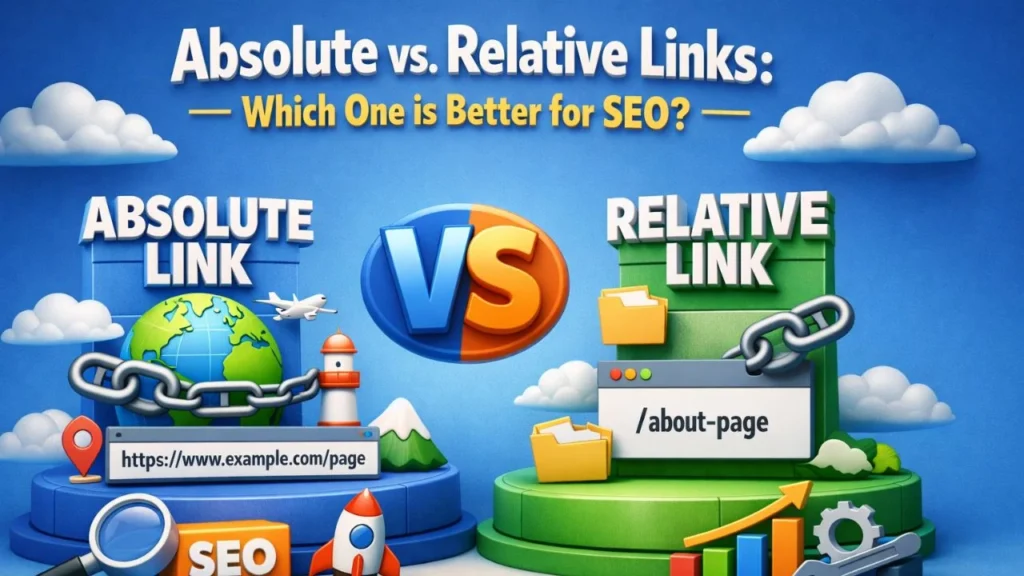
An absolute link, also known as an absolute URL, is a complete web address that includes all elements required to locate a page on the internet. This includes the protocol, domain name, and the full page path. This format clearly specifies the exact location of the page regardless of where the link is placed.
Key Components of Absolute URLs
Absolute links include several essential components that help search engines and browsers locate a specific page.
Protocol
The protocol defines how the browser should retrieve the resource. Common examples include HTTP and HTTPS.
Domain Name
The domain identifies the website hosting the page.
Full Page Path
The path shows the exact location of the page within the website structure.
Because absolute links include the full path to a page, search engines can interpret them clearly without relying on contextual information.
SEO Benefits of Absolute Links

Absolute URLs offer several advantages in terms of Search Engine Optimization.
Clear URL Identification
Search engines can easily understand the exact location of a page when the complete URL is provided.
Reduced Risk of Duplicate Content
Absolute links minimize confusion caused by multiple URL variations.
Improved Indexing Accuracy
Search engines can crawl and index pages more efficiently when the full URL is specified.
These benefits make absolute URLs particularly useful in certain SEO scenarios, especially when content is shared across multiple platforms.
When Absolute Links Are Preferred
There are several situations where absolute URLs are considered the better option.
External Linking
When linking to external websites, absolute URLs are required because the destination is outside the current domain.
Content Syndication
If your content appears on multiple websites, absolute URLs ensure that links always point to the correct page.
Cross Domain Environments
Websites that operate across multiple domains often rely on absolute links to maintain clarity.
These scenarios demonstrate why understanding Absolute vs. Relative Links is important for anyone working in digital marketing or website management.
What Are Relative Links?
Relative links use a shorter URL format that references the location of a page relative to the current page rather than specifying the full web address.
For example:
/blog/seo-guide
- Instead of including the entire domain name, the link only shows the path within the website.
- Browsers automatically combine the relative path with the current domain to locate the page.
Key Characteristics of Relative Links
Relative URLs are designed to simplify internal linking. Some of their common characteristics include:
Shorter Link Structure
They require fewer characters because the domain name is omitted.
Context Based Navigation
The browser determines the complete URL based on the current page.
Flexible for Development
Relative links are often used during website development because they make testing easier.
Advantages of Relative Links
Relative URLs offer several practical benefits.
Simplified Website Maintenance
If a domain name changes, relative links usually continue to work without modification.
Faster Development Workflow
Developers can create links quickly without repeatedly typing the full domain.
Improved Site Portability
- Relative links make it easier to migrate a website between environments.
- These advantages explain why many websites rely on relative links for internal navigation.
When Relative Links Work Best
Relative URLs are commonly used in specific situations.
Internal Linking
They are ideal for linking pages within the same website.
Testing Environments
Relative links simplify staging and development processes.
Content Rich Websites
Large websites with many internal pages often use relative URLs to keep their code cleaner.
This is why the debate around Absolute vs. Relative Links often focuses on internal linking strategies.
Absolute vs. Relative Links: Core Differences
Understanding the technical differences between these link types helps clarify their impact on SEO.
| Factor | Absolute Links | Relative Links |
| URL Structure | Full web address | Partial path |
| Clarity for Search Engines | Very clear | Context dependent |
| Portability | Less flexible | Highly flexible |
| Use Case | External links and canonical URLs | Internal navigation |
Both options have legitimate uses, which means the decision is not always about choosing one over the other.
Crawling and Indexing Perspective
Search engine crawlers navigate websites by following links. Clear link structures help crawlers move efficiently between pages.
Absolute links provide direct clarity about a page location, while relative links rely on contextual information. In most cases, search engines can interpret both formats correctly as long as they are implemented properly.
Site Architecture Impact
Website architecture determines how pages are connected. A logical internal linking structure ensures that important pages receive more visibility and link equity.
Whether you choose absolute or relative URLs, the goal should always be to create a clean and organized structure that supports Search Engine Optimization.
How Linking Structure Influences Search Engine Optimization?

Internal linking plays a crucial role in improving a website’s SEO performance. It helps search engines understand how content is connected and which pages are most important.
Crawlability and Indexing
Search engines use automated bots to crawl websites. These bots follow links to discover new pages and update existing ones in their index.
If internal links are poorly structured, some pages may remain undiscovered. A well organized linking structure ensures that search engines can easily access all important pages.
Page Authority Distribution
Link equity, often referred to as link authority, flows through internal links. Pages that receive more links generally gain more importance in the eyes of search engines.
Strategically placing links helps distribute authority across the website and supports better rankings.
Canonical Signals
Canonicalization helps search engines identify the preferred version of a page. Proper linking structures ensure that canonical signals remain consistent and clear.
When discussing Absolute vs. Relative Links, this aspect becomes particularly relevant because inconsistent linking can lead to multiple URL variations.
Technical SEO Considerations
Maintaining consistent URLs is a key part of technical SEO. This includes:
• Using proper canonical tags
• Ensuring consistent link formats
• Avoiding unnecessary redirects
These practices improve crawl efficiency and contribute to stronger SEO performance.
Risks and SEO Mistakes in URL Linking
Incorrect link structures can create several problems that affect search visibility.
Broken Links
Broken links occur when a page no longer exists or when the URL is incorrect. These links can frustrate users and reduce trust in the website.
Duplicate Content Issues
When multiple URLs lead to the same page, search engines may struggle to determine which version should rank.
Redirect Chains
Improper link structures sometimes cause multiple redirects before reaching the final page. This can slow down crawling and affect user experience.
These issues highlight the importance of understanding Absolute vs. Relative Links and implementing them carefully.
Role of Internal Links in Content Marketing Strategy
Internal linking is an essential part of any successful Content Marketing Strategy. It connects related content, helping users discover additional information while strengthening topical relevance.
Supporting Topic Clusters
Topic clusters organize content around a central theme. Internal links connect related articles, creating a structured content ecosystem that search engines can easily understand.
Improving Content Discoverability
When pages are connected through relevant links, users are more likely to explore additional content.
Enhancing Engagement
Internal links encourage visitors to spend more time on a website, which can indirectly support SEO performance.
A thoughtful linking approach strengthens both content visibility and audience engagement.
How Linking Strategy Supports Company Branding and SEO?

A strong linking structure contributes to both technical performance and brand perception.
Consistent URL Structure
Consistent URLs help users understand where they are on a website. This clarity improves trust and reinforces professional branding.
Improved User Experience
Easy navigation allows visitors to move between pages effortlessly. When users find information quickly, they are more likely to return.
Stronger Brand Visibility
Effective internal linking ensures that key pages remain accessible and visible to search engines.
By aligning technical SEO practices with brand goals, businesses can strengthen Company Branding and SEO simultaneously.
Strategic Use of Images and Links in SEO
Images play an important role in modern SEO strategies. When used correctly, they enhance engagement and support search visibility.
Image Linking Best Practices
Images can be linked to relevant pages to guide users toward related content.
Alt Text Optimization
Alt text describes the image content for search engines and screen readers. This improves accessibility and supports image search visibility.
Image SEO Benefits
Optimized images can appear in search results, driving additional traffic to a website.
Combining images with internal links demonstrates the Strategic Use of Images, which strengthens both visual engagement and SEO performance.
Link Structure and Google Penalty Recovery
Incorrect linking practices sometimes contribute to technical SEO issues that affect rankings.
Technical Errors
Examples include:
• Duplicate URL structures
• Incorrect redirects
• Broken internal links
These issues can reduce crawl efficiency and confuse search engines.
Link Audits
Regular audits help identify linking errors and improve website structure.
Role in Google Penalty Recovery
When websites experience ranking drops, fixing technical problems becomes essential. Correcting link structures often plays a role in Google Penalty Recovery, especially when indexing issues are involved.
Absolute vs. Relative Links: Which One Is Better for SEO?
- Many website owners want a simple answer to this question.
- The truth is that both link types have valid use cases.
- Absolute links provide clarity for search engines and are ideal for external linking, canonical references, and syndicated content.
- Relative links are often more practical for internal navigation because they simplify development and site management.
- For most websites, the best approach is a balanced strategy that uses each link type where it works best.
- Understanding Absolute vs. Relative Links allows you to build a flexible linking structure that supports both usability and SEO performance.
Conclusion
Internal linking remains one of the most important yet often overlooked aspects of website optimization. A well structured linking system helps search engines crawl pages efficiently, distribute authority across the site, and improve overall visibility.
Understanding Absolute vs. Relative Links enables website owners to make informed decisions about their linking strategy. Absolute links provide clarity and reliability in certain situations, while relative links offer flexibility and efficiency for internal navigation.
When used strategically, both link types contribute to stronger Search Engine Optimization, support a well organized Content Marketing Strategy, reinforce Company Branding and SEO, and enhance the Strategic Use of Images across a website.
By focusing on clear site architecture, consistent URLs, and user friendly navigation, you can build a linking framework that benefits both search engines and visitors. Over time, this approach strengthens your website’s authority, improves discoverability, and supports long term search performance.
Frequently Asked Questions
What is the difference between absolute and relative links?
Absolute links include the complete URL with protocol and domain name, while relative links only show the page path within a website.
Which link type is better for SEO?
Both formats can support Search Engine Optimization when implemented correctly. Absolute links offer clarity, while relative links provide flexibility for internal navigation.
Do relative links affect Google rankings?
Relative links generally do not harm rankings as long as they are used consistently and correctly within the website structure.
Should internal links be absolute or relative?
Many websites use relative links for internal navigation because they simplify maintenance and development.
Can wrong links cause SEO penalties?
Improper linking structures can create technical issues that may affect visibility. Fixing these problems is often part of Google Penalty Recovery.