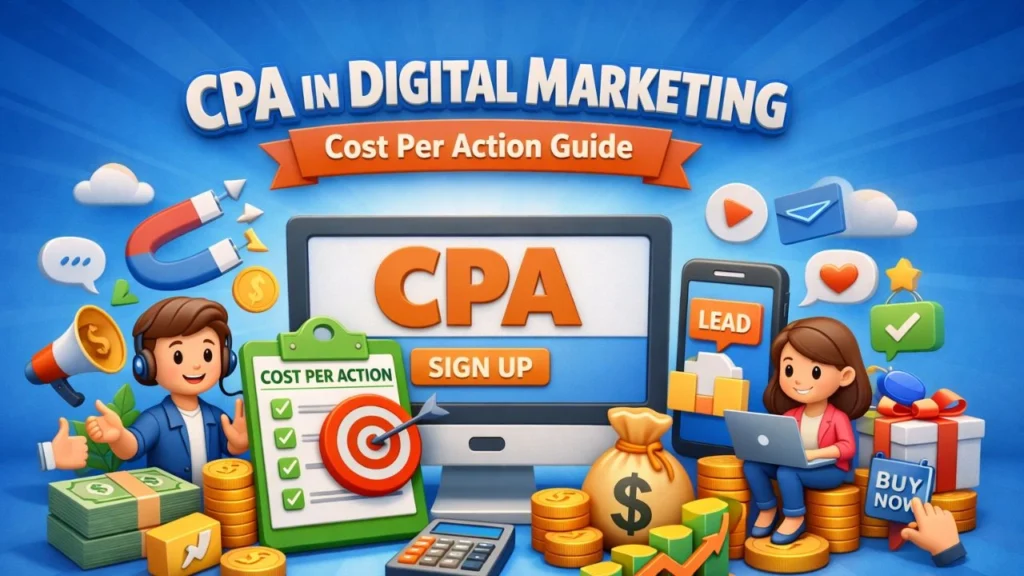
If you are spending money on ads, campaigns, landing pages, or funnel optimization, you need to know whether your investment is actually producing results. That is where CPA in Digital Marketing becomes so important. It tells you how much you are paying for a desired action, whether that action is a lead, a sale, a signup, a call, or a form submission.
In simple terms, Cost Per Acquisition or Cost Per Action in Digital Marketing helps you measure efficiency. It shows whether your campaigns are attracting the right audience and turning that attention into meaningful outcomes. For businesses focused on Performance Marketing, Lead Generation, and measurable growth, this metric is not optional. It is essential.
If you want to scale smarter, improve conversions, and stop wasting budget, understanding Cost Per Action or Cost Per Acquisition in Digital Marketing can completely change the way you plan campaigns.
Table of Contents
What Is CPA in Digital Marketing?
CPA in Digital Marketing, short for Cost Per Action represents the average amount you pay to prompt a user to complete a predefined, goal-driven action. That “action” can be anything that supports your business objectives, such as submitting a lead form, downloading an e-book, installing an app, or completing a purchase. By tracking how much you spend for each conversion event, Cost Per Action or Cost Per Acquisition in Digital Marketing helps you measure campaign efficiency, compare channels, and allocate budget toward the tactics that generate the highest return on investment.
An action may include:
- A product purchase
- A contact form submission
- A demo booking
- A phone call
- A newsletter signup
- A free trial registration
- A download
So when marketers talk about CPA in Digital Marketing, they are asking one simple question: how much did it cost to get one valuable conversion?
This is why CPA in Digital Marketing is such a powerful metric. It connects your marketing spend directly to outcomes, not just clicks or impressions. You are not only paying for visibility. You are measuring what that visibility produces.
Why CPA in Digital Marketing Matters?
Many businesses focus heavily on traffic. Traffic matters, but traffic alone does not guarantee growth. If 10,000 people visit your page and nobody converts, your campaign is not performing the way you need it to.
That is why Cost Per Acquisition or Cost Per Action in Digital Marketing matters. It helps you move beyond surface-level metrics and focus on the real result.
Here is what CPA in Digital Marketing helps you do:
1. Control marketing costs
By tracking CPA in Digital Marketing, you can see exactly how much you spend to secure a sale, signup, or other goal-driven action. That clarity lets you decide whether a campaign is genuinely sustainable or needs trimming.
2. Improve campaign decisions
When you measure Cost Per Action across different ad sets, landing pages, platforms, and audiences, comparisons become apples-to-apples. Precise Cost Per Acquisition in Digital Marketing data highlights which creative and channel combinations deserve more budget—and which should be paused.
3. Support better Lead Generation
In many service businesses, a phone inquiry isn’t as valuable as a booked consultation. Calculating CPA in Digital Marketing for each stage of your lead funnel shows whether your overall lead-generation process is cost-efficient or leaking money on low-value prospects.
4. Align spend with business outcomes
Performance Marketing lives and dies by results. Mapping every rupee to its corresponding Cost Per Action in Digital Marketing ensures your spend is always tied to an action and a measurable return, not vanity metrics.
5. Scale with more confidence
Once you’ve defined an acceptable CPA in Digital Marketing, scaling is straightforward: increase budget only on the channels and creatives that stay below—or beat—that threshold. This guards profitability while you grow.
Businesses that invest in performance marketing services often use CPA as a primary benchmark because it offers a clearer view of real campaign value.
How to Calculate CPA in Digital Marketing?
The formula for Cost Per Acquisition or Cost Per Action in Digital Marketing is simple:
Let us say you spend ₹20,000 on a campaign and generate 40 leads. Your CPA is ₹500.
If another campaign costs ₹30,000 and generates 100 leads, your CPA is ₹300.
That means the second campaign is delivering actions more efficiently.
However, CPA in Digital Marketing should never be judged in isolation. A lower number looks better on paper, but if those leads are unqualified or do not convert into customers, the campaign may not actually be stronger.
What Is Considered a Good CPA?
There is no single universal benchmark for CPA in Digital Marketing because every industry, offer, location, and funnel is different.
A good CPA depends on factors such as:
- Your profit margin
- Your average order value
- Your customer lifetime value
- Your conversion rate
- Your competition level
- Your sales cycle length
- Your audience intent
For example, a local service business may accept a higher CPA in Digital Marketing if one lead can turn into a high-value long-term client. On the other hand, an eCommerce brand with lower margins may need a tighter CPA target.
The better question is not just, “Is my CPA low?” It is, “Is my CPA profitable?”
That is where businesses gain a stronger edge. They do not chase cheap leads. They chase valuable actions.
CPA vs CPC vs CPL vs ROAS
To understand CPA in Digital Marketing properly, it helps to compare it with other common metrics.
CPA vs CPC
CPC means cost per click. It tells you how much you pay for each click on your ad. It is useful, but it does not tell you whether that click turned into anything meaningful.
CPA vs CPL
CPL means cost per lead. It is similar to Cost Per Acquisition, but narrower. CPL tracks the cost of getting a lead, while CPA in Digital Marketing can track any action, including purchases, signups, bookings, or downloads.
CPA vs ROAS
ROAS means return on ad spend. It focuses on revenue generated from advertising. CPA in Digital Marketing focuses on the cost to generate an action. Both matter, but they answer different questions.
In a strong Performance Marketing strategy, these metrics work together. Still, CPA in Digital Marketing remains one of the clearest ways to measure direct campaign efficiency.
Where CPA in Digital Marketing Is Used?
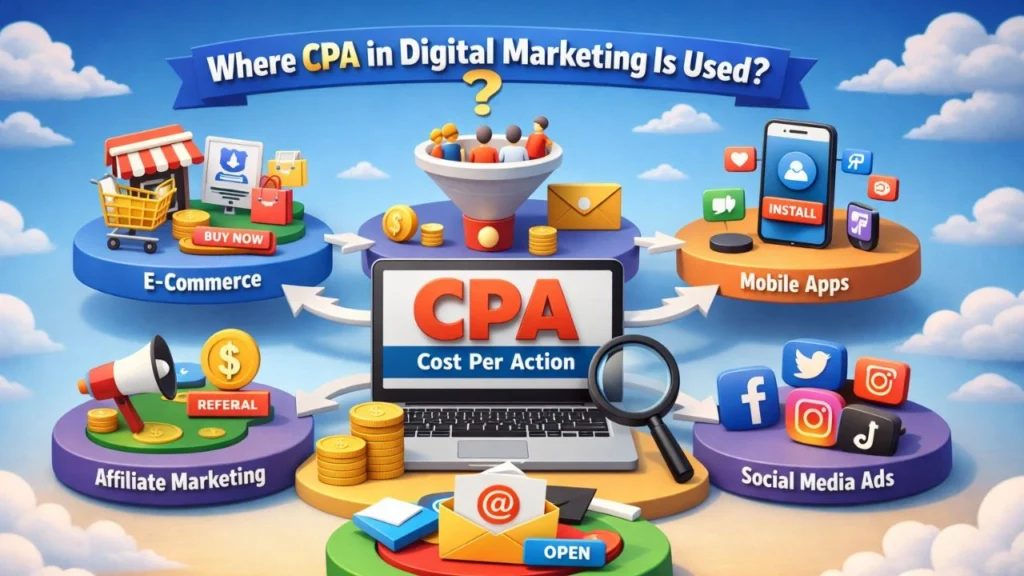
One of the reasons CPA in Digital Marketing is so widely discussed is because it applies across many channels and campaign types.
You can use it in:
- Google Ads
- Meta Ads
- YouTube campaigns
- Affiliate campaigns
- Email funnels
- App install campaigns
- ECommerce campaigns
- Local business campaigns
- B2B service promotions
If your goal is Lead Generation, CPA in Digital Marketing becomes even more useful because it helps you compare how much different channels charge you for each qualified opportunity.
For local businesses, this metric also connects with Google Maps performance. If a user finds your brand through local search, clicks through, and submits an inquiry, that journey can still be evaluated through a conversion lens. So even organic-local visibility can influence your effective CPA.
Factors That Affect CPA in Digital Marketing
If your CPA is too high, the problem is rarely just one thing. Usually, several performance issues are working together.
Here are the biggest factors that affect CPA in Digital Marketing:
1. Audience targeting
If you target the wrong users, your ad spend will disappear quickly.
2. Ad relevance
Weak copy, unclear messaging, and poor creative can reduce conversions.
3. Landing page quality
A confusing or slow page can increase CPA in Digital Marketing even when your ad traffic is strong.
4. Offer strength
If your offer is not attractive enough, people will not take action.
5. Conversion tracking setup
If your tracking is broken, your CPA data will be misleading.
6. Device and user experience
If your site performs poorly on mobile, users may leave before converting.
7. Funnel friction
Long forms, weak CTAs, and unnecessary steps can increase cost per action. A healthy CPA in Digital Marketing depends on alignment. Your audience, ad, landing page, and CTA all need to work together.
How to Reduce CPA in Digital Marketing?
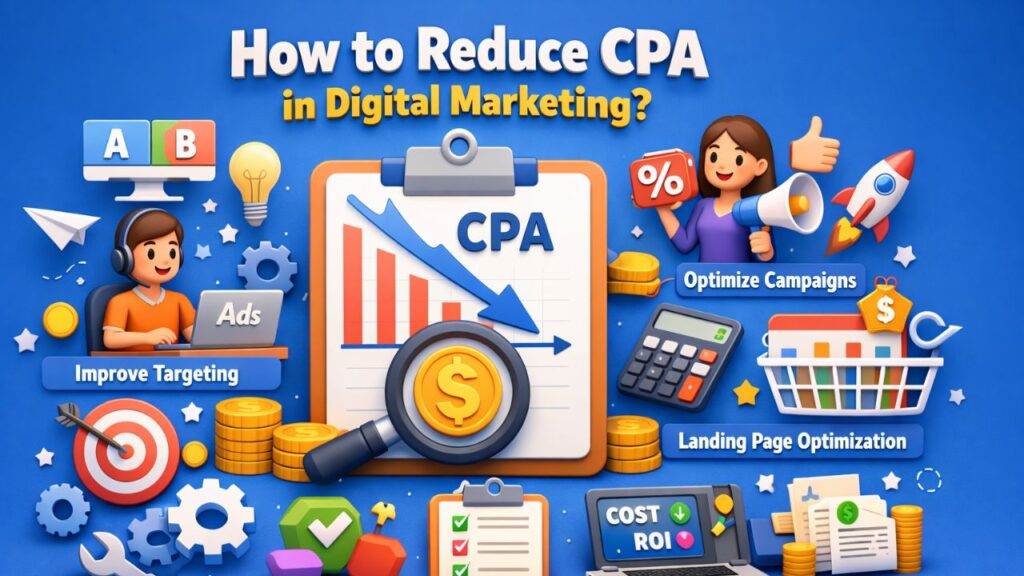
If you want better profitability, you need to reduce waste without hurting quality. That is the smart way to improve CPA in Digital Marketing.
Improve your targeting
Focus on high-intent users. Refine audiences based on behavior, demographics, interests, and search intent.
Match the ad with the landing page
Your message should feel consistent from click to conversion. That alignment often improves CPA in Digital Marketing quickly.
Strengthen your CTA
A weak CTA creates hesitation. A clear next step makes action easier. Whether it is “book a demo” or “get a quote,” clarity matters.
Test different creatives
Sometimes small changes in headline, copy, or visual direction can lower CPA significantly.
Simplify your forms
Ask only for what you really need. Friction often increases drop-off.
Use retargeting
People who already know your brand usually convert more easily than cold audiences. That can lower your CPA in Digital Marketing.
Improve page speed and trust signals
Fast-loading pages, testimonials, FAQs, and clear contact details help users feel confident.
Review search intent
The more closely your campaign matches what users are actually looking for, the more efficient your cost per action becomes.
The Relationship Between CPA, SEO, and Long-Term Growth
Many people think CPA in Digital Marketing only matters in paid advertising. That is not true. Organic strategy also affects acquisition cost.
A strong SEO foundation can support lower conversion costs over time because it brings in users with clearer intent. When content is optimized well, landing pages match search behavior, and site structure supports conversion, your overall acquisition becomes more efficient.
This is why businesses often work with an SEO Agency while also running ad campaigns. Paid media brings immediate visibility, and SEO supports long-term efficiency. Together, they can strengthen campaign performance and help reduce CPA in Digital Marketing.
An SEO Agency may improve content quality, page relevance, trust signals, and conversion paths. All of these contribute to better user behavior, which can support healthier results across both organic and paid channels.
How Search Issues Can Increase CPA?
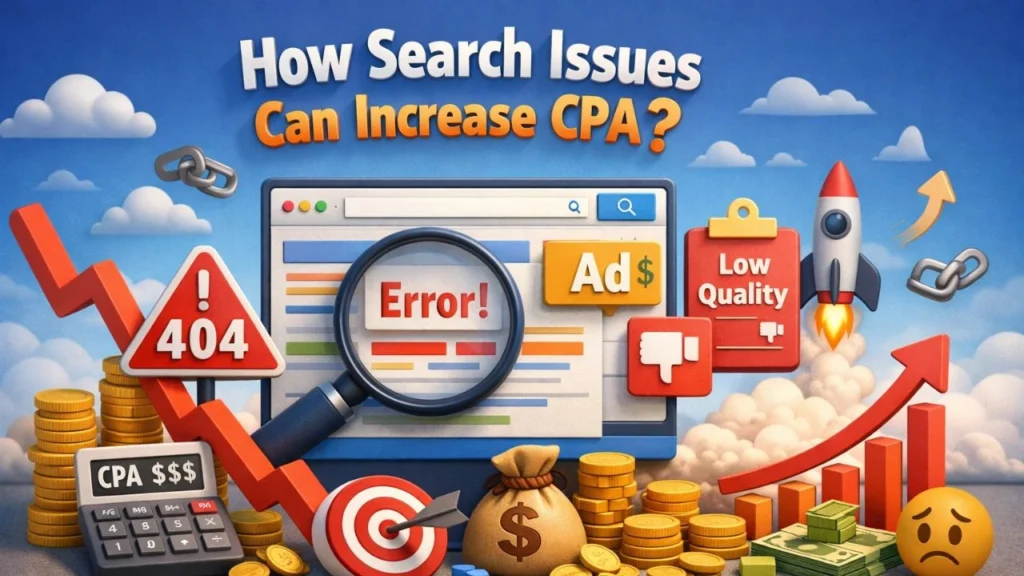
Sometimes, rising costs are not only caused by campaign problems. Broader search visibility issues can also affect performance.
If your site loses traffic, rankings, or trust, your paid campaigns may have to work harder to produce the same number of actions. That can raise CPA in Digital Marketing.
This is where topics like Google Penalty Recovery and Google Core Update Recovery become relevant.
Google Penalty Recovery
If your site has been affected by spam issues, unnatural practices, or manual actions, visibility can drop. When that happens, paid campaigns may have to compensate for lost organic demand, which can put pressure on CPA.
Google Core Update Recovery
When algorithm changes affect rankings and content performance, your overall traffic mix may shift. A weaker organic presence can lead to more reliance on paid traffic, making CPA in Digital Marketing more sensitive.
That does not mean every CPA problem is caused by search issues. But if performance changed sharply after a visibility drop, it is worth investigating whether Google Penalty Recovery or Google Core Update Recovery should be part of the conversation.
CPA in Digital Marketing for Local Businesses
For local businesses, CPA in Digital Marketing is especially practical because actions are often tied to real-world intent. A user may click to call, request directions, book an appointment, or fill out a short inquiry form.
If your business depends on local discovery, Google Maps can also influence performance. A user who discovers you through Google Maps may still complete an action on your site or through your business profile. That action has value, and it should be tracked wherever possible.
For this reason, local campaigns should not focus only on rankings or impressions. They should also measure how local visibility turns into action.
When you connect Google Maps, local landing pages, and conversion tracking correctly, you get a more complete picture of CPA in Digital Marketing for your area-based campaigns.
Common Mistakes That Raise CPA
| Common Mistake | Why it Inflates CPA in Digital Marketing | Quick Optimization Fix |
|---|---|---|
| Targeting audiences that are too broad | Broad, unfocused targeting shows ads to users with low purchase intent, forcing you to pay for impressions or clicks that rarely convert—driving up CPA in Digital Marketing. | Narrow segments with tighter demographic, interest, or intent filters; upload first-party look-alike lists. |
| Writing generic ad copy | Bland messages fail to resonate, so prospects scroll past or click without converting, wasting spend and raising your CPA in Digital Marketing. | Speak to one pain point per ad, echo search intent, and add specificity (e.g., numbers, benefits, urgency). |
| Sending traffic to irrelevant pages | When the landing page doesn’t match ad promises, visitors bounce quickly, leaving you with clicks but no actions—again spiking CPA in Digital Marketing. | Align headline, imagery, and offer on the landing page with the exact ad message; remove navigation distractions. |
| Using weak or hidden CTAs | If the call-to-action is vague or buried, users don’t know the next step, lowering conversion rate and boosting CPA in Digital Marketing. | Place a contrasting, action-oriented CTA (“Get Free Audit”) above the fold and repeat it after key content sections. |
| Ignoring mobile experience | Slow loads, tiny buttons, or misaligned forms on mobile frustrate users, cutting conversions in half and hiking CPA in Digital Marketing. | Implement responsive design, compress images, enable AMP or similar tech, and streamline forms for thumbs. |
| Tracking the wrong conversion events | Optimizing toward vanity metrics (e.g., time on site) misguides algorithms, so ad spend chases non-revenue actions—ballooning CPA in Digital Marketing. | Define primary conversions (demo booked, purchase, qualified lead) in analytics and ad platforms; disable low-value goals. |
| Failing to test landing page variations | Relying on one untested page leaves potential gains undiscovered, keeping conversion rates—and therefore CPA in Digital Marketing—stagnant. | Run A/B or multivariate tests on headlines, imagery, social proof, and form length; double down on winners. |
| Not following up on leads fast enough | Leads cool quickly; delayed outreach means fewer deals closed, so acquisition cost per action rises, hurting overall CPA in Digital Marketing. | Automate instant email/SMS responses, set SLA for sales contact within 5 minutes, and use CRM alerts. |
If you want to improve CPA in Digital Marketing, you need to treat it as a full-funnel issue, not just an ad platform issue.
How to Build a Better CPA Strategy?
| # | Action Step | Purpose & Best Practice | Impact on CPA in Digital Marketing |
|---|---|---|---|
| 1 | Define ideal conversion goals | Pinpoint revenue-driving events (checkout, demo booking, subscription) instead of superficial metrics. | Ensures you calculate CPA against actions that truly matter, revealing profitable vs. wasteful spend. |
| 2 | Set up proper analytics & tracking | Tag ads, URLs, and on-site events for end-to-end attribution. | Produces accurate cost-per-action data and lets you segment CPA by channel, audience, or campaign. |
| 3 | Build landing pages around intent | Match ad promise with headline, visuals, and CTA on the page. | Higher relevance lifts conversion rate, driving down the average CPA without extra ad spend. |
| 4 | Improve messaging across campaigns | A/B-test copy, creative, and offers for each audience segment. | Even small wins compound to reduce CPA while boosting return on ad spend. |
| 5 | Review performance consistently | Inspect dashboards weekly (or daily at scale) to spot CPA spikes early. | Rapid course-corrections keep campaigns within target CPA and protect budget. |
| 6 | Compare quality, not just quantity | Track pipeline value, sales velocity, and churn—not just lead counts. | Filters out low-quality leads, so CPA reflects the cost of acquiring customers who generate profit. |
| 7 | Align sales & marketing expectations | Maintain feedback loops on lead quality and definitions of “conversion.” | Shared targets prevent mis-reporting and keep CPA calculations consistent across teams. |
| 8 | Test, measure, refine, improve | Treat experimentation as an ongoing habit across the entire funnel. | Turns CPA in Digital Marketing from a passive metric into an active lever for growth. |
Final Thoughts
If you want a more profitable marketing strategy, you cannot afford to ignore CPA in Digital Marketing. It helps you understand whether your campaigns are truly producing meaningful outcomes or simply spending budget.
From Performance Marketing and Lead Generation to local visibility through Google Maps, CPA gives you a practical way to measure efficiency. It also connects with broader strategy areas such as SEO, site quality, funnel design, and even visibility recovery work like Google Penalty Recovery and Google Core Update Recovery.
The businesses that grow fastest are not always the ones spending the most. They are the ones measuring the right actions, improving the right pages, and making every click work harder.
If you want to improve campaign efficiency, uncover hidden conversion issues, and build a smarter growth strategy, Request Free Audit.
FAQs
What is CPA in Digital Marketing?
CPA in Digital Marketing means Cost Per Action. It measures how much you spend to get one specific user action, such as a lead, sale, signup, or inquiry.
How do you calculate CPA in Digital Marketing?
You calculate CPA in Digital Marketing by dividing total campaign cost by total number of actions generated.
Why is CPA important in Performance Marketing?
It helps you understand how efficiently your campaigns are converting spend into real outcomes. That is why it is a core metric in Performance Marketing.
Is CPA in Digital Marketing better than CPC?
Not necessarily better, but more outcome-focused. CPC measures click cost, while CPA in Digital Marketing measures the cost of actual conversion actions.
How can I lower my CPA in Digital Marketing?
You can reduce it by improving targeting, strengthening landing pages, testing better creatives, simplifying forms, and optimizing tracking.
What is the difference between Cost Per Acquisition and Lead Generation cost?
Lead Generation cost usually refers to cost per lead, while CPA in Digital Marketing can track any valuable action, including sales, signups, calls, and downloads.
Can SEO help improve Cost Per Acquisition?
Yes. Better SEO can bring more qualified traffic, improve landing page relevance, and reduce dependency on expensive paid acquisition over time.
Why do businesses use performance marketing services for Cost Per Action improvement?
Because performance marketing services are usually focused on measurable outcomes, optimization, testing, and conversion efficiency, all of which support better Cost Per Action results.
Can Google Maps affect Cost Per Action for local businesses?
Yes. Google Maps visibility can influence calls, visits, and inquiries, which can contribute to local conversion performance.
Do Google Penalty Recovery and Google Core Update Recovery affect Cost Per Acquisition?
They can. If search visibility drops, your paid channels may have to compensate, which can indirectly increase CPA in Digital Marketing.