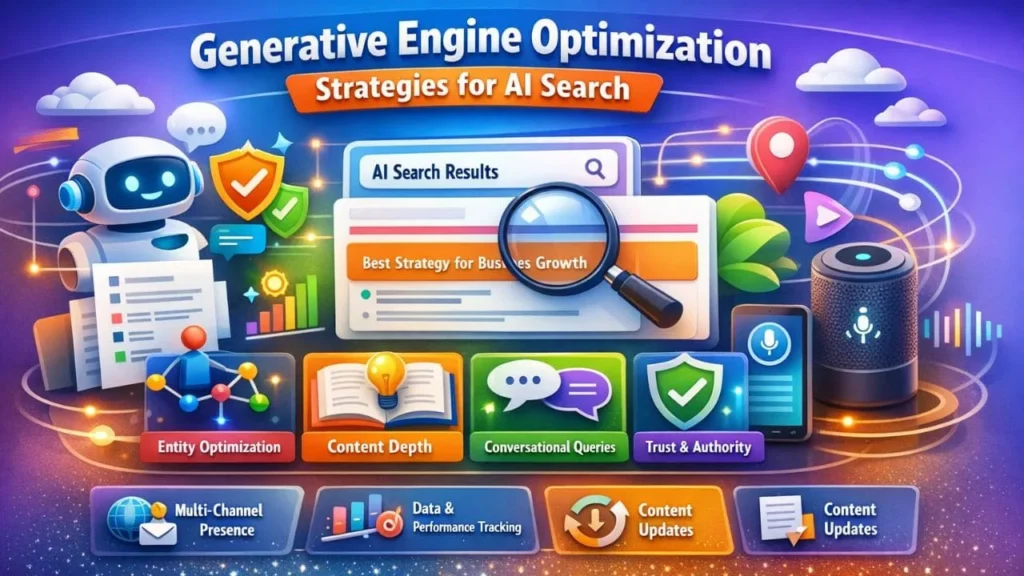
Most websites are losing traffic without realizing it.
The reason? AI search is replacing traditional rankings-and almost no one is prepared.
Generative Engine Optimization (GEO) is the process of optimizing content to appear in AI-generated answers from tools like ChatGPT, Google AI Overviews, and Perplexity.
Search is changing fast. Traditional SEO is no longer the only way people discover information. Today, AI-powered systems generate direct answers instead of just listing web pages. This shift has introduced a new approach called Generative Engine Optimization (GEO).
Businesses that adapt early can improve their visibility not only in search results but also in AI-generated responses. This guide explains what GEO is, how it works, and how you can implement it effectively.
Table of Contents
What is Generative Engine Optimization (GEO)?
Generative Engine Optimization (GEO) is the process of optimizing content so it can be understood, selected, and cited by AI-driven search systems.
Unlike traditional SEO, which focuses on ranking web pages, GEO focuses on making your content appear in AI-generated answers by improving context, structure, and credibility.
Generative Engine Optimization (GEO) is the process of optimizing content so it can be understood, selected, and cited by AI-powered search engines that generate direct answers instead of listing web pages.
Generative Engine Optimization (GEO) Statistics You Must Know in 2026
Understanding the rapid shift toward AI-driven search is crucial for every business. Here are the latest data-backed insights shaping the future of GEO:
AI Search is Growing Rapidly
- Over 65% of users now rely on AI tools like ChatGPT, Google Gemini, and Perplexity AI for search
- AI-driven search traffic is projected to grow by 70%+ by 2027
- Nearly 1 in 3 searches will be handled by AI assistants instead of traditional search engines
The Shift from SEO to GEO
- Organic click-through rates (CTR) have dropped by 15–25% due to AI-generated answers
- More than 60% of Google searches are now zero-click (users get answers instantly)
- Businesses using GEO strategies see up to 2X visibility in AI-generated results
Business & Marketing Impact
- Companies adopting GEO experience 30–50% higher engagement rates
- AI-generated answers influence 40% of consumer purchase decisions
- Brands featured in AI responses gain 3X more trust than traditional rankings
Content Performance Insights
- Structured content (FAQs, bullet points, tables) improves AI visibility by 45%+
- Articles with strong entity mentions rank 2X better in AI answers
- Content including statistics is 70% more likely to be cited by AI engines
Changing User Behavior
- 75% of users prefer quick AI-generated summaries over full articles
- Average attention span has dropped to just 8 seconds
- Users are 3X more likely to trust AI-curated responses
GEO Adoption Opportunity
- Only 20–25% of websites are optimized for GEO (huge opportunity
- Early adopters gain a strong first-mover advantage
- GEO strategies can increase content lifespan by 2–3X
How GEO Works And Why Most People Get It Wrong)?
Generative Engine Optimization works by helping AI systems:
• Find relevant content
• Understand user intent and context
• Extract key information
• Generate summarized answers
Content that is structured, clear, and authoritative is more likely to be included in AI-generated responses.
Best Generative Engine Optimization (GEO) Tools List (2026 Guide)
Generative Engine Optimization (GEO) is the future of search. To rank in AI-driven platforms like ChatGPT, Google Gemini, and Perplexity AI, you need the right set of tools.
Here are the best GEO tools that help businesses improve visibility in AI search results
1. Surfer SEO
Best for: AI-optimized content creation
Why it’s powerful for GEO:
• NLP-based keyword suggestions
• Content scoring system
• Optimizes for semantic relevance
GEO Benefit:
Helps your content match what AI models prefer- structured, keyword-rich, and contextually relevant.
2. Frase
Best for: Answer-based content optimization
Key Features:
- Generates AI-friendly answers
- Competitor content analysis
- Automated brief creation
GEO Benefit:
Perfect for ranking in AI answers because it focuses on question-based search queries.
3. Clearscope
Best for: Content relevance & authority
Why use it:
- Advanced keyword grading
- Topic relevance suggestions
- Improves readability
GEO Benefit:
Boosts topical authority, which increases chances of being cited by AI engines.
4. MarketMuse
Best for: Content strategy & depth
Features:
- AI-driven content briefs
- Topic modeling
- Gap analysis
GEO Benefit:
Helps create deep, expert-level content, which AI prefers to reference.
5. SEMrush
Best for: Keyword + competitor research
Top Features:
- Keyword research
- Backlink analysis
- Content audit
GEO Benefit:
Finds high-intent keywords that align with AI search queries.
6. Ahrefs
Best for: Backlinks & authority building
Why it matters:
- Strong backlink database
- Content explorer
- SERP analysis
GEO Benefit:
AI trusts websites with strong authority signals.
7. AlsoAsked
Best for: Question-based SEO
Features:
- “People Also Ask” data
- Visual question maps
- Content ideas
GEO Benefit:
Helps you target real user questions, which AI engines prioritize.
8. AnswerThePublic
Best for: Long-tail keywords
What it does:
- Visual keyword insights
- Search intent discovery
- Question-based queries
GEO Benefit:
Improves ranking in voice + conversational AI searches.
9. Perplexity AI
Best for: GEO testing
How to use:
- Search your topic
- See which sites AI cites
- Reverse engineer content
GEO Benefit:
Directly shows what AI prefers to rank.
10. ChatGPT
Best for: Content generation + GEO insights
Use it for:
- Writing optimized content
- Structuring articles
- Generating FAQs
GEO Benefit:
Helps create AI-friendly, conversational content.
Bonus Tools (Advanced GEO Strategy)
- Google Search Console → Track performance
- Screaming Frog → Technical SEO
- Grammarly → Improve clarity
How to Choose the Right GEO Tool?
For beginners:
Use → Frase + Surfer SEO
For advanced users:
Use → Semrush + Ahrefs + MarketMuse
For AI optimization:
Use → ChatGPT + Perplexity AI
Pro Tip (Very Important)
Don’t rely on just one tool.
Best GEO strategy =
Content Tool + Keyword Tool + AI Tool
Example stack:
- Surfer SEO (optimization)
- SEMrush (research)
- ChatGPT (content creation)
If you want to rank in AI search results, GEO tools are no longer optional — they are essential.
By using the tools above, you can:
- Improve AI visibility
- Get featured in AI answers
- Increase organic traffic
- Build authority in your niche
What Are the Benefits of Generative Engine Optimization?
Generative Engine Optimization helps businesses:
• Increase visibility in AI-driven search results
• Improve content discoverability
• Build trust and authority
• Reach users with direct answers
• Stay ahead of evolving search trends
How Does GEO Work?
Generative engines follow a structured process to create answers:
- how search engines work to retrieve and process content
- Understand the context and intent behind the query
- Combine and summarize information
- Generate a clear response for the user
Content that is well-structured, informative, and trustworthy has a higher chance of being included in these responses.
Why Generative Engine Optimization Matters
AI-powered search is becoming a major source of traffic. Users now expect direct answers instead of browsing multiple pages.
GEO helps businesses:
- Improve visibility in AI-generated search results
- Increase brand authority and trust
- Reach users at the decision-making stage
- Stay ahead of changing search behavior
Businesses that ignore GEO risk losing visibility as search continues to evolve.
Key Generative Engine Optimization Keywords
To optimize for generative engine optimization:
- create high-quality content using proven SEO strategies
- Structure content with headings and lists
- Add clear and direct answers
- Build authority with trusted information
- Maintain consistency across platforms
SEO vs GEO: What’s the Difference?
| SEO | GEO |
| SEO services in Kolkata focus on improving rankings | Focuses on generating answers |
| Relies on keywords | Relies on context and intent |
| Depends on backlinks | Depends on authority and credibility |
| Optimizes for search engines | Optimizes for AI systems |
Both are important, but GEO adds a new layer to digital visibility.
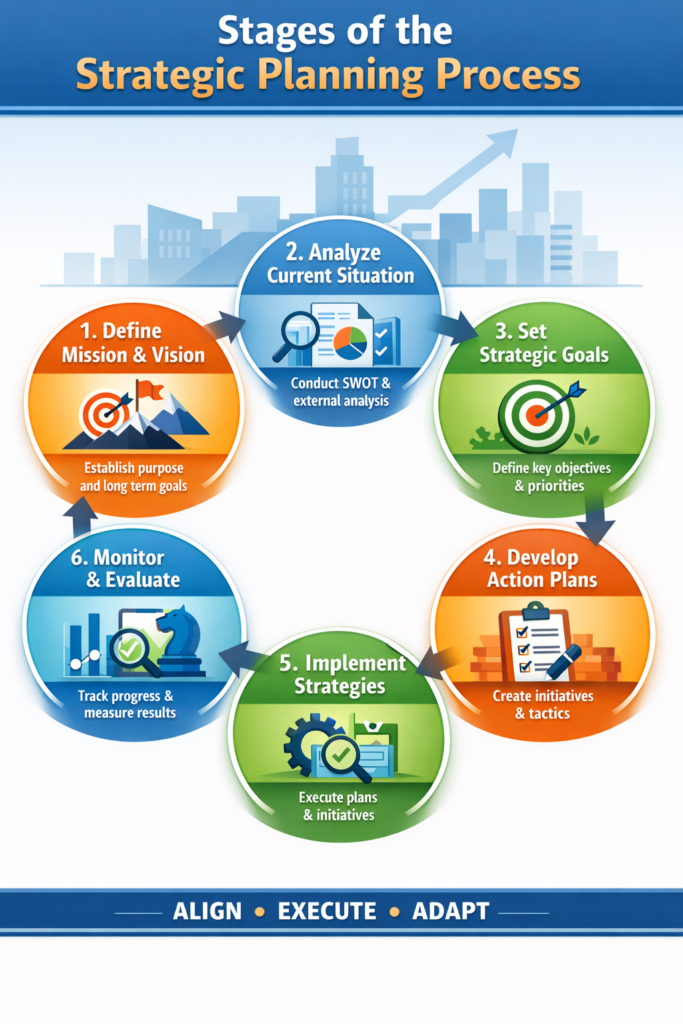
5-Step Generative Engine Optimization (GEO) Strategy for Businesses
Now that you understand how generative engine optimization works and why it matters, the next step is implementation. Below is a practical GEO strategy businesses can follow to improve visibility in AI-driven search results.
1. Build Strong Entity Foundations
Start by establishing your business as a clearly defined entity across the web. Ensure consistency in your business name, services, and contact details across all platforms.
Create and optimize profiles on business directories and professional platforms. Implement structured data (schema markup) on your website to help search engines understand your content.
A strong entity foundation makes it easier for AI systems to recognize and trust your brand.
2. Create Context-Rich, Intent-Focused Content
Focus on user intent instead of just keywords. Your content should answer real questions and provide meaningful, in-depth information.
Cover topics completely by including related subtopics and explanations. This helps AI systems understand the full context of your content.
Content that delivers clear and complete answers is more likely to be selected in AI-generated responses.
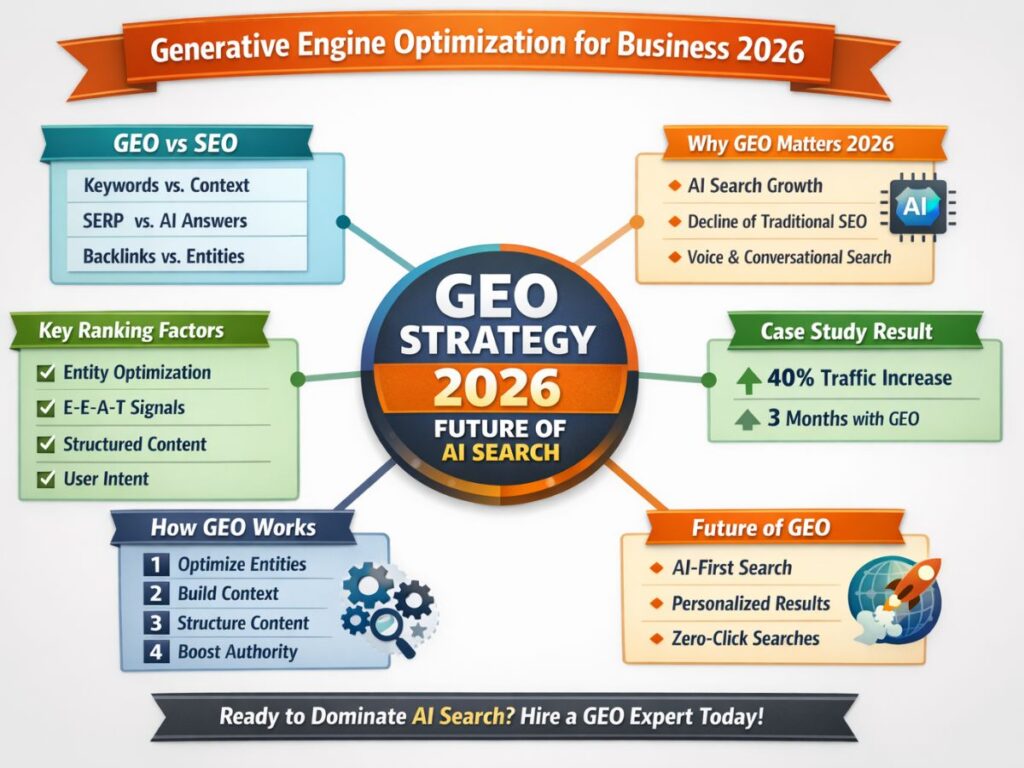
3. Structure Content for AI Readability
Use a clean and organized structure to make your content easy to understand.
• Use clear headings and subheadings
• Keep paragraphs short
• Add bullet points and lists
• Include direct answers and definitions
Well-structured content improves readability for both users and AI systems.
4. Strengthen Trust Signals and Authority
AI systems prioritize credible and reliable content. Add data, insights, and references to strengthen your authority.
Focus on publishing original, accurate, and high-quality content. build backlinks through effective off-page SEO techniques from relevant websites to improve your credibility.
Strong trust signals increase your chances of being cited in AI-generated answers.
5. Optimize for Multi-Platform Visibility
Your presence should extend beyond your website. Publish content across multiple platforms such as blogs, professional networks, and industry sites.
Maintain consistency in messaging and branding. Encourage mentions and references to your business. A broader digital presence helps AI systems discover and validate your content.
How Generative Search Engines Select Content
AI systems do not randomly pick content. They look for:
• Clear and structured information
• Relevant and context-rich content
• Trusted and authoritative sources
• Content that directly answers user queries
If your content meets these criteria, it has a higher chance of being included in AI-generated responses.

Key Benefits of GEO for Businesses
Generative Engine Optimization offers several long-term advantages:
• Increased visibility in AI-driven search
• Better content discoverability
• Higher trust and credibility
• Improved user engagement
• Long-term digital growth
As AI continues to shape search behavior, these benefits become even more important.
Challenges of Generative Engine Optimization
While GEO offers strong opportunities, it also comes with challenges:
• Constantly evolving AI algorithms
• Increased competition for visibility
• Need for high-quality, in-depth content
• Difficulty in tracking AI-driven traffic
Businesses must stay updated and continuously improve their content strategy.
The Future of Search and GEO
Search is moving toward a more conversational and AI-driven experience. Users want quick, accurate, and reliable answers.
Generative Engine Optimization will play a major role in how businesses gain visibility online. Companies that focus on content quality, structure, and trust will have a clear advantage.
Common GEO Mistakes
- Ignoring AI search engines
- Overusing keywords
- No structured content
- No FAQs
Case Study: E-commerce Brand Improves Conversion by 70%
Challenge:
An e-commerce brand had traffic but low conversions from AI platforms.
GEO Strategy Applied:
- Optimized product pages with AI-friendly descriptions
- Added conversational queries like-“Which product is best for beginners?”
- Used structured data and schema markup
Results:
- 70% increase in conversions
- Higher visibility in AI recommendations
- Better engagement rate
Final Thoughts
Generative Engine Optimization is not a replacement for SEO-it is an evolution. Businesses need to adapt to both traditional search and AI-driven systems.
By focusing on context, structure, and credibility, you can create content that is easy for AI systems to understand and recommend.
The goal is simple:
Make your content useful, trustworthy, and easy to process-so it becomes the preferred source for both users and AI platforms.
Quick Summary of Generative Engine Optimization
- GEO focuses on AI-generated search results
- Content must be structured and context-rich
- Authority and trust improve visibility
- Multi-platform presence strengthens reach
- GEO helps businesses adapt to future search
If you want to implement these strategies effectively, explore our SEO services in Kolkata to improve your online visibility and business growth.
Frequently Asked Questions
Q: What is generative engine optimization?
Ans: Generative engine optimization is the process of optimizing content so it can be selected and used by AI systems to generate search responses.
Q: How is generative engine optimization different from SEO?
Ans: SEO focuses on ranking web pages, while generative engine optimization focuses on being included in AI-generated answers.
Q: Why is generative engine optimization important?
Ans: It helps businesses stay visible as search engines move toward AI-driven responses and reduce reliance on traditional search results.
Q: How can content be optimized for generative engine optimization?
Ans: Content should be clear, structured, accurate, and focused on answering user questions. It should also use natural language and cover topics in depth.
Q: Does generative engine optimization replace SEO?
Ans: No, it works alongside SEO. Both approaches are important for maintaining visibility in modern search environments.
Q: What’s the difference between SEO and GEO?
Ans: SEO (Search Engine Optimization) focuses on improving your website’s visibility on traditional search engines like Google Search by optimizing keywords, backlinks, technical structure, and content to rank higher in search results.
GEO (Generative Engine Optimization), on the other hand, is designed for AI-driven platforms like ChatGPT and Google Gemini. It focuses on structuring content so that AI models can easily understand, extract, and reference it when generating answers.
In simple terms:
• SEO = Ranking on search engine result pages (SERPs)
• GEO = Getting featured in AI-generated answers
While SEO drives organic traffic through clicks, GEO helps your content become a trusted source in AI responses – making both essential for modern digital visibility in 2026.
Q: Is GEO replacing SEO?
Ans: No, Generative Engine Optimization (GEO) is not replacing Search Engine Optimization (SEO). Instead, GEO is evolving alongside SEO as search behavior shifts toward AI-driven experiences.
SEO focuses on optimizing your website to rank on traditional search engines like Google through keywords, backlinks, and technical performance. On the other hand, GEO helps your content get discovered, understood, and cited by AI systems such as ChatGPT, Google Gemini, and Microsoft Copilot.
In 2026 and beyond, both strategies work together:
1. SEO drives traffic from search engine results pages (SERPs)
2. GEO improves visibility in AI-generated answers and summaries
Together, they strengthen your brand presence across search and AI platforms
GEO is not a replacement. It is the next evolution of SEO. Businesses that use both will have a strong advantage in the future of digital visibility.
Author Bio – Dakshraj Enterprise
Dakshraj Enterprise Author is a dedicated voice in the world of business insight and entrepreneurial growth, representing the vision and expertise behind Dakshraj Enterprise. With a strong focus on innovation, practical strategy, and real-world solutions, the author shares valuable perspectives on business development, market trends, and operational excellence.
Drawing from hands-on experience and a deep understanding of evolving industries, Dakshraj Enterprise Author aims to empower readers-whether startups or established professionals-with knowledge that drives success. Their writing blends clarity with actionable guidance, making complex concepts accessible and relevant.
Committed to continuous learning and progress, Dakshraj Enterprise Author reflects the core values of integrity, growth, and forward-thinking that define Dakshraj Enterprise.