

Search engines have changed dramatically over the past decade. Earlier, website owners often relied on manual submission methods to ensure their pages appeared in search engine indexes. Today, search engines are far more advanced and capable of discovering websites automatically. This raises an important question for website owners and marketers: Do you still need to perform Search Engine Submission this year?
Many people assume that submitting a website manually is still necessary for visibility. However, modern search engines rely on sophisticated systems that continuously scan the internet to discover new content. These systems are powered by automated technologies known as crawlers, which are designed to find, analyze, and index web pages across the web.
In this guide, we will explore whether Search Engine Submission is still relevant today, how search engines discover websites automatically, and what strategies businesses should focus on instead. You will also learn how modern optimization practices like Answer Engine Optimization, keyword research using Google Keyword Planner, and maintaining a strong Google Business Profile contribute to better search visibility.
Table of Contents
Understanding Search Engine Submission
Before deciding whether it is necessary today, it is helpful to understand what Search Engine Submission actually means.
In simple terms, Search Engine Submission refers to the process of manually informing search engines about a website or a specific web page. In the early days of SEO, website owners often submitted their site URLs to search engines so they could be indexed and appear in search results.
This process was useful when search engines had limited capabilities for discovering new pages. By submitting a site manually, webmasters ensured that search engines were aware of their content.
However, search technology has evolved significantly. Modern search engines now rely heavily on automated discovery systems that scan the internet continuously. Because of this advancement, manual Search Engine Submission is no longer the primary method for getting indexed.
How Search Engines Discover Websites Today?
Today’s search engines operate through complex systems designed to locate and analyze web pages automatically. Instead of waiting for manual submissions, they use automated programs called crawlers.
These crawlers move from one webpage to another by following links. Whenever they discover a new page, they analyze its content and determine whether it should be added to the search engine’s index.
There are several ways crawlers find websites:
Internal Linking
When pages within a website link to each other, crawlers can easily navigate through the site and discover new pages.
Backlinks from Other Websites
When other websites link to your content, crawlers often follow those links and discover your pages.
XML Sitemaps
Sitemaps help search engines understand the structure of a website and identify important pages.
Because of these automated processes, many websites get indexed without any manual Search Engine Submission.
Why Search Engine Submission Is Less Important Today?
Search engines have invested heavily in improving their ability to find and index content quickly. As a result, manual Search Engine Submission is no longer required in most cases.
Here are several reasons why.
Automated Crawling Systems
Search engines rely on highly advanced crawlers that continuously scan the internet. These systems operate around the clock and can discover new pages within minutes or hours.
Improved Indexing Algorithms
Modern indexing systems evaluate content quality, structure, and relevance before including pages in search results.
Faster Content Discovery
Because billions of websites are interconnected through links, crawlers can easily discover new content as they navigate the web.
For most websites, simply publishing high quality content and ensuring proper website structure is enough to get indexed without manual Search Engine Submission.
Situations Where Search Engine Submission May Still Help
Although automated indexing is very efficient, there are certain situations where Search Engine Submission may still be useful.
Launching a New Website
If a website has no backlinks and no visibility, submitting it manually may help search engines discover it faster.
Websites With Limited Links
Sites that are not connected to other websites through backlinks may take longer to be discovered by crawlers.
Newly Published Pages
Sometimes website owners want newly published pages to be indexed quickly. In such cases, submitting URLs directly can help speed up the process.
Technical Barriers
If a website has technical issues that prevent crawlers from accessing certain pages, manual submission combined with technical fixes can improve indexing.
Even in these scenarios, manual Search Engine Submission should not be the primary SEO strategy. It should simply support other optimization practices.
Using Google Search Console Instead of Manual Submission
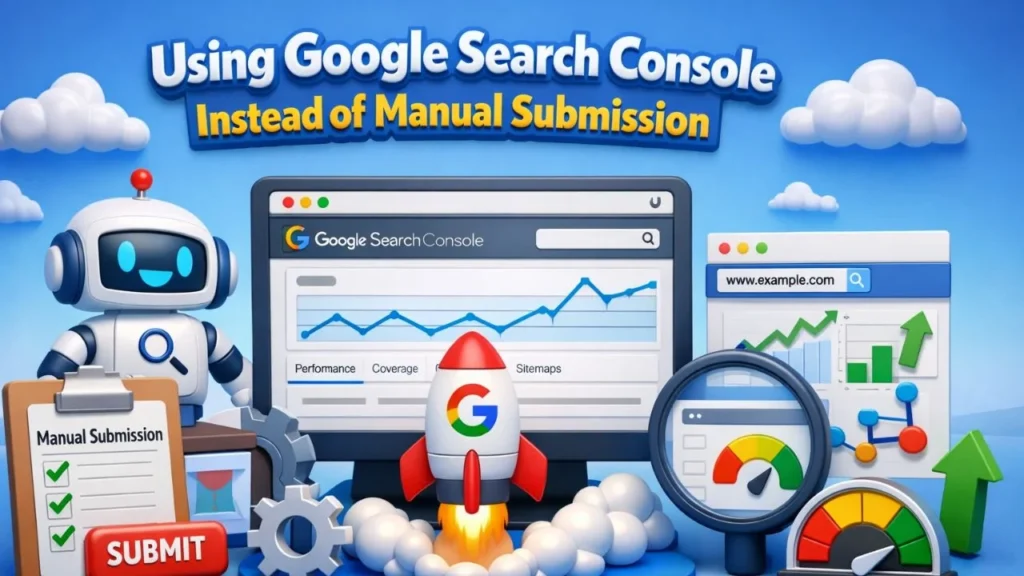
One of the most effective ways to inform search engines about new pages is through Google Search Console.
This tool allows website owners to request indexing for specific pages and submit XML sitemaps. Compared to traditional Search Engine Submission, this method is faster and more reliable.
The URL inspection feature in Search Console allows you to check whether a page is indexed and request indexing if necessary.
Because of these capabilities, many SEO professionals rely on Search Console instead of traditional Search Engine Submission.
Keyword Research Before Indexing Content
Publishing content without keyword research can reduce its visibility in search results. Before focusing on indexing, it is important to understand what users are searching for.
Tools like Google Keyword Planner help identify relevant keywords that align with user intent.
By using Google Keyword Planner, website owners can:
- Discover popular search queries
- Understand search demand
- Identify content opportunities
- Optimize pages for relevant keywords
When content is optimized properly before publishing, search engines are more likely to recognize its value and index it quickly.
Local Visibility Through Google Business Profile
For businesses targeting local customers, optimizing a Google Business Profile can significantly improve visibility.
A properly optimized Google Business Profile helps search engines understand a business’s location, services, and credibility. This information can appear in local search results and map listings.
When local profiles are optimized, search engines can easily connect business information with relevant searches. In many cases, maintaining a strong Google Business Profile eliminates the need for manual Search Engine Submission for local visibility.
Avoiding Practices That May Lead to Google Penalty

While trying to improve search visibility, some website owners use outdated or aggressive tactics. These practices can sometimes trigger a Google Penalty.
Common risky practices include:
- Submitting websites to low quality directories
- Using automated submission tools
- Creating spam backlinks
- Publishing duplicate content
A Google Penalty can negatively affect search rankings and reduce website visibility.
Instead of relying heavily on outdated submission tactics, website owners should focus on building high quality content and maintaining a technically sound website.
The Rise of Answer Engine Optimization
Search behavior is evolving rapidly. Many users now expect direct answers rather than a list of links. This shift has given rise to Answer Engine Optimization.
Answer Engine Optimization focuses on structuring content so that search engines can easily extract and display answers to user questions.
Strategies for Answer Engine Optimization include:
- Writing clear and concise answers
- Using structured headings
- Addressing common questions
- Providing accurate and helpful information
By focusing on Answer Engine Optimization, websites can appear in featured snippets, voice search results, and AI powered answer systems.
Building Trust Through Online Reputation Management
Search engines also evaluate the credibility of a brand before ranking its content. This is where Online Reputation Management becomes important.
Online Reputation Management involves maintaining a positive online presence through reviews, mentions, and consistent branding.
Strong Online Reputation Management signals trust to both users and search engines. Websites with positive reputation signals often experience better visibility in search results.
What You Should Focus on Instead of Manual Submission?

Instead of relying heavily on manual indexing tactics, businesses should prioritize modern SEO strategies that improve discoverability and credibility.
Here are some important areas to focus on:
High Quality Content
Content should address real user questions and provide valuable insights.
Technical SEO
Ensure that your website is fast, mobile friendly, and easy for crawlers to navigate.
Keyword Strategy
Use tools like Google Keyword Planner to identify relevant search queries.
Local SEO
Maintain an optimized Google Business Profile to improve local visibility.
Structured Content
Use headings, lists, and clear formatting to support Answer Engine Optimization.
Reputation Signals
Invest in Online Reputation Management to build trust with both users and search engines.
Conclusion
For most websites, manual Search Engine Submission is no longer necessary.
Modern search engines use sophisticated crawlers that automatically discover and index content across the web. If your website has good internal linking, quality content, and proper technical structure, it will likely be indexed naturally.
However, there are certain situations where Search Engine Submission can still help, such as when launching a new website or trying to speed up indexing for newly published pages.
In today’s SEO landscape, the real focus should be on creating valuable content, understanding user intent, and optimizing for modern search experiences through practices like Answer Engine Optimization, keyword research, and strong Online Reputation Management.
When these elements are in place, search engines will naturally recognize and index your website without the need for frequent manual submissions.
Frequently Asked Questions
Do I still need to submit my website to search engines?
In most cases, no. Modern search engines rely on automated crawlers that discover websites through links and sitemaps.
How do search engines find new websites?
Search engines use automated crawlers that follow links from existing websites to discover new pages.
Can manual submission improve SEO rankings?
Manual submission can help search engines discover pages faster, but it does not directly improve rankings.
Can excessive submissions cause problems?
Using automated or spammy submission tools can lead to issues and may even trigger a Google Penalty.
What should businesses focus on instead?
Businesses should prioritize quality content, keyword research with Google Keyword Planner, local optimization through Google Business Profile, structured content for Answer Engine Optimization, and strong Online Reputation Management.



Great content! Super high-quality! Keep it up! 🙂