Search engine optimization (SEO) involves numerous elements, and one often overlooked aspect is “stop words,” which include prepositions, conjunctions, pronouns, articles, and verbs. These seemingly insignificant words – like “and,” “of,” and “the” – can subtly impact your website’s visibility in search results. Let’s delve into:
- The definition and role of “stop words.”
- A detailed “stop words” list
- How “stop words” influence SEO
- Strategic tips to leverage stop words for better rankings
Table of Contents
What Are Stop Words in SEO (Search Engine Optimization)?
Stop words are common words that search engines often choose to ignore during indexing and search queries. This filtering process is designed to improve search efficiency and focus on the core meaning of a user’s query.
Extensive List of English Stop Words in SEO
Here’s a more comprehensive list of frequent English stop words in SEO:
a
- able
- about
- above
- abroad
- according
- accordingly
- across
- actually
- after
- afterwards
- again
- against
- ago
- ahead
- ain’t
- all
- allow
- allows
- almost
- alone
- along
- alongside
- already
- also
- although
- always
- am
- amid
- amidst
- among
- amongst
- an
- and
- another
- any
- anybody
- anyhow
- anyone
- anything
- anyway
- anyways
- anywhere
- apart
- appear
- appreciate
- appropriate
- are
- aren’t
- around
- as
- aside
- ask
- asking
- associated
- at
- available
- away
- awfully
b
- back
- backward
- backwards
- be
- became
- because
- become
- becomes
- becoming
- been
- before
- beforehand
- begin
- behind
- being
- believe
- below
- beside
- besides
- best
- better
- between
- beyond
- both
- brief
- but
- by
c
- came
- can
- cannot
- cant
- can’t
- caption
- cause
- causes
- certain
- certainly
- changes
- clearly
- c’mon
- co
- co.
- com
- come
- comes
- concerning
- consequently
- consider
- considering
- contain
- containing
- contains
- corresponding
- could
- couldn’t
- course
- c’s
- currently
d
- dare
- daren’t
- definitely
- described
- despite
- did
- didn’t
- different
- directly
- do
- does
- doesn’t
- doing
- done
- don’t
- down
- downwards
- during
e
- each
- edu
- eg
- eight
- eighty
- either
- else
- elsewhere
- end
- ending
- enough
- entirely
- especially
- et
- etc
- even
- ever
- evermore
- every
- everybody
- everyone
- everything
- everywhere
- ex
- exactly
- example
- except
f
- fairly
- far
- farther
- few
- fewer
- fifth
- first
- five
- followed
- following
- follows
- for
- forever
- former
- formerly
- forth
- forward
- found
- four
- from
- further
- furthermore
g
- get
- gets
- getting
- given
- gives
- go
- goes
- going
- gone
- got
- gotten
- greetings
h
- had
- hadn’t
- half
- happens
- hardly
- has
- hasn’t
- have
- haven’t
- having
- he
- he’d
- he’ll
- hello
- help
- hence
- her
- here
- hereafter
- hereby
- herein
- here’s
- hereupon
- hers
- herself
- he’s
- hi
- him
- himself
- his
- hither
- hopefully
- how
- howbeit
- however
- hundred
i
- i’d
- ie
- if
- ignored
- i’ll
- i’m
- immediate
- in
- inasmuch
- inc
- inc.
- indeed
- indicate
- indicated
- indicates
- inner
- inside
- insofar
- instead
- into
- inward
- is
- isn’t
- it
- it’d
- it’ll
- its
- it’s
- itself
- i’ve
j
- just
k
- keep
- keeps
- kept
- know
- known
- knows
l
- last
- lately
- later
- latter
- latterly
- least
- less
- lest
- let
- let’s
- like
- liked
- likely
- likewise
- little
- look
- looking
- looks
- low
- lower
- ltd
m
- made
- mainly
- make
- makes
- many
- may
- maybe
- mayn’t
- me
- mean
- meantime
- meanwhile
- merely
- might
- mightn’t
- mine
- minus
- miss
- more
- moreover
- most
- mostly
- mr
- mrs
- much
- must
- mustn’t
- my
- myself
n
- name
- namely
- nd
- near
- nearly
- necessary
- need
- needn’t
- needs
- neither
- never
- neverf
- neverless
- nevertheless
- new
- next
- nine
- ninety
- no
- nobody
- non
- none
- nonetheless
- noone
- no-one
- nor
- normally
- not
- nothing
- notwithstanding
- novel
- now
- nowhere
o
- obviously
- of
- off
- often
- oh
- ok
- okay
- old
- on
- once
- one
- ones
- one’s
- only
- onto
- opposite
- or
- other
- others
- otherwise
- ought
- oughtn’t
- our
- ours
- ourselves
- out
- outside
- over
- overall
- own
p
- particular
- particularly
- past
- per
- perhaps
- placed
- please
- plus
- possible
- presumably
- probably
- provided
- provides
q
- que
- quite
- qv
r
- rather
- rd
- re
- really
- reasonably
- recent
- recently
- regarding
- regardless
- regards
- relatively
- respectively
- right
- round
s
- said
- same
- saw
- say
- saying
- says
- second
- secondly
- see
- seeing
- seem
- seemed
- seeming
- seems
- seen
- self
- selves
- sensible
- sent
- serious
- seriously
- seven
- several
- shall
- shan’t
- she
- she’d
- she’ll
- she’s
- should
- shouldn’t
- since
- six
- so
- some
- somebody
- someday
- somehow
- someone
- something
- sometime
- sometimes
- somewhat
- somewhere
- soon
- sorry
- specified
- specify
- specifying
- still
- sub
- such
- sup
- sure
t
- take
- taken
- taking
- tell
- tends
- th
- than
- thank
- thanks
- thanx
- that
- that’ll
- thats
- that’s
- that’ve
- the
- their
- theirs
- them
- themselves
- then
- thence
- there
- thereafter
- thereby
- there’d
- therefore
- therein
- there’ll
- there’re
- theres
- there’s
- thereupon
- there’ve
- these
- they
- they’d
- they’ll
- they’re
- they’ve
- thing
- things
- think
- third
- thirty
- this
- thorough
- thoroughly
- those
- though
- three
- through
- throughout
- thru
- thus
- till
- to
- together
- too
- took
- toward
- towards
- tried
- tries
- truly
- try
- trying
- t’s
- twice
- two
u
- un
- under
- underneath
- undoing
- unfortunately
- unless
- unlike
- unlikely
- until
- unto
- up
- upon
- upwards
- us
- use
- used
- useful
- uses
- using
- usually
v
- value
- various
- versus
- very
- via
- viz
- vs
w
- want
- wants
- was
- wasn’t
- way
- we
- we’d
- welcome
- well
- we’ll
- went
- were
- we’re
- weren’t
- we’ve
- what
- whatever
- what’ll
- what’s
- what’ve
- when
- whence
- whenever
- where
- whereafter
- whereas
- whereby
- wherein
- where’s
- whereupon
- wherever
- whether
- which
- whichever
- while
- whilst
- whither
- who
- who’d
- whoever
- whole
- who’ll
- whom
- whomever
- who’s
- whose
- why
- will
- willing
- wish
- with
- within
- without
- wonder
- won’t
- would
- wouldn’t
y
- yes
- yet
- you
- you’d
- you’ll
- your
- you’re
- yours
- yourself
- yourselves
- you’ve
z
- zero
Additional Types of Stop Words Used in SEO
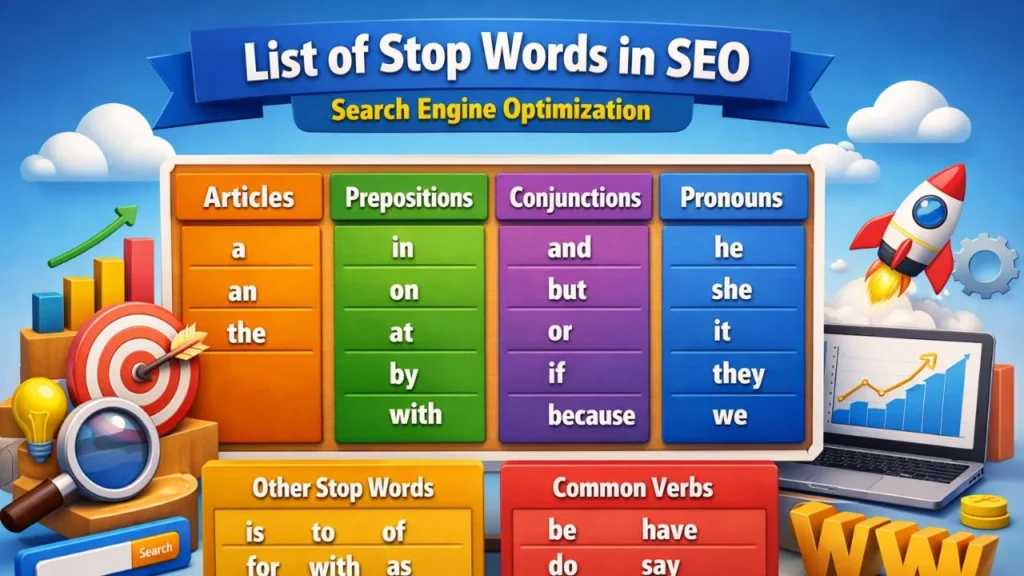
Stop words can also be categorized based on their grammatical function. Understanding these categories helps improve content readability while maintaining SEO performance.
Articles
These define nouns and include:
• a
• an
• the
Prepositions
These describe relationships between words.
Examples include:
• in
• on
• at
• under
• between
• with
Conjunctions
These connect words or phrases.
Examples:
• and
• or
• but
• because
• although
Pronouns
Pronouns replace nouns.
Examples:
• he
• she
• it
• they
• we
• you
Auxiliary Verbs
These help form verb tenses.
Examples:
• is
• are
• was
• were
• have
• had
How Do Stop Words Impact SEO?
Stop words can influence SEO in several subtle ways depending on where they appear in your content.
1. Titles and Headlines
Titles should prioritize clarity and keyword relevance. While stop words sometimes help readability, too many can dilute keyword strength.
Example:
- Less optimized title: “How to Start a Blog for the Beginners”
- Better optimized title: “How to Start a Blog Beginner Guide”
However, removing stop words entirely can sometimes make titles sound unnatural, so a balanced approach is recommended.
2. URLs and Permalinks
URLs should ideally remain short, clear, and keyword focused.
Example:
- Less optimized URL: /guide-to-starting-a-blog-for-the-beginners
- Better optimized URL: /start-blog-beginner-guide
Short URLs help search engines crawl and understand page topics more easily.
3. Body Content
In body content, stop words are essential for natural language. Removing them completely can make content difficult to read.
Search engines now prioritize:
• readability
• user engagement
• natural language flow
Therefore, stop words should be used naturally rather than aggressively removed.
4. Meta Descriptions
Though search engines may not directly index stop words within meta descriptions, they contribute to the snippet displayed to users in search results.
A well written meta description should:
• include the main keyword
• maintain readability
• encourage clicks
Stop words often help make descriptions sound more conversational and user friendly
5. Voice Search Optimization
Voice searches tend to include more stop words because people speak in natural sentences.
Example voice search:
“What is the best way to start a blog?”
This means stop words can actually improve SEO performance for voice search queries.
SEO Best Practices for Using Stop Words
Prioritize User Experience
Write primarily for human readers. Stop words should be used where they improve readability and sentence structure.
Avoid writing unnatural phrases just to remove stop words.
Use Stop Words When They Clarify Meaning
In certain situations, removing stop words may change the meaning of a keyword phrase.
Example:
- “Best restaurants in New York”
- Removing “in” would make the phrase unclear.
Therefore, always consider search intent and context.
Keep URLs Clean
While stop words may appear in titles or content, it is often beneficial to remove them from URLs to keep links concise.
Example:
yourdomain.com/seo-stop-words-guide
instead of
yourdomain.com/what-are-the-stop-words-in-seo-guide
Research Long Tail Keywords
Long tail keywords frequently include stop words because they resemble natural queries.
Examples:
• how to improve website SEO
• what are stop words in SEO
• how to optimize blog content for Google
Using long tail keywords can improve search visibility and ranking potential.
Utilize SEO Tools
Plugins such as Yoast SEO or Rank Math can help analyze stop word usage in URLs and titles.
These tools help ensure:
• better keyword placement
• optimized readability
• improved SEO structure
Common SEO Myths About Stop Words
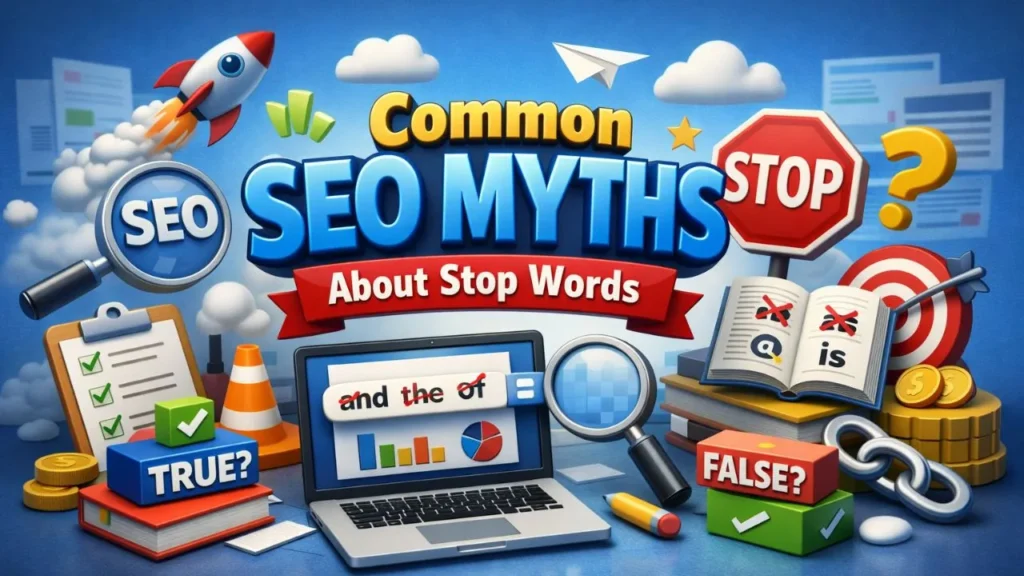
Myth 1: Stop Words Should Always Be Removed
This is no longer true. Modern search engines evaluate context and intent, so stop words can be important.
Myth 2: Stop Words Hurt Rankings
Stop words do not automatically harm rankings. Poor content quality and keyword stuffing are far more damaging.
Myth 3: Google Ignores All Stop Words
Google may ignore some stop words but not always. Many queries require them for correct interpretation.
Conclusion
Mastering the art of stop word usage is a valuable skill in SEO. By strategically including them for readability while prioritizing core keywords, you can optimize your content for both search engines and human readers.
Stop words may appear small and insignificant, but they play an important role in content clarity, user experience, and search intent understanding. When used correctly, they help create natural content that aligns with modern search engine algorithms.By balancing readability, keyword placement, and search intent, you increase the chances of achieving better search visibility and higher rankings.
Frequently Asked Questions (FAQ)
What are stop words in SEO?
Stop words are common words such as the, is, at, which, and, of that search engines may ignore when processing search queries. These words generally carry little meaning on their own, so search engines focus more on the important keywords in a query.
Does Google ignore stop words in search queries?
Google does not always ignore stop words. Modern search algorithms analyze the context and search intent of a query. In many cases, stop words are necessary to understand the meaning of a phrase, so they may still be considered during indexing and ranking.
Should stop words be removed from SEO titles?
Stop words can be used in SEO titles when they improve readability and clarity. However, it is usually recommended to keep titles concise and focus on the main keywords while avoiding unnecessary words.
Are stop words harmful for SEO?
Stop words are not harmful for SEO. They are a natural part of language and help create readable and user friendly content. Problems arise only when excessive or irrelevant words dilute the focus of the primary keywords.
Should stop words be removed from URLs?
In many cases, removing stop words from URLs can make them shorter, cleaner, and easier to understand. Search engines prefer simple URLs that clearly describe the page topic.
Example:
yourdomain.com/seo-stop-words-guide
Do stop words affect keyword research?
Yes, stop words can influence keyword research, especially for long tail keywords and conversational queries. Many users search using natural language phrases that include stop words, so keyword research tools often show these variations.