
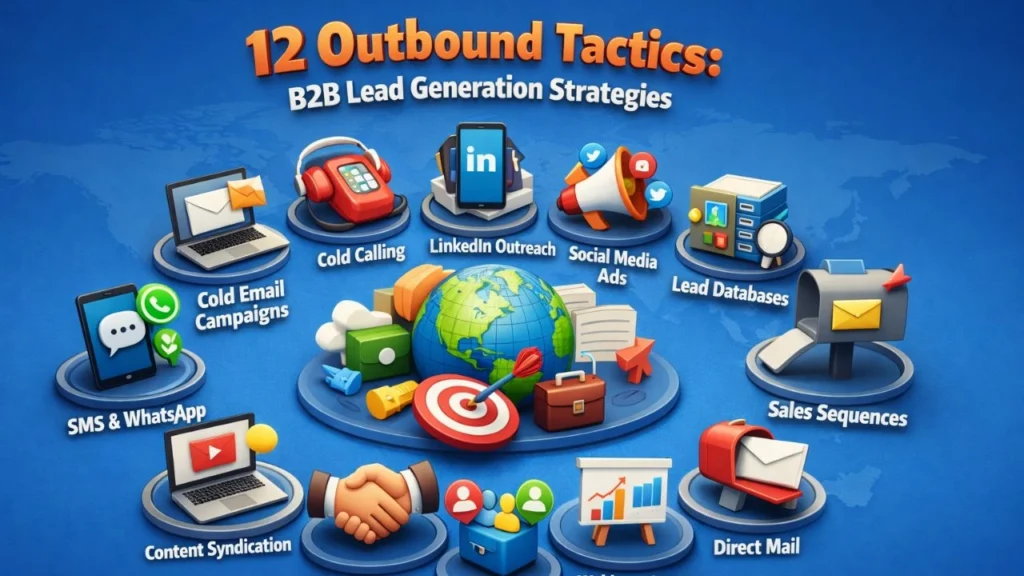
If you want a stronger pipeline, faster conversations, and more control over who enters your funnel, outbound still deserves your attention. The difference is that today’s outbound is not about sending the same message to hundreds of people and hoping for replies. It is about relevance, timing, clarity, and consistency.
That is why smart b2b lead generation strategies continue to play a major role in modern growth. When you use the right outbound tactics, you can reach decision makers directly, start qualified conversations sooner, and create a predictable path to revenue. For many businesses, that level of control is hard to ignore.
In this guide, you will learn 12 practical outbound tactics that can improve your Lead Generation results without making your brand sound pushy or generic. These tactics are built for businesses that want to grow with more intent, more precision, and better quality leads.
If you want to strengthen your pipeline with a more focused outbound plan, Book Discovery Call.
Table of Contents
What are b2b lead generation strategies?
b2b lead generation strategies are the methods businesses use to attract, identify, and engage potential buyers in other businesses. In outbound marketing, that means reaching out proactively through channels like email, LinkedIn, calls, retargeting, and account based campaigns to create sales opportunities.
In simple terms, b2b lead generation strategies help you put your offer in front of the right people before they start searching for you. That matters because not every qualified buyer will discover your business through organic channels alone. Sometimes, you need to initiate the conversation.
Outbound works especially well when you sell to a specific niche, offer a high value service, or need to reach decision makers directly. It gives you more control over targeting, messaging, and campaign pace, which makes it an essential part of a balanced Lead Generation approach.
Why outbound still matters in modern Lead Generation?
Many marketers focus heavily on inbound, and that makes sense. Organic traffic, SEO, and content all have long term value. But outbound still plays a critical role because it helps you create momentum faster.
Here is why outbound remains effective:
- You can target specific industries, roles, or company sizes
- You can test messaging quickly
- You can generate meetings without waiting for search traffic to grow
- You can support account based marketing with direct outreach
- You can build pipeline more predictably
The best b2b lead generation strategies do not treat outbound and inbound as rivals. They use both together. Inbound builds trust over time, while outbound helps you create opportunities now.
How to prepare before launching outbound campaigns?
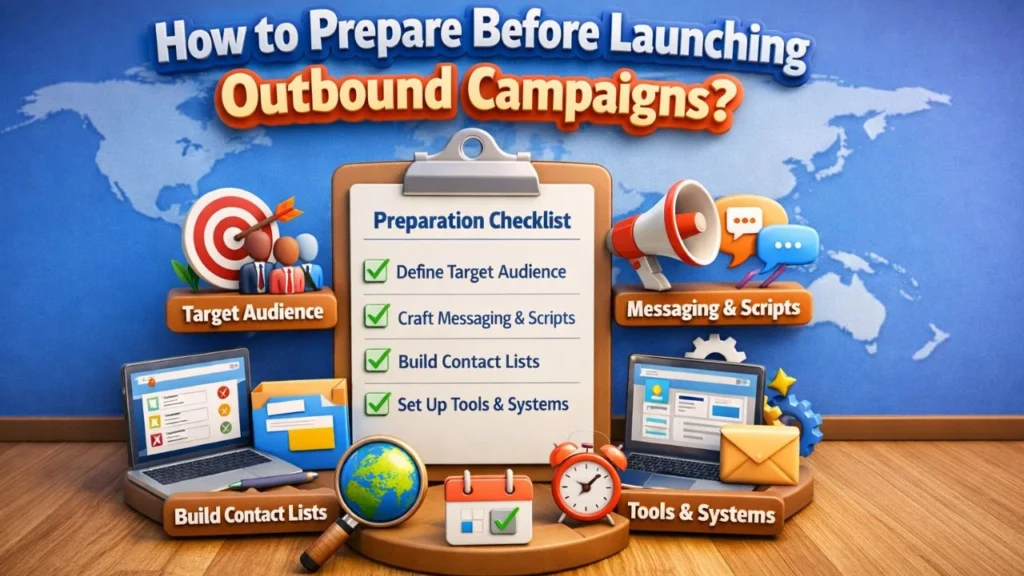
Before you start applying any outbound tactic, you need a solid foundation. Even the best b2b lead generation strategies can underperform if your targeting is weak or your message is unclear.
Define your ideal customer profile
Know exactly who you want to reach. That includes industry, company size, geography, revenue range, team structure, and decision maker role. When your targeting is broad, your outreach becomes vague.
Clarify the pain point you solve
Your prospects care about outcomes, not your internal process. Speak clearly about the challenge you solve and the result you help them achieve.
Segment your audience
Different prospects need different messages. A founder, a sales head, and a marketing manager may all care about growth, but not in the same way. Strong b2b lead generation strategies always account for that.
Align your sales and marketing language
Your emails, landing pages, sales calls, and offer should sound connected. If your outreach makes one promise and your website says something else, trust drops quickly.
Track the right metrics
Do not focus only on open rates. Measure replies, booked meetings, qualified opportunities, and revenue impact. That is how Lead Generation becomes measurable and useful.
1. Build a highly targeted prospect list
Every outbound campaign starts with the list. If the list is poor, the results will be poor. That is why one of the most important b2b lead generation strategies is simply improving who you contact.
Focus on quality over volume. Look for fit based on company type, role, buying potential, and business need. A smaller, sharper list often outperforms a large generic one because your message can be more relevant.
When you know exactly who you want to reach, every other tactic becomes more effective.
2. Personalize cold email outreach
Cold email still works, but only when it feels relevant. People can spot a template instantly, and they usually ignore it. Personalized email is one of the most reliable b2b lead generation strategies because it allows you to connect your offer to a real business problem.
Keep your outreach focused on three things:
- who the prospect is
- what challenge they may be facing
- why your solution is worth a conversation
Do not overload the email with features. Keep it clear, brief, and outcome driven. The goal is not to close the deal in the inbox. The goal is to start a conversation.
3. Use LinkedIn for direct engagement
LinkedIn gives you a natural way to connect with decision makers before you pitch them. You can engage with their content, learn how they position their business, and make your outreach feel more informed.
Among modern b2b lead generation strategies, LinkedIn works well because it combines visibility, credibility, and direct access. Instead of sending a message immediately after connecting, spend some time warming up the interaction. Thoughtful engagement often improves response rates later.
When people see that you understand their space, your message feels less like an interruption and more like a relevant opportunity.
4. Create multi touch follow up sequences
Many outbound campaigns fail because they stop too early. A prospect may see your first message, get busy, and forget to respond. That does not mean the opportunity is gone.
That is why follow up is one of the most practical b2b lead generation strategies you can implement. A strong sequence may include:
- an initial email
- a follow up with a clearer angle
- a LinkedIn touchpoint
- a short call
- a final value based follow up
Consistency matters. Politeness matters too. You are not chasing people. You are creating multiple chances for the right prospect to respond when the timing is better.
5. Add cold calling with better context
Cold calling sounds old school to some teams, but it still works when it is done with context. If someone has opened your email, viewed your profile, or engaged with your content, a call can be the right next step.
The best b2b lead generation strategies do not rely on random calls. They use signals. That makes the call more timely and more relevant.
Keep the conversation simple. Focus on whether the problem is worth discussing, not on forcing a meeting in the first thirty seconds.
6. Run account based outbound campaigns
If your deal size is high or your sales cycle is complex, account based outreach can be one of the strongest b2b lead generation strategies available. Instead of chasing individual leads randomly, you focus on a specific list of target accounts and tailor your messaging to each one.
This approach works well because it aligns sales and marketing around the same accounts. You can combine email, calls, LinkedIn, retargeting, and landing pages in a coordinated way.
It takes more effort, but it often produces higher quality conversations.
If you want help building an account focused outbound plan, Book Discovery Call.
7. Use intent signals to prioritize outreach
Not all prospects are equally ready. Some are actively exploring solutions, while others are still unaware of the problem. One of the smartest b2b lead generation strategies is to prioritize outreach based on buying signals.
These signals may include:
- repeated website visits
- content engagement
- job changes
- new funding
- hiring patterns
- technology adoption
- competitor comparisons
Intent based outreach helps you spend time where the odds are better. That improves efficiency and increases the chance of starting a timely conversation.
8. Offer something valuable in the first touch
Outbound works better when your message gives value before asking for time. That value could be a useful insight, a quick audit, a checklist, a benchmark, or a brief recommendation.
This is where many b2b lead generation strategies go wrong. They ask too much too early. When you lead with value, you reduce friction and show that you understand the prospect’s needs.
A small, relevant offer can open the door to a much larger conversation.
9. Write pain point based messaging
Your message should not sound like a company brochure. It should sound like you understand what the prospect is dealing with. That is why pain point based copy remains central to effective b2b lead generation strategies.
Instead of listing what you do, show how your solution connects to a challenge they already recognize. Speak to inefficiency, missed revenue, poor conversion quality, wasted spend, or low response rates if those are the real issues.
When your message reflects the buyer’s reality, it earns more attention.
10. Use social proof carefully
People trust outcomes, patterns, and credibility. You do not need to overload your outreach with claims, but a little proof can make a big difference. Relevant proof supports b2b lead generation strategies because it lowers perceived risk.
That proof might include:
- experience in a specific industry
- a clear process
- measurable improvements
- recognizable problem solving ability
Make it relevant to the prospect. Generic proof is forgettable. Specific proof is persuasive.
11. Retarget engaged prospects
Some prospects click your link, visit your site, or review your offer but never respond. That does not mean they are not interested. It often means they need more time.
Retargeting supports b2b lead generation strategies by keeping your brand visible after the first touch. It helps reinforce your message and keeps you present during longer decision cycles.
This tactic works especially well when paired with email and LinkedIn, because it adds familiarity without requiring another direct message.
12. Measure, test, and improve continuously
Outbound is not something you set up once and leave alone. Strong b2b lead generation strategies improve over time because you keep testing what works.
Review:
- subject lines
- messaging angles
- reply rates
- call outcomes
- meeting quality
- conversion to opportunity
- performance by segment and channel
The goal is not just more activity. It is better performance. Small improvements in targeting, copy, and timing can make a noticeable difference in your overall Lead Generation results.
Common mistakes that weaken outbound performance
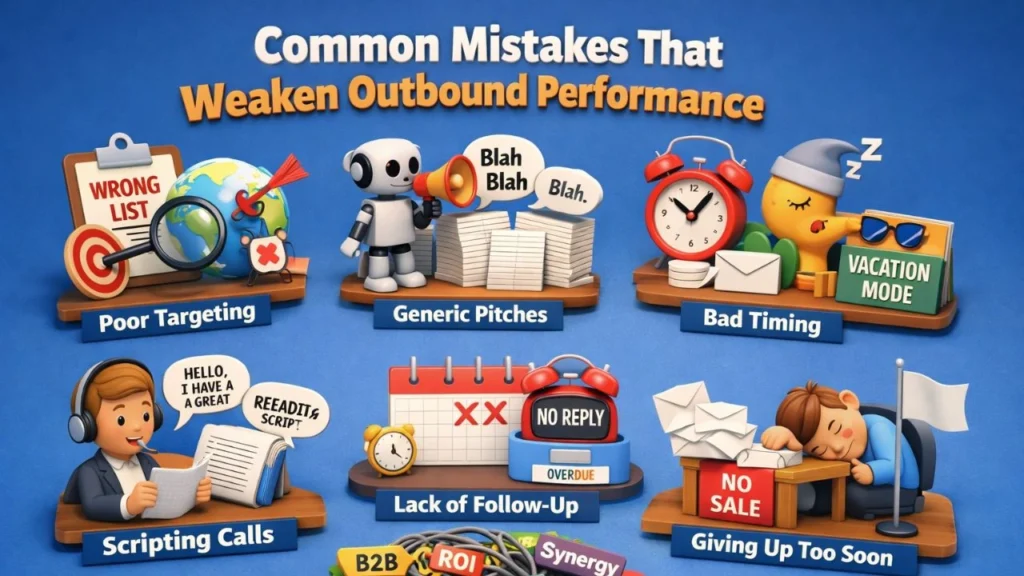
Even the most promising outbound campaign can stall when foundational elements are overlooked. Below is a clearer look at the pitfalls that sabotage performance—and how smart b2b lead generation strategies sidestep them.
| Misstep | Why It Hurts | How to Fix It |
|---|---|---|
| Generic messaging | A one-size-fits-all note feels impersonal and fails to spark curiosity. | Speak your prospect’s language. Reference their pain points, industry context, and success metrics so the outreach feels written “just for me.” |
| Weak targeting | When you pitch the wrong companies or contacts, you burn through time, sender reputation, and ad spend. | Define tight ICP (ideal customer profile) parameters, layer firmographic and intent data, and prioritize accounts that mirror your best customers. |
| Too little follow-up | Most buyers need multiple touches before responding—stopping at email #2 means you never reach the consideration stage. | Build multi-channel sequences that span email, LinkedIn, phone, and retargeting for at least 8–10 touches over 2–3 weeks. |
| Feature-heavy copy | Long lists of capabilities force prospects to translate features into value on their own. | Lead with outcomes: revenue growth, cost savings, risk reduction. Features become proof points, not the hero. |
| No clear CTA | If readers don’t know the next step, inertia wins. | End every touch with a single, specific ask—e.g., “Book a 15-minute discovery call this week.” |
| Ignoring data | Guesswork locks you into tactics that may never work. | Treat every send as feedback. Monitor open, reply, and meeting-set rates; A/B test subject lines, cadences, and offers; and iterate relentlessly. The strongest b2b lead generation strategies evolve through evidence, not hope. |
Address these fundamentals first, and your outbound efforts gain the traction—and the qualified pipeline—they were meant to deliver.
What makes outbound work in 2026 and beyond?
Outbound is changing, but it is not disappearing. What works now is simple to understand:
- precise targeting
- better timing
- stronger relevance
- more human messaging
- channel coordination
- consistent follow up
- data driven optimization
That is what separates average outreach from high performing b2b lead generation strategies. Buyers do not want spam. They want relevance. When your outbound reflects that, results improve.
Final thoughts
The most effective b2b lead generation strategies are not built on volume alone. They are built on clarity, research, timing, and persistence. If you want better outbound results, start with the basics. Know your audience, sharpen your message, follow up with intent, and keep refining your process.
You do not need to apply every tactic at once. Start with a few that match your business model, measure what happens, and build from there. Over time, your outbound system becomes more efficient, more targeted, and more profitable.
If you are ready to improve your outbound approach and turn more outreach into qualified conversations, Book Discovery Call.
Frequently Asked Questions
What are b2b lead generation strategies?
b2b lead generation strategies are methods used to attract and engage potential business buyers. These strategies can include outbound channels like cold email, LinkedIn outreach, calls, retargeting, and account based campaigns.
Why are b2b lead generation strategies important for outbound marketing?
They help you reach the right prospects directly, create predictable pipeline opportunities, and reduce reliance on passive traffic sources alone.
Which outbound channel is best for Lead Generation?
There is no single best channel for every business. Email, LinkedIn, calls, and retargeting can all work well when they are aligned with the right audience and offer.
How many follow ups should you send in outbound campaigns?
Most businesses benefit from a structured follow up sequence with several touchpoints. A single message is rarely enough to judge prospect interest.
Is cold email still effective in 2026?
Yes, cold email still works when it is personalized, relevant, and supported by a clear value proposition.
How can I improve response rates in outbound outreach?
Improve list quality, personalize your messaging, lead with value, follow up consistently, and make your CTA clear and easy to respond to.
Are b2b lead generation strategies useful for small businesses?
Yes. Small businesses can use focused outbound outreach to connect with qualified prospects without needing a massive marketing budget.
What metrics should I track in Lead Generation campaigns?
Track reply rate, meetings booked, conversion to opportunity, pipeline contribution, and revenue influence to understand what is actually working.
How do you identify the right audience for outbound B2B campaigns?
The right audience is identified by studying industry, company size, decision maker roles, business challenges, and purchase intent. A well defined audience improves relevance and increases the chance of getting qualified replies.
What is the difference between lead quantity and lead quality in outbound marketing?
Lead quantity refers to the number of contacts generated, while lead quality refers to how closely those contacts match your ideal buyer profile. In B2B, quality matters more because better fit leads usually convert faster and more profitably.
How long does it take to see results from outbound lead generation?
Results can vary based on your industry, offer, targeting, and outreach quality. Some campaigns generate replies within days, while others need a few weeks of testing and follow up before producing steady results.
Should outbound messaging be different for startups and enterprise companies?
Yes, messaging should reflect the buyer’s size, priorities, and buying process. Startups may respond better to speed and flexibility, while enterprise buyers often expect more structure, credibility, and risk reduction.
How important is timing in outbound lead generation?
Timing is very important because even a strong message can fail if it reaches the prospect at the wrong moment. Good timing improves open rates, replies, and meeting acceptance.
Can outbound lead generation work for service based businesses?
Yes, service based businesses can benefit greatly from outbound when they target the right industries and position their services around clear business outcomes. It works especially well when the offer solves a specific problem.
What kind of offer works best in outbound campaigns?
Offers that reduce friction tend to perform better. Strategy calls, mini audits, quick consultations, benchmark reports, and practical recommendations often work well because they make it easier for prospects to say yes.
