If you want your Shopify store to attract more qualified visitors, better rankings alone are not enough. You need pages that are easy to understand, simple to crawl, useful for shoppers, and clear enough for search engines, AI search tools, and voice assistants to interpret with confidence. That is where shopify seo optimization becomes valuable.
A well planned shopify seo optimization approach helps your store appear for product searches, category searches, buyer questions, and comparison queries. It also improves how your pages are read by modern search systems that look for context, structure, direct answers, and helpful information. When your store content matches real intent, your traffic quality improves and your chances of earning sales become stronger.
If you are looking for professional support, you can also explore our Shopify SEO service for deeper ecommerce growth and better organic visibility.
Table of Contents
Why Shopify SEO Optimization Matters
Shopify makes it easy to launch an online store, but ranking well requires more than a good design and a few product pages. Strong shopify seo optimization depends on how clearly your store presents information, how well your pages match intent, and how easily search systems can connect your products with what people are searching for.
Many Shopify stores struggle because they publish thin category content, repeated product descriptions, weak metadata, and limited internal links. These gaps reduce visibility and make it harder for your pages to stand out in search results, AI summaries, and spoken answers. A focused shopify seo optimization strategy helps fix these issues and improves your chances of attracting more qualified store traffic.
With strong shopify seo optimization, you can improve:
- Product discoverability
- Collection page relevance
- Topical depth across your site
- User experience and page engagement
- Rich result eligibility
- Voice search compatibility
- AI search readability
This is not just about ranking for one keyword. It is about creating an ecommerce site that answers questions, supports buying decisions, and builds trust through every page.
Main benefits of Shopify SEO optimization
| Benefit | Why It Matters | Expected Outcome |
|---|---|---|
| Better keyword targeting | Helps pages match buyer intent | More qualified visitors |
| Improved site structure | Makes crawling and navigation easier | Better indexation and user flow |
| Stronger product page optimization | Improves relevance for commercial searches | More organic clicks |
| Structured data implementation | Helps search engines understand products better | Richer search appearance |
| Content for user questions | Supports AI, AEO, and voice search visibility | More informational reach |
Core Benefits of Shopify SEO Optimization
A strong SEO foundation can support your store in many ways. It helps you reach users at different stages of the buying journey, from early research to final purchase.
Better quality traffic
Organic visitors are often more relevant because they arrive through specific product needs, category searches, or informational queries. This means the traffic coming to your store is more likely to align with what you actually sell.
Stronger page relevance
When each collection, product, and blog page has a clear purpose, search engines can understand which page should rank for which query. This improves visibility and reduces internal competition between your own pages.
Improved user experience
Shopify seo optimization is closely connected with usability. Clear navigation, clean page structure, readable content, and fast loading pages make it easier for shoppers to move through your store with confidence.
More opportunities in AI and voice search
Modern search systems prefer content that is direct, well structured, and easy to summarize. If your content answers questions clearly and provides strong context, your store can become more visible across AI search experiences and voice driven results.
1 Build a Clear Site Structure
Your store structure shapes how both users and search engines move through the site. A clean hierarchy makes it easier to discover important pages and understand how categories connect with products.
What to focus on
- Keep main collections easy to reach
- Group related products under logical categories
- Avoid creating too many unnecessary collection layers
- Make sure the navigation reflects real buying intent
A simple structure strengthens crawl flow and helps your category pages become more useful landing pages.
2 Target Search Intent Through Keyword Research
Keyword research should go beyond search volume. Your goal is to understand what people want at each stage of their journey. Some users are ready to buy, while others want guidance before making a decision.
Types of intent to cover
- Informational queries
- Commercial comparison queries
- Transactional buying queries
- Brand related queries
- Question based voice style queries
When planning keywords, mix broad product themes with detailed long tail searches. This helps your store capture both reach and precision.

3 Optimize Collection Pages for Commercial Visibility
Collection pages are often some of the strongest ranking assets on a Shopify store. As part of shopify seo optimization, they can target broad buying queries and connect users with multiple products from one entry point.
How to improve them
- Write unique collection introductions
- Add supporting text that explains product types, use cases, or selection factors
- Use clear headings and subheadings
- Include keyword variations naturally
- Link to related collections and blogs where relevant
Collection pages should not feel empty. They should guide the shopper while also giving search engines enough content to understand page relevance, which is an important part of shopify seo optimization.
4 Strengthen Product Page Content
Product pages should answer practical questions, reduce uncertainty, and support decision making. Thin descriptions often hold stores back because they do not provide enough useful content.
What strong product pages include
- Original product descriptions
- Clear features and benefits
- Material, size, use, or care details where relevant
- Short answer sections for common questions
- Trust elements such as shipping or return information
Avoid copying manufacturer descriptions. Original content helps your products become more useful and more distinctive in organic search.
5 Improve Titles and Meta Descriptions
Your title and description shape how your page appears in search results. They influence click quality and help search engines understand page focus.
Best practices
- Place the main topic near the beginning
- Keep the title clear and readable
- Write descriptions that match search intent
- Reflect the value of the page honestly
- Avoid repetitive wording across similar pages
Well written metadata supports stronger click performance and better relevance signals.
6 Use Strong Headings and On Page Structure
A good heading structure makes the page easier to scan, easier to understand, and easier to summarize. This supports both human readers and machine interpretation, which also strengthens shopify seo optimization.
What to include
- One clear H1 for the page
- Logical H2 sections
- Supporting H3 sections where needed
- Short paragraphs that stay focused on one idea
- Lists for quick readability
This style also improves the chance of your content being used in answer based search features.
7 Add Helpful Structured Data
Structured data gives search systems extra context about your products and pages. It helps clarify what the page is about and can improve how listings appear in search.
Pages that benefit from structured data
- Product pages
- Collection pages where applicable
- Review related sections
- FAQ sections
- Breadcrumb navigation
This added clarity can support product understanding and help your store appear more complete in search environments where context matters.
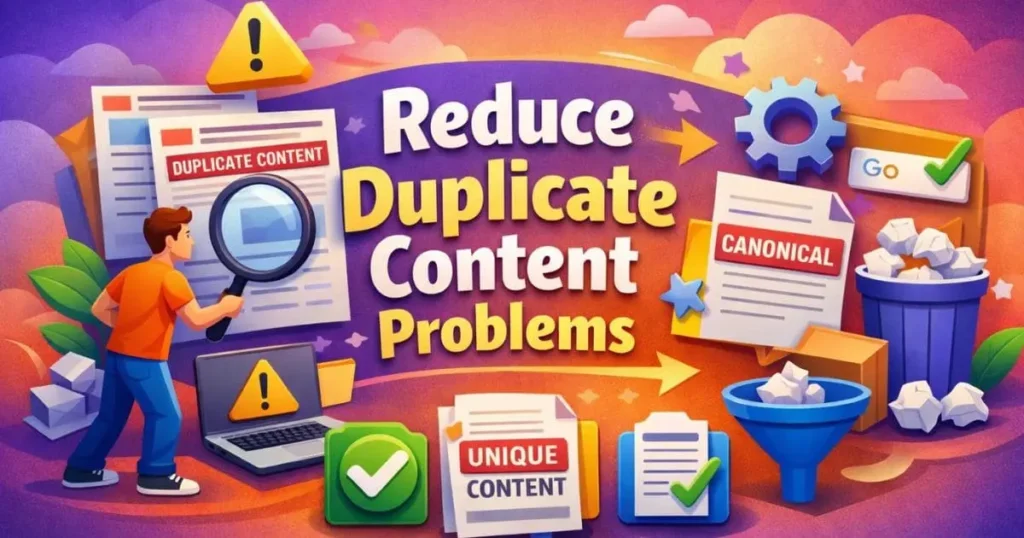
8 Reduce Duplicate Content Problems
Duplicate content is common in ecommerce. Similar products, collection filters, variant pages, and reused descriptions can create confusion.
Ways to reduce duplication
- Write original text for key collections and products
- Review indexable filtered pages
- Keep category targeting distinct
- Improve internal linking so page roles are clear
- Make sure each page serves a unique purpose
When every important page offers something different, your site becomes easier to rank and easier to understand.
9 Improve Technical SEO
Technical quality supports visibility in shopify seo optimization. Even strong content can struggle if search engines face obstacles while crawling, indexing, or understanding key Technical SEO elements across the store.
Technical areas to review
- Mobile usability
- Page loading speed
- Crawl access
- Indexation signals
- Broken links
- Image optimization
- Internal redirects
Technical improvements do not replace content, but they help your content perform better.
10 Optimize Images for Search and Usability
Images matter in ecommerce because they influence both rankings and user trust. They should support page speed, accessibility, and search understanding.
Image optimization checklist
- Use descriptive file names
- Add relevant alt text
- Compress images for faster loading
- Keep image quality clean and useful
- Align visuals with the product and page theme
This can help your content become more useful in image search and improve the page experience overall.
11 Create Supporting Blog Content
Blog content helps Shopify stores rank for questions, guides, comparisons, and educational topics that support product discovery. It also strengthens shopify seo optimization by building topical depth around your core categories.
Content types that work well
- Buying guides
- Product care content
- Comparison posts
- Seasonal shopping advice
- Problem solving topics
- Question led articles
Informational content also creates natural internal linking opportunities to commercial pages and service pages such as shopify seo optimization.
12 Build a Strong Internal Linking System
Internal linking helps search engines understand page relationships and supports user navigation across the store. It also spreads authority from stronger pages to pages that need more visibility.
Where internal links should go
- From blog posts to collection pages
- From blog posts to product categories
- Between related collection pages
- From helpful guides to service pages
- From high traffic pages to conversion focused pages
Anchor text should feel natural and specific. It should help the reader understand what they will find after clicking.
SEO, GEO, AEO, and voice search alignment
| Area | What to Optimize | Why It Helps |
|---|---|---|
| SEO | Titles, headings, internal links, crawlability | Improves rankings and indexation |
| GEO | Entity clarity, contextual depth, structured information | Helps generative systems understand page meaning |
| AEO | Direct answers, FAQs, concise definitions | Improves answer extraction potential |
| Voice Search | Conversational queries, short answers, mobile friendly pages | Supports spoken search behavior |
13 Optimize for AI Search and Voice Search
Search is changing. People now use conversational queries, longer questions, and AI tools that summarize pages rather than only listing them. Your content should be ready for this shift.
How to make content more compatible
- Use natural language in subheadings
- Answer important questions clearly
- Add concise explanations after each major heading
- Use entity rich wording that makes context obvious
- Keep content easy to scan and summarize
Voice search often favors direct, simple answers. AI search tools prefer pages with strong structure, clarity, and complete context. If your content is vague or scattered, it becomes harder to extract useful answers.
14 Build Trust and Authority
Authority matters in ecommerce because buyers want confidence before making a purchase. Search systems also look for signals that suggest reliability and subject depth.
Ways to strengthen trust
- Publish accurate and complete product details
- Keep policies clear and easy to find
- Use professional page design and navigation
- Earn relevant mentions and links
- Maintain content freshness where needed
Strong trust signals help both rankings and conversions because they support confidence at every stage of the visit.
15 Measure, Refine, and Expand
Shopify seo optimization results improve when you treat your store as an active system rather than a fixed website. Growth comes from reviewing performance, improving weak areas, and expanding what works.
Metrics worth tracking
- Organic clicks
- Ranking growth
- Indexed page count
- Collection page performance
- Product page engagement
- Conversion quality from organic traffic
Do not only track traffic volume. Look at the pages bringing users in, the intent behind those visits, and how well those pages support business goals.
Practical Strategy for Better Store Growth
A successful store does not depend on one page or one keyword. It grows when technical health, content quality, page relevance, and internal linking all support each other.
A simple strategy flow
| Page Type | Main SEO Goal | Recommended Action |
|---|---|---|
| Homepage | Brand visibility | Clear positioning, strong internal links |
| Collection pages | Rank for category searches | Unique content, optimized headings, schema support |
| Product pages | Capture commercial intent | Original descriptions, FAQs, review and product data |
| Blog posts | Answer informational queries | Long tail content, question led sections, internal links |
| Service page | Drive qualified leads | Strong conversion copy and relevant supporting links |
Start with technical cleanup
Make sure your store can be crawled, loaded, and understood without friction.
Next improve commercial pages
Work on collection and product pages first because they usually have the strongest revenue value.
Then publish support content
Use blog content to answer broader questions, build topical authority, and link users toward buying pages.
After that strengthen internal links
Guide users from educational content into category and product pages with natural, useful anchors.
Finally review performance often
Refresh underperforming pages, improve weak content, and expand successful topics into clusters.
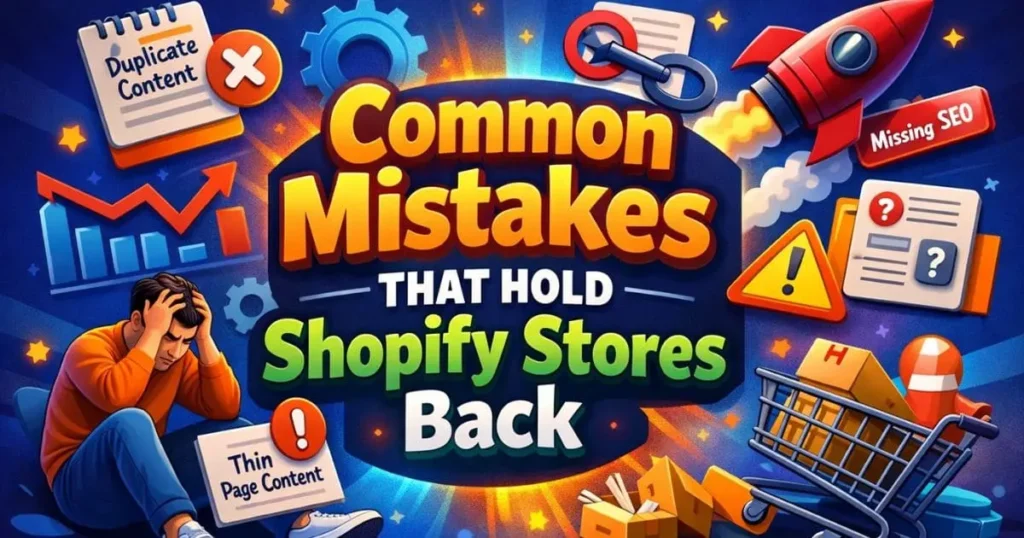
Common Mistakes That Hold Shopify Stores Back
Even a visually appealing store can lose organic opportunities if the basics of shopify seo optimization are weak. Many common issues appear again and again, and without proper shopify seo optimization, those gaps can limit rankings, traffic, and overall store visibility.
Frequent problems
- Thin collection pages with little context
- Repeated product descriptions across multiple items
- Weak internal linking
- Missing FAQ style content
- Unclear heading structure
- Overuse of the same keyword
- Ignoring technical improvements
- Publishing content without intent focus
Fixing these issues can create fast improvement because they affect both discoverability and usability.
Conclusion
Shopify growth through search is not based on shortcuts. It comes from clear page structure, useful content, strong internal linking, and consistent technical quality. When these elements work together, your store becomes easier to understand, easier to trust, and easier to discover.
A thoughtful approach to shopify seo optimization helps your store rank for category searches, product searches, buyer questions, and conversational queries. It also improves how your site appears across AI search tools and voice search experiences where clarity and usefulness matter more than ever.
If your goal is to build lasting visibility, focus on page quality, intent alignment, and structure. Over time, these improvements can create stronger rankings, better traffic quality, and more meaningful store growth. For brands that want dedicated support, our Shopify SEO service can help improve organic performance with a focused ecommerce strategy.
FAQ
Q: What is shopify seo optimization?
Ans: Shopify SEO optimization is the process of improving a Shopify store so it can rank better in search engines and attract more relevant visitors. It includes work on content, technical setup, internal links, metadata, images, and page structure.
Q: Why are collection pages important for Shopify SEO?
Ans: Collection pages help target broader commercial searches. They allow you to rank for product category terms and guide shoppers toward relevant products from one useful landing page.
Q: How can I increase traffic to my Shopify store organically?
Ans: You can increase organic traffic by improving collection pages, writing original product content, publishing helpful blog posts, strengthening internal links, adding clear metadata, and keeping your store technically healthy.
Q: Does blog content help ecommerce SEO?
Ans: Yes. Blog content helps you target informational and question based queries. It builds topical depth, supports internal linking, and brings more users into your store through earlier stage searches.
Q: How does Shopify SEO support AI search visibility?
Ans: AI search tools look for content that is clear, useful, and easy to summarize. Shopify SEO supports this by improving structure, context, relevance, and direct answer quality across your pages.
Q: Is voice search important for Shopify stores?
Ans: Yes. Voice search often uses longer and more conversational queries. If your content answers questions naturally and clearly, your store can become more useful for voice based discovery.
Q: How often should I update Shopify SEO content?
Ans: You should review performance regularly. Update weak pages, improve content depth, refresh metadata when needed, and expand successful topics into related pages to keep building visibility over time.
Q: Should I use the same keyword on every page?
Ans: No. Each page should have a distinct focus. Use the main term where it fits naturally, but rely on related phrases and supporting topics so your pages remain clear and balanced.