In today’s digital world, content is no longer limited to text. Visual elements have become an essential part of how users interact with online information. When people browse websites, they often look for images, infographics, and visual explanations that help them understand information quickly. Because of this shift in user behavior, visuals now play a major role in Search Engine Optimization.
Search engines aim to deliver the most useful and relevant content to users. That includes not only written information but also visual content that enhances the overall experience. This is where Images in SEO become highly valuable. When images are optimized properly, they help search engines understand the context of a page, improve page engagement, and contribute to better rankings.
Modern search algorithms also consider performance, accessibility, and visual relevance when evaluating a webpage. Properly structured optimized images can improve loading speed, enhance mobile experience, and support stronger search visibility. At the same time, visuals now influence advanced search technologies such as AI powered results, voice search responses, and visual search tools.
Another important aspect is the relationship between image optimization and Technical SEO. Technical elements such as structured data, image sitemaps, and responsive design ensure that search engines can properly crawl and index visual assets. Without these technical elements, even high quality visuals may not contribute to search performance.
Additionally, the rise of artificial intelligence has introduced new approaches to digital visibility. Concepts like Generative Engine Optimization focus on how content appears in AI generated answers and search summaries. Visual content helps AI systems interpret topics more accurately, which makes image strategy even more important.
Visual assets also support broader digital marketing strategies. For example, a Video Marketing Agency often relies on strong visuals such as thumbnails, graphics, and preview images to improve video visibility across search platforms.
In this guide, we will explore how images can be used strategically in SEO. You will learn how visuals influence search rankings, how to create optimized visuals, and how to align image strategies with modern search technologies.
Table of Contents
What Are Images in SEO?
Understanding the Concept
To understand how visual optimization works, we first need to understand what Images in SEO actually mean. In simple terms, image SEO refers to the process of optimizing visual content so that search engines can easily understand, index, and rank it in search results.
Search engines cannot interpret images in the same way humans do. Instead, they rely on technical signals such as file names, alt text, surrounding content, and structured data to understand what an image represents.
When images are optimized correctly, they become valuable signals that help search engines determine the relevance of a page.
Why Images Matter in Search Engine Optimization?
Images contribute to Search Engine Optimization in several ways. They enhance the readability of content, break up long blocks of text, and help visitors absorb information more effectively.
When readers stay longer on a page because the content is engaging, search engines interpret this behavior as a positive user experience signal. Over time, this can contribute to improved rankings.
Visual content also increases the chances of appearing in image search results, which can generate additional traffic from users who specifically search for images.
How Search Engines Interpret Images
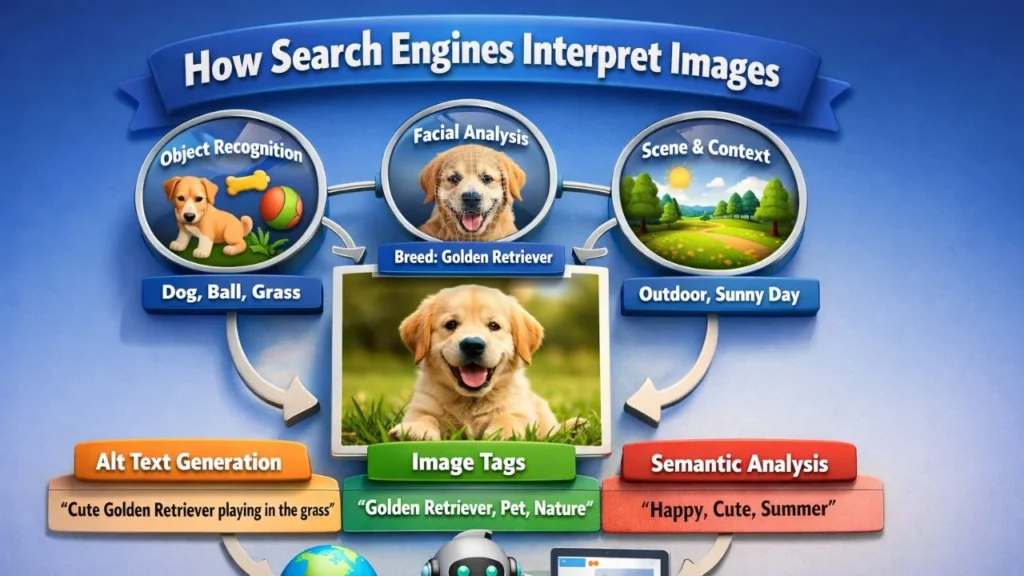
Search engines rely on several elements to understand images.
These include,
- File names that describe the image
- Alt text that explains the visual content
- Captions that provide additional context
- Surrounding text that supports the topic
- Structured data that improves indexing
When these elements work together, search engines gain a clearer understanding of how the image relates to the content.
Role of Optimized Images in Search Engine Optimization
What Are Optimized Images
Before discussing strategies, it is important to understand what optimized images are. These are images that have been prepared in a way that improves performance, accessibility, and search visibility.
Optimized visuals are compressed to reduce file size while maintaining quality. They also include descriptive file names, alt attributes, and responsive dimensions.
Benefits of Using Optimized Images
When properly implemented, optimized images provide several advantages.
- First, they improve website speed. Page loading speed is a critical ranking factor in Search Engine Optimization, and large images can slow down a site significantly.
- Second, they enhance accessibility. Screen readers rely on alt text to explain visual content to users with visual impairments.
- Third, optimized visuals improve user experience by displaying clearly across different devices and screen sizes.
Best Practices for Image Optimization
To create effective visuals, several best practices should be followed:
- Use appropriate image formats such as JPEG, PNG, or WebP depending on the type of visual.
- Compress images to reduce file size without affecting clarity.
- Ensure that dimensions match the design requirements of the webpage.
- Include descriptive alt text that explains the image naturally.
- These practices help search engines and users understand the content more effectively.
How Images in SEO Improve User Experience?
User experience has become a major factor in search rankings. When visitors interact positively with a webpage, search engines interpret that behavior as a sign of quality content.
This is one reason why Images in SEO are so important.
Visual Engagement
Visuals make content easier to understand. Instead of reading long explanations, users can quickly grasp information through diagrams, illustrations, or charts.
This helps readers stay engaged with the content for longer periods.
Improved Content Clarity
Images can simplify complex topics. For example, process diagrams and step by step visuals help users understand instructions more easily.
This type of clarity improves the overall usefulness of the content.
Better Mobile Experience
Mobile browsing continues to grow, and responsive images ensure that visuals display correctly on smaller screens.
When images adapt to different devices, users experience smoother navigation and faster loading pages.
Images in SEO and Technical SEO Integration
Visual optimization is not limited to creative design. It also requires technical implementation. This is where Technical SEO plays a critical role.
Image Sitemaps
An image sitemap helps search engines discover images more easily. It provides structured information about image URLs and their relevance to specific pages.
This improves indexing and increases the chances of appearing in image search results.
Structured Data for Images
Structured data allows search engines to understand additional information about visual content.
For example, schema markup can specify details such as the type of image, the subject it represents, and how it relates to the page.
This supports richer search results and improved visibility.
Lazy Loading and Performance
Lazy loading is a technique that delays the loading of images until they are needed. Instead of loading all images at once, the browser loads them as the user scrolls down the page.
This reduces initial page load time and improves performance.
Strategic Placement of Images in SEO Content
- Simply adding visuals to a page is not enough. The placement of images also matters.
- Effective placement improves readability and supports topic relevance.
Images in Header Sections
Header images often provide the first visual impression of a webpage. They should clearly represent the main topic of the page.
Images in Content Sections
Images placed within content sections help explain key ideas. They also make long articles easier to read.
Infographics and Data Visualizations
Infographics are highly shareable visual assets that summarize information in a concise format. These visuals often attract backlinks and social shares.
Image SEO Best Practices
When optimizing images for search engines, several techniques can improve results.
Keyword Friendly File Names
File names should describe the image clearly. Instead of using generic names like image001, use descriptive names that relate to the topic.
Alt Text Optimization
Alt text explains what an image represents. It should be written naturally and include relevant keywords when appropriate.
This is another place where Images in SEO contribute to stronger contextual signals.
Captions and Context
Captions help readers understand the purpose of an image. They also provide additional context for search engines.
Images in SEO and Generative Engine Optimization
Artificial intelligence is changing how search engines deliver results. Instead of simply listing web pages, search engines now generate summaries and answers.
This evolution has introduced the concept of Generative Engine Optimization.
Role of Visuals in AI Driven Results
AI systems often analyze both text and images to understand a topic. Visual content can reinforce the meaning of written content and improve the accuracy of AI generated summaries.
Multimodal Search
Modern search engines increasingly rely on multimodal understanding, which means they interpret text, images, and other media together.
Because of this, Images in SEO now contribute to how content appears in AI powered results.
Images in SEO for Voice Search Optimization
- Voice search is becoming more common as users interact with digital assistants.
- Although voice responses are spoken, visual content still plays a role.
Visual Support for Voice Answers
- When voice assistants display results on smart devices, they often include supporting visuals.
- Optimized images increase the chances that your content will appear in these results.
Structured Content for Answer Engines
Clear headings, concise explanations, and relevant visuals help answer engines extract useful information from a page.
Images in SEO for Content Marketing
Visual content supports many digital marketing strategies.
Blog Content
Blog articles often include images to explain ideas and improve engagement.
Landing Pages
Landing pages use visuals to guide users toward specific actions.
Infographics
Infographics summarize complex information in an easy to understand format and encourage sharing.
How Video Marketing Agency Strategies Use? Images in SEO?
- Visual marketing strategies often combine multiple forms of media.
- A Video Marketing Agency typically uses images to support video content in several ways.
- Thumbnails attract clicks in video search results.
- Preview images provide context before a video starts playing.
- Supporting graphics enhance visual storytelling.
By integrating images with video content, marketers create a stronger multimedia presence in search results.
Common Mistakes to Avoid When Using Images in SEO
Even well designed visuals may fail to support SEO if certain mistakes occur.
Common issues include:
- Using large uncompressed images that slow down page loading
- Ignoring alt text descriptions
- Using irrelevant visuals that do not match the content
- Uploading images with generic file names
- Forgetting to optimize images for mobile devices
Avoiding these mistakes helps maintain strong performance in search results.
Future Trends of Images in SEO
- Search technology continues to evolve, and visual optimization will become even more important.
- Several trends are shaping the future.
- AI powered visual search tools are becoming more advanced.
- Search engines are improving their ability to interpret image context.
- Augmented reality and interactive visuals are expanding the role of visual content.
As these technologies develop, Images in SEO will play an increasingly important role in digital visibility.
Conclusion
Visual content has become an essential part of modern Search Engine Optimization. Images help search engines understand content, improve user engagement, and support better performance across devices.
When businesses focus on creating optimized images, they improve website speed, accessibility, and overall user experience.
Combining visual optimization with strong Technical SEO ensures that search engines can properly crawl and index visual assets.
At the same time, emerging technologies such as Generative Engine Optimization highlight the importance of visual content in AI driven search results.
Whether you are publishing blogs, designing landing pages, or working with a Video Marketing Agency, strategic use of images can strengthen your overall digital presence.
By focusing on visual relevance, performance optimization, and user experience, you can create content that attracts both search engines and readers.
Frequently Asked Questions
What are Images in SEO?
Images in SEO refer to the process of optimizing visual content so that search engines can understand, index, and rank images effectively within search results.
Why are optimized images important for SEO?
Optimized images improve page speed, enhance accessibility, and provide better context for search engines, which supports stronger search rankings.
How do images support Technical SEO?
Images support Technical SEO through elements such as structured data, image sitemaps, responsive design, and proper indexing.
What is Generative Engine Optimization?
Generative Engine Optimization focuses on optimizing content so that it appears in AI generated search results and summaries.
Do images help voice search results?
Yes. Images support voice search by providing visual context when search results appear on smart devices or digital assistants.