
AI Search Optimization Services: AEO, GEO & Voice Search
Position your brand as the definitive source cited by ChatGPT, Google AI Overviews, Gemini, Perplexity, Siri, and Copilot. We combine Answer Engine Optimization (AEO), Generative Engine Optimization (GEO), entity disambiguation, and structured data into a unified organic discovery strategy.
What is AI Search Optimization?
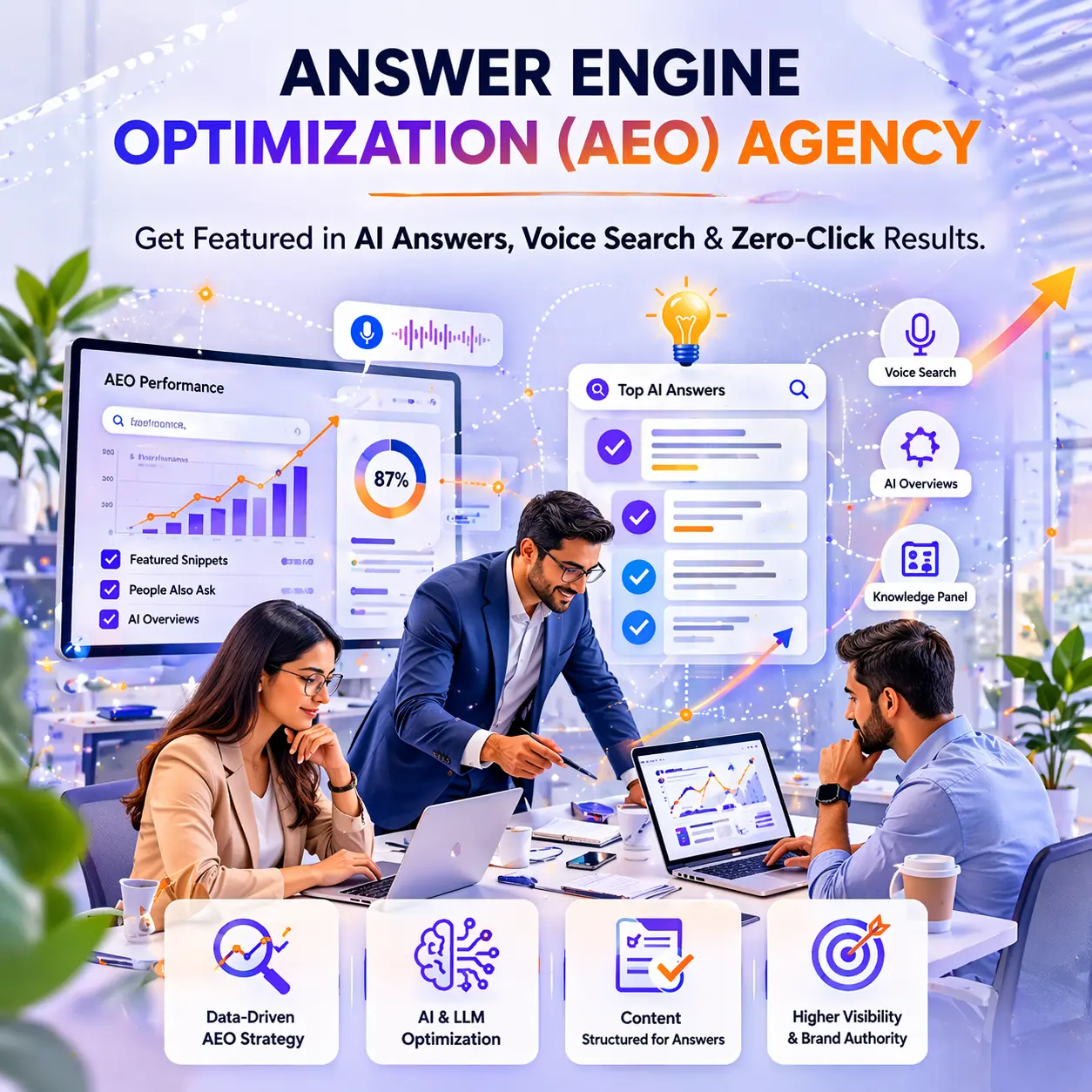
AI Search Optimization is the unified discipline of engineering digital assets so that both traditional search engines and generative Large Language Models (LLMs) understand, index, and cite your brand. By unifying Answer Engine Optimization (AEO), Generative Engine Optimization (GEO), conversational voice queries, and semantic entity mapping, we ensure your business remains visible whether users perform a Google search, ask an AI assistant, or trigger a voice query.
How Does Answer Engine Optimization (AEO) Work?
Structuring website content into concise, direct, machine-extractable answer blocks so search engines and virtual assistants select your brand as the single definitive answer for zero-click queries.
Direct Q&A Content Formatting
We frame headings as natural language questions and place clear, high-density answer definitions directly beneath them for effortless extraction by automated answer engines.
Featured Snippet Position Capture
Optimizing bulleted steps, comparative data tables, and concise definition paragraphs to dominate Position Zero on traditional Google SERPs with our foundational Enterprise SEO Services.
Zero-Click Brand Ownership
Ensuring that even when users do not click through, your authoritative brand is explicitly credited in zero-click answer cards, Knowledge Graph snippets, and generative AI assistant responses.
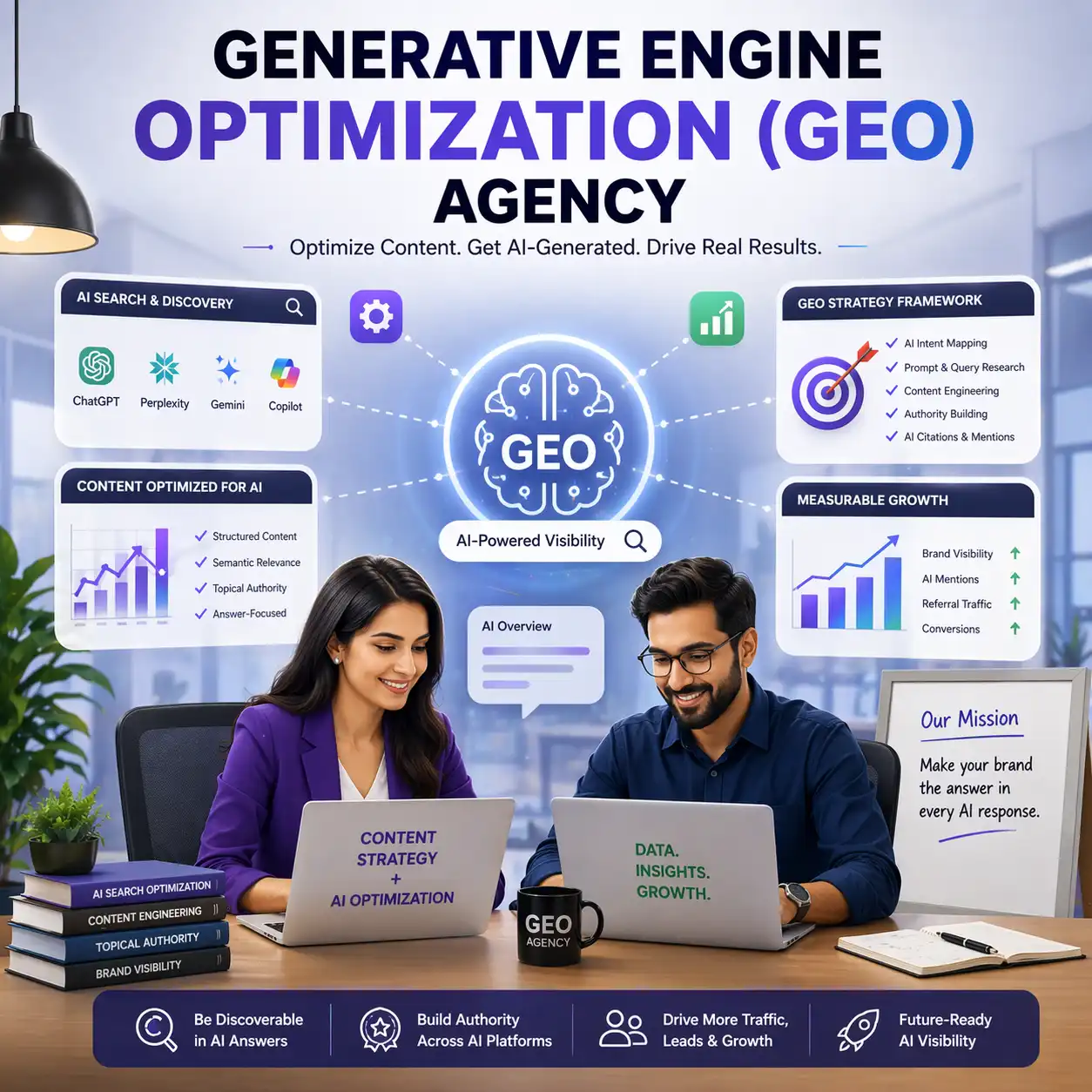
What is Generative Engine Optimization (GEO)?
Optimizing content for Large Language Models (LLMs) such as ChatGPT, Google Gemini, and Perplexity by enriching pages with high Information Gain, verified statistical backing, and clear conceptual depth.
Information Gain Injection
LLMs prioritize sources that offer new, unique data rather than repeating web consensus. We integrate original research, statistics, and domain expertise into your content through a data-driven Content Marketing Strategy.
Multi-Perspective Synthesis
Generative AI models build authoritative answers by synthesizing multiple web perspectives. We structure content into data-backed frameworks, trade-off matrices, and pros/cons comparison analyses.
Authoritative Citation Building
Establishing off-page citation density across trusted industry publications, Knowledge Graph entities, and recognized authoritative reference repositories to measurably strengthen generative model affinity and trust.
How Do Generative AI Models Retrieve Live Web Citations?
How generative models retrieve, ground, and cite external web documents during response synthesis.
Official Google Search Standards for AI Features
Google explicitly states that pages appearing as supporting links or citations in AI features (such as AI Overviews and AI Mode) do not require a separate special technical standard or secret optimization trick. Fundamentally, web pages must be indexed by Google and eligible to appear in standard Google Search with snippets, aligned with official Google Search Central guidance on creating helpful content.
At Dakshraj Enterprise, we avoid presenting GEO as a "secret hack" that forces AI citations. Instead, we build authentic search eligibility by combining core technical SEO, semantic clarity, high-value content, and verified entity trust.
How Retrieval-Augmented Generation Works
When an AI engine generates an answer, it uses RAG to fetch real-time search snippets from indexed web pages. It evaluates candidate documents based on topical relevance, entity authority, freshness, and structural clarity before generating citations.
Earning High-Affinity Citations
By ensuring your pages load rapidly, maintain clear heading structures, pass core indexability requirements, and feature structured entity markup, your content is primed for selection whenever an LLM generates a response in your domain.

Search Optimization Matrix
Comparing Traditional SEO, AEO, GEO, and Voice Search mechanics.
| Optimization Dimension | Traditional SEO | AEO (Answer Engine) | GEO (Generative Engine) | Voice Search |
|---|---|---|---|---|
| Primary Surface | Google SERP Blue Links | Featured Snippets & Position Zero | ChatGPT, Gemini, Perplexity, AI Overviews | Siri, Alexa, Google Assistant |
| Target User Query | Short-tail keywords (2-3 words) | Direct Q&A questions (Who, What, How) | Complex, multi-layered prompts | Conversational spoken sentences |
| Content Structure | Long-form articles with H2/H3 tags | 40-60 word concise answer blocks | Information gain, stats & entity depth | Audio-friendly speakable summaries |
| Key Metadata Layer | Title Tags & Meta Descriptions | FAQPage & HowTo JSON-LD | SameAs Wikidata & Service Schema | Speakable Schema Markup |
How Do You Optimize for Google AI Overviews & AI Mode?
Ensuring your domain ranks prominently inside Google's AI-generated overview panels and conversational AI search interfaces.
Overview Snippet Alignment
Structuring paragraphs into clear 40–60 word answer units that map directly to common multi-part search intents evaluated by Google AI Overviews.
AI Mode Multi-Turn Readiness
Preparing semantic content for multi-turn follow-up questions and conversational refinements as users interact with Google's interactive AI search mode and Overviews.
Indexability & Snippet Health
Maintaining robust robots directives, canonical tags, mobile usability, and speed so Google's crawlers smoothly index and reference your pages.
How Does Conversational & Voice Search Optimization Work?
Capturing natural language, spoken queries from Apple Siri, Google Assistant, Amazon Alexa, and mobile voice search.
Natural Phrasing Targeting
Voice queries are longer and more conversational than typed searches. We optimize for complete spoken questions (Who, What, Where, How, Best).
Speakable Schema Integration
Deploying structured `Speakable` JSON-LD schema markup to explicitly highlight audio-friendly summary text for conversational text-to-speech voice assistants like Siri and Alexa.
Hyper-Local Voice Intent
Capturing high-intent "near me" and localized conversational searches with structured location schema, supported by our specialized Mobile Marketing framework and Google Business Profile data.
Why is Entity Optimization Vital for AI Search Visibility?
Establishing your brand, executives, and services as unambiguous semantic entities in Google's Knowledge Graph and major AI training corpora.
Knowledge Graph Linkage
Linking your brand entity using `sameAs` attributes to authoritative sources like Wikidata, Wikipedia, Crunchbase, and supported by our Online Reputation Management desk.
Semantic Entity Disambiguation
Eliminating search algorithm confusion around your brand entity, core offerings, and key personnel to effectively prevent AI hallucinations and brand misattribution by generative LLMs.
Topical Ecosystem Authority
Building interconnected content clusters that demonstrate deep E-E-A-T (Experience, Expertise, Authoritativeness, Trustworthiness) across core industry verticals.
Which Structured Data Schemas Drive AI & Voice Citations?
Feeding search engines and AI parser bots standardized, machine-readable metadata aligned with official Schema.org structured data standards.
Comprehensive Schema Stack
Deploying fully validated, machine-readable Schema.org JSON-LD metadata layers built manually or via our free interactive Schema Generator Tool for seamless generative AI discovery:
- Service Schema: Explicitly defining service scope, area served, and provider entities.
- FAQPage Schema: Providing explicit Question and Answer nodes for featured snippets.
- Article & TechArticle Schema: Defining author, publisher, and main entity metadata.
- Organization & Brand Schema: Establishing logo, founders, and `sameAs` entity links.
- Speakable Schema: Marking voice-ready content segments for Siri & Google Assistant.
Technical Validation & Maintenance
We continuously validate all JSON-LD code blocks against Google Rich Results standards and Schema.org specifications to prevent syntax errors, missing required properties, or broken entity nodes:
- Rich Results Test Audits: 100% error-free validation in Google Search Console and Schema.org tools.
- Entity Disambiguation: Linking official Wikipedia, Wikidata, and Crunchbase URI entities.
- Dynamic Schema Injection: Server-side streaming of structured JSON-LD to optimize crawl budget.
- Automated Health Monitoring: Real-time monitoring to catch missing schema properties before indexing.
- Free Schema Generator Access: Built-in integration with our free Schema Generator Tool.
How Do You Measure GEO & AEO Performance ROI?
Tracking visibility, citation frequency, and business impact across AI-driven discovery channels.
Generative AI Citation Frequency
Monitoring how often your domain is cited across ChatGPT, Gemini, Claude, and Perplexity for targeted query sets.
AI Overview Impression Share
Tracking zero-click panel occurrences and link placement positions inside Google AI Overviews and AI Mode.
Conversational Pipeline ROI
Attributing qualified leads and pipeline revenue back to zero-click answers, LLM referrals, and voice search touchpoints.
Test Your Site's AI Search Readiness Score
Instantly analyze your website's schema layers, entity signals, and RAG citation compatibility using our free AI Search Readiness Checker.
2026 AI Search Visibility Benchmark Study
Our research desk audited 150 enterprise B2B and eCommerce domains across Google AI Overviews, ChatGPT Search, Gemini, and Perplexity. Here are the empirical findings on what drives LLM citations.
SameAs Disambiguation
Of domains cited natively in ChatGPT and Perplexity had verified sameAs JSON-LD links linking their organization entity to Wikidata or Crunchbase.
Information Gain Yield
Pages featuring unique empirical statistical data achieved 3.4× higher citation frequency in Google AI Overviews compared to regurgitated summary posts.
Answer Block Density
The optimal text length for zero-click voice assistant extraction (Apple Siri & Google Assistant) averaged 42 words placed immediately under H2 question headers.

Frequently Asked Questions
Common questions about Answer Engine Optimization (AEO), Generative Engine Optimization (GEO), and AI Search Optimization.
Ready to Own Your Space in AI Search?
Schedule a comprehensive AI Search Audit. We'll evaluate your brand's presence across ChatGPT, Gemini, Perplexity, Google AI Overviews, and Voice Search.