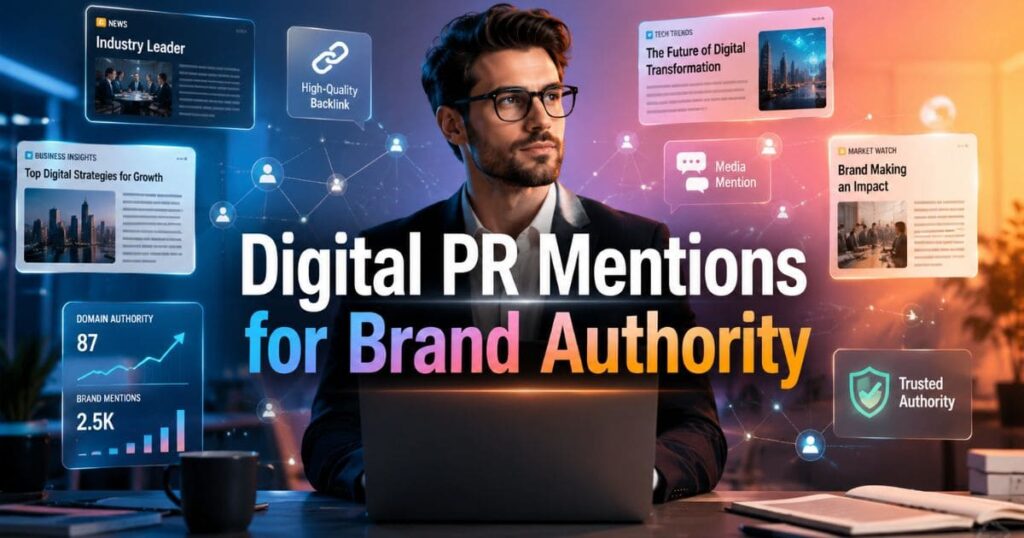
Brand authority is no longer built only through website content, service pages, or paid visibility. Today, people trust a brand when they see it being discussed, quoted, referenced, and recommended across credible online spaces. This is where digital PR mentions become important.
A mention can appear in an industry article, news story, expert roundup, interview, podcast transcript, local publication, research summary, or trusted blog. It may include a backlink, but even when it does not, it can still help people and search engines understand that the brand is part of a wider conversation.
For businesses that want stronger visibility, these mentions can support trust, search performance, referral interest, and long term recognition. They also help build a stronger connection between a brand, its services, and the topics it wants to be known for.
Table of Contents
What Are Digital PR Mentions?
Digital PR mentions are online references to a business, founder, expert, service, product, report, quote, or opinion on a third party platform. These references may appear in news websites, niche blogs, interviews, social discussions, podcasts, online magazines, or industry reports.
Some mentions include clickable links. Others only mention the brand name. Both types can be useful when they come from relevant and trusted sources.
Linked Mentions
A linked mention includes a clickable link to the website. This can send referral traffic and may also support search visibility when the linking source is relevant and trustworthy.
Unlinked Mentions
An unlinked mention does not include a clickable link. It still has value because it shows that people are talking about the brand online. These references can support recognition, trust, and future outreach opportunities.
Why This Matters
Search engines and users both look for signs of trust. When a brand appears across multiple reliable sources, it becomes easier to connect that brand with a specific topic, location, or service category.

Why Brand Authority Matters in Search
Brand authority is the level of trust and recognition a business earns in its market. It is shaped by content quality, customer experience, expert visibility, third party references, reviews, media coverage, and consistent messaging.
In SEO, authority is not only about ranking a single page. It is about becoming a known and trusted source around a subject. This is why brand authority SEO is important for long term growth.
When users search online, they often compare more than one result. They may choose a brand they have already seen in articles, discussions, interviews, or trusted recommendations. This means authority can influence both ranking potential and click behavior.
How Digital PR Supports SEO
Digital PR helps a brand earn attention outside its own website. Instead of only publishing content on owned pages, a brand can appear on external platforms where potential customers, journalists, search engines, and AI systems can notice it.
This is the foundation of digital PR for SEO. The goal is not only to get links. The goal is to build visibility around the brand in places that matter.
Digital PR Helps With Search Signals
When a brand is mentioned on relevant sources, it can support:
- Brand discovery
- Topical relevance
- Referral visits
- Search demand
- Reputation growth
- Trust building
- Entity recognition
- Authority in a niche
Digital PR Helps With User Trust
People often trust third party references more than self published claims. A brand that is quoted in an article or included in an industry discussion may appear more credible than a brand that only talks about itself.
Digital PR Mentions vs Backlinks
Many businesses think digital PR is only useful when it creates backlinks. Backlinks are valuable, but mentions without links can also support brand growth. Alongside effective link building strategies, brand mentions help increase visibility, strengthen credibility, and keep your business in front of potential customers across multiple online channels.
| Comparison Point | Brand Mention | Backlink |
|---|---|---|
| Basic meaning | A reference to a brand on another platform | A clickable link from another website |
| Direct traffic value | May increase search interest and recognition | Can send referral visitors directly |
| SEO support | Helps build context, trust, and recognition | Supports authority flow and discovery |
| Link required | No | Yes |
| Best use | Awareness, reputation, authority, entity clarity | Ranking support, referral traffic, page discovery |
| Example | A journalist quotes a founder | A blog links to a service page |
Which One Is Better?
Both are useful. Backlinks can help pages gain strength, while mentions can help the brand become more recognizable. A strong strategy should aim for both, but it should not ignore unlinked references.
The Better Approach
The better approach is to earn relevant media coverage first. If the mention includes a link, that is valuable. If it does not, the mention can still contribute to visibility and may later become a link opportunity through respectful outreach.

Types of Mentions That Build Brand Authority
Not all mentions have the same value. A random mention on an unrelated website will not help much. A relevant mention on a trusted industry source can be far more useful.
Media Mentions
These appear in online news articles, business magazines, trade publications, and local media platforms. They help show that the brand is part of public or industry discussion.
Expert Quote Mentions
These happen when a founder, specialist, consultant, or team member is quoted as a subject expert. This can support expertise and trust.
Research Based Mentions
A business can earn references by publishing original data, surveys, market observations, reports, or statistics that others want to cite.
Local Mentions
For location focused brands, mentions from city based publications, local business platforms, event websites, and community resources can support both trust and local visibility.
Social and Community Mentions
Mentions in forums, social posts, niche groups, and professional communities may not always pass direct SEO value, but they can influence awareness and reputation.
How Mentions Build Trust Signals
Search engines try to understand whether a brand is reliable and relevant. Users also make trust decisions before they contact a business. This is why brand trust signals matter.
Mentions can support trust in several ways. They show that other sources recognize the brand. They also help users see the brand in a wider context, not just on its own website. Strong brand mentions may also contribute to E E A T Google ranking signals by reinforcing a company’s experience, expertise, authority, and trustworthiness across the web.
Key Trust Benefits
A mention can show that the brand has expertise in a topic. It can show that the business is active in its industry. It can also create a stronger reputation when the source is respected.
These references work as SEO brand signals because they help connect the brand with topics, services, and expertise across the web.
Digital PR and Brand Mentions SEO
Brand mentions SEO focuses on how brand references across the web can influence search visibility, awareness, and trust. It is not a replacement for technical SEO, quality content, on-page optimization, or semantic SEO entity optimization. Instead, it works alongside these strategies to strengthen overall search performance, improve topical relevance, and support long-term digital authority.
When a website has strong content but weak external recognition, users may still choose competitors they know better. Mentions help close this trust gap.
Why Search Engines Care About Context
A search engine needs to understand what a brand is known for. If a business is repeatedly mentioned around digital marketing, local SEO, technical SEO, content strategy, or PR topics, it creates a clearer topic connection.
This is why consistent and relevant online brand mentions can support long term search growth.
Role of Digital PR in Off Page SEO
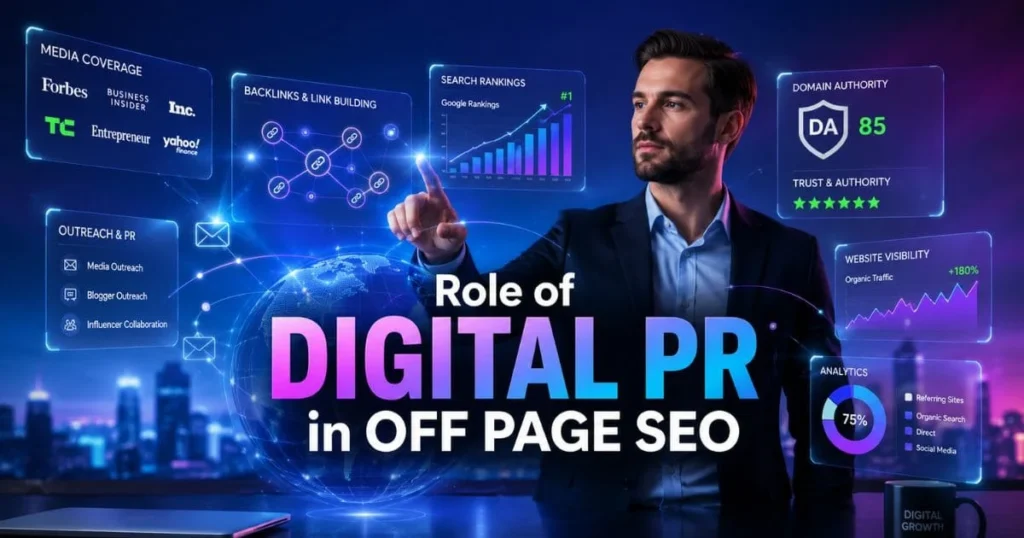
Off-page SEO includes the actions taken outside a website to improve visibility, trust, and authority. Digital PR fits naturally into this because it creates third-party references.
Traditional off-page work often focused heavily on backlinks and inbound linking. Modern off-page strategy is broader. It includes mentions, reviews, citations, expert participation, social visibility, media references, and trust signals.
What Makes a Strong Off Page Strategy?
A strong strategy focuses on relevance and credibility. It does not chase every opportunity. It looks for sources that match the brand’s industry, audience, and goals.
Why Relevance Matters
A mention from a relevant industry website is usually more useful than a mention from a large but unrelated platform. Search value and user trust both improve when the context is clear.
Link Building Through PR
Link building through PR is the process of earning backlinks through stories, expert insights, data, interviews, and media outreach. It is different from basic link requests because it gives publishers a reason to reference the brand. PR-driven link building focuses on creating newsworthy content that attracts editorial mentions, while reciprocal links can help build relationships with relevant websites when used selectively and naturally. Together, these approaches can support a stronger and more diverse backlink profile.
What Can Earn Links?
- Useful statistics
- Original research
- Expert commentary
- Industry reports
- Free tools
- Checklists
- Templates
- Local market insights
- Clear visual assets
- Data backed opinions
High Quality Over High Quantity
A few relevant links and mentions can be more valuable than many weak references. High authority backlinks are useful, but only when they make sense in context and come from trusted sources.
Earned Media and SEO Growth
Earned media SEO is about gaining visibility through coverage that is not directly paid for. It can include articles, interviews, quotes, podcast appearances, roundups, expert comments, and references in industry content.
Earned media helps because the brand appears in places where people are already looking for information. It also shows that the brand is contributing useful knowledge, not only promoting services.
Why Earned Media Works
People trust third party coverage because it feels less biased. When a business is mentioned by relevant sources, it can improve brand credibility and make users more comfortable taking the next step.
Building Online Authority With Digital PR
Online authority grows when a brand is visible, useful, and trusted across different web sources. This does not happen through one article or one mention. It grows through consistent presence.
Steps to Build Authority
First, define the topics the brand wants to be known for. Then create useful content around those topics. After that, share expert insights with relevant publishers and track where the brand is being mentioned.
Authority Building Needs Consistency
Authority building is a long term process. A single media feature may bring attention, but repeated visibility creates memory. When users see the same brand across search, media, social platforms, and expert discussions, trust becomes stronger.
Digital PR Mention Strategy
A practical strategy should be simple and focused. The aim is to earn mentions from sources that your audience may trust.
| Strategy Step | What To Do | Why It Helps |
|---|---|---|
| Define core topics | Choose the subjects your brand should be known for | Builds topical clarity |
| Create useful assets | Publish guides, reports, tools, or insights | Gives publishers something to reference |
| Prepare expert comments | Write clear opinions on industry questions | Makes outreach easier |
| Find relevant sources | List media, blogs, podcasts, and newsletters | Improves mention quality |
| Track coverage | Monitor linked and unlinked references | Helps measure results |
| Review outcomes | Check traffic, branded search, and leads | Connects PR with growth |
Practical Example
A digital marketing brand may want to become known for local SEO, Google Business Profile growth, technical SEO, and AI search visibility. Instead of pitching generic service information, it can share local search trends, small business visibility insights, and practical expert comments.
This makes the outreach useful for editors and readers.
How To Earn Better Mentions
Mentions are easier to earn when the brand has something valuable to say. Generic outreach usually fails because publishers receive many similar pitches.
Create Useful Content Assets
Strong assets include research pages, statistics, guides, tools, templates, checklists, and visual explainers. These give writers and editors a reason to mention the brand.
Share Expert Insights
Short expert comments are useful for journalists and bloggers. The comment should be clear, specific, and easy to quote.
Use Data
Original data can make a story stronger. Even small research based insights can earn attention if they are relevant and easy to understand.
Focus on Real Audience Problems
A pitch should not only talk about the brand. It should answer a real question that readers already care about.
Measuring Digital PR Success
“Digital PR should be measured with more than link numbers. Links matter, but they are not the only result. Strong campaigns also influence SEO metrics and KPIs such as organic traffic growth, keyword rankings, referral traffic, brand mentions, domain authority, engagement rates, conversion performance, and overall search visibility.”
Important Metrics
Track total mentions, linked mentions, unlinked mentions, referral visits, branded search growth, keyword movement, content visibility, and lead quality.
Reputation Signals
Reputation signals can include reviews, positive references, expert quotes, media coverage, customer discussions, and trusted citations. These signals help users form an opinion before they contact the business.
Brand Credibility Metrics
A business can also measure how often people search for its name, how often leads mention they saw the brand elsewhere, and whether referral traffic comes from relevant sources.
Case Study
How a Service Business Improved Authority With PR Mentions
A service based business had a well structured website, useful blog content, and active social pages. However, it was struggling to build trust in a competitive market. Users were comparing the business with more familiar competitors that had stronger third party visibility.
The Problem
The brand had limited media presence. It had very few external references and almost no expert quotes on other websites. Its service pages were ranking for some keywords, but users did not always convert because the brand was not widely recognized.
The Strategy
The team created a simple PR plan. They published expert led blogs, created a short industry insight report, prepared comments on common customer questions, and reached out to relevant blogs and digital publications.
They also tracked unlinked mentions and contacted publishers only when adding a link would help readers.
The Result
Over a few months, the business earned several relevant mentions. Some included links, while others only referenced the brand name. Branded search increased, referral visits improved, and more enquiries came from users who had already seen the brand in another source.
The Learning
The result showed that digital PR is not only about backlinks. It can improve trust, recognition, and online authority when the mentions are relevant and consistent.
Common Mistakes To Avoid
Chasing Random Mentions
A mention on an unrelated website does not create strong value. Relevance is more important than volume.
Ignoring Unlinked References
Unlinked mentions can still help with recognition. They can also become future link opportunities.
Sending Generic Pitches
Editors want useful information. A pitch should be based on data, expert input, or a clear reader benefit.
Measuring Only Backlinks
A campaign may improve branded search, referral traffic, social discussion, and authority even when it does not create many links.
Using Weak Content Assets
If the website has thin content, weak author pages, or unclear service information, PR visibility may not convert well.
Best Practices for Long Term Brand Authority
Keep Messaging Consistent
Use the same brand name, service categories, location signals, and topic language across all platforms.
Build Strong Website Pages
External visibility works better when the website has helpful service pages, expert content, clear contact paths, and trust elements.
Support E E A T
Mention real expertise, author details, clear sources, and practical knowledge. This helps users and search engines understand why the brand should be trusted.
Review Mentions Monthly
Check which sources mention the brand, whether links are included, and how those mentions affect traffic and visibility.
Connect PR With Content Strategy
Use PR insights to create better website content. If journalists repeatedly ask the same questions, those questions may become strong blog or FAQ topics.
Digital PR for AI Search and Voice Search
AI search systems, voice assistants, and answer engine optimization strategies rely on clear answers and reliable context. A brand that is referenced across trusted sources may be easier for both users and AI-driven systems to understand and present accurately.
How To Make Content AI Friendly
Write direct answers. Use clear headings. Add FAQs. Explain concepts in simple language. Keep brand information consistent across the web.
Voice Search Optimization
Voice search often uses question based queries. A blog should answer questions like:
- What are PR mentions?
- How do brand references help SEO?
- Are unlinked mentions useful?
- How can a business earn media coverage?
- How do mentions improve trust?
Clear answers make the content easier for users, search engines, and AI tools to understand.
FAQ
Q: What are digital PR mentions?
They are online references to a brand, expert, product, service, quote, or content asset on third party platforms such as media websites, blogs, podcasts, interviews, and industry resources.
Q: Do brand mentions help SEO?
Yes, brand mentions can support SEO by improving trust, topical relevance, referral interest, branded search demand, and external recognition.
Q: Are unlinked mentions useful?
Yes, unlinked mentions are useful because they show that a brand is being discussed online. They may also become link opportunities when a link would improve the reader experience.
Q: What is the difference between a mention and a backlink?
A mention is a reference to a brand. A backlink is a clickable link to the website. A mention may or may not include a backlink.
Q: How can a business earn more PR mentions?
A business can earn more mentions by publishing useful insights, sharing expert comments, creating data based content, joining relevant industry conversations, and reaching out to suitable publishers.
Q: How do PR mentions build authority?
They build authority by showing that the brand is being referenced by outside sources. This can improve trust among users and help search systems understand the brand’s relevance.
Q: What should be measured in a PR campaign?
Measure total mentions, linked mentions, unlinked mentions, referral visits, branded search growth, source quality, keyword movement, and lead quality.
Conclusion
Brand authority is built through useful content, strong service pages, customer trust, and third party recognition. A business cannot rely only on what it says about itself. It also needs to be visible in the places where people already look for trusted information.
Digital PR mentions help create that visibility. They support trust, search relevance, user confidence, and long term recognition. When used with content strategy, technical SEO, and strong on page optimization, they can become an important part of sustainable brand growth.