A quote page often acts as the bridge between website traffic and real enquiries. When someone reaches this page, they are usually not just browsing. They want information, clarity, and a simple way to move forward. That is why quote page SEO matters so much for businesses that depend on online enquiries.
Many service-based businesses invest time in blogs, homepages, and service pages, but they overlook the page where the actual conversion happens. A quote page should do more than show a form. It should answer common questions, reduce hesitation, explain the process, and make it easier for the right visitor to submit a request.
If a quote page is not well structured, it may attract the wrong users or fail to convert the right ones. A weak page can also miss search opportunities that could bring highly qualified traffic. When done properly, a quote page can support search visibility and improve the quality of incoming enquiries.
This guide explains how to build and improve a quote page so it performs better in search and brings better enquiries for service businesses.
Table of Contents
Why Quote Pages Matter for Lead Generation
A quote page is different from a regular contact page. A contact page is usually broad. A quote page is action-focused. It targets people who are already interested in a service and want pricing, availability, or next-step details.
For businesses that rely on enquiries, the quote page is one of the most valuable conversion points on the website. This is especially true for local and service-based businesses where customers compare multiple providers before making a choice.
A well-structured quote page helps in several ways:
- It makes the page more useful for visitors
- It can improve organic visibility
- It supports better user intent matching
- It helps generate more relevant enquiries
- It improves trust before form submission
When a page is optimized carefully, it can contribute directly to service business leads without sounding overly sales-driven.
What Is Quote Page SEO?
In simple terms, quote page SEO means optimizing a quote request page so it can rank for relevant searches and convert interested users into enquiries.
This includes:
- Choosing the right keywords
- Writing useful page content
- Improving headings and structure
- Making forms easier to complete
- Adding trust elements
- Supporting mobile usability
- Aligning the content with search intent
A good quote page should help both search engines and people. Search engines need enough content to understand what the page is about. Users need enough clarity to feel confident before taking action.
That is why SEO for quote pages is not just about keywords. It is also about usability, clarity, and relevance.
Who Should Focus on Quote Page SEO?
Any service business that invites users to request estimates, pricing, or project details can benefit from this approach. This includes:
- Local repair services
- Digital marketing services
- Cleaning services
- Legal services
- Interior and design services
- Construction-related services
- Consulting businesses
- Health and wellness service providers
For these businesses, quote-related queries often come from users with stronger intent. That makes the quote page especially useful in service business lead generation.
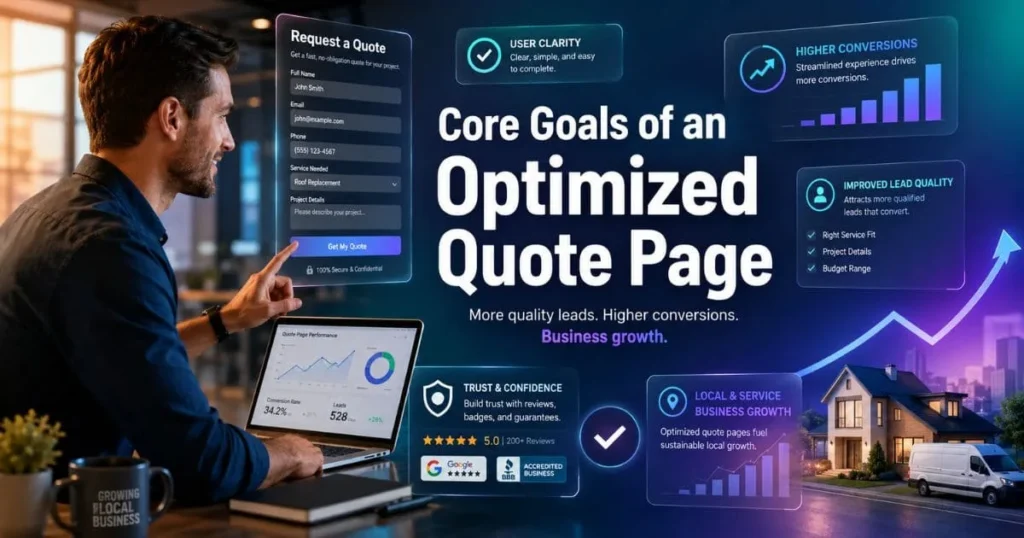
Core Goals of an Optimized Quote Page
Before improving the page, it helps to understand what the page should achieve. A well-built quote page should:
Help Search Engines Understand the Page
The page should clearly explain the service, the audience, and what the quote covers. This strengthens topical relevance and supports quote request page SEO.
Help Users Understand What to Do
People should know:
- What service the quote is for
- What details they need to provide
- What happens after submission
- How long the response may take
Improve Lead Quality
A better page often results in better enquiries. This supports service business leads because users are better informed before they submit the form. A PPC audit checklist for better lead quality can further improve campaign performance by identifying targeting gaps, refining ad relevance, optimizing landing pages, and reducing low-intent traffic, helping businesses attract more qualified prospects.
Support Local and Commercial Searches
Many businesses need both local and high-intent traffic. A strong quote page can support that by including service and location context in a natural way, helping strengthen local landing page SEO.
Key Elements of an Effective Quote Page
Below is a table showing the most important parts of a quote page and why they matter.
Key Elements of a Quote Page
| Element | Why It Matters | Impact on Leads |
|---|---|---|
| Clear headline | Tells users and search engines what the page is about | Improves clarity |
| Short service summary | Explains what the quote is for | Reduces confusion |
| Simple form | Makes submission easier | Improves conversions |
| Trust signals | Builds confidence | Supports enquiry completion |
| Service area details | Helps local relevance | Attracts relevant visitors |
| FAQ section | Answers objections | Reduces hesitation |
| CTA button | Encourages action | Increases form submissions |
| Internal links | Supports site structure | Helps users explore more |
| Mobile-friendly layout | Improves usability | Prevents drop-offs |
How to Structure the Page Properly
A strong structure helps search engines crawl the page and users move through it comfortably. That is where quote page optimization becomes practical.
Use a Strong H1
The main heading should clearly describe the purpose of the page. Instead of just saying “Get a Quote,” consider a heading that includes the service and purpose more clearly.
Example:
- Request a Quote for Our [Service Name]
- Get Pricing for [Service Type]
- Request Service Details and a Quote
Add Supporting Intro Text
The introduction should briefly explain:
- Who the page is for
- What the user will receive
- What details they may need to submit
This adds context and supports SEO for service pages because the page becomes more informative.
Include Helpful Subsections
Break the page into useful sections such as:
- What this quote covers
- What affects pricing
- Areas served
- What happens next
- Frequently asked questions
This improves readability and makes the page more useful than a form-only layout.
Keep the Layout Easy to Scan
People often skim. Short paragraphs, bullet points, and clear headings help them find answers faster.
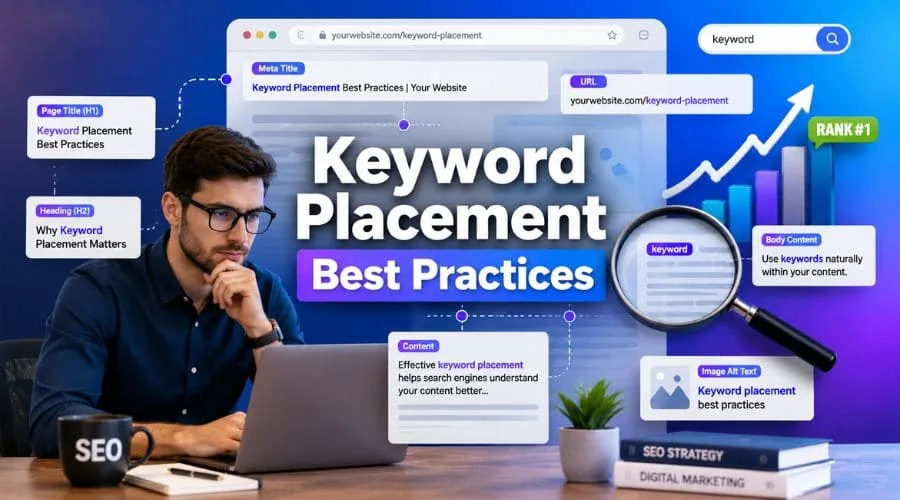
Keyword Placement Best Practices
Many quote pages fail because they either contain almost no content or overuse keywords unnaturally. A smart approach to quote form SEO includes placing keywords where they make sense.
Useful placement areas include:
- Page title
- Meta description
- H1 heading
- First paragraph
- H2 subheadings
- FAQ section
- Alt text for relevant images
- Internal anchor text
The goal is not to repeat exact keywords too often. The goal is to build context naturally. This is where service page SEO strategy plays a role. A quote page should fit into the wider SEO structure of the website.
Writing Content That Matches Search Intent
Search intent matters because users searching quote-related phrases often want to take the next step. They may want pricing, service details, or a clear way to request help.
To improve get a quote page SEO, your page should answer questions like:
- What service is this for?
- What information do I need to provide?
- Is the quote free?
- How long will it take?
- What affects the final cost?
If these answers are missing, users may leave the page even if they were interested.
Improving the Form Without Making It Too Long
You can naturally include “conversion rate optimization A/B testing” like this:
“The form is one of the most sensitive parts of the page. A form that is too short may bring vague enquiries, while a form that is too long may reduce conversions. Regular conversion rate optimization A/B testing helps identify the ideal form length and field structure to improve lead quality and submission rates.”
This adds the keyword phrase naturally without repetition.
This is where quote form optimization becomes important.
A strong quote form may ask for:
- Name
- Phone number
- Service required
- Location
- Project details
- Preferred timeline
You may also add optional fields for budget or special requirements if they help qualify the lead.
Add Form Microcopy
Small notes near the form can reduce hesitation. For example:
- We use your information only to respond to your request
- Please share a few details for a more accurate quote
- Response time may vary based on project scope
This supports trust and can strengthen quote page conversion optimization.
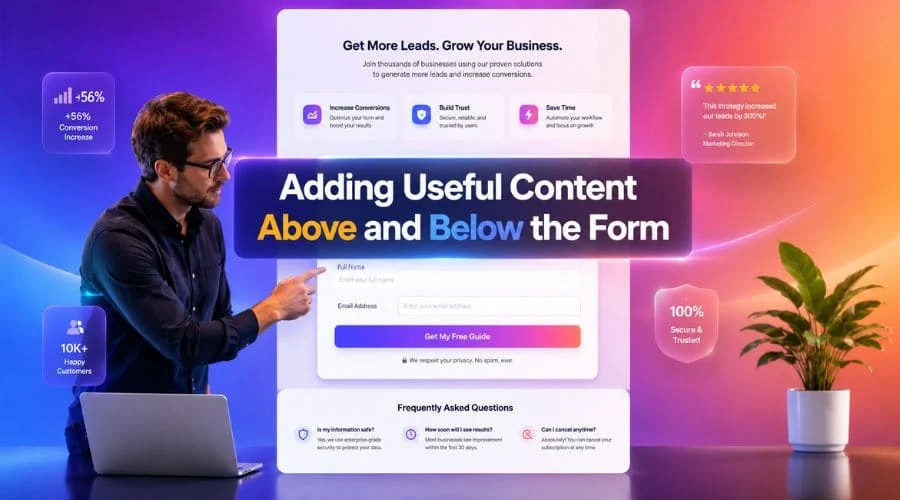
Adding Useful Content Above and Below the Form
A common mistake is showing only a form and nothing else. That approach limits both user confidence and search relevance. Adding informative content, clear service details, and insights about content marketing services can help build trust, improve engagement, and support better search visibility.
A stronger approach is to add:
Above the Form
- Brief service explanation
- What the quote includes
- Who the service is for
- Key benefits of requesting a quote
Below the Form
- FAQs
- Next steps after submission
- Service area details
- Related service links
This improves quote request page optimization because the page provides more value before and after the form.
Local SEO Considerations for Quote Pages
For businesses that serve specific cities or regions, local relevance matters a lot. Quote pages can help attract local service business leads if they include local context naturally, service area SEO for local business leads.
Useful local elements include:
- Mentioning cities or service areas served
- Referring to local customer needs where relevant
- Linking to location-specific service pages
- Adding local business details where suitable
This can also strengthen SEO for service business websites by improving relevance across the site.
Role of Internal Linking
A quote page should not sit alone. It should connect with:
- Main service pages
- Pricing pages
- FAQ pages
- Location pages
- Related blog posts
This creates a better site structure and helps users gather information before submitting an enquiry. Internal links also support service landing page SEO by connecting commercial and informational content effectively.
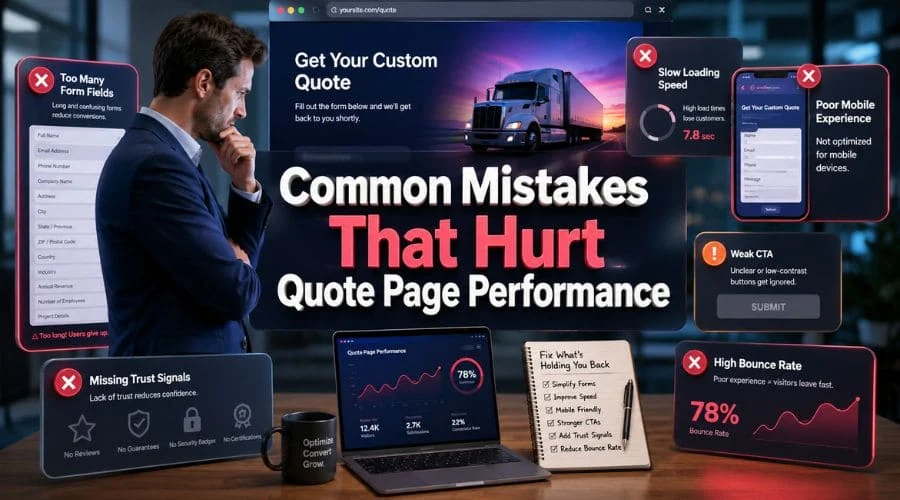
Common Mistakes That Hurt Quote Page Performance
A quote page can lose traffic or conversions for several reasons. Here are some of the most common issues:
Thin Content
If the page contains only a form and one line of text, search engines may struggle to understand its purpose.
Weak Headings
Generic headings do not explain enough. Stronger headings improve both clarity and relevance.
No Trust Signals
Users may hesitate if they do not see signs of credibility such as process details, response expectations, privacy reassurance, or positive Google reviews in local SEO.
Poor Mobile Experience
Many quote requests happen on phones. If the form is hard to complete on mobile, users may leave.
Mismatch Between Service and Form
If the page does not explain what the quote is for, users may feel uncertain about whether they are in the right place.
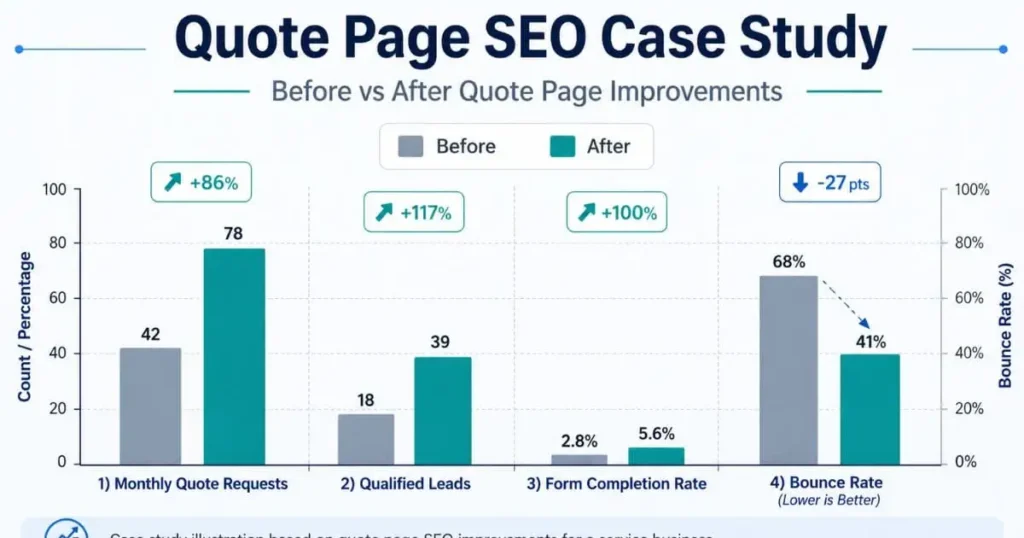
Case Study
The following example shows how a service business improved its quote page without major design changes.
Background
A service-based business had a quote request page with only a short headline and a long form. The page received some traffic, but enquiries were inconsistent. Many users submitted incomplete requests, and others left without taking action.
Problems Found
The page had several weaknesses:
- Very little page content
- No explanation of what the quote covered
- No section about pricing factors
- No service area information
- No FAQ content
- Too many required fields in the form
Changes Made
The business improved the page by:
- Rewriting the heading for clarity
- Adding a short introduction above the form
- Explaining what information helps create a better quote
- Including service area references
- Reducing unnecessary form fields
- Adding an FAQ section
- Improving internal links from service pages
Outcome
After these updates, the page became easier to understand and easier to complete. Users submitted more complete requests, and the overall quality of enquiries improved. This is a practical example of how lead generation SEO for service business can be strengthened by improving a quote page instead of relying only on a contact form.
Best Practices Checklist
Below is a quick checklist that can be used while creating or improving a quote page.
Quote Page SEO Checklist
| Area | Best Practice |
|---|---|
| Title tag | Use a clear keyword-focused title |
| H1 | Make the topic of the page obvious |
| Intro content | Explain the purpose of the page |
| Form | Keep it simple and relevant |
| Content depth | Add useful supporting sections |
| Local relevance | Mention areas served where suitable |
| CTA | Use clear action wording |
| FAQ | Answer common user questions |
| Mobile usability | Make the page easy to use on phones |
| Internal links | Connect with related pages |
How Quote Pages Support the Wider SEO Strategy
A quote page should be part of a broader approach, not an isolated asset. It connects directly with:
- Service pages
- Local landing pages
- Blog content
- Conversion-focused pages
That is why SEO for service pages and quote-page work should support each other. When a service page educates the visitor and the quote page closes the information gap, the user journey becomes much stronger.
This also supports quote page optimization at a deeper level because the page is integrated into the website rather than treated as a separate form page.
FAQ on Quote Page SEO
Q: What is a quote page in SEO?
Ans: A quote page is a page designed to help users request pricing, estimates, or service details. In SEO terms, it should be optimized so search engines understand the page and users can act easily.
Q: Why is quote page SEO important?
Ans: It helps a business attract more relevant traffic and improves the chance that interested users will request a quote instead of leaving the site.
Q: How much content should a quote page have?
Ans: A quote page should have enough content to explain the service, the quote process, and the next steps. It should not be thin, but it also should not overwhelm the visitor.
Q: What should be included on a quote request page?
Ans: A strong page should include a headline, service summary, short form, trust-building details, service area references, FAQs, and a clear call to action.
Q: Can a quote page help local SEO?
Ans: Yes. If written properly, it can support local visibility by mentioning service areas and matching high-intent local queries in a natural way.
Q: How does quote page SEO help service businesses?
Ans: It improves visibility for quote-related searches and helps convert relevant users into enquiries, which can improve the quality of incoming leads.
Conclusion
A quote page is one of the most valuable pages on a service business website, yet it is often underdeveloped. A page that only contains a form may not perform well in search and may not help users feel ready to submit an enquiry.
Strong quote page SEO improves the page in two important ways. First, it helps search engines understand the page better. Second, it helps users feel informed and comfortable enough to take action. When combined with clear content, a usable form, local context, and better structure, the quote page can play a major role in improving service business leads.
Instead of treating the quote page as a simple endpoint, treat it as a conversion-focused content asset. That shift can make the page far more useful, both for search visibility and for real business growth.