Service businesses often depend on inquiries, calls, quote forms, consultation requests, and website leads. But getting a lead is only the first step. The real challenge begins after someone shows interest. Many leads do not convert immediately because they still have questions, doubts, price concerns, timing issues, or trust gaps. This is where lifecycle email funnels can help.
A structured email process allows a business to communicate with leads based on where they are in the buying journey. Instead of sending one general message to everyone, lifecycle email funnels help service businesses send the right message at the right time. This makes follow-up more organised, useful, and relevant, while supporting a strong content marketing funnel strategy.
For service-based businesses, email is not only a communication tool. It can guide a lead from first interest to consultation, from consultation to decision, and from customer to repeat client. When planned properly, email can reduce missed opportunities and improve the quality of conversations with potential customers, especially when aligned with a clear content marketing funnel strategy.
This guide explains how lifecycle email funnels for service leads work, why they matter, what stages to include, what emails to send, and how to measure results.
Table of Contents
What Are Lifecycle Email Funnels?
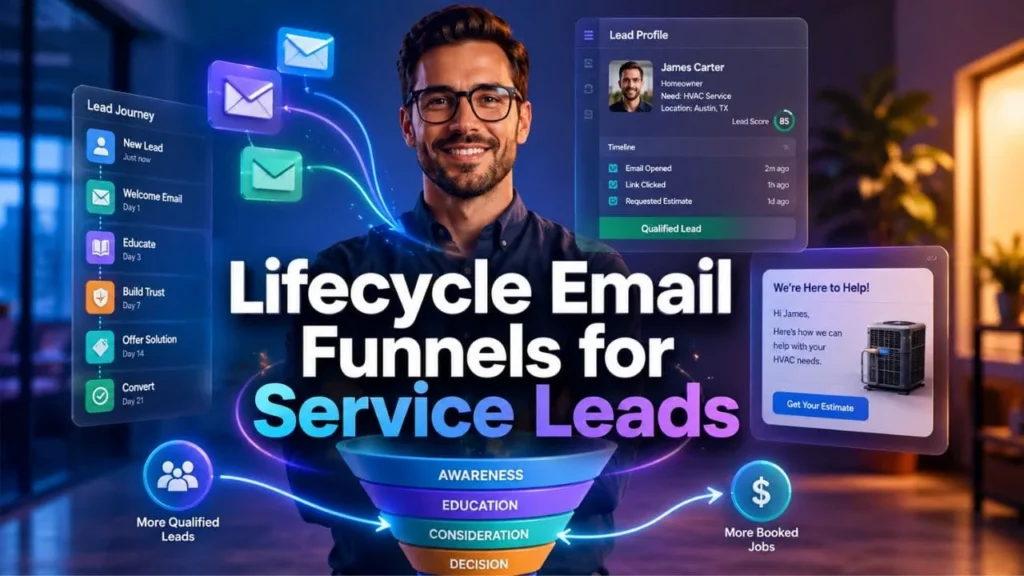
Lifecycle email funnels are planned email sequences that move leads through different stages of the customer journey. These stages usually begin when a person first contacts a business and continue through education, qualification, conversion, onboarding, retention, and re-engagement.
Unlike a one-time newsletter, this type of funnel is based on user behaviour and lead intent. A new inquiry may receive a thank-you email. A warm lead may receive a consultation reminder. An inactive lead may receive a re-engagement message. Each email has a purpose.
A basic email campaign usually sends the same message to a large group of people. A lifecycle-based email system is more specific. It considers what the lead has done, what they need next, and how ready they are to take action.
For example, someone who filled out a quote form should not receive the same message as someone who downloaded a general guide. The first person may need pricing details or a consultation link. The second person may need educational content before speaking to the business.
Why Email Funnels Matter for Service-Based Leads
Service leads usually need more trust before they take action. Unlike simple product purchases, service decisions often involve cost, quality, experience, time, and confidence. A person may compare different providers, read reviews, check pricing, and think about whether the service fits their needs.
This is why an email funnel for service business growth should focus on education and guidance, not pressure. Good emails help the reader understand the service, the process, the benefits, and the next step. Using B2B email marketing automation can further support this approach by delivering the right information at the right time, helping build trust and move prospects closer to a confident decision.
A service lead email funnel can also reduce the burden on sales teams. Without a structure, follow-up depends on memory, manual effort, and timing. Some leads get proper attention, while others are forgotten. With planned email sequences, every lead receives a consistent response.
A strong email marketing funnel for service businesses can help with:
- Faster response after inquiry
- Better lead education
- More organised follow-up
- Higher consultation booking rates
- Better qualification before sales calls
- Improved trust before decision-making
- Re-engagement of inactive leads
The main goal is not to send more emails. The goal is to send more useful emails.
Table 1: Main Lifecycle Stages and Email Purpose
| Lifecycle Stage | Lead Situation | Email Purpose | Example Email Type |
|---|---|---|---|
| New Inquiry | Lead has submitted a form or requested information | Confirm the inquiry and explain the next step | Thank-you email |
| Awareness | Lead is still learning about the problem | Educate and build clarity | Problem-awareness email |
| Consideration | Lead is comparing options | Explain service process and value | Service explainer email |
| Qualification | Lead may be a good fit | Collect details and understand intent | Requirement checklist email |
| Decision | Lead is close to taking action | Encourage booking or reply | Consultation email |
| Post-Conversion | Lead has become a client | Set expectations and reduce confusion | Onboarding email |
| Re-Engagement | Lead has gone inactive | Bring the conversation back | Follow-up reminder email |
Key Components of a Strong Email Funnel
A good funnel is not created by writing random emails. It needs planning. Each email should answer a real question or solve one small problem in the lead journey.
Clear Lead Source
The first step is to understand where the lead came from. A lead from a pricing page may already be serious. A lead from a blog post may need more education. A lead from a paid ad may need faster follow-up because they may also be checking other providers. Additionally, optimize contact forms for qualified leads to ensure you capture prospects who are genuinely interested and ready to engage.
Common lead sources include:
- Contact forms
- Quote request pages
- Consultation booking forms
- Local SEO landing pages
- Google Business Profile inquiries
- Paid ad landing pages
- Referral traffic
- Downloadable resources
When the source is clear, the email message becomes more relevant.
Defined Lead Stage
Not every lead is ready to buy. Some are researching. Some are comparing. Some want a quote. Some only want basic information. This is why businesses need to define lead lifecycle stages before building the email journey.
The common stages include new lead, engaged lead, qualified lead, sales-ready lead, customer, inactive lead, and repeat customer.
Useful Email Content
Every email should have one clear message. If an email tries to explain everything at once, it may become confusing. A better approach is to focus on one topic at a time.
For example:
- One email explains the service process.
- One email answers common pricing questions.
- One email explains how to prepare for a consultation.
- One email asks the lead to reply with their requirement.
- One email reminds the lead to book a call.
Simple Call-to-Action
A good email does not need too many buttons or links. One clear next step is usually better. The CTA should match the lead’s stage.
Examples include:
- Reply with your requirement
- Book a consultation
- View service details
- Request a quote
- Confirm your preferred time
- Share your project details
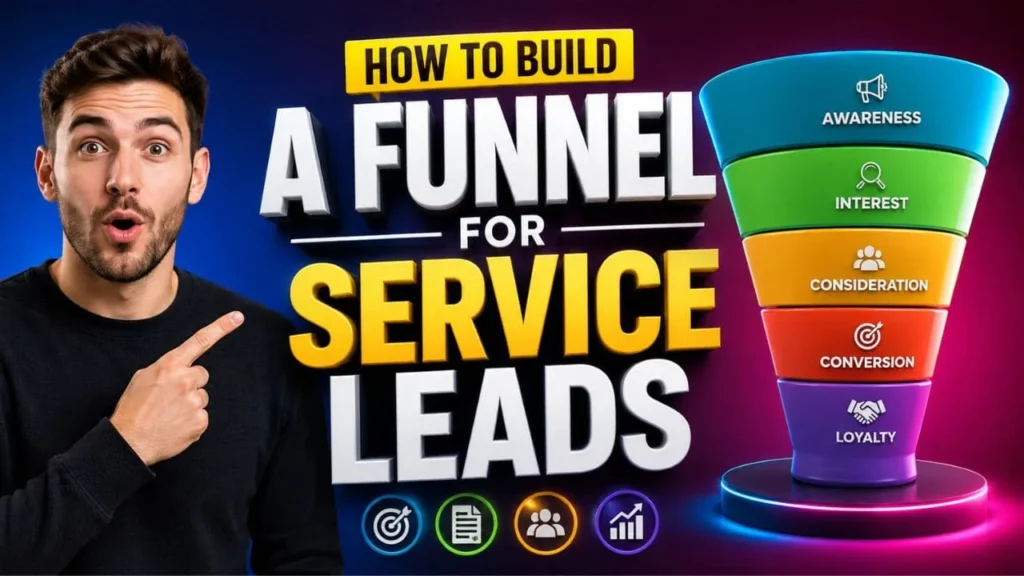
How to Build a Funnel for Service Leads
Building an email funnel becomes easier when the process is divided into simple steps.
Step 1: Map the Lead Journey
Start by understanding how people move from inquiry to conversion. A typical journey may look like this:
Visitor reads a service page, fills out a form, receives confirmation, reads more details, answers a few qualification questions, books a consultation, receives a proposal, and then makes a decision.
This journey may not be the same for every service business, but the basic structure remains similar.
Step 2: Create Email Goals for Each Stage
Each email should support one goal. The goal may be to educate, qualify, remind, convert, onboard, or re-engage.
For example, service lead nurturing may begin with a simple thank-you email and continue with educational emails that explain how the service works.
Step 3: Plan the Email Timing
Timing is important. The first email should usually go immediately after the inquiry. The next few emails can be spaced over several days. If the lead does not respond, the business can send a reminder later.
An email drip campaign can work well when emails are planned over time. However, the timing should feel natural. Sending too many emails in a short period may annoy the lead.
Step 4: Segment Leads Properly
An email segmentation strategy helps divide leads based on interest, behaviour, location, budget, or service need. This improves relevance.
For example, a lead asking for local SEO should receive different information than a lead asking for paid ads or website design. A lead looking for urgent support may need a faster response than someone doing early research.
Step 5: Connect Emails With Sales Activity
Email should support the sales process, not replace it completely. If a lead replies, books a call, or shows strong interest, the sales team should know. This is where a marketing automation workflow can help organise tasks, reminders, and lead movement.
Email Types for Different Service Lead Goals
| Email Type | Best Time to Send | Main Goal | Suggested CTA |
|---|---|---|---|
| Thank-you email | Immediately after inquiry | Confirm lead action | Check next steps |
| Service explainer email | Day 1 or Day 2 | Educate the lead | Learn how it works |
| Problem-awareness email | Day 3 | Build understanding | Read service details |
| Qualification email | Day 4 or Day 5 | Collect lead details | Reply with requirements |
| Consultation email | Day 6 or Day 7 | Move lead to call | Book a consultation |
| Reminder email | After no response | Bring back attention | Confirm interest |
| Re-engagement email | After 2 to 4 weeks | Restart conversation | Reply if still interested |
Important Email Sequences for Service Businesses
A structured funnel may include different types of sequences. Each one supports a different goal.
Lead Nurturing Sequence
A lead nurturing sequence educates leads gradually. It helps answer their questions, reduce confusion, and build trust. This type of sequence is useful when the lead is interested but not ready to talk to sales.
The emails can explain the problem, the service process, pricing factors, preparation steps, expected outcomes, and guide lead magnet conversion.
Automated Follow-Up Emails
Automated follow-up emails help businesses respond consistently and reduce lead leakage with CRM. They are especially useful when teams are busy or when inquiries come outside working hours.
These emails can confirm the inquiry, send helpful information, remind the lead about the next step, or invite them to book a call.
Sales Email Funnel
A sales email funnel is more focused on moving warm leads toward a clear action. It may include proposal reminders, consultation follow-ups, objection-handling emails, and decision-stage messages.
This should still feel helpful, not pushy. The tone should be clear, polite, and useful.
Email Conversion Funnel
An email conversion funnel focuses on turning interested leads into booked calls, confirmed appointments, or paying clients. This requires clear CTAs, strong timing, and messages that answer the lead’s main concerns.
For service businesses, conversion often depends on trust and clarity. Emails should explain what happens next, how the process works, and why the lead should take the next step.
Customer Journey Email Sequence
A customer journey email sequence continues after conversion. Once a lead becomes a client, emails can explain onboarding steps, timelines, expectations, documents required, reporting methods, or support channels.
This improves the client experience and reduces confusion after the sale.
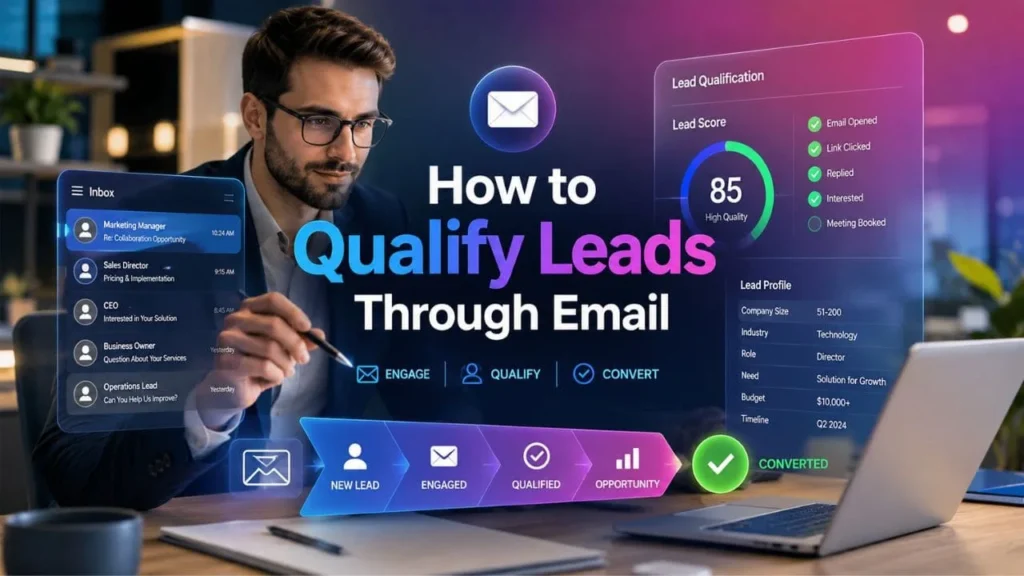
How to Qualify Leads Through Email
Not every inquiry is a good fit. Some leads may not have the right budget, location, timeline, or need. Email can help qualify leads before a call.
A qualified lead email sequence can ask simple questions such as:
- What service are you looking for?
- What is your main goal?
- What is your timeline?
- What is your preferred contact method?
- Have you used this type of service before?
- What result are you expecting?
These questions help the business understand the lead better. They also help the lead think more clearly about their own requirement.
For B2B services, an MQL to SQL email funnel can help move marketing-qualified leads toward sales-qualified conversations. This is useful when a person has shown interest but needs more qualification before direct sales contact.
Best Practices for Writing Service Lead Emails
Email writing should feel like a helpful conversation. The lead should feel guided, not chased.
Use a Clear Subject Line
The subject line should tell the reader what the email is about. Avoid vague or overly clever subject lines. Service leads are usually busy, so clarity works better.
Examples:
- Your inquiry has been received
- Here is what happens next
- A quick question about your requirement
- Would you like to book a consultation?
- Still interested in this service?
Keep the Email Focused
Each email should have one main idea. If the email is about booking a call, do not add too many unrelated points. If the email is about pricing factors, focus only on that.
Write in a Natural Tone
The email should sound like a real person wrote it. Avoid heavy marketing language. Use simple words and short sentences.
Add One Clear Next Step
Do not confuse the lead with multiple CTAs. A single action is usually enough.
Respect the Reader’s Time
Long emails may work in some cases, but most service leads prefer quick and useful messages. Keep the message direct and easy to scan.

Common Mistakes to Avoid
Even a good funnel idea can fail if the execution is poor. Here are common mistakes service businesses should avoid.
Sending the Same Message to Everyone
A new lead, warm lead, cold lead, and existing client should not receive the same message. Their needs are different.
Overloading the Lead With Too Many Emails
Too many emails can reduce trust. The goal is to stay helpful, not to fill the inbox.
Not Following Up Quickly
If a lead submits a form and receives no reply for hours or days, they may contact another provider. Fast response matters.
Ignoring Inactive Leads
Some leads do not convert immediately, but they may still need the service later. An email retargeting sequence can help bring inactive leads back into the conversation.
Using Weak CTAs
If the email does not clearly tell the reader what to do next, the lead may simply close it and move on.
Focusing Only on Selling
Service business email marketing should educate first. When leads understand the process and feel confident, they are more likely to take action.
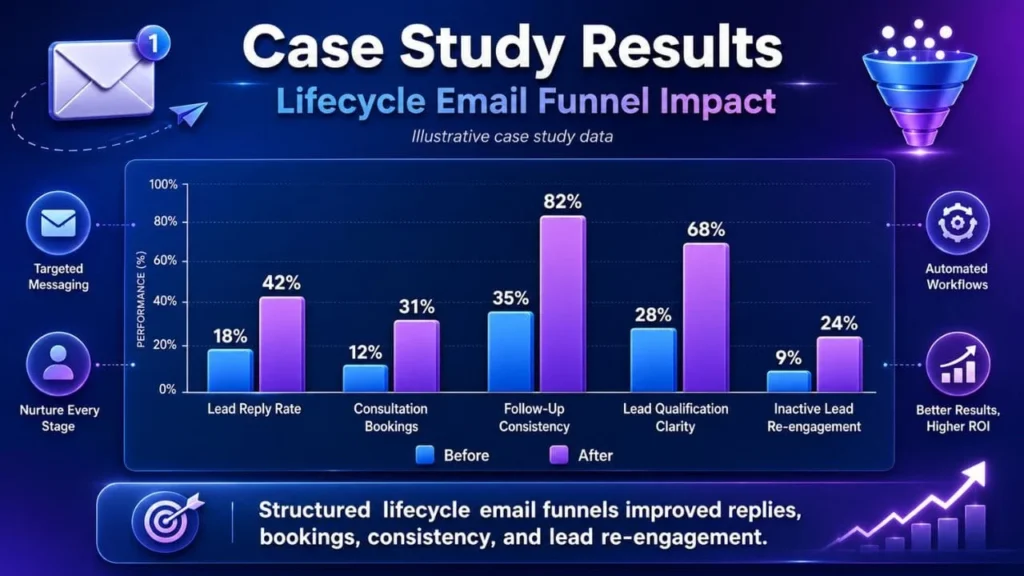
Case Study: How a Service Business Improved Lead Follow-Up
Background
A service-based business was getting regular website inquiries but was struggling to convert them into consultations. Many leads filled out the form but did not reply after the first response. The team was using manual follow-up, and some leads were missed during busy periods.
Problem
The business had several issues:
- No structured email process
- Delayed response after inquiry
- Same email sent to every lead
- No separate path for warm and cold leads
- No reminder system for inactive leads
- No onboarding email after conversion
Because of this, leads were not getting the right information at the right time.
Strategy
The business created a simple email system with different stages. New inquiries received an instant thank-you email. Interested leads received service explanation emails. Warm leads received consultation reminders. Inactive leads received polite follow-up messages.
The business also added prospect nurturing emails to explain service value, answer common questions, and reduce confusion before a sales call.
Result
The team became more consistent with follow-up. Leads received useful information without waiting for manual replies. More people responded to qualification questions, and consultation bookings improved because the next step became clearer.
Key Learning
A service business does not always need a complicated funnel. A clear structure, helpful content, and timely communication can make a major difference.
How to Measure Funnel Performance
A funnel should be reviewed regularly. Without measurement, it is difficult to know what is working, especially when tracking CPA in digital marketing.
Open Rate
Open rate shows whether people are opening the emails. If open rates are low, subject lines may need improvement.
Click-Through Rate
Click-through rate shows whether people are clicking links inside the email. This helps measure interest in the next step.
Reply Rate
For service businesses, reply rate is very important. A reply usually means the lead is interested enough to continue the conversation.
Booking Rate
This shows how many leads book a call, consultation, appointment, or demo after receiving emails.
Conversion Rate
This shows how many email-nurtured leads become actual customers.
Unsubscribe Rate
A high unsubscribe rate may mean the emails are too frequent, too generic, or not useful enough.
Example Funnel Timeline for Service Leads
Here is a simple timeline that service businesses can use as a starting point.
Day 0: Inquiry Confirmation
Send a thank-you email immediately after the lead submits a form. Confirm that the request has been received and explain what happens next.
Day 1: Service Process Email
Explain how the service works. Keep it simple and focused.
Day 3: Educational Email
Share useful information that helps the lead understand the problem or solution.
Day 5: Qualification Email
Ask a few simple questions to understand the lead’s requirement.
Day 7: Consultation Invitation
Invite the lead to book a call or reply with a preferred time.
Day 14: Reminder Email
Send a polite follow-up if there is no response.
Day 30: Re-Engagement Email
Ask whether the lead is still interested and offer a simple next step.
AEO and Voice Search Friendly Answers
What is a lifecycle email funnel?
A lifecycle email funnel is a planned email sequence that sends different messages to leads based on their stage in the customer journey, from first inquiry to conversion and retention, while incorporating AEO content briefs for service page leads.
Why do service businesses need email funnels?
Service businesses need email funnels because many leads do not convert immediately. Emails help educate, remind, qualify, and guide leads toward the next step.
How many emails should a service lead funnel include?
A simple service lead funnel can start with 5 to 7 emails. It may include a thank-you email, service explanation email, qualification email, consultation email, reminder email, and re-engagement email.
What should the first email say?
The first email should thank the lead, confirm the inquiry, explain what happens next, and give one simple action such as replying or booking a consultation.
FAQs
1. What are lifecycle-based email funnels for service leads?
They are structured email sequences that guide service leads through different stages, from first inquiry to final decision. They help businesses send timely and relevant messages.
2. Why are email funnels useful for service businesses?
They help service businesses follow up faster, educate leads, answer questions, qualify prospects, and increase the chances of conversion.
3. What type of emails should be included?
A service lead funnel can include thank-you emails, educational emails, qualification emails, consultation reminders, proposal follow-ups, onboarding emails, and re-engagement emails.
4. How often should service leads receive emails?
The timing depends on the service and urgency. A common approach is to send the first email immediately, then follow up over the next few days or weeks.
5. Can small service businesses use email automation?
Yes. Even a small business can start with a basic sequence of 5 emails. The goal is to stay consistent and helpful.
6. What is the biggest mistake in service lead emails?
The biggest mistake is sending generic messages that do not match the lead’s interest, stage, or requirement.
7. How can email funnels improve lead quality?
They can ask qualification questions, track engagement, and identify leads who are more likely to book a consultation or buy a service.
8. Should emails be promotional or educational?
They should be mostly educational. Service leads usually need clarity and trust before they make a decision.
9. What should inactive leads receive?
Inactive leads can receive a polite reminder, helpful resource, or simple question asking whether they are still interested.
10. How do you know if the funnel is working?
Track open rate, reply rate, click rate, consultation bookings, conversion rate, and unsubscribe rate.
Conclusion
Service leads need timely communication, useful information, and clear next steps. A structured email system helps businesses manage this process without depending only on manual follow-up.
The best approach is simple. Understand the lead journey, divide leads by stage, write helpful emails, and guide people toward one action at a time. When emails are relevant and well-timed, they can improve trust, reduce missed opportunities, and support better lead conversion.
For service businesses, the goal is not to send more messages. The goal is to send better messages that match what the lead needs at that moment.