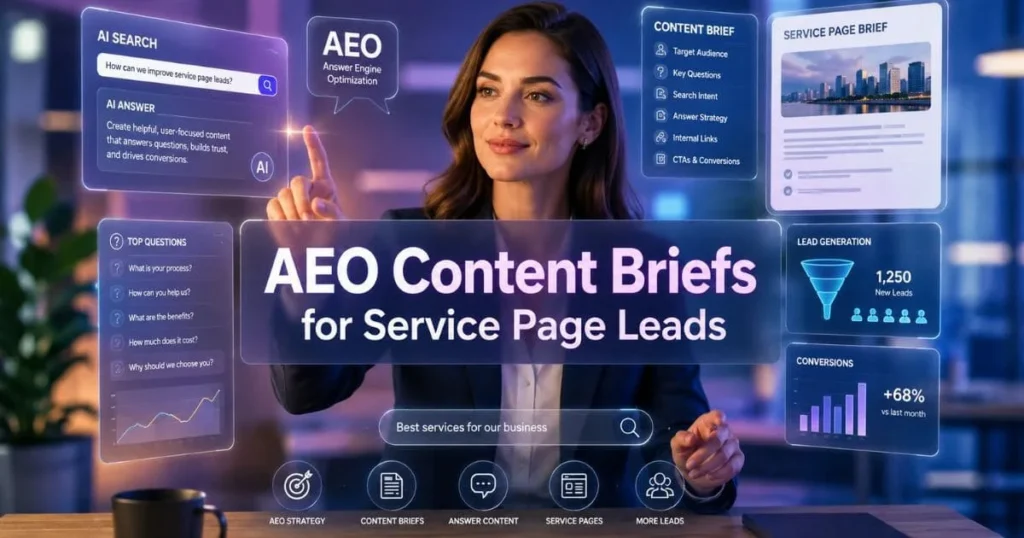
Service pages are no longer built only for rankings. They also need to answer questions, build trust, guide users, and help search systems understand the exact value of a service. This is why AEO content briefs are becoming important for businesses that want better visibility and stronger inquiries from their service pages.
A good brief gives writers, SEO teams, and business owners a clear plan before writing begins. It explains what the page should answer, which keywords matter, which user questions should be covered, where internal links should appear, and how the page should guide visitors toward action.
For service based businesses, this matters even more. A visitor who lands on a service page usually has a problem and wants a clear answer. They may want to know what the service includes, how the process works, how long it takes, what result they can expect, and how to contact the business. When the page gives these answers clearly, it can support rankings and improve lead quality.
Table of Contents
What Makes AEO Different From Basic SEO
Traditional SEO often focuses on keywords, headings, backlinks, and rankings. These are still important, but answer engine optimization adds another layer. It focuses on how clearly the page answers real questions.
In simple terms, answer engine optimization content is created to help search engines, AI search tools, and users understand the answer quickly. It does not mean writing short or shallow content. It means making the content easy to scan, easy to trust, and easy to use.
This is where AEO for service pages becomes useful. Service pages need more than general descriptions. They need clear sections that explain the service, answer doubts, show relevance, and make the next step simple.
Why Service Pages Need a Better Brief
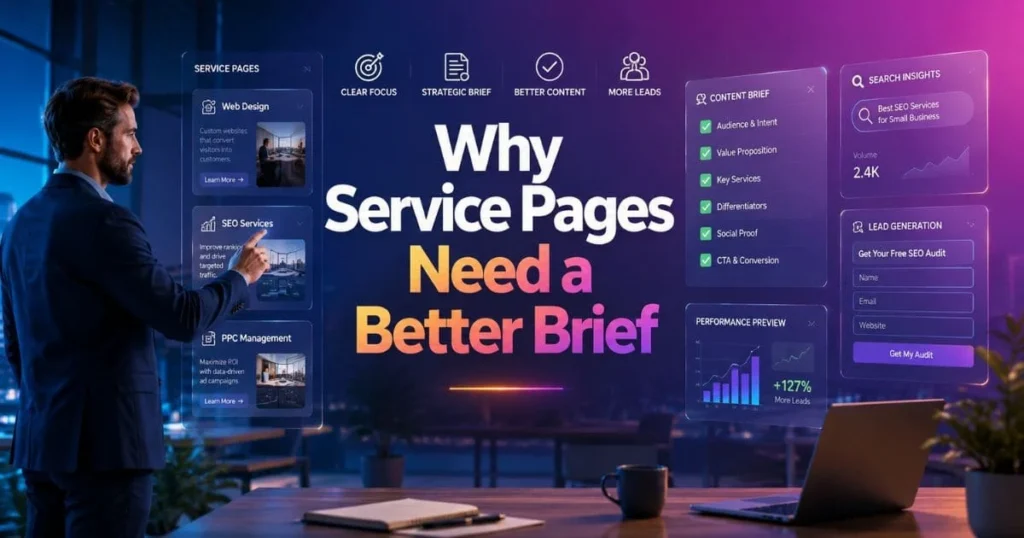
Many service pages fail because they are written without a proper plan. The page may include a few keywords, a short description, and a contact button, but it may not explain the real value of the service.
A service page content brief solves this problem by giving the content team a clear structure. It explains the purpose of the page, the main audience, user intent, key questions, supporting topics, and conversion points.
A strong service page SEO strategy should include both search visibility and lead generation. Ranking is useful, but the page must also turn visitors into inquiries. That is why an AEO content strategy should focus on clarity, trust, and action.
SEO Brief vs AEO Brief for Service Pages
| Area | Basic SEO Brief | AEO Based Brief |
|---|---|---|
| Main Focus | Keywords and rankings | Answers, intent, clarity, and leads |
| Content Goal | Improve search position | Improve visibility and user response |
| Structure | Headings and word count | Questions, answers, sections, and CTA flow |
| User Intent | Often broad | Mapped to exact buyer needs |
| Lead Support | Usually limited | Built around trust and inquiry |
| AI Search Readiness | Not always included | Designed for AI search and voice style queries |
Core Elements of an AEO Based Service Page Brief
A proper brief should include search intent, service details, buyer questions, keyword groups, answer sections, FAQ ideas, internal links, conversion points, structured data recommendations, AI search optimization, AEO (Answer Engine Optimization) opportunities, entity coverage, semantic topic clusters, and machine-readable content elements. It should also guide the writer on tone, structure, user needs, content hierarchy, and how to create information that is easily understood by both users and AI-powered search systems.
Search Intent Comes First
You can revise it as:
Before writing a page, you need to understand why the user is searching. Some users want information. Some compare service providers. Some are ready to contact a business. This is where search intent mapping becomes important. It also helps you optimise content for PAA (People Also Ask) boxes by addressing common user questions and providing clear, direct answers that match search expectations.
A service page should not answer only one type of query. It should cover informational, commercial, local, and action based intent. This helps the page connect with users at different stages of decision making.
Buyer Questions Shape the Content
People usually search with questions before they fill out a form. They want practical answers. A good brief should include buyer intent keywords, real questions that match the decision process, and content structured for Google AI Overviews optimization by providing clear, direct, and authoritative answers that are easy for search engines to understand and surface.
For example, users may ask:
- What does the service include?
- How long does the service take?
- Is it right for my business?
- What results can I expect?
- How do I contact the team?
These questions help create answer focused content that is useful for both users and search systems.
Service Page Copy Must Be Clear
Good service page copywriting does not only explain features. It explains problems, solutions, process, proof, and next steps. The goal is to make the user feel informed before they contact the business.
This is how lead generating service pages are built. They reduce confusion and make the visitor more confident.
Keyword Planning for Better AEO Content
A well-planned brief should include primary, secondary, long-tail, question-based, and conversion keywords, along with a topical clustering content strategy to ensure comprehensive coverage of related subtopics and search intent. The goal is not to force all keywords into the page. The goal is to use them naturally where they make sense while maintaining relevance, readability, and topical authority.
Keyword Groups for Service Page AEO Planning
| Keyword Group | Keywords |
|---|---|
| Core Terms | content briefs for lead generation, SEO content brief for service pages, AI search optimized content, AEO friendly content structure |
| Secondary Terms | answer engine optimization, AI search visibility, voice search optimization, featured snippet optimization |
| Semantic Terms | Google AI Overviews optimization, semantic SEO content, topical authority content, entity based SEO |
| Brief Planning Terms | structured content brief, FAQ optimized content, service page keyword mapping, content outline for service pages, SEO brief template |
| Lead Terms | service page leads, qualified leads from SEO, organic lead generation, website lead generation strategy |
| Conversion Terms | conversion optimized content, lead focused service page, high intent service keywords, inquiry driven content |
How AEO Supports Service Page Lead Generation
A service page should not only bring traffic. It should bring the right visitors. This is why service page lead generation depends on content quality, user intent, trust, and page structure.
When content answers the right questions, visitors spend more time reading. They understand the service better. They are also more likely to contact the business because the page has reduced their doubts.
Another important factor is to optimize contact forms for qualified leads. Clear, relevant form fields help businesses collect useful information while making it easier for potential customers to submit inquiries. A well-designed form encourages serious prospects to take action and helps sales teams focus on high-intent leads.
Better Answers Create Better Leads
Users who understand your service are more likely to become good leads. They know what you offer, who it is for, and what the next step should be. This improves the chance of receiving qualified leads from SEO instead of random inquiries.
CTA Placement Matters
A service page should guide the visitor naturally. A service page CTA strategy should place calls to action after helpful sections, not only at the end. If a user reads about the process, there should be a small CTA nearby. If a user reads pricing context, there should be a next step. This can improve contact form conversions.
Local and B2B Intent Should Be Covered
You can revise it as:
Service businesses may target local clients, national clients, or business clients. A strong brief should include local service leads, B2B service leads, appointment booking content, sales-ready content, and service area SEO for local business leads where relevant. This makes the page more useful for different audience types and supports landing page lead generation.
Building an AEO Friendly Page Structure
You can naturally incorporate JSON-LD schema markup without repetition like this:
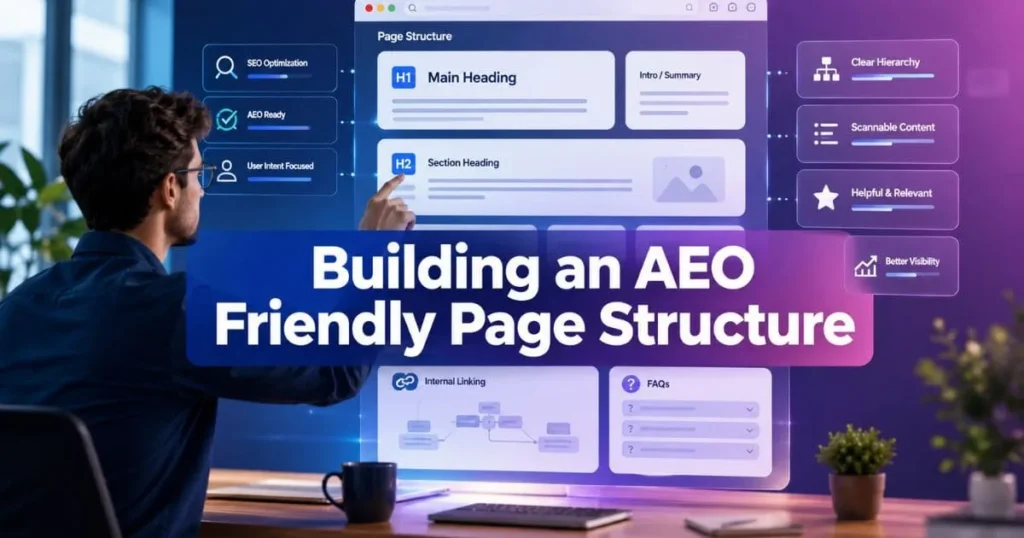
“The structure of a service page matters because users scan before they read. They look at headings, short answers, tables, FAQs, and CTAs. Search systems also use structure to understand meaning. Implementing a JSON-LD schema markup guide helps provide clear, machine-readable context, making it easier for search engines to interpret page content and display relevant information in search results.”
H4 Suggested Page Flow
A strong service page can follow this structure:
- Clear service introduction
- Direct answer to the main query
- Who the service is for
- What the service includes
- Process explanation
- Benefits and expected outcomes
- FAQs
- Trust signals
- CTA section
This type of structured answer format supports users and can also improve visibility for answer style results.
Important Brief Sections to Include
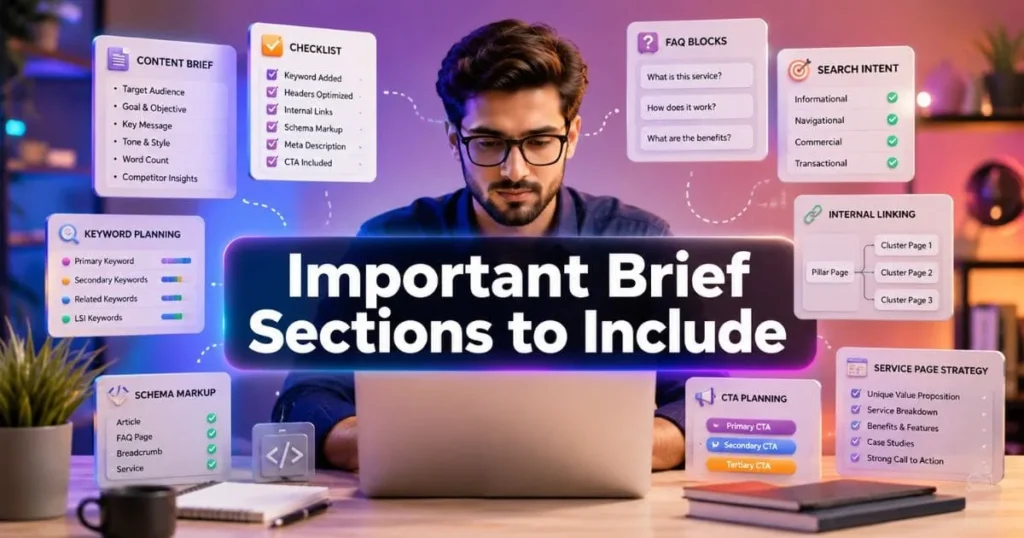
“A complete brief should give writers enough direction without making the content sound forced. It should include strategy, content flow, conversion planning, and opportunities to incorporate resources such as a schema markup generator free tool where relevant to enhance user value and search visibility.”
Content Planning Section
The brief should include AEO content planning, an AEO content framework, and an answer based content brief. These help the writer understand how each section should answer a specific question.
It should also include a content brief for AI search because AI search tools often look for clear, direct, and well organized information.
Research Section
The research section should include question based keyword research, competitor content review, entity research, and user intent analysis. This helps the page cover real search behavior.
Answer Section
The brief should guide the writer to create concise answer content and use direct answer optimization where needed. This does not mean writing only short answers. It means giving the answer first, then adding more detail.
Checklist Section
A content brief checklist helps the content team confirm that nothing important is missing. It can include headings, FAQs, internal links, schema, CTA points, and user questions.
AI Readiness Section
The brief should also include AI ready service page content, AEO writing guidelines, a search intent content brief, a content brief for featured snippets, a service page FAQ brief, and a schema ready content brief.
These sections help the page become more complete and easier to understand.
AEO Brief Checklist for Service Pages
| Brief Section | What to Add | Why It Helps |
|---|---|---|
| Page Goal | Lead, inquiry, booking, or call | Keeps the page focused |
| Main Audience | Business owner, local buyer, or decision maker | Improves message clarity |
| Intent | Informational, local, commercial, or action based | Matches user needs |
| Questions | Real buyer doubts | Supports AEO and voice queries |
| Keywords | Primary, secondary, and long tail terms | Supports organic reach |
| Entities | Services, tools, locations, industries | Improves topic understanding |
| FAQs | Short and useful answers | Helps users and answer engines |
| CTA | Contact, quote, booking, or consultation | Supports conversions |
How to Create a Strong Service Page Brief
If you want to know How to create a service page content brief, start with the page goal. Do not begin with keywords only. First decide what the page should achieve. Is the goal to get calls, form fills, bookings, or consultation requests?
After that, define the target audience. A local business owner, ecommerce founder, and SaaS company may all need different explanations. The same service can require different messaging depending on the audience.
Next, map questions to sections. This answers What should a service page content brief include in a practical way. It should include user questions, keyword groups, topic coverage, headings, internal links, FAQs, CTAs, and schema suggestions.
How AEO Helps Service Pages Perform Better
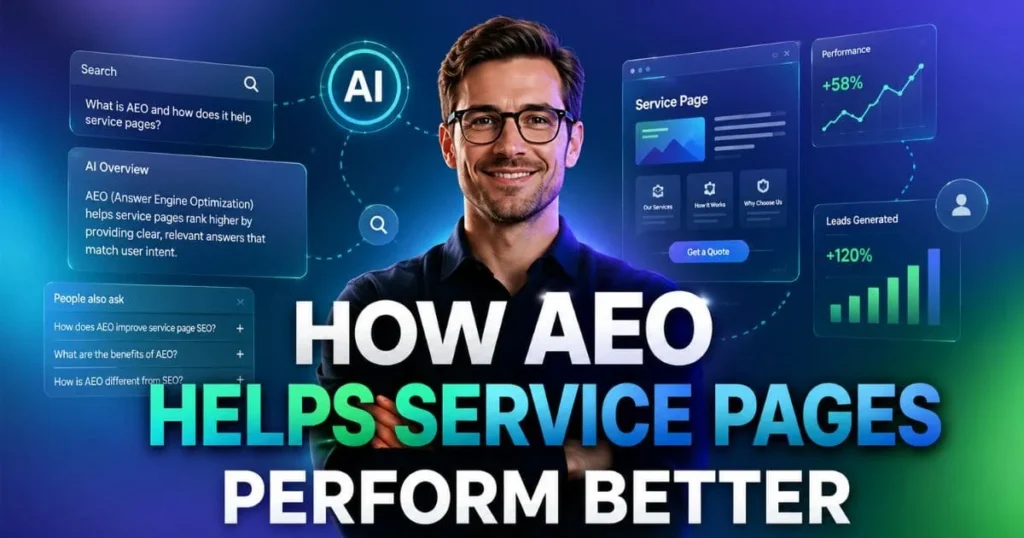
Many people ask, Why is AEO important for lead generation. The answer is simple. It helps users get the information they need before they take action. When the content is clear, the visitor feels less confused and more ready to contact the business.
Another common question is How can AEO improve service page leads. It improves leads by matching content with user intent, answering buyer questions, and guiding users toward the right action.
For AI search, the question becomes How to write service pages for AI search. The page should use clear headings, short answers, helpful explanations, FAQs, semantic terms, and structured content.
To answer How to optimize service pages for answer engines, focus on question based sections, direct answers, useful tables, internal links, and schema planning.
Best Structure for a Service Page
Many businesses ask What is the best structure for a service page. The best structure is one that explains the service clearly and helps the user make a decision.
A service page should include:
- A clear introduction
- A direct answer to the main query
- Service details
- Process explanation
- Benefits
- Proof or trust points
- FAQs
- CTA
This structure also answers How to create content that brings qualified leads because it connects useful information with clear conversion steps.
Long Tail Keyword Planning
Long tail keywords are important because they usually show stronger intent. A user searching a longer query often knows what they need.
A good brief can include terms such as AEO content brief template for service page leads, best content brief structure for lead generation, service page SEO content brief for businesses, and answer engine optimization for service based websites.
It can also include how AEO content improves organic leads, service page content strategy for AI search, write service pages that rank and generate leads, SEO and AEO content brief for service businesses, and how to optimize service pages for buyer intent.
These phrases help the content team build a page that supports both search visibility and user action.
Case Study: Service Page Improved With Better Brief Planning
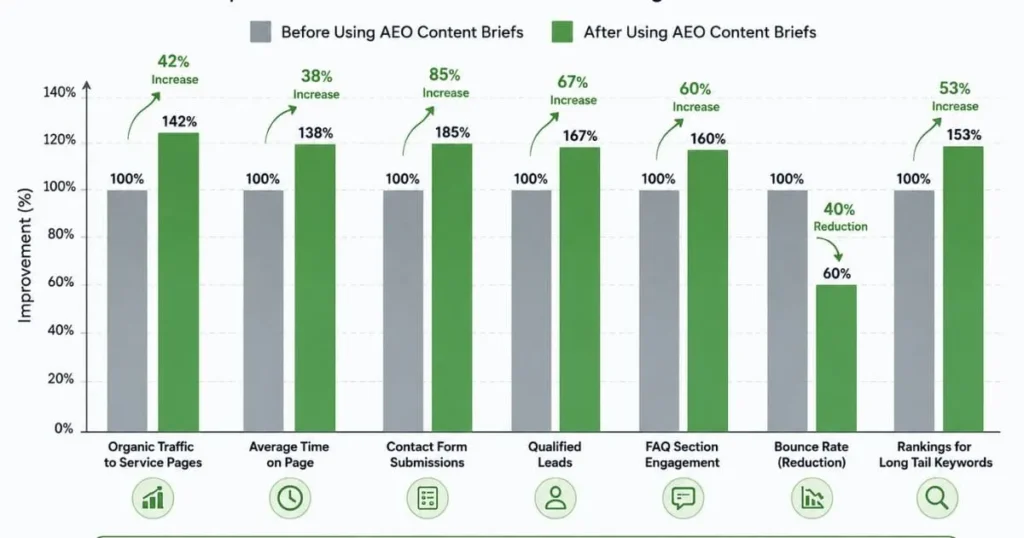
A service-based business had several pages that received traffic but did not generate enough inquiries. The pages were written in a basic format, explaining the service but failing to answer common buyer questions. They also had weak CTA placement, limited internal linking, and lacked valuable conversion-focused tools such as a local SEO ROI calculator, which could help visitors understand the potential return on their investment and encourage more inquiry submissions.
Problem
The main problems were:
- The page did not explain who the service was for
- The process was unclear
- FAQs were missing
- The CTA appeared only at the bottom
- The page did not include enough buyer questions
- The content did not support voice style searches
- Internal links were weak
Strategy
The content team created a new brief before rewriting the page. The brief included search intent, buyer questions, service related entities, FAQ planning, internal links, answer blocks, and CTA placement.
The team also added a short answer under each major heading. This helped visitors understand the service faster. The page included a simple table, a process section, a question based FAQ, and a stronger contact section.
Result
After the update, users spent more time on the page. More visitors reached the contact section. The business also received more relevant inquiries because the page explained the service more clearly before asking users to contact the team.
The improvement came from better planning, not from adding keywords randomly.
Common Mistakes to Avoid
Using Keywords Without Intent
A service page should not be filled with keywords without purpose. Every keyword should support a section, answer, or user need.
Writing Generic Service Content
Generic content does not help users decide. The page should explain what the service includes, who needs it, and what steps happen next.
Ignoring FAQs
FAQs are useful because they match natural language searches. They also help users find quick answers before contacting the business.
Weak Internal Linking
Internal links help users find related service pages and blog posts. They also help search engines understand the relationship between topics.
No CTA Planning
A service page needs a clear action path. A good CTA should appear after important sections where the user may be ready to act.
FAQ
What is an AEO content brief?
An AEO content brief is a planning document that helps writers create content that answers user questions clearly. It includes search intent, buyer questions, headings, FAQs, internal links, conversion points, and strategies to rank Google Maps in Kolkata for enhanced local search visibility.
How do AEO content briefs help service pages?
How do AEO content briefs help service pages is a common question. They help by giving writers a clear structure that answers real user doubts and supports better lead generation.
How to create AEO content briefs for service pages?
To answer how to create AEO content briefs for service pages, start with search intent, audience needs, buyer questions, service details, FAQs, CTA placement, and internal linking.
Why does a service page need answer focusaed content?
A service page needs answer focused content because visitors want quick clarity before they contact a business. Clear answers reduce confusion and support trust.
Can a content brief improve organic leads?
Yes. A strong brief can improve organic lead generation by helping the page match search intent, answer buyer questions, and guide users toward inquiry.
How many FAQs should a service page include?
A service page can include 5 to 8 useful FAQs. The questions should come from real buyer concerns, not generic filler content.
Should schema be included in the brief?
Yes. A brief can include schema suggestions such as FAQ schema, service schema, local business schema, or review related structured data where suitable.
Is AEO useful for local service businesses?
Yes. AEO is useful for local businesses because many users search with questions, location terms, and service needs before contacting a provider.
Conclusion
Service pages need more than keywords to perform well. They need clarity, structure, useful answers, and a clear path to inquiry. A strong brief helps the content team plan every part of the page before writing begins.
When a service page answers real questions, explains the process, supports user intent, and places CTAs at the right points, it becomes more useful for visitors and easier for search systems to understand.
For any business that wants better service page visibility and stronger inquiries, better content planning should come before rewriting the page. A clear brief can turn a basic service page into a helpful, search ready, and lead focused asset.