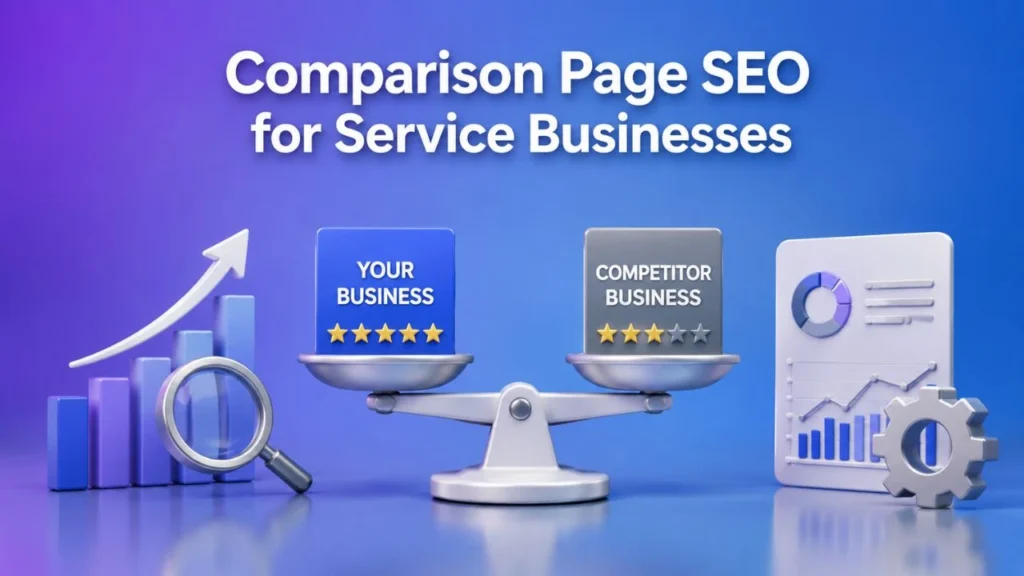
When people search for services online, they often compare multiple options before making a decision. They want to understand the differences, advantages, pricing structures, expected outcomes, and overall value offered by each solution. This behavior has created a significant opportunity for businesses that invest in comparison-focused content.
This is where comparison page SEO becomes an important part of a modern digital marketing strategy.
A well-optimized comparison page helps potential customers evaluate different services while guiding them toward a more informed decision. Instead of forcing users to search across multiple websites, comparison content brings valuable information together in one place. This improves user experience, increases engagement, and creates additional opportunities for lead generation.
Search engines also recognize the value of comparison content because it directly addresses commercial investigation intent. Users searching for terms such as “SEO vs PPC,” “email marketing vs social media marketing,” or “local SEO alternatives” are often closer to making a purchase decision than users conducting general research.
As search engines become more sophisticated and AI-powered search experiences continue to evolve, comparison content is becoming increasingly valuable. AI systems often look for structured, factual, and balanced content when generating answers. Well-crafted comparison pages can therefore increase visibility not only in traditional search results but also in AI-generated responses.
In this guide, you will learn how comparison page SEO works, why it matters for service businesses, how to understand search intent behind comparison queries, and how to perform effective keyword research that supports long-term rankings.
Table of Contents
What Is Comparison Page SEO?
Comparison pages have become one of the most effective content formats for attracting users who are actively evaluating solutions. Unlike informational blog posts, comparison pages focus on helping users choose between multiple options.
Definition of Comparison Pages
A comparison page is a content asset designed to analyze, compare, and explain the differences between two or more services, solutions, strategies, or providers.
The primary purpose of these pages is to assist users during the decision-making phase of the customer journey.
Examples include:
- SEO vs PPC
- Content Marketing vs Email Marketing
- Local SEO vs National SEO
- Organic Search vs Paid Search
- Social Media Marketing vs Search Engine Marketing
These pages often contain:
- Feature comparisons
- Benefits and limitations
- Cost considerations
- Suitability for different business goals
- Frequently asked questions
- Decision-making guidance
The SEO process used to optimize these pages is commonly referred to as comparison page SEO.
Why Comparison Content Matters in Digital Marketing?
- Digital marketing involves numerous strategies, channels, and service offerings. Businesses often struggle to determine which approach aligns best with their objectives.
- Comparison content helps solve this problem by providing clarity.
- Instead of simply promoting one service, comparison pages educate users about available options. This educational approach builds trust and positions your website as a reliable source of information.
Some major benefits include:
| Benefit | Impact |
| Better user experience | Helps visitors make informed decisions |
| Higher engagement | Users spend more time evaluating options |
| Improved lead quality | Attracts decision-stage prospects |
| Greater topical authority | Expands content coverage |
| Enhanced AI visibility | Structured information supports AI-generated answers |
Because comparison content directly addresses user concerns, it often generates stronger engagement metrics than general awareness content.
Types of Service Comparison Pages
Not all comparison pages serve the same purpose. Different formats address different search intents.
Service vs Service Pages
These are among the most common forms of comparison content.
Examples include:
- SEO vs PPC
- Content Marketing vs Paid Advertising
- Email Marketing vs Social Media Marketing
- Local SEO vs Traditional Advertising
These pages are often associated with versus page SEO because they target users searching for direct comparisons.
Agency vs Agency Comparisons
Potential clients frequently compare agencies before making a hiring decision.
Common searches include:
- SEO Agency A vs SEO Agency B
- Digital Marketing Agency Comparison
- Local Agency vs National Agency
This type of content addresses highly commercial search intent.
Tool Comparison Pages
Many businesses evaluate software and platforms before selecting solutions.
Examples include:
- CRM Platform A vs CRM Platform B
- Analytics Tool A vs Tool B
- Marketing Automation Platform Comparisons
Although tool comparisons focus on software, the same principles of comparison page SEO apply.
Alternative Solution Pages
Alternative-focused content helps users discover options beyond their original consideration.
Examples include:
- Alternatives to Paid Advertising
- Alternatives to Social Media Marketing
- Alternatives to Traditional Marketing
This content category is often optimized through alternative page SEO, which targets users actively seeking substitutes or additional options.
Service Comparison Pages
Comprehensive service comparison pages evaluate multiple solutions within a single piece of content.
Examples include:
- Best Lead Generation Strategies Compared
- Digital Marketing Channels Compared
- Local SEO Services Compared
These pages provide broader evaluations and often attract significant organic traffic because they satisfy multiple search intents simultaneously.
Why Comparison Page SEO Matters for Service Businesses?
The digital marketing landscape is becoming increasingly competitive. Businesses are no longer competing only for visibility; they are competing for attention, trust, and conversions.
This is why comparison page SEO has become such a valuable strategy.
Captures High Intent Searches
Users who perform comparison searches are often further along in the buying journey.
Consider the difference between:
- What is SEO?
- SEO vs PPC
The first query indicates general interest.
The second query indicates evaluation and decision-making.
Comparison searches frequently signal commercial investigation intent, making them highly valuable for service providers.
Improves Lead Quality
- Traffic volume alone does not guarantee business growth.
- Many websites attract visitors who are not ready to purchase.
- Comparison content tends to attract users who are actively exploring solutions and narrowing their options.
This often results in:
- Better conversion rates
- Higher-quality leads
- More meaningful engagement
When users find answers to their questions, they are more likely to trust the source providing those answers.
Supports Bottom Funnel Marketing
- Many content strategies focus heavily on awareness-stage content.
- While awareness content is important, businesses also need content that supports users near the purchasing stage.
- Comparison pages naturally align with bottom-funnel marketing objectives because they address practical decision-making questions.
Builds Topical Authority
- Search engines increasingly evaluate websites based on topic depth and content relationships.
- Publishing comparison content helps strengthen topical authority by covering related concepts within a subject area.
For example, a digital marketing website may publish:
- SEO guides
- PPC guides
- Local SEO guides
- Content marketing guides
- Comparison pages connecting these topics
This creates a stronger content ecosystem and demonstrates expertise.
Enhances Conversion Rates
Comparison pages provide an opportunity to educate users while moving them closer to conversion.
Because visitors are already evaluating options, they are often more receptive to:
- Consultation requests
- Service inquiries
- Contact forms
- Strategy discussions
This makes comparison content valuable not only for rankings but also for business growth.
Understanding Search Intent Behind Comparison Queries
- Search intent is one of the most important ranking factors in modern SEO.
- A page that perfectly matches user intent often performs better than a page with more backlinks or a larger domain authority.
- Understanding intent is therefore essential for effective comparison page SEO.
Informational Intent
Some users are simply trying to understand the differences between options.
Examples include:
- What is the difference between SEO and PPC?
- How does email marketing compare to social media marketing?
These users are gathering information before making decisions.
Content targeting informational intent should focus on education and clarity.
Commercial Investigation Intent
This is the most common intent behind comparison searches.
Examples include:
- SEO vs PPC for small businesses
- Local SEO vs Google Ads
- Content marketing vs paid advertising
Users want practical information that helps them choose the right solution. This audience is often close to conversion.
Transactional Intent
Some comparison queries reveal immediate purchase interest.
Examples include:
- Best SEO service for local businesses
- Best lead generation strategy for B2B companies
- Which digital marketing service should I choose?
These users want recommendations and actionable guidance.
Pages optimized for transactional intent should include strong calls to action and clear decision-making frameworks.
AI Search Intent Patterns
AI-powered search systems process comparison queries differently than traditional search engines.
When generating responses, AI systems often prioritize:
- Structured content
- Clear headings
- Tables
- Objective comparisons
- Direct answers
- Frequently asked questions
This means comparison pages must be designed not only for human readers but also for machine understanding.
Websites that provide organized information are more likely to appear in AI-generated search experiences.
Keyword Research for Comparison Page SEO
- Without proper keyword research, even the most detailed comparison page can struggle to gain visibility.
- Effective keyword research helps identify the language your audience uses when comparing services.
Primary Keywords
The primary keyword for this topic is:
| Keyword Type | Keyword |
| Main Keyword | comparison page SEO |
| Secondary Keyword | versus page SEO |
| Secondary Keyword | alternative page SEO |
| Supporting Keyword | service comparison pages |
These keywords should appear naturally throughout the content.
Keyword stuffing should always be avoided.
Long Tail Keyword Opportunities
Long-tail keywords often convert better because they reflect specific user intent.
Examples include:
| Long Tail Keyword | Intent |
| comparison page SEO strategy | Informational |
| comparison page SEO best practices | Informational |
| service comparison pages for lead generation | Commercial |
| SEO vs PPC for local businesses | Commercial |
| digital marketing service comparison | Commercial |
| alternative page SEO guide | Informational |
These terms help capture highly targeted traffic.
Semantic Keywords
Modern search engines rely heavily on semantic relevance.
Related phrases may include:
- search intent
- conversion optimization
- digital marketing services
- commercial investigation
- topical authority
- customer journey
- structured data
- service evaluation
- lead generation
- decision making
Using these naturally strengthens topic coverage.
Question Based Keywords
Question-focused keywords support featured snippets and AI search visibility.
Examples include:
- What is comparison page SEO?
- How do service comparison pages work?
- Why are versus pages important for SEO?
- What is alternative page SEO?
- How do comparison pages generate leads?
These questions can later be expanded into FAQ sections.
Voice Search Keywords
Voice searches tend to be longer and more conversational.
Examples include:
- Which digital marketing service is best for my business?
- Should I choose SEO or PPC?
- What is the difference between local SEO and paid advertising?
- Which lead generation strategy works best?
Including conversational language helps improve visibility across voice-enabled devices and AI assistants.
Keyword Mapping Strategy
A strong keyword map improves topical relevance.
| Page Section | Target Keyword |
| Introduction | comparison page SEO |
| Service Comparisons | service comparison pages |
| Comparison Frameworks | versus page SEO |
| Alternative Solutions | alternative page SEO |
| FAQ Section | Long tail question keywords |
Proper keyword mapping ensures comprehensive coverage without over-optimization.
At this stage, you should have a clear understanding of what comparison pages are, why they matter for service businesses, how users search for comparison content, and how to identify keywords that support ranking potential. The next step is learning how to structure and optimize comparison pages so they attract qualified traffic and convert visitors into leads.
Ideal Structure of High-Ranking Service Comparison Pages
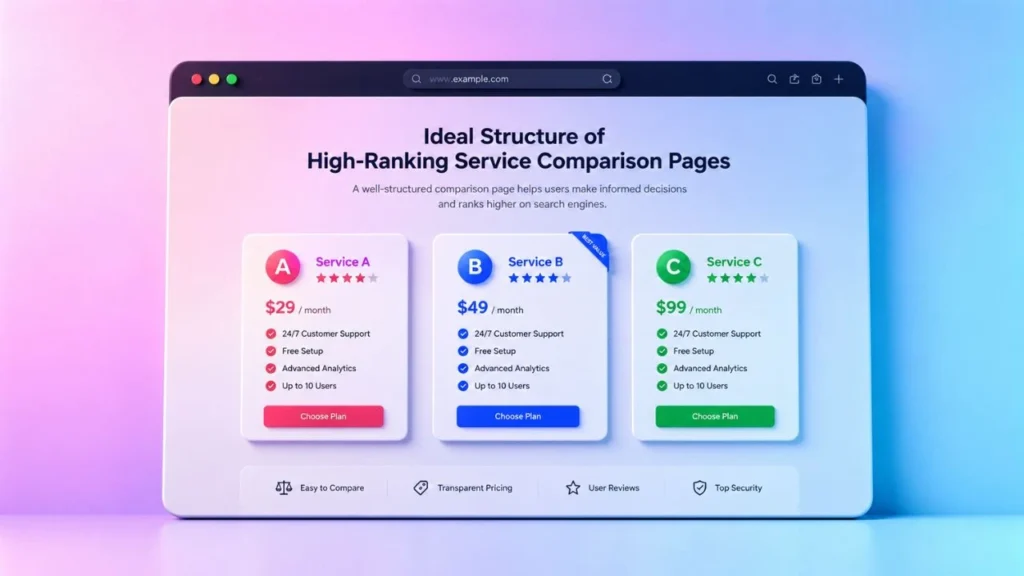
Creating a comparison page is not simply about placing two services side by side and listing their features. Search engines, AI search platforms, and users all expect a clear structure that helps them quickly understand the differences between available options.
A well-structured page improves readability, engagement, rankings, and conversions. This is one of the most important aspects of successful comparison page SEO.
Start with a Clear Introduction
The introduction should immediately explain:
- What is being compared
- Why the comparison matters
- Who the comparison is for
- What readers will learn
Many websites jump directly into comparison tables. While tables are useful, readers often need context before evaluating different options.
An effective introduction sets expectations and aligns with user intent.
For example, if you are comparing SEO and PPC, explain that both channels can generate traffic but serve different business objectives.
This helps readers stay engaged and signals relevance to search engines.
Include a Quick Summary Section
Many visitors want answers immediately.
A quick summary section helps users understand the key differences without reading the entire article.
Example Summary Table
| Factor | SEO | PPC |
| Traffic Source | Organic | Paid |
| Time to Results | Longer | Faster |
| Long-Term Value | High | Moderate |
| Cost Structure | Ongoing Optimization | Advertising Budget |
| Sustainability | Strong | Depends on Spend |
This format improves user experience and increases the likelihood of appearing in featured snippets.
AI search systems also prefer concise summaries because they simplify information extraction.
Build Comprehensive Comparison Tables
Tables are a fundamental component of service comparison pages.
They allow readers to evaluate multiple factors quickly while reducing cognitive effort.
Example Service Comparison Framework
| Comparison Factor | Service A | Service B |
| Cost | Varies | Varies |
| Scalability | High | Moderate |
| Long-Term ROI | High | Moderate |
| Setup Time | Moderate | Fast |
| Maintenance Requirements | Ongoing | Continuous |
| Lead Generation Potential | High | High |
Comparison tables should focus on meaningful business factors rather than generic information.
Add Pros and Cons Sections
Readers appreciate balanced content.
Presenting advantages and limitations creates trust and supports stronger engagement.
Pros Example
- Long-term growth potential
- Sustainable visibility
- Strong brand authority
Cons Example
- Longer implementation period
- Ongoing optimization required
- Results may vary by industry
Balanced analysis supports stronger comparison page SEO because it demonstrates objectivity.
Include Real Business Use Cases
Every service performs differently depending on business goals. Creating use case sections helps users identify the best solution for their situation.
Examples
Best for Local Businesses
Explain which service may be more suitable for businesses targeting local customers.
Best for Fast Lead Generation
Discuss options that may produce faster results.
Best for Long-Term Growth
- Highlight services that provide sustainable benefits over time.
- Use case sections align closely with commercial investigation intent and often improve conversion rates.
Add a Decision-Making Section
- Many comparison pages stop after listing differences.
- A better approach is to help readers make a decision.
Consider questions such as:
- When should you choose Service A?
- When should you choose Service B?
- Which solution is ideal for specific goals?
- Can both solutions work together?
This type of content directly supports users who are close to taking action.
Include Frequently Asked Questions
FAQs help address additional search queries while expanding topical relevance.
Common questions often include:
- Which service is more cost-effective?
- Which strategy produces faster results?
- Can both approaches be used together?
- What are the long-term benefits?
FAQ sections also create opportunities for rich results and AI-generated answers.
On-Page SEO Best Practices for Comparison Page SEO
- Even the best content can struggle if technical and on-page optimization are ignored.
- Effective comparison page SEO requires careful optimization of every page element.
Optimize the URL Structure
A clean URL improves usability and relevance.
Examples:
- /seo-vs-ppc/
- /local-seo-vs-google-ads/
- /content-marketing-vs-paid-advertising/
Avoid unnecessary parameters or excessively long URLs.
Short and descriptive URLs are easier for both users and search engines to understand.
Create SEO-Friendly Title Tags
The title tag remains one of the strongest on-page ranking signals.
Effective titles should:
- Include the primary keyword
- Reflect search intent
- Encourage clicks
Examples
- Comparison Page SEO: Complete Guide for Service Businesses
- SEO vs PPC: Which Strategy Is Right for Your Business?
- Alternative Page SEO Strategies for Service Providers
Write Compelling Meta Descriptions
Meta descriptions influence click-through rates.
A strong description should:
- Summarize the page
- Include target keywords
- Encourage engagement
Example:
Compare leading digital marketing services, understand key differences, and discover proven comparison page SEO strategies to improve rankings and conversions.
Optimize Header Structure
Logical headings improve readability and crawling efficiency.
Recommended Structure
H1:
- Comparison Page SEO for Service Businesses
H2:
- What Is Comparison Page SEO?
- Why Comparison Pages Matter
H3:
- Benefits
- Best Practices
- Optimization Techniques
Clear hierarchy helps search engines understand content relationships.
Use Strategic Internal Linking
Internal links strengthen topical authority.
Potential destinations include:
- SEO guides
- Lead generation articles
- Local SEO resources
- Content marketing tutorials
- Conversion optimization content
Internal linking also distributes authority across your website.
Optimize Images
Comparison pages often contain charts, graphics, and visual comparisons.
Image optimization should include:
- Descriptive filenames
- Keyword-relevant alt text
- Compressed file sizes
- Mobile-friendly dimensions
Image SEO can generate additional organic visibility through image search.
Implement Schema Markup
- Structured data improves search engine understanding.
- Several schema types are particularly useful.
FAQ Schema
Supports enhanced search visibility.
Article Schema
Provides context about the content.
Breadcrumb Schema
Improves navigation and user experience.
Schema markup becomes increasingly important as AI-driven search experiences expand.
How to Create Effective Service Comparison Pages?
- Many comparison pages fail because they focus more on promotion than education.
- Successful pages prioritize user needs first.
Collect Reliable Information
- Every comparison should be accurate, current, and verifiable.
- Avoid assumptions or unsupported claims.
Instead, focus on:
- Features
- Benefits
- Limitations
- Business suitability
- Strategic considerations
Accuracy builds credibility and trust.
Focus on User Intent
Different comparison queries reflect different goals.
Some users want:
- Educational information
- Cost comparisons
- Performance comparisons
- Alternative solutions
Understanding intent helps shape content structure.
Maintain a Neutral Tone
One of the most effective ways to improve trust is to remain objective.
Balanced comparisons:
- Improve credibility
- Increase engagement
- Reduce bounce rates
- Strengthen E-E-A-T signals
Users can easily identify biased content.
Neutral analysis generally performs better over time.
Highlight Unique Value Propositions
Each service should have clearly defined strengths.
Questions to address include:
- What makes this service different?
- Which business goals does it support?
- What are the expected outcomes?
Helping users understand these distinctions improves decision-making.
Include Conversion Opportunities
Comparison content should educate while supporting business objectives.
Potential conversion elements include:
- Contact forms
- Consultation requests
- Strategy sessions
- Service pages
- Resource downloads
The key is ensuring that calls to action feel helpful rather than disruptive.
Versus Page SEO Best Practices
Direct comparison searches represent some of the most valuable opportunities in digital marketing.
This is where versus page SEO becomes highly relevant.
How Search Engines Evaluate Versus Pages?
Search engines look for:
- Comprehensive analysis
- Clear differentiation
- User-focused information
- Structured formatting
- Content depth
Thin comparison pages rarely perform well.
Match Commercial Investigation Intent
Users searching “SEO vs PPC” typically want answers to questions such as:
- Which is better?
- Which is more affordable?
- Which generates faster results?
- Which provides better ROI?
Your content should answer these questions directly.
Prioritize Content Depth
High-performing comparison pages typically include:
- Detailed analysis
- Multiple comparison factors
- Supporting explanations
- Use cases
- FAQs
Depth improves topical coverage and user satisfaction.
Demonstrate Experience and Expertise
Search engines increasingly prioritize content demonstrating expertise.
Consider discussing:
- Industry considerations
- Strategic implications
- Practical implementation factors
This supports stronger E-E-A-T signals.
Avoid Common Versus Page Mistakes
Common issues include:
- Biased comparisons
- Shallow analysis
- Missing comparison tables
- Weak internal linking
- Lack of user-focused recommendations
Addressing these problems can significantly improve rankings.
Alternative Page SEO Strategy for Service Businesses
Alternative-focused searches continue to grow because businesses want multiple options before making decisions.
Optimizing these pages requires a slightly different approach than traditional comparison content.
What Are Alternative Pages?
Alternative pages introduce users to substitute services, strategies, or solutions.
Examples include:
- Alternatives to traditional advertising
- Alternatives to PPC campaigns
- Alternatives to social media marketing
This content category is often optimized using alternative page SEO principles.
Understanding Alternative Search Intent
Users searching for alternatives often have specific concerns.
Common reasons include:
- Budget limitations
- Feature requirements
- Performance expectations
- Strategic preferences
Understanding these motivations helps create more relevant content.
Structure Alternative Pages Effectively
A strong alternative page typically includes:
Original Solution Overview
Explain the existing option.
Alternative Solutions
Introduce viable alternatives.
Comparison Table
Compare major factors.
Best Use Cases
Explain who benefits most from each option.
Recommendations
Help users identify the most suitable solution.
Ranking Factors for Alternative Pages
Search engines often reward alternative pages that provide:
- Comprehensive coverage
- Balanced recommendations
- Clear comparisons
- Updated information
- Strong user engagement
The more useful the content is, the stronger its ranking potential.
Conversion Opportunities Within Alternative Pages
Alternative pages attract highly engaged visitors.
Potential conversion strategies include:
- Service consultations
- Educational resources
- Industry guides
- Personalized recommendations
When executed properly, alternative pages can become valuable lead-generation assets.
By combining effective page structure, strong on-page optimization, comprehensive comparisons, and strategic content design, businesses can create comparison assets that rank well, support users, and contribute to long-term growth. These foundations set the stage for the next phase of optimization, which focuses on AI search visibility, voice search, internal linking, measurement, and future-proof SEO strategies.
AI Search Optimization for Comparison Pages
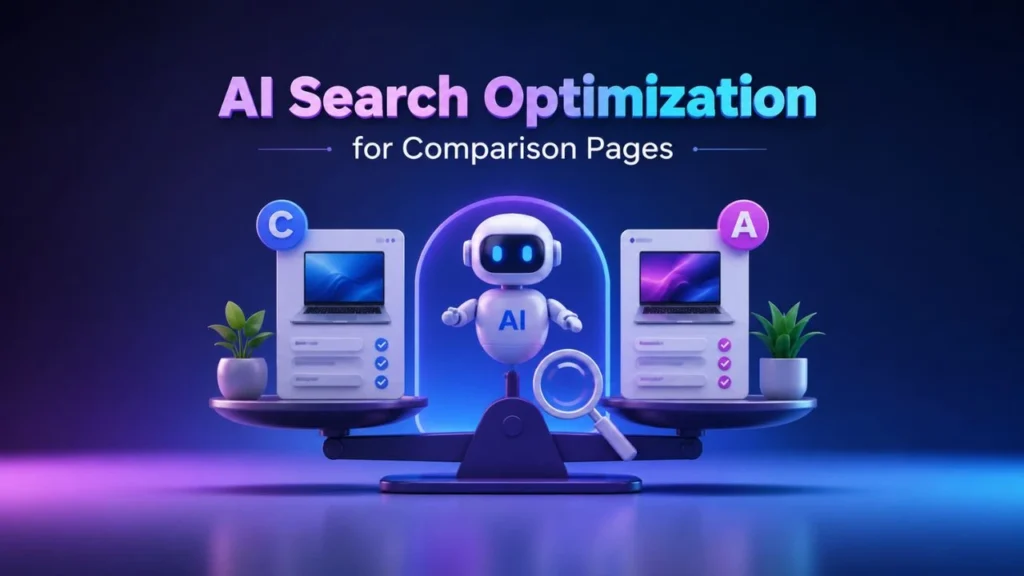
Search behavior is changing rapidly. While traditional search engines continue to drive significant traffic, AI-powered search experiences are becoming an increasingly important source of visibility.
Users now ask detailed questions and expect direct answers. AI systems analyze content differently than traditional ranking algorithms, which means businesses must adapt their comparison page SEO strategy accordingly.
How AI Search Engines Evaluate Content?
AI search platforms focus heavily on:
- Content clarity
- Contextual relevance
- Structured information
- Entity relationships
- Factual accuracy
- User intent satisfaction
Unlike traditional search engines that primarily rank pages, AI systems often extract information directly from content and use it to generate responses.
As a result, comparison pages should be written in a way that makes information easy to understand and easy to extract.
Structure Content for AI Citations
AI systems prefer content that follows logical organization.
Best practices include:
- Clear headings
- Short paragraphs
- Comparison tables
- Bullet points
- Direct answers
- FAQ sections
When information is organized clearly, AI platforms can interpret it more effectively.
For example, instead of writing lengthy paragraphs explaining differences between services, create dedicated sections that answer specific questions.
Use Entity-Based Optimization
Modern search engines increasingly rely on entities rather than keywords alone.
Entities help search engines understand relationships between concepts.
Examples within digital marketing include:
- Search Engine Optimization
- Pay Per Click Advertising
- Content Marketing
- Lead Generation
- Conversion Rate Optimization
- Local SEO
- Email Marketing
Including related entities naturally throughout your content strengthens topical relevance and improves understanding.
Create Direct Answer Sections
Many comparison searches are phrased as questions.
Examples include:
- Which service is better for lead generation?
- Is SEO better than PPC?
- What is the best alternative to paid advertising?
Providing concise answers immediately beneath these questions improves the likelihood of appearing in AI-generated responses.
Use Comparison Tables Extensively
- AI systems often rely on structured information.
- Comparison tables simplify information retrieval and improve readability.
Example
| Factor | SEO | PPC |
| Traffic Source | Organic | Paid |
| Initial Cost | Moderate | Higher |
| Long-Term Value | High | Variable |
| Speed of Results | Slower | Faster |
Well-designed tables strengthen both user experience and AI visibility.
Demonstrate Trust and Expertise
AI systems favor trustworthy content.
Trust signals may include:
- Accurate information
- Balanced analysis
- Comprehensive explanations
- Updated content
- Consistent topical coverage
These elements support stronger rankings across both traditional and AI-powered search environments.
Voice Search Optimization for Service Comparison Pages
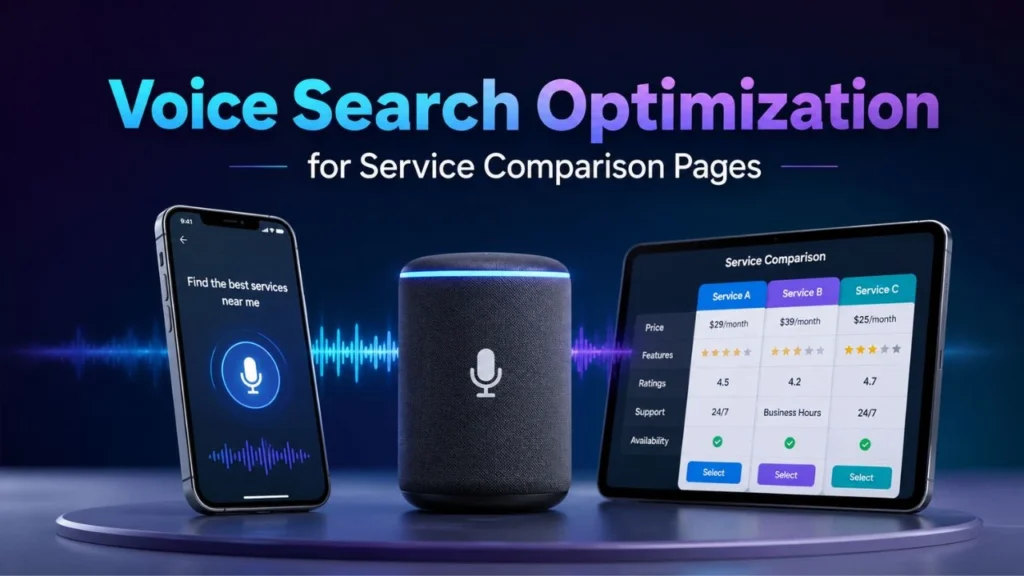
- Voice search continues to influence how users interact with digital content.
- Instead of typing short phrases, users often ask complete questions.
- This creates new opportunities for comparison page SEO.
Focus on Conversational Queries
Voice searches commonly resemble natural conversations.
Examples include:
- Which marketing strategy is best for a small business?
- Should I choose SEO or paid advertising?
- What is the difference between content marketing and PPC?
Creating content that answers these questions naturally can improve voice search visibility.
Optimize for Featured Snippets
Many voice assistants rely on featured snippets when providing answers.
To increase your chances of earning these positions:
- Answer questions directly
- Use concise explanations
- Include numbered lists
- Create comparison tables
- Structure content logically
Featured snippets often become the source of voice search responses.
Use Question-Based Headings
Question-based headings align naturally with voice search behavior.
Examples include:
- Which Digital Marketing Service Produces Faster Results?
- Is SEO Better Than Paid Advertising?
- What Are the Best Alternatives to PPC?
These headings create opportunities for both traditional rankings and AI-generated answers.
Write Natural Language Answers
- Avoid overly technical or robotic language.
- Users interact with voice assistants conversationally, and content should reflect that behavior.
- Natural language improves readability while increasing relevance for voice-based queries.
Common Comparison Page SEO Mistakes
- Even well-intentioned comparison pages can struggle when important optimization principles are overlooked.
- Avoiding these mistakes can significantly improve performance.
Creating Biased Comparisons
- One of the biggest mistakes is presenting an obviously one-sided comparison.
- Users want objective guidance.
- Search engines also prefer content that demonstrates balance and credibility.
- When discussing services, highlight both strengths and limitations.
Publishing Thin Content
- A comparison page with only a few hundred words rarely satisfies user intent.
- Comprehensive analysis typically performs better because it answers more questions and covers a broader range of concerns.
- Depth often contributes to stronger rankings.
Ignoring Comparison Tables
- Tables help users evaluate information quickly.
- Without them, comparison pages can become difficult to navigate.
- Structured comparisons improve both usability and search visibility.
Weak Internal Linking
Many websites treat comparison pages as isolated assets.
Instead, connect them to:
- Service pages
- Educational resources
- Case studies
- Industry guides
- Related comparison articles
This strengthens topical authority and improves crawling.
Failing to Match Search Intent
- A user searching for alternatives has different expectations than a user searching for a direct comparison.
- Understanding intent is critical for effective versus page SEO and alternative page SEO.
Neglecting Structured Data
- Schema markup helps search engines understand content more effectively.
- Without structured data, you may miss opportunities for enhanced search visibility.
Using Outdated Information
- Comparison content should be reviewed regularly.
- Service offerings, pricing models, and marketing trends evolve over time.
- Fresh content tends to maintain stronger relevance.
Internal Linking Strategy for Service Comparison Pages
- Internal linking is often underestimated, yet it plays a significant role in SEO performance.
- Effective internal links help search engines understand content relationships while guiding users through your website.
Link to Relevant Service Pages
Comparison content naturally connects to service-focused pages.
Examples include:
- SEO services
- PPC services
- Content marketing services
- Local SEO services
- Lead generation services
These links help users continue their journey after reading comparison content.
Connect Supporting Educational Content
Educational resources strengthen topic clusters.
Examples include:
- Beginner SEO guides
- PPC strategy articles
- Content marketing tutorials
- Conversion optimization resources
This creates a more comprehensive user experience.
Link to Related Comparison Articles
Comparison content often leads naturally to additional comparisons.
Examples:
- SEO vs PPC
- SEO vs Social Media Marketing
- PPC vs Display Advertising
- Content Marketing vs Email Marketing
This structure encourages deeper engagement.
Build Topic Clusters
Topic clusters help establish authority.
A digital marketing cluster may include:
| Pillar Topic | Supporting Content |
| SEO | SEO Comparisons |
| PPC | PPC Comparisons |
| Content Marketing | Content Comparisons |
| Lead Generation | Lead Generation Comparisons |
| Local SEO | Local SEO Comparisons |
Topic clusters strengthen semantic relevance and support long-term rankings.
Measuring the Success of Comparison Page SEO
- Publishing a page is only the beginning.
- Ongoing measurement helps determine whether your strategy is achieving desired outcomes.
Organic Traffic
Traffic growth is often the first indicator of success.
Monitor:
- Total organic visits
- New users
- Returning users
- Traffic trends
Consistent growth suggests improving visibility.
Keyword Rankings
Track important keywords such as:
- comparison page SEO
- versus page SEO
- alternative page SEO
- service comparison pages
Ranking improvements often indicate stronger relevance and authority.
Click Through Rate
- CTR measures how effectively your search listing attracts visitors.
- Improving titles and meta descriptions can increase click-through rates significantly.
User Engagement Metrics
Monitor metrics such as:
- Average engagement time
- Bounce rate
- Scroll depth
- Pages per session
Strong engagement often signals content quality.
Lead Generation Performance
Ultimately, many service businesses create comparison content to generate leads.
Track:
- Contact form submissions
- Consultation requests
- Phone inquiries
- Service page visits
These metrics provide insight into business impact.
AI Search Visibility
As AI search continues to grow, visibility should also be monitored.
Indicators include:
- Referral traffic from AI platforms
- Brand mentions
- Citation frequency
- Featured answer appearances
Tracking these metrics can help evaluate emerging opportunities.
Future Trends in Comparison Page SEO
Search engines continue to evolve, and successful marketers adapt accordingly.
Several trends are expected to influence comparison page SEO in the coming years.
AI-Generated Search Results
- AI-generated summaries are becoming more common.
- Content that is clear, structured, and authoritative will likely receive greater visibility.
Entity-Based Ranking Systems
Search engines increasingly evaluate relationships between topics rather than isolated keywords.
Strong topical coverage will become even more important.
Experience-Focused Content
- Users value practical insights and useful guidance.
- Content that genuinely helps decision-making is likely to outperform content created solely for rankings.
Semantic Search Evolution
- Search engines continue to improve their understanding of context and meaning.
- Future optimization efforts will focus more on topic relevance than exact-match keyword repetition.
Personalized Search Experiences
- Search experiences are becoming increasingly personalized.
- Comparison pages that address multiple user scenarios may benefit from this shift.
Conclusion
Comparison-focused content has become one of the most valuable assets a service business can create.
A well-executed comparison page SEO strategy helps attract high-intent visitors, improve user experience, strengthen topical authority, and support lead generation objectives.
Whether you are creating direct comparisons, implementing versus page SEO, developing alternative page SEO content, or building comprehensive service comparison pages, the goal remains the same: helping users make informed decisions.
As search engines, AI platforms, and voice assistants continue to evolve, businesses that prioritize clear, trustworthy, and structured comparison content will be better positioned to earn visibility and build credibility.
The most successful comparison pages do more than rank. They educate, guide, and create meaningful connections between user needs and business solutions.
Frequently Asked Questions
What is comparison page SEO?
Comparison page SEO is the process of optimizing pages that compare two or more services, solutions, or strategies. The goal is to improve visibility for comparison-related searches and help users make informed decisions.
How do service comparison pages improve SEO?
Service comparison pages target high-intent keywords, improve topical authority, increase user engagement, and provide valuable information that search engines can use to understand content relevance.
What is the difference between versus page SEO and alternative page SEO?
Versus page SEO focuses on direct comparisons between two options, while alternative page SEO targets users looking for substitute solutions or additional choices.
Why are comparison pages effective for lead generation?
Comparison pages attract users who are already evaluating solutions. These visitors are often closer to making purchasing decisions, which can lead to higher conversion rates.
How long should a comparison page be?
The ideal length depends on the topic, but comprehensive comparison pages typically range from 2,000 to 4,500 words to fully address user intent and provide meaningful analysis.
Are comparison pages useful for AI search engines?
Yes. AI search systems frequently rely on structured, informative, and well-organized content. Comparison pages that use clear headings, tables, and concise answers are often easier for AI systems to interpret.
Which schema markup should be used on comparison pages?
Common options include FAQ Schema, Article Schema, and Breadcrumb Schema. These help search engines better understand the content and may improve visibility in search results.
How often should comparison pages be updated?
Reviewing comparison pages every few months is recommended. Updates help maintain accuracy, improve relevance, and align content with changing industry trends.
What makes a high-converting comparison page?
A high-converting comparison page provides balanced information, addresses user concerns, includes clear recommendations, and offers helpful next steps without being overly promotional.
Can comparison page SEO help service businesses rank for commercial keywords?
Yes. Comparison pages are particularly effective for commercial investigation searches because they align closely with the evaluation stage of the customer journey and often attract highly qualified traffic.