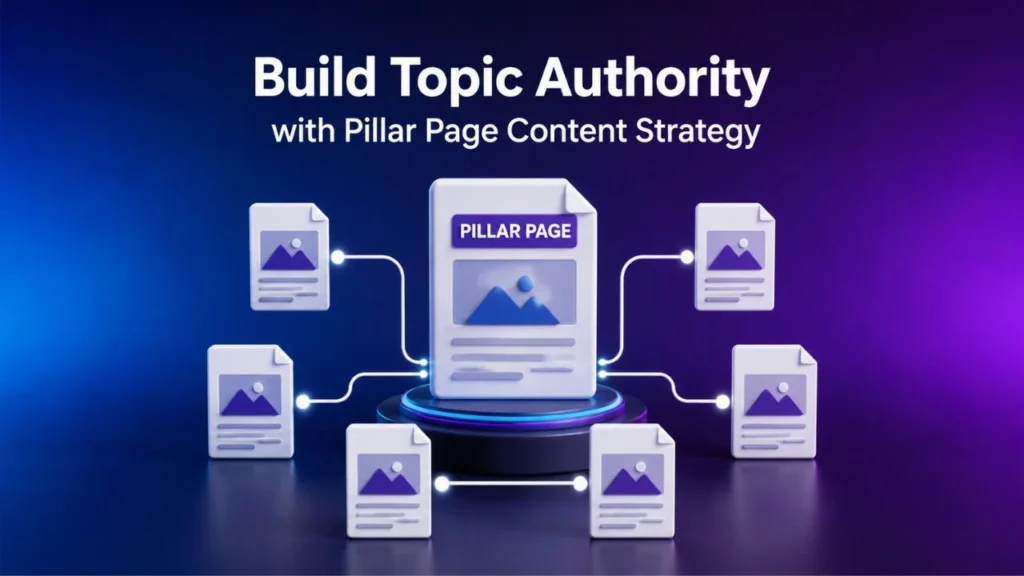
Search engines no longer rank content based only on individual keywords. Modern SEO focuses more on relevance, depth, structure, and content relationships. Websites that consistently cover a subject from multiple angles often perform better in organic search results. This is why many digital marketing websites are now investing in a strong Pillar Page Content Strategy.
A well planned Pillar Page Content Strategy helps organize content into connected topics that improve user experience and search engine understanding. Instead of publishing unrelated blog posts, websites can build a complete content ecosystem around a core topic. This approach supports topical authority SEO and helps search engines recognize a website as a reliable source of information.
The growing influence of AI search engines, voice search tools, and semantic search algorithms has made structured content even more important. Search engines now evaluate how pages connect, how topics are grouped, and whether a website provides comprehensive coverage of a subject. A proper topic cluster strategy allows websites to create content that aligns with these ranking signals.
For digital marketing blogs, this approach supports long term visibility. It improves keyword coverage, strengthens internal linking, boosts topical relevance, and supports organic traffic growth strategy goals. It also helps websites improve crawlability while building a scalable SEO content plan.
This guide explains how to build topical authority using a content cluster model, internal linking strategy, semantic SEO strategy, and structured SEO content architecture. It also covers how pillar pages improve SEO and why this strategy is essential for modern search engine visibility improvement.
Table of Contents
Why Topic Authority Matters in Modern SEO
The Shift from Keyword SEO to Topical Authority SEO
Traditional SEO relied heavily on exact match keywords and isolated landing pages. While keywords still matter, search engines now prioritize broader topic understanding. Algorithms analyze semantic relationships, user intent, and content depth to determine which websites deserve higher rankings.
Topical authority SEO focuses on building expertise around a subject instead of optimizing a single page for one keyword. This process allows websites to rank for a larger set of related search queries.
A strong Pillar Page Content Strategy helps search engines understand:
- The primary topic of a website
- The relationship between related pages
- The depth of content coverage
- The relevance of internal links
- The structure of the website content hierarchy
This creates a more effective authority building content strategy that supports sustainable rankings.
How AI Search Is Changing Content Optimization?

AI search engines use natural language processing and semantic understanding to deliver answers. They analyze topic relationships instead of depending only on keyword repetition. This means websites need content that is connected, well organized, and contextually relevant.
A semantic SEO strategy helps align content with how AI systems interpret meaning. Instead of focusing only on keywords, websites should create connected content that addresses multiple related questions and subtopics.
This is where a content hub strategy becomes valuable. When pages are linked together logically, search engines can better understand the overall topic structure.
The Role of Search Intent Optimization
Search intent optimization is essential in modern SEO. Users search with different goals, including:
- Learning information
- Comparing solutions
- Finding services
- Solving problems
A pillar page strategy allows websites to target broad search intent while supporting cluster pages focus on more specific queries. This combination improves search visibility across different stages of the user journey.
What Is a Pillar Page Content Strategy?
A Pillar Page Content Strategy is a structured content model where one central page covers a broad topic and links to multiple related supporting pages. The main pillar page acts as cornerstone content while cluster pages provide detailed information about subtopics.
This pillar page content strategy is widely used in digital marketing because it helps improve website authority and organize content more effectively.
Components of a Pillar Page Strategy
Pillar Pages for SEO
Pillar pages are comprehensive resources that provide an overview of a broad subject. They usually target competitive keywords with high search demand.
These pages support:
- Topic authority building
- Search engine visibility improvement
- Stronger SEO content architecture
- Better content organization for SEO
Cluster Content Creation
Cluster pages focus on narrower subtopics connected to the main pillar. These pages target long tail keywords and answer specific user questions.
Cluster content creation helps:
- Increase organic rankings
- Improve search rankings
- Expand semantic relevance
- Strengthen topic depth
Internal Linking Strategy
An effective internal linking strategy connects cluster pages back to the pillar page and vice versa. This creates a clear content silo structure that search engines can crawl efficiently.
Internal linking for topic authority supports:
- Better page discovery
- Improved crawlability
- Stronger topical relationships
- Improved website content hierarchy
Content Silo Structure
A content silo structure groups related content into organized categories. This improves user navigation and helps search engines understand topic relationships.
A proper content silo structure is important for:
- SEO topic clusters
- Semantic SEO strategy
- Structured content strategy
- Website organization
How Search Engines Understand Topical Relevance?

Search engines use advanced algorithms to determine how relevant a page is to a topic. They evaluate content quality, internal links, semantic relationships, and topical depth.
Semantic SEO Strategy and Topic Relationships
Semantic SEO strategy focuses on context and meaning rather than exact keyword matching. Search engines analyze related terms, entities, and concepts to determine content relevance.
When websites use a content cluster model, they naturally create semantic relationships between pages. This helps boost topical relevance and improve rankings for multiple related keywords.
Keyword Clustering Strategy
Keyword clustering strategy involves grouping similar search queries into categories. Instead of targeting one keyword per page, websites can create broader content themes.
Benefits of keyword clustering strategy include:
- Better search intent alignment
- Reduced keyword cannibalization
- Improved content mapping for SEO
- More scalable SEO content plan
Website Content Hierarchy and Crawlability
Search engines rely on structure to crawl websites effectively. A clear website content hierarchy makes it easier for bots to understand page relationships.
When websites use a Pillar Page Content Strategy, they improve crawlability by:
- Reducing orphan pages
- Creating logical navigation paths
- Improving link equity distribution
- Supporting faster indexing
Topic Cluster vs Pillar Page
Many marketers confuse topic clusters and pillar pages, but both serve different purposes within the same SEO system.
| Element | Pillar Page | Topic Cluster |
| Purpose | Covers broad topic | Covers specific subtopic |
| Content Length | Long form content strategy | Detailed focused article |
| Keyword Focus | High volume keyword | Long tail keyword |
| Linking Structure | Links to clusters | Links back to pillar |
| SEO Goal | Build authority | Expand topical depth |
A topic cluster strategy depends on both elements working together. Without cluster pages, a pillar page lacks depth. Without a pillar page, cluster content may become disconnected.
This relationship is central to building authority with content clusters.
How to Build a Pillar Page Strategy?
Choose a Core Topic
The first step in how to create a pillar page strategy is selecting a broad topic relevant to your digital marketing niche.
The topic should:
- Have long term search demand
- Support multiple subtopics
- Align with business goals
- Offer content expansion opportunities
Good pillar topics usually support several cluster pages and allow continuous topic authority building.
Build SEO Topic Clusters
After selecting the main topic, create SEO topic clusters around related themes.
Examples,
- Semantic SEO strategy
- Internal linking strategy
- Content optimization strategy
- Search intent optimization
- Keyword clustering strategy
This process helps create connected content while improving content organization for SEO.
Create Cornerstone Content
Cornerstone content forms the foundation of a pillar page strategy. These pages should provide comprehensive information without becoming overly technical or repetitive.
Important elements of cornerstone content include:
- Clear structure
- Organized headings
- Semantic keyword integration
- User focused formatting
- Strong internal linking
A strong long form content strategy improves engagement and supports better rankings.
Develop Cluster Content Creation Workflow
Cluster content creation should focus on answering specific questions and expanding the main topic.
This supports:
- Voice search optimization
- AI search visibility
- Featured snippet opportunities
- Better semantic relevance
Websites that continuously expand cluster content often improve search engine visibility improvement over time.
Internal Linking for Topic Authority
Internal linking plays a major role in topical authority SEO. It helps distribute authority across pages and improves the relationship between related topics.
Why Internal Linking Strategy Matters?
An organized internal linking strategy allows search engines to:
- Discover content faster
- Understand page relationships
- Identify important pages
- Evaluate topic relevance
For users, it improves navigation and content accessibility.
Best Practices for Internal Linking for Topic Authority
Use Relevant Anchor Text
Anchor text should naturally describe the linked page. Avoid repetitive exact match anchor text.
Link Related Pages Together
Pages should connect based on semantic relevance. This helps strengthen internal linking and improve contextual understanding.
Maintain Logical Content Flow
Links should support a clear website content hierarchy and enhance user experience.
Support Content Silo Structure
A structured content silo structure improves SEO content architecture and crawl efficiency.
SEO Benefits of Pillar Pages
Increase Organic Rankings
A well optimized Pillar Page Content Strategy allows websites to target broader keyword groups. This increases ranking opportunities across multiple search terms.
Benefits include:
- Higher keyword coverage
- Improved semantic signals
- Better search visibility
- More long tail rankings
Improve Search Rankings
Search engines reward websites that demonstrate expertise and topic depth. Pillar pages help establish this expertise.
They support:
- Better user engagement
- Lower bounce rates
- Stronger authority signals
- Improved topical relevance
Improve Crawlability
Search engine bots rely on internal links and structure to navigate websites. A clear SEO content architecture improves crawlability and indexing efficiency.
Improve Website Authority
Topic authority building helps establish trust and expertise. Websites with organized content clusters often perform better in competitive search results.
Support Organic Traffic Growth Strategy
A topic cluster strategy creates multiple entry points for organic traffic. This supports a more stable organic traffic growth strategy over time.
Content Hub Strategy for Digital Marketing Websites
A content hub strategy organizes related topics into centralized categories. This structure is especially useful for digital marketing blogs that cover multiple services and concepts.
Benefits of a Content Hub Strategy
A content hub strategy helps:
- Improve search rankings
- Create connected content
- Strengthen internal linking
- Improve user navigation
- Build SEO friendly website structure
SEO Content Architecture for Digital Marketing Blogs
Digital marketing blogs often publish content about:
- SEO
- Content marketing
- Paid advertising
- Social media marketing
- Conversion optimization
- Analytics
Without structure, these topics can become disconnected. A pillar page strategy organizes them into related clusters.
This creates a stronger structured content strategy while supporting better crawlability.
Content Mapping for SEO
Content mapping for SEO involves planning content based on topic relationships, search intent, and keyword relevance.
Why Content Mapping Matters?
Content mapping helps websites:
- Avoid duplicate topics
- Improve semantic coverage
- Support search intent optimization
- Maintain website content hierarchy
It also supports a scalable SEO content plan.
Structured Content Strategy for Growth
A structured content strategy allows websites to expand without losing organization.
This is important for:
- Large content websites
- Digital marketing blogs
- Agency websites
- Educational SEO platforms
As websites grow, proper organization becomes essential for maintaining topical authority SEO.
How Pillar Pages Improve SEO?
Many websites ask how pillar pages improve SEO. The answer lies in structure, relevance, and content relationships.
Better Semantic Relationships
Pillar pages connect related content into one ecosystem. This improves semantic SEO strategy performance.
Improved User Experience
Users can navigate related topics more easily. This supports engagement and session duration.
Stronger Internal Linking
A well built internal linking strategy distributes authority effectively across cluster pages.
Better Search Intent Coverage
Pillar pages address broad topics while supporting pages answer detailed queries. This improves search intent optimization.
Higher Visibility in AI Search
AI search systems prefer organized content structures that demonstrate topical expertise.
Voice Search and AI Search Optimization
Voice search queries are usually conversational and question based. Websites need content that answers questions naturally.
Voice Search Optimization Tips
Use Conversational Language
Content should sound natural while remaining informative.
Add Question Based Headings
Question focused headings improve AEO and voice search performance.
Improve Readability
Simple formatting improves accessibility for both users and AI systems.
Use Semantic SEO Strategy
Semantic optimization helps AI systems understand content relationships more effectively.
Building Authority with Content Clusters
Building authority with content clusters requires consistency and structure.
Focus on Content Depth
Cover topics comprehensively using supporting cluster pages.
Maintain Strong Internal Links
Internal linking for topic authority helps reinforce topic relationships.
Update Content Regularly
Refreshing cornerstone content supports search engine visibility improvement.
Expand Topic Coverage
A scalable SEO content plan should continuously add relevant supporting topics.
Common Mistakes in Pillar Page Strategy
Weak Content Organization
Poor content organization for SEO can confuse both users and search engines.
Thin Cluster Pages
Cluster pages should provide meaningful information rather than short repetitive content.
Poor Internal Linking
Weak internal linking strategy reduces topical relevance signals.
Ignoring Search Intent
Search intent optimization is essential for ranking success.
Lack of SEO Content Architecture
Without structure, websites struggle to improve crawlability and maintain topical authority SEO.
Future of Topical Authority SEO
Search engines continue moving toward semantic understanding and AI driven indexing.
Future SEO trends will likely focus more on:
- Entity based optimization
- Conversational search
- Structured content strategy
- AI search compatibility
- Topic authority building
This makes pillar page strategy even more important for digital marketing websites.
Websites that invest in content clusters, semantic SEO strategy, and organized SEO content architecture will likely have stronger long term visibility.
Conclusion
A strong Pillar Page Content Strategy helps digital marketing websites build authority, improve rankings, and organize content more effectively. Instead of focusing only on isolated keywords, websites can create a complete content ecosystem around important topics.
Using a topic cluster strategy allows websites to improve topical relevance, strengthen internal linking, and support search engine visibility improvement. It also helps create a more scalable SEO content plan that supports long term growth.
By combining cornerstone content, cluster content creation, semantic SEO strategy, and structured content organization, websites can improve crawlability and increase organic rankings across multiple search queries.
As search engines continue prioritizing semantic understanding and AI driven results, structured content systems will become even more valuable. Businesses that invest in topic authority building today will be better positioned for future organic growth.
Frequently Asked Questions
What is a Pillar Page Content Strategy?
A Pillar Page Content Strategy is a content structure where a central page covers a broad topic and links to multiple related cluster pages.
How does a topic cluster strategy improve SEO?
A topic cluster strategy improves SEO by strengthening semantic relevance, improving internal linking, and expanding keyword coverage.
Why is internal linking important for topical authority SEO?
Internal linking helps search engines understand page relationships and distribute authority across related content.
What is cornerstone content?
Cornerstone content refers to comprehensive pages that serve as the foundation of a topic cluster.
How do pillar pages improve crawlability?
Pillar pages improve crawlability by organizing content into connected structures that search engines can navigate more efficiently.
What is the difference between topic cluster vs pillar page?
A pillar page covers a broad topic while cluster pages focus on specific supporting subtopics.
Why is semantic SEO strategy important?
Semantic SEO strategy helps search engines understand context, meaning, and topic relationships beyond exact keywords.
How can websites improve topical relevance?
Websites can boost topical relevance by creating connected content, using keyword clustering strategy, and strengthening internal linking.
What is content mapping for SEO?
Content mapping for SEO involves organizing content based on keyword themes, search intent, and topic relationships.
Why is a scalable SEO content plan important?
A scalable SEO content plan helps websites grow content consistently while maintaining structure and topical authority.