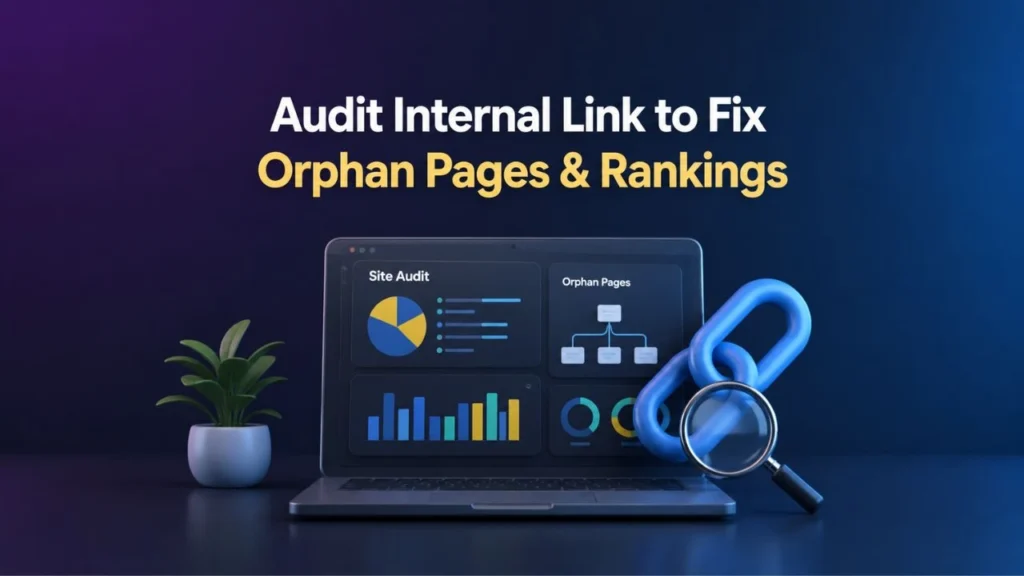
Search visibility depends on more than publishing content regularly. Even well written blog posts can struggle to rank when search engines cannot properly discover, crawl, or understand the relationship between pages on a website. This is where internal linking becomes essential.
When you audit internal link structures properly, you improve crawlability, distribute authority across pages, and help search engines understand your site architecture. Internal linking also improves user experience by guiding visitors toward related information naturally. At the same time, it reduces orphan pages that often remain hidden from search engines and users.
For digital marketing websites, internal linking is not just a technical SEO activity. It directly impacts rankings, engagement, indexing, AI search visibility, and voice search performance. A properly connected website structure helps modern search systems understand topical depth and semantic relationships between content pieces.
Table of Contents
What Does It Mean to Audit Internal Link Structures?
An internal link audit is the process of analyzing how pages connect within a website. It helps identify whether important pages receive enough internal links, whether orphan pages exist, and whether the overall structure supports crawling and indexing.
When search engines crawl a website, they follow internal links to discover pages and understand relationships between topics. If pages are disconnected or buried too deeply, they may lose visibility in search results.
To audit internal link performance effectively, marketers must evaluate:
- Crawl depth
- Link distribution
- Anchor text relevance
- Navigation structure
- Contextual linking
- Orphan pages
- User journey flow
Internal links also help distribute authority from strong pages to weaker pages. For example, if a high traffic blog post links to a newer article, some authority passes through that connection.
This is why digital marketers regularly audit internal link structures as part of ongoing optimization.
Why Internal Links Matter for SEO?
Internal links help search engines:
- Discover new pages faster
- Understand topical relationships
- Prioritize important pages
- Improve crawl efficiency
- Strengthen keyword relevance
- Understand website hierarchy
When your website lacks proper linking, search engines may struggle to interpret content relationships.
Modern AI search tools also rely heavily on structured content relationships. Well organized internal links support semantic understanding and improve visibility in AI generated answers.
What Are Orphan Pages in SEO?
Orphan pages are pages that do not receive internal links from other pages on a website. Since search engine crawlers primarily discover content through links, orphan pages often remain hidden.
These pages may still exist in XML sitemaps or databases, but without proper linking, they become isolated.
Common Causes of Orphan Pages
Several issues can create orphan pages:
Deleted Navigation Links
When menu links are removed, pages can lose their only internal connection.
Website Migration Errors
During redesigns or migrations, internal links may break or disappear.
Poor Content Planning
Older blog posts often remain disconnected from newer content.
Landing Pages Created for Campaigns
Many marketers publish landing pages for ads but never integrate them into the main website structure.
Incorrect Pagination
Pagination issues can isolate blog archives or category pages.
Why Orphan Pages Hurt Rankings?
Orphan pages create several SEO problems:
| Problem | SEO Impact | UX Impact |
| Limited crawl access | Poor indexing | Users cannot discover pages |
| Weak authority flow | Lower rankings | Reduced engagement |
| Poor topical signals | Reduced relevance | Confusing navigation |
| Lower visibility | Traffic decline | Difficult content discovery |
If search engines cannot easily reach a page, that page becomes less likely to rank competitively. This is why businesses should regularly audit internal link structures to detect hidden orphan content.
Why You Should Audit Internal Link Structures Regularly?
Many websites focus heavily on backlinks while ignoring internal linking opportunities. However, internal links remain one of the most controllable SEO factors.
When you audit internal link patterns consistently, you improve both search engine understanding and user navigation.
Improve Crawl Efficiency
Search engine bots have limited crawl budgets. If your website structure is inefficient, important pages may not get crawled frequently.
A strategic internal linking structure helps crawlers:
- Reach deeper pages faster
- Discover updated content quickly
- Prioritize important URLs
- Avoid crawl waste
Strengthen Topical Authority
Search engines analyze topic relationships across websites. For example, if multiple articles about technical SEO link together naturally, search engines interpret stronger topical depth.
Internal linking helps establish:
- Topic clusters
- Semantic relationships
- Content hierarchy
- Contextual relevance
Improve User Experience
A strong internal linking structure improves navigation. Users spend more time on websites when they can easily access related information. Better engagement signals may also support SEO performance indirectly.
Internal linking contributes to:
- Lower bounce rates
- Higher session duration
- Improved content discovery
- Better navigation flow
Support AI Search and Voice Search
Modern search systems increasingly depend on structured content understanding.
AI search tools analyze:
- Topic relationships
- Semantic patterns
- Contextual relevance
- Content organization
When you audit internal link strategies properly, your website becomes easier for AI systems to interpret. Voice search also benefits from structured content because conversational queries require clear topic associations.
Step by Step Process to Audit Internal Link Structures
A complete internal linking audit requires both technical analysis and content evaluation.
Step 1: Crawl Your Website
The first step is identifying how your pages connect.
A website crawler helps reveal:
- Pages with zero internal links
- Broken internal links
- Redirect chains
- Deep pages
- Crawl depth issues
You should compare crawl results with:
- XML sitemap
- Indexed pages
- Navigation structure
- Category hierarchy
This process helps uncover orphan pages quickly.
Step 2: Identify Pages with Weak Link Equity
Not every page receives equal internal authority. Some pages attract many links while others remain disconnected.
During this stage, review:
- Pages with few incoming links
- Important pages buried deep in the structure
- High authority pages lacking outbound contextual links
The goal is to distribute authority more strategically.
Step 3: Analyze Anchor Text Relevance
Anchor text provides contextual information to search engines.
Generic anchors such as:
- Click here
- Read more
- Learn more
provide weak contextual signals. Instead, use descriptive anchors naturally.
For example:
- technical SEO audit guide
- mobile optimization checklist
- content optimization strategies
When you audit internal link anchor text, ensure it aligns with topical relevance without appearing spammy.
Step 4: Improve Contextual Linking
Contextual links within content carry stronger SEO value than footer or sidebar links.
To improve contextual linking:
- Link related blog posts naturally
- Connect category pages with supporting content
- Use topic clusters
- Add links to important conversion pages
- Update older content regularly
This strengthens semantic relevance.
Step 5: Reduce Crawl Depth
Pages requiring too many clicks become harder for crawlers and users to reach.
Ideally:
- Important pages should remain within three clicks from the homepage
- Blog categories should connect logically
- Navigation should remain simple and structured
Reducing crawl depth improves discoverability.
Step 6: Monitor Indexation and Performance
After implementing changes, monitor:
- Indexed pages
- Organic traffic
- Ranking movement
- User engagement
- Crawl reports
SEO improvements often appear gradually as search engines reprocess the updated structure.
Best Practices to Audit Internal Link Structures for Better Rankings
Build Topic Clusters
Topic clusters organize content around central themes.
For example:
- Technical SEO
- Local SEO
- Content marketing
- Link building
- Conversion optimization
Each cluster should contain:
- Pillar pages
- Supporting articles
- Contextual cross links
This structure improves semantic SEO.
Use Natural Anchor Text
Over optimized anchor text can appear manipulative.
Instead:
- Write naturally
- Match user intent
- Prioritize readability
- Maintain contextual relevance
Search engines now evaluate semantics more intelligently.
Link Old and New Content Together
- Many websites publish new content without updating older pages.
- This creates disconnected content silos.
A better approach is:
- Update older posts regularly
- Add links to recent articles
- Refresh outdated resources
- Maintain content relationships
Prioritize High Value Pages
Some pages deserve stronger internal linking support.
Examples include:
- Service pages
- High converting landing pages
- Pillar content
- Important category pages
These pages should receive links from:
- High traffic articles
- Homepage sections
- Popular resources
Maintain Logical Navigation
Navigation impacts both UX and SEO.
Good navigation should:
- Remain simple
- Use descriptive labels
- Reduce unnecessary complexity
- Guide users clearly
A clean structure improves discoverability.
Internal Linking Mistakes That Hurt SEO
Even experienced marketers make internal linking mistakes.
Using Too Many Links on a Single Page
- Excessive internal links dilute authority.
- Too many links also overwhelm users.
Instead:
- Prioritize relevance
- Link strategically
- Focus on user intent
Ignoring Orphan Pages
- Many websites unknowingly publish isolated content.
- Without regular audits, orphan pages accumulate over time.
- This weakens overall SEO performance.
Linking Irrelevant Pages Together
Topical relevance matters. Random linking patterns confuse search engines.
Every internal link should support:
- Contextual understanding
- User navigation
- Semantic relationships
Relying Only on Navigation Links
- Menu links alone are not enough.
- Contextual links within content provide stronger SEO signals.
Forgetting Mobile Navigation
- Poor mobile navigation affects both UX and rankings.
- Since mobile first indexing dominates search, websites must optimize internal linking for smaller screens.
Why Businesses Use internal link audit and SEO services?
- Many websites struggle to manage internal linking at scale.
- Large blogs often contain hundreds or thousands of pages.
- This makes manual analysis difficult.
Professional internal link audit and SEO services help businesses:
- Detect orphan pages
- Improve crawl efficiency
- Build topic clusters
- Optimize anchor text
- Strengthen site architecture
- Improve rankings
Experts also identify technical issues that may impact crawling and indexing.
For digital marketing websites competing in crowded industries, strategic internal linking often creates significant ranking advantages.
Full Website Audit Checklist for SEO and UX
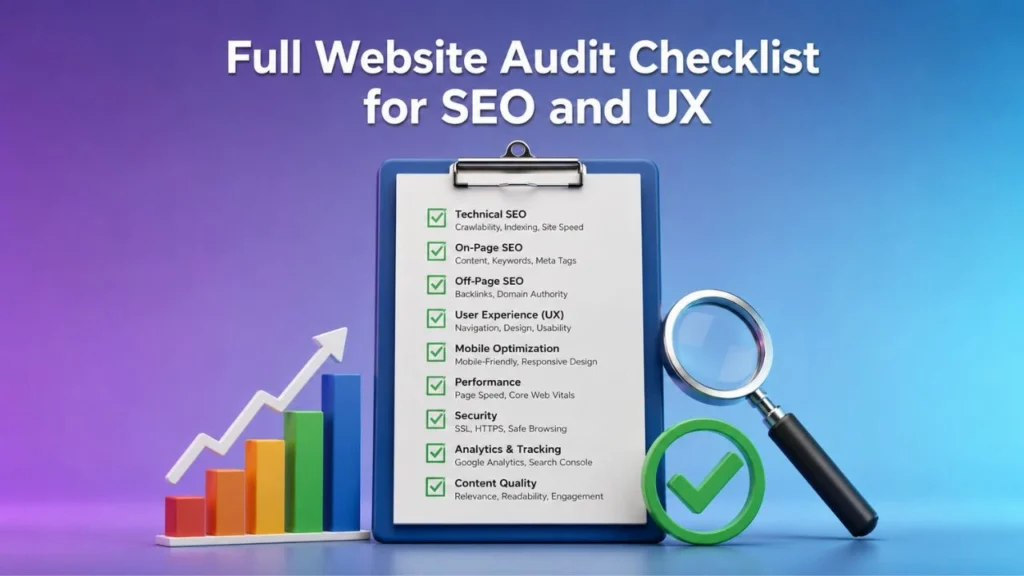
A strong website audit should evaluate both SEO and user experience.
| Audit Area | SEO Benefit | UX Benefit |
| Internal linking | Better crawlability | Easier navigation |
| Page speed | Improved rankings | Faster browsing |
| Mobile usability | Mobile first optimization | Better engagement |
| Structured headings | Improved semantics | Better readability |
| Navigation hierarchy | Stronger crawl structure | Clear user journey |
| Content organization | Better indexing | Improved accessibility |
Technical SEO Review
Technical analysis should include:
- Crawl errors
- Redirect issues
- Broken links
- Indexation problems
- XML sitemap validation
- Canonical tags
UX Evaluation
User experience directly impacts engagement.
Review:
- Navigation clarity
- Mobile responsiveness
- Readability
- Visual hierarchy
- Accessibility
Content Structure Analysis
Content should remain:
- Organized
- Relevant
- Easy to scan
- Contextually connected
This supports both users and search engines.
SEO checklist for new websites
New websites often make structural mistakes early. A strategic foundation prevents future SEO problems.
Create a Logical Website Structure
- Organize pages into categories and subcategories.
- Avoid chaotic structures.
Build Internal Links Early
- Do not wait until the website grows.
- Create relationships between pages from the beginning.
Avoid Orphan Pages During Launch
Before publishing:
- Review navigation
- Check internal links
- Validate crawl paths
- Test mobile usability
Optimize for Search Intent
Every page should align with user intent.
This improves:
- Engagement
- Rankings
- Conversion potential
Focus on Topic Clusters
- Modern SEO favors topical authority.
- Cluster based content structures help establish expertise.
Advanced Strategies to Audit Internal Link Opportunities

Use Analytics to Find Weak Pages
Some pages receive impressions but limited traffic. Strategic internal links may improve their visibility.
Review:
- Low traffic pages
- Pages with declining rankings
- Underperforming blogs
Strengthen Conversion Pages
Not every internal link should focus only on SEO. Some links should guide users toward:
- Service pages
- Lead generation pages
- Contact pages
- Product pages
This improves conversion pathways.
Improve Engagement with Related Content
Suggested articles and contextual recommendations help users continue exploring.
This increases:
- Session duration
- Page views
- Engagement signals
Update Older Articles Regularly
Older articles often carry authority.
Refreshing them with newer links helps distribute relevance more effectively.
Conclusion
Internal linking remains one of the most powerful yet overlooked SEO strategies.
When you audit internal link structures consistently, you improve crawlability, strengthen topical authority, enhance user experience, and reduce orphan pages.
Modern optimization now extends beyond traditional search engines. Websites must also optimize for AI search, answer engines, and voice search systems.
A strong internal linking strategy supports all these areas by creating structured semantic relationships across content.
Whether you manage a small business website or a large digital marketing blog, internal linking deserves ongoing attention.
Businesses that regularly audit internal link structures often gain stronger rankings, better visibility, improved engagement, and more sustainable organic growth.
As search engines and AI systems continue evolving, organized website architecture will remain a critical competitive advantage.
Frequently Asked Questions
What is an internal link audit?
An internal link audit is the process of reviewing how pages connect within a website to improve crawlability, indexing, user experience, and rankings.
Why should businesses audit internal link structures?
Businesses should audit internal link structures to detect orphan pages, improve topical authority, strengthen rankings, and support better navigation.
How do orphan pages affect SEO?
Orphan pages reduce crawl accessibility and often struggle to rank because search engines cannot easily discover or understand them.
How often should websites audit internal link patterns?
Most websites should review internal linking quarterly, while large publishing websites may require monthly audits.
Can internal links improve AI search visibility?
Yes. Structured internal linking improves semantic understanding, which helps AI systems interpret relationships between topics.
Do internal links support voice search optimization?
Yes. Internal linking strengthens contextual clarity and conversational topic relationships that voice search systems rely on.