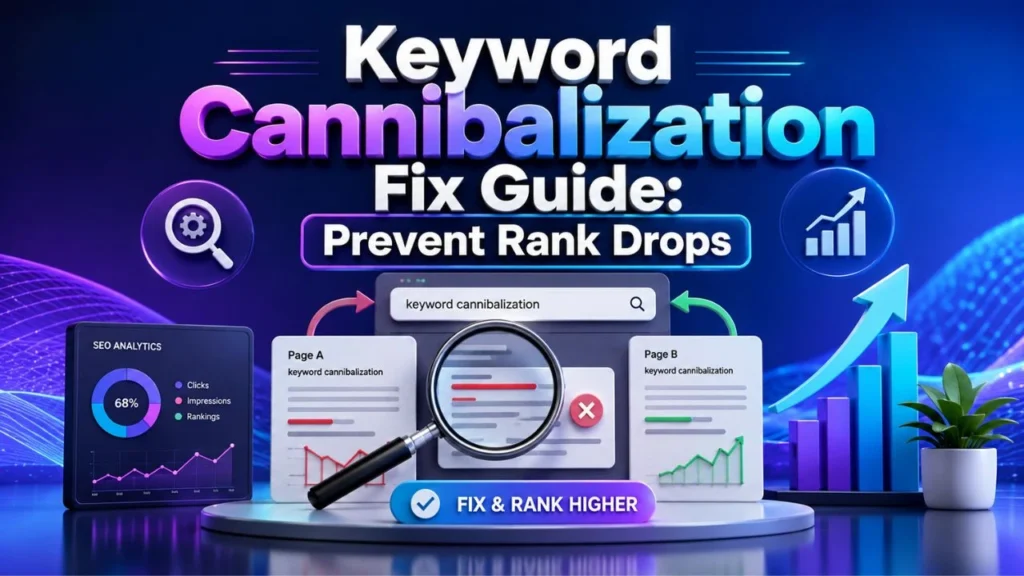
If your site has strong content but your rankings still move up and down without a clear reason, there is a good chance your pages are competing with each other. That problem is more common than many site owners realize, and it quietly weakens visibility, splits authority, and confuses search engines. This Keyword Cannibalization Fix Guide will help you understand why it happens, how to find it, and what you can do to fix it before it costs you more rankings and traffic.
Many websites publish with good intentions. You create one blog post for a target term, then later publish another post that covers a similar angle. Over time, those pages begin to overlap. Instead of helping each other, they compete. Search engines then struggle to decide which page deserves to rank, and your visibility can suffer.
That is exactly why a practical Keyword Cannibalization Fix Guide matters. When you know how to identify overlap, align intent, and strengthen the right page, you give your site a better chance to perform consistently in search, AI answer engines, and voice search results.
Table of Contents
What Is Keyword Cannibalization in SEO?
Keyword cannibalization happens when two or more pages on the same website target the same keyword or the same search intent. As a result, search engines may rotate those pages in rankings, lower the visibility of all of them, or choose the wrong page to rank.
The issue is not always about using the exact same phrase on more than one page. Sometimes the real problem is intent overlap. For example, one article may target a basic definition while another tries to target the same topic with only minor wording changes. To a search engine, both pages may look too similar.
This is where many websites go wrong. They assume more pages on a topic automatically means more ranking potential. In reality, when those pages are not clearly separated by intent, they can weaken each other. A well planned Keyword Cannibalization Fix Guide helps you stop that from happening.
Why Keyword Cannibalization Causes Rank Drops?
When several pages compete for the same query, your SEO signals become divided. Internal links may point to different URLs. External backlinks may be split across similar posts. Anchor text may send mixed signals. Search engines then receive an unclear message about which page is the most authoritative result.
This often leads to rank drops in a few different ways.
First, your strongest page may never gather enough concentrated authority because that value is spread across competing pages. Second, Google may keep testing different URLs, which creates ranking fluctuations. Third, the page that ranks may not be the one most likely to convert. That means even when impressions remain stable, your clicks and conversions can fall.
A solid Keyword Cannibalization Fix Guide is not just about cleaning up duplication. It is about restoring clarity, consolidating authority, and helping the right page rank for the right intent.
Common Signs Your Site Has a Cannibalization Problem
You do not always need advanced tools to suspect cannibalization. In many cases, the signs show up in your everyday performance data.
One common sign is when multiple pages from your site rank for the same term, but none of them ranks strongly for long. Another sign is when your rankings fluctuate even though you have not made any major technical changes. You may also notice that a weaker or older page ranks instead of your most useful page.
Traffic drops after publishing similar content can also be a warning signal. If you add a new article and the old one begins losing clicks, you may not be expanding coverage. You may be creating conflict.
This is why every serious site should eventually run a keyword cannibalization audit. Without that review, it is easy to keep publishing overlap and make the issue worse over time.
How to Perform a Keyword Cannibalization Audit?
A proper keyword cannibalization audit gives you a clear picture of where your pages overlap and which URLs deserve to stay, merge, or change direction. You do not need to overcomplicate it, but you do need to be consistent.
Start by listing your important pages and the primary keyword or search intent each one is meant to target. Be honest here. If multiple pages are trying to rank for the same thing, note that clearly.
Next, review search performance. Look for cases where two or more URLs earn impressions or rankings for the same query. When this happens repeatedly, you likely have an overlap issue.
Then compare the search intent of those pages. Ask yourself what the user truly wants. Are they looking for a definition, a process, a checklist, a comparison, or a service page? If two pages answer the same need in nearly the same way, that is a strong sign of cannibalization.
After that, review page quality. Which page is more complete, better structured, fresher, and more useful? Which one has better backlinks, internal links, or engagement? Your keyword cannibalization audit should not just find overlap. It should help you choose a clear winner.
Finally, decide the action. You may keep one page and improve it, merge two pages into one, redirect one page to another, or reposition each page around a different intent. That is where this Keyword Cannibalization Fix Guide becomes practical rather than theoretical.
How to Fix Keyword Cannibalization Without Hurting SEO?
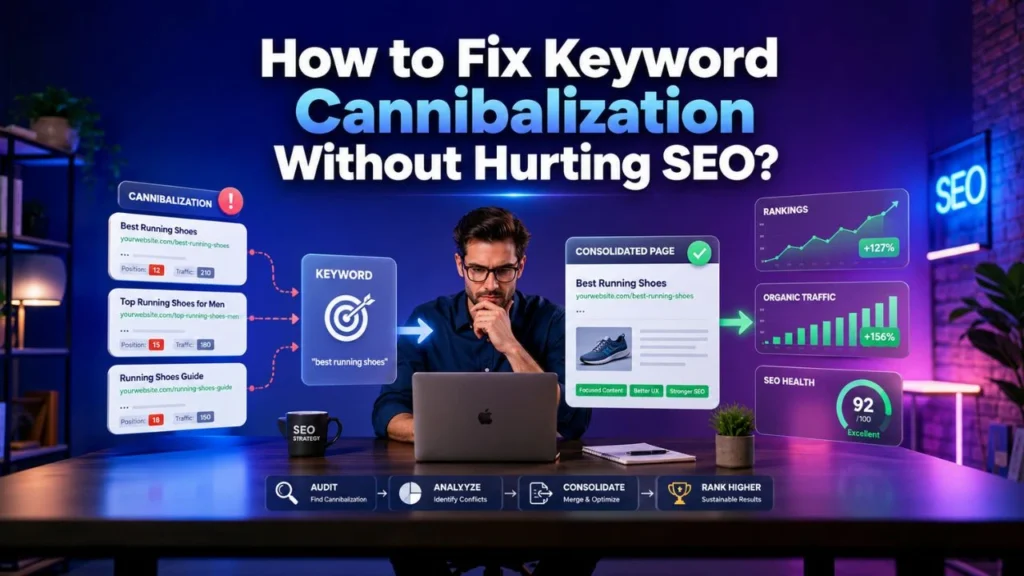
There is no single fix for every case. The right solution depends on how similar the pages are and whether they serve the same user intent.
If two pages cover almost the same topic and offer similar value, merging them is often the strongest option. Combine the best information into one comprehensive page, improve the structure, and then redirect the weaker page to the stronger one. This helps consolidate authority rather than split it.
If the pages are related but not identical, reoptimize them so each targets a distinct intent. One page might focus on the definition of a topic, while another focuses on the process, checklist, or advanced strategy. When that separation is clear, both pages can coexist without conflict.
You should also review titles, headings, meta descriptions, and internal links. Many cannibalization problems continue because internal anchors point to different pages using the same target phrase. That sends mixed signals. A good Keyword Cannibalization Fix Guide always includes internal linking cleanup because your own site structure should support the main page, not compete with it.
Canonical tags can help in certain situations, but they are not a magic solution. If two pages should not both exist in their current form, a canonical alone will not solve the underlying content problem. You still need strategic clarity.
How Semantic SEO Helps Prevent Cannibalization?
Modern search is not just about repeating exact match keywords. Search engines are much better at understanding context, relationships, and meaning. That is why semantic SEO and entity-based optimization plays such an important role in preventing content overlap.
When you rely only on slight keyword variations, you may end up publishing multiple pages that say almost the same thing. But when you use semantic SEO and entity-based optimization, you plan content around intent, subtopics, entities, and topical depth. That helps each page have its own purpose.
For example, instead of creating several posts around near identical phrases, you can build one pillar page and several supporting pages that each address a clearly different question. One page may explain what keyword cannibalization is. Another may walk through a keyword cannibalization audit. A third may focus on internal linking or content consolidation. Together, those pages create a topic cluster rather than a mess of competing URLs.
That is one of the strongest lessons in any Keyword Cannibalization Fix Guide. Search engines reward clear topical organization much more than scattered repetition.
How to Structure Content So Pages Do Not Compete?
The easiest way to prevent cannibalization is to assign one clear primary intent to each page before you publish. That sounds simple, but many sites skip this step and pay for it later.
Before creating a new article, ask what gap it fills. Is it answering a new question, or is it just repeating an existing page with slightly different wording? If it is the second one, do not publish a new page. Improve the existing one.
You should also organize your site around topic clusters. A central guide can target the broad topic, while supporting articles go deeper into related subtopics. This is where semantic SEO and entity-based optimization becomes useful again. It helps you build connected content that expands authority instead of fragmenting it.
Strong content maps also support voice search and AI search. When your pages are clearly separated by question, intent, and answer depth, systems can more easily identify which page is best for a given query. A smart Keyword Cannibalization Fix Guide is no longer only about Google rankings. It is also about making your content easier to interpret across search surfaces.
Keyword Cannibalization Fix Guide for New Websites
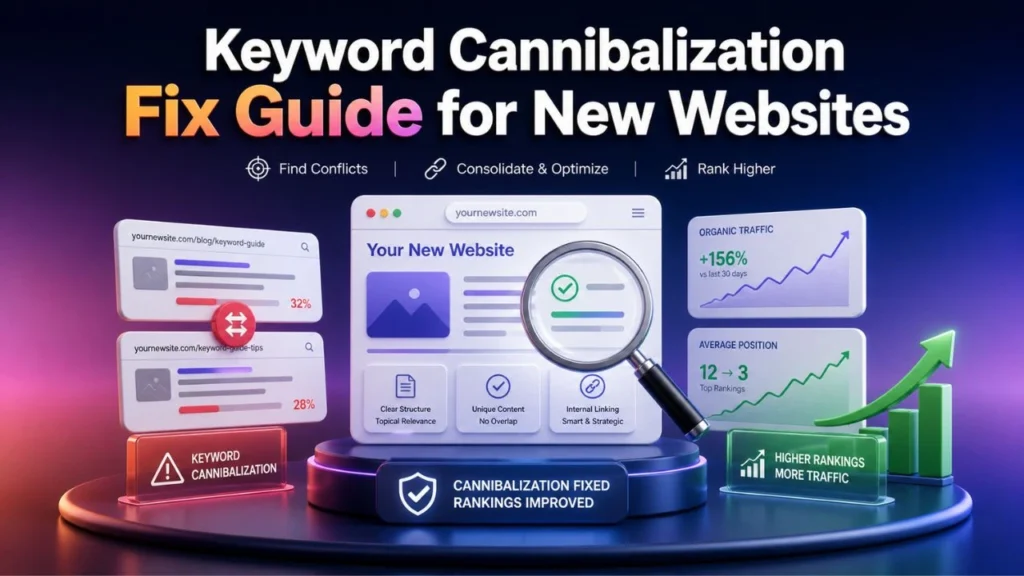
New websites are especially vulnerable to cannibalization because they often publish aggressively without a long term structure. You may feel pressure to create many posts quickly, but without a plan, you can accidentally target the same topic again and again.
This is why a Keyword Cannibalization Fix Guide is useful even before you have a visible problem. Prevention is always easier than repair. When your site is new, every page should have a defined role in your content strategy.
A smart way to handle this is to connect your content plan to a complete SEO checklist for new websites. That checklist should include keyword mapping, topic clustering, intent separation, internal linking rules, and content review before publication. If you already use a complete SEO checklist for new websites, make sure it includes a step that asks whether a similar page already exists.
That small habit can save you months of confusion later.
Best Practices to Prevent Keyword Cannibalization in the Future
Once you fix existing issues, you need a system that stops them from coming back. The best prevention strategy is consistency.
Keep a content map that shows each page, its primary target term, and its core intent. Review your old content before publishing new pages. Refresh and expand older content when possible instead of always creating new URLs. Make internal linking intentional so your strongest page gets the clearest support.
It is also wise to schedule a recurring keyword cannibalization audit. You do not need to wait until traffic drops. Regular reviews help you catch overlap early, before it becomes a ranking problem.
This is where the long term value of a Keyword Cannibalization Fix Guide becomes obvious. You are not just fixing a one time issue. You are building a publishing process that protects your rankings as your site grows.
A Simple SEO Checklist to Fix and Prevent Cannibalization
Here is a practical checklist you can follow:
- Identify pages targeting the same keyword or search intent.
- Compare ranking, traffic, links, and page quality.
- Choose the strongest page to keep as primary.
- Merge overlapping content when pages serve the same purpose.
- Redirect weaker duplicate pages where appropriate.
- Reposition related pages around distinct intent.
- Update titles, headings, and internal links for clarity.
- Use semantic SEO and entity-based optimization to create better topic separation.
- Add cannibalization checks to your complete SEO checklist for new websites.
- Repeat a keyword cannibalization audit on a regular basis.
That process is simple, but when followed properly, it can make a major difference.
Mistakes to Avoid While Fixing Cannibalization

One common mistake is deleting pages too quickly. Before you remove or redirect a page, check whether it has backlinks, traffic, or useful content worth preserving. Another mistake is merging pages that actually serve different intent. Not every overlap needs consolidation. Sometimes the better fix is sharper positioning.
Another problem is relying only on exact match keyword changes. You can rename headings and still have a cannibalization issue if the intent remains the same. That is why semantic SEO and entity-based optimization matters so much. You are not just separating phrases. You are separating meaning.
Many site owners also forget to update internal links after merging or redirecting pages. That leaves old signals in place and weakens the fix. A proper Keyword Cannibalization Fix Guide always includes internal cleanup because it reinforces which page now matters most.
Final Thoughts
If your rankings feel unstable, your pages may not be competing with other websites as much as they are competing with each other. That is why this Keyword Cannibalization Fix Guide deserves your attention. When you identify overlap, consolidate authority, separate intent, and improve structure, you make it easier for search engines to understand your site and rank the right page.
The goal is not to publish more pages just to cover more phrases. The goal is to publish smarter pages that each serve a clear purpose. That is how you strengthen topical authority, improve user experience, and create a site that performs better across search engines, AI search tools, and voice search platforms.
A useful Keyword Cannibalization Fix Guide is not only about fixing an SEO mistake. It is about building a content strategy that stays clear, scalable, and durable as your website grows.
Frequently Asked Questions
What is the fastest way to fix keyword cannibalization?
The fastest fix is usually to identify the strongest page, merge useful overlapping content into it, and redirect weaker duplicate pages when they serve the same intent.
How often should I run a keyword cannibalization audit?
A keyword cannibalization audit every few months is a smart starting point. If you publish often, review more frequently.
Can keyword cannibalization lower traffic even if I still rank?
Yes. You may still appear in search, but the wrong page can rank, rankings may fluctuate, or clicks may drop because authority is split across several URLs.
Does semantic SEO help prevent cannibalization?
Yes. Semantic SEO and entity-based optimization helps you organize content by meaning, context, and search intent instead of producing near duplicate pages around slight keyword variations.
Should new websites worry about this problem?
Absolutely. New sites often create overlap early. Adding this topic to your complete SEO checklist for new websites can help prevent future ranking issues.