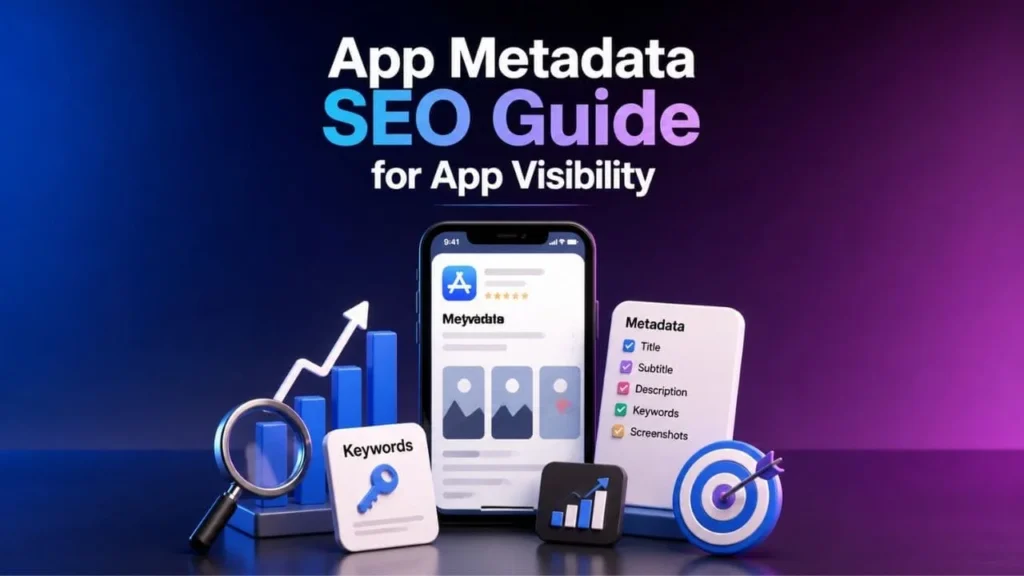
App discovery has become more competitive as millions of apps compete for attention across app stores. Visibility is no longer based only on downloads or brand awareness. It depends heavily on how well your app is understood by search algorithms and how effectively it matches user intent. This is where an app metadata SEO guide becomes useful.
app metadata SEO guide as the foundation that helps app stores interpret what your app offers. When structured correctly, it improves discoverability across search results, AI driven tools, and voice based queries. Users now search in more conversational ways, and apps that align with these patterns gain better exposure.
This guide explains how metadata influences rankings, how to optimize it step by step, and how to align it with modern search behavior including AI and voice search.
Table of Contents
What Is App Metadata in ASO
App metadata SEO guide refers to the set of textual and visual elements that describe your app within an app store. These elements help algorithms understand the purpose and relevance of your app.
Key components include
- App title
- Subtitle or short description
- Full description
- Keyword fields
- App icon
- Screenshots and preview videos
App metadata SEO guide is different from technical performance factors such as app speed or stability. While technical aspects affect user experience, technical SEO strategies help improve how systems interpret and index content, whereas metadata directly influences how your app appears in search results.
Why App Metadata Optimization Matters for Visibility
App stores rely on metadata to decide which apps should appear for a search query. When your metadata aligns with what users are searching for, your chances of ranking improve, supporting overall visibility and improving search rankings.
Key reasons why it matters
- Helps search engines understand your app context
- Matches your app with relevant user queries
- Improves impressions and click through rate
- Supports conversions through clear messaging
As search behavior evolves, metadata also plays a role in AI generated answers and voice search results. Clear and structured metadata increases the likelihood of your app being surfaced in these environments, while also supporting local SEO services for better regional discovery.
Key App Metadata Elements You Must Optimize
App Title and Subtitle Optimization
The app title carries the highest weight in search rankings. It should include your primary keyword while remaining easy to read.
Best practices
- Place the main keyword at the beginning
- Keep it clear and relevant
- Avoid repeating keywords unnecessarily
The subtitle adds supporting context and allows inclusion of secondary keywords. It should complement the title rather than repeat it.
App Description Optimization
The description helps both users and algorithms understand your app in detail.
How to structure it
- Start with a clear summary of the app
- Use short paragraphs for readability
- Include relevant keywords naturally
- Highlight features in bullet points
Descriptions should also be written in a way that answers common user queries. This improves performance in voice search and AI based results.
Keyword Field Optimization
Keyword fields are especially important for certain app stores.
Optimization tips
- Use relevant and high intent keywords
- Avoid duplication across fields
- Focus on search terms users actually type
Proper keyword selection ensures your app appears for a wider range of queries without overloading any single field.
Visual Metadata Optimization
Visual elements influence user engagement and conversion.
Important visual components
- App icon
- Screenshots
- Preview videos
These elements do not directly impact keyword rankings but strongly affect user behavior. Higher engagement signals often support better visibility.
Top Ranking Factors for App Metadata SEO
| Ranking Factor | Impact Level | Optimization Approach |
| App Title Keywords | High | Use primary keyword early |
| Subtitle Keywords | Medium | Add supporting keywords |
| Description Content | Medium | Maintain clarity and relevance |
| Keyword Field Usage | High | Include focused search terms |
| User Engagement Signals | High | Improve visuals and clarity |
| Ratings and Reviews | High | Encourage consistent feedback |
How to Do Keyword Research for App Metadata
Keyword research is essential for effective optimization. It helps identify what users are searching for, how they phrase their queries, and how an effective SEO keyword research process supports better targeting.
Steps to follow
- Analyze search suggestions in app stores
- Study competitor apps and their keyword usage
- Focus on long tail queries with clear intent
- Identify conversational phrases used in voice search
Understanding user intent is important. Some users search for information while others are ready to install. Your keyword strategy should address both. Applying effective content optimization techniques ensures your metadata aligns with these different search behaviors and improves overall visibility.

Step by Step App Metadata Optimization Strategy
Step One Research User Intent
Focus on understanding what users want when they search. Look for patterns in queries and identify keywords that reflect real needs.
Step Two Map Keywords to Metadata Fields
Assign specific keywords to each field instead of repeating the same terms everywhere.
Step Three Optimize Title and Description
Ensure that keywords are placed naturally. Maintain readability while improving relevance.
Step Four Improve Visual Presentation
Align visuals with the app purpose so users can quickly understand its value.
Step Five Monitor Performance
Track rankings, impressions, and downloads. Update metadata regularly based on performance data.
Common Mistakes to Avoid in App Metadata SEO
- Overloading metadata with too many keywords
- Ignoring user intent behind search queries
- Using misleading or irrelevant keywords
- Not updating metadata after performance changes
- Overlooking localization for different regions
Avoiding these mistakes helps maintain consistency and improves long term visibility.
Benefits of Optimizing App Metadata
| Benefit | Description |
| Better Visibility | Higher chances of appearing in search results |
| Increased Downloads | More exposure leads to more installs |
| Improved Conversion Rate | Clear messaging improves user actions |
| Targeted Audience Reach | Connects with relevant users |
| Long Term Growth | Sustained performance over time |
Advanced App Metadata Strategies for Modern Search
Search behavior is shifting beyond traditional queries. Users now interact with AI tools and voice assistants to find apps.
Important strategies
- Use natural language keywords
- Structure content for direct answers
- Focus on semantic relevance
- Update metadata based on search trends
- Apply AI driven SEO strategies to improve how your app is understood by modern search systems
These strategies help align your app with evolving discovery methods.
Voice Search Optimization for App Metadata
Voice search queries are more conversational compared to typed searches.
Example query formats
- What is the best fitness tracking app
- Which app helps manage daily tasks
- Best budgeting app for beginners
Optimization tips
- Use natural phrases in descriptions
- Include question based keywords
- Provide clear and direct answers
This approach increases the chances of appearing in voice driven results.
How App Metadata SEO Aligns with AI Search
AI driven search engines focus on clarity and relevance. They prefer content that directly answers user queries.
Key considerations
- Use structured headings
- Provide concise answers under each section
- Maintain logical flow of information
- Avoid unnecessary repetition
This improves the chances of being included in AI generated responses.
Role of Digital Marketing and SEO in App Visibility
App visibility does not depend only on metadata. It works alongside broader strategies.
Digital marketing services help improve brand awareness and bring external traffic. SEO services support discoverability through search engines. Local SEO services can be useful for apps targeting specific regions. Social media marketing services contribute by increasing engagement and driving installs.
When combined with metadata optimization, these efforts create a more balanced growth approach.
Conclusion
App visibility depends on how well your metadata communicates relevance to both users and algorithms. A structured approach to optimization improves rankings, increases downloads, and supports long term growth.
As search continues to evolve with AI and voice interactions, metadata must adapt to match these changes. Clear language, proper keyword placement, and regular updates are essential for maintaining visibility.
FAQs
What is app metadata in SEO?
App metadata includes the title, description, keywords, and visual elements that describe an app. These components help app stores understand and rank the app for relevant searches.
How does app metadata improve app visibility?
It improves visibility by aligning your app with user search queries. When metadata matches user intent, the app appears more frequently in search results.
What are the most important metadata elements?
The most important elements include the app title, subtitle, description, keyword fields, and visuals such as screenshots and icons.
How often should app metadata be updated?
Metadata should be reviewed regularly. Updates should be made based on performance data, keyword trends, and changes in user behavior.
Does metadata help in voice search?
Yes, using natural language and question based keywords improves the chances of appearing in voice search results.