If you want your business to appear more often in local search results, you cannot ignore Local Citations. They may not look flashy from the outside, but they play a quiet and important role in how search engines understand your business and how confidently they can place you in map results.
When people search for businesses near them, search engines try to verify whether a business is real, relevant, and trustworthy. That is where Local Citations come in. They help confirm your business details across the web and strengthen your local presence. When your information is accurate and consistent, you make it easier for search engines to trust your business profile and connect it to location-based searches.
In this guide, you will learn what Local Citations are, why they matter for map visibility, how to build them properly, and what mistakes you should avoid if you want better local rankings.
Table of Contents
What Are Local Citations?
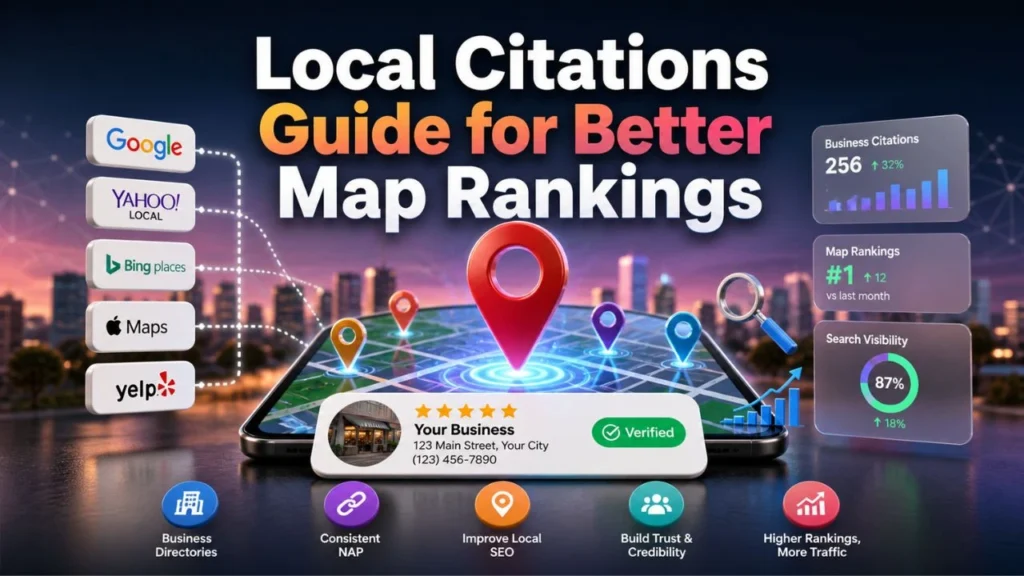
Local Citations are online mentions of your business information across different websites, directories, apps, and platforms. In most cases, they include your business name, address, phone number, website, and sometimes extra details like categories, hours, and reviews.
In simple words, Local Citations help search engines verify that your business exists and operates where you say it does.
These citations usually fall into two categories:
Structured citations
These appear on business listing platforms and directories where your information is added in a set format. Examples include local directories, map listings, and industry-specific platforms.
Unstructured citations
These are mentions of your business on blog posts, local news websites, event pages, chamber sites, or community portals. They may not follow a fixed listing format, but they still support your local digital footprint.
So, if you are trying to improve your visibility in local search, local business citations should be part of your strategy from the beginning.
Why Local Citations Matter for Better Map Rankings?
Many businesses focus only on their website and forget that search engines look beyond it. Your business information across the web sends important trust signals. When search engines find the same business details in multiple reliable places, they become more confident about your legitimacy and location relevance. That is why Local Citations matter.
1. Better business verification
When your name, address, and phone number appear consistently across trusted websites, search engines can verify your business with more confidence.
2. Stronger local relevance
If your business details appear on local directories, local associations, and region-specific websites, it strengthens your connection to a place.
3. Improved trust and prominence
A business that is mentioned accurately across quality platforms often appears more established. This can support your prominence in local search.
4. Cleaner entity signals
Search engines try to connect all mentions of your business into one clear identity. local business citations help build that identity across platforms.
If your business information is scattered, outdated, or inconsistent, you make that process harder. If it is clean and aligned, you make it easier.
The Core Details Every Local Citation Should Include
Not every listing is equal, but the most valuable Local Citations usually contain a consistent set of details.
These include:
- Business name
- Address
- Phone number
- Website URL
- Business category
- Working hours
- Service area
- Short business description
- Photos where allowed
The biggest priority here is consistency. If your business name is written one way on your website, another way in directories, and a third way on local portals, it creates confusion. The same applies to address formatting, phone numbers, and URLs.
A strong Local Citations strategy is not just about getting listed everywhere. It is about getting listed correctly.
Types of Local Citations You Should Build
If you are new to local SEO, you may think all citations are the same. They are not. Some have a stronger influence because they are more trusted, more relevant, or more connected to your location or niche.
Core directory citations
These are your foundational listings. They usually come from well-known business directories, map-related platforms, and major listing websites. These are often the first local citation building you should create or clean up.
Local directory citations
These come from city-based, region-based, or community-focused websites. These local citation building are useful because they strengthen your connection to a specific area.
Industry-specific citations
These listings are tied to your niche. They help search engines understand not only where you are, but also what kind of business you run.
Unstructured citations
Mentions on blogs, local media sites, business interviews, sponsor pages, and event websites also matter. These may not look like standard listings, but they still support your local authority.
The goal is not random volume. The goal is relevance, trust, and accuracy.
How to Build Local Citations Step by Step?
If you want your efforts to produce real results, you need a structured process. Building Local Citations should never be rushed.
Step 1: Audit your current citations
Start by checking where your business is already mentioned. Look for incorrect phone numbers, outdated addresses, duplicate profiles, and old website links.
Step 2: Standardize your business details
Choose one official version of your business name, address, phone number, and website. Use that exact format everywhere.
Step 3: Claim important listings
Before building new local citation building, claim the listings that already exist. This gives you control over the details and helps prevent incorrect information from spreading.
Step 4: Submit to trusted directories
Focus first on high-quality, relevant platforms. Then move into local directories and niche listings.
Step 5: Expand into local and niche platforms
Once the foundation is in place, build more local citation building on local business directories, business associations, and relevant industry websites.
Step 6: Remove duplicates
Duplicate listings confuse search engines and users. Clean them up as early as possible.
Step 7: Review and maintain
local citation building are not a one-time job. If your hours, phone number, address, or website changes, you need to update your listings quickly.
This process may feel repetitive, but it is one of the most practical ways to strengthen your local map presence.
Common Local Citation Mistakes That Hurt Map Rankings
A lot of businesses build local citation building but still struggle with local visibility because they overlook the basics.
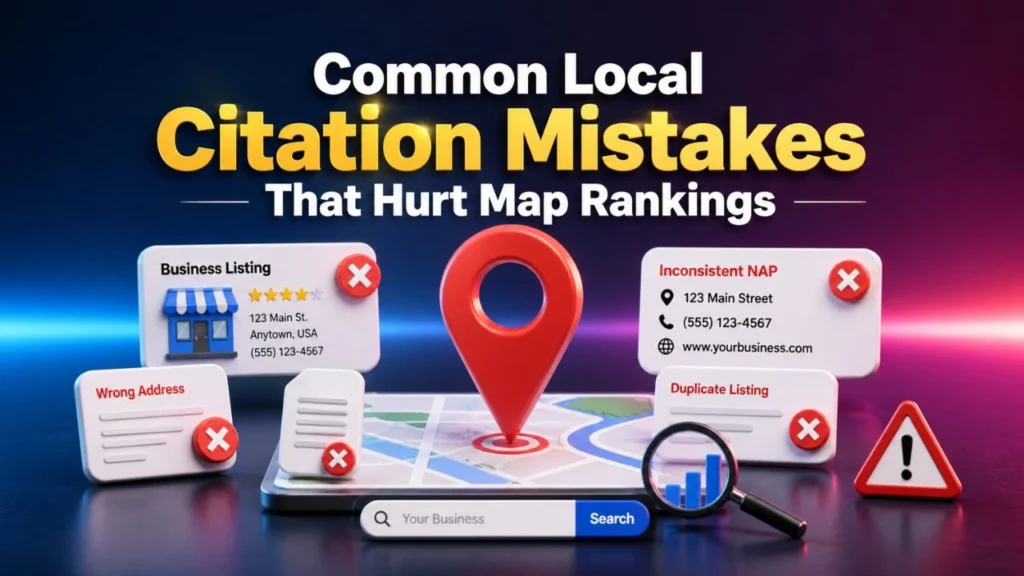
Here are some common issues:
Inconsistent NAP details
If your name, address, and phone number do not match across listings, you weaken trust signals.
Old addresses and outdated phone numbers
This is common after relocation or rebranding. Even one old listing can create confusion.
Duplicate business profiles
Duplicates split signals and can frustrate users.
Wrong business categories
If your category does not match what you actually offer, your relevance for local searches can suffer.
Low-quality listing websites
Not all directories help. Some add little value and can waste your time.
Incomplete profiles
Thin listings with no descriptions, no hours, and no supporting business details miss an opportunity.
No ongoing maintenance
Your local citation listings should be checked regularly. If they are left unattended for too long, errors pile up.
Avoiding these mistakes can make your citation work far more effective.
Local Citations vs Backlinks vs Reviews
People often mix these up, but they serve different purposes.
Local Citations
These help verify your business information and local presence.
Backlinks
These are links from other websites to your site. They support authority and can improve organic visibility.
Reviews
These influence trust, click behavior, and local credibility.
You need all three, but Local Citations are especially important when you want search engines to trust your business details across the web. Backlinks help authority. Reviews help reputation. Citations help identity and location clarity.
A smart local SEO strategy connects all three instead of treating them as separate tasks.
How to Audit Local Citations for Accuracy?
If your listings are live but not consistent, you may be holding back your own local growth. That is why regular audits matter.
When reviewing your Local Citations, check the following:
- Is the business name identical everywhere?
- Is the address current and formatted consistently?
- Is the phone number correct?
- Does the website URL point to the right page?
- Are business hours updated?
- Is the category relevant?
- Are there duplicate profiles?
- Are there listings with missing details?
A citation audit helps you spot gaps that are easy to miss. It also helps you identify which platforms need attention first.
If you want better map rankings, do not just build Local Citations. Audit them.
How to Use Schema Markup Alongside Local Citations?
While Local Citations help externally, schema markup helps on your own website. Both work better together.
By adding local business schema to your site, you make it easier for search engines to understand your business details directly from the source. That includes:
- Business name
- Address
- Phone number
- Hours
- Website
- Service area
- Coordinates where relevant
If your schema, website content, and Local Citations all match, you create a stronger and cleaner trust signal.
This does not replace citations, but it supports them in a meaningful way.
How Many Local Citations Does a Business Need?
There is no fixed number that works for every business.
Some businesses need only a strong base of core listings plus a few relevant local and niche mentions. Others may need a wider citation footprint depending on competition, service area, and business category.
The better question is not, “How many Local Citations do I need?”
It is, “Do I have enough accurate, relevant, and trusted citations to support my local authority?”
Start with the most important platforms. Then improve local relevance. Then expand carefully. Quality almost always beats random quantity.
Are Local Citations Still Important?
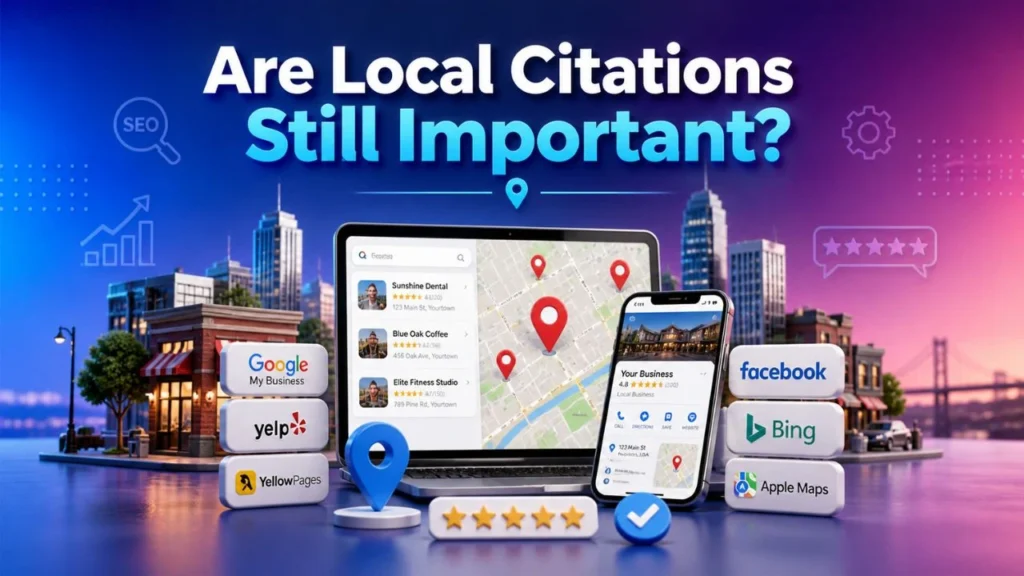
Yes, Local Citations are still important.
They may not be the only factor that affects map rankings, but they remain useful because they support trust, consistency, and local confirmation. Search engines still need to verify who you are, what you do, and where you are located. Citations help with that.
If your website is strong, your business profile is complete, your reviews are growing, and your Local Citations are clean, you put yourself in a much better position than businesses that ignore these basics.
So no, citations are not outdated. They are still part of a solid local search foundation.
Final Checklist for Better Map Rankings
Before you publish or update your local SEO strategy, use this quick checklist:
- Standardize your business name, address, and phone number
- Audit existing Local Citations
- Claim and update major business listings
- Build local and niche citations
- Remove duplicate profiles
- Complete every profile fully
- Keep hours and service details updated
- Add local business schema to your website
- Monitor citation accuracy over time
- Align citations with your website and business profile
Small details make a big difference in local search. When your information is clear, consistent, and trusted, your chances of showing up in maps improve.
Conclusion
If you want better visibility in maps, do not treat Local Citations as a minor SEO task. They are one of the core ways search engines verify your business across the web. They help confirm your identity, strengthen your local relevance, and support trust signals that influence map visibility.
The good news is that you do not need a complicated strategy to get started. You need accuracy, consistency, and a clear process. Audit what already exists, fix what is wrong, build the right Local Citations, and keep them updated as your business grows.
When you do that well, you create a stronger local foundation not just for search engines, but for real people who are trying to find and trust your business.
FAQs About Local Citations
What are Local Citations in SEO?
Local Citations are online mentions of your business details such as name, address, phone number, and website on directories, local websites, and other online platforms.
Do Local Citations help map rankings?
Yes, Local Citations can support better map rankings by helping search engines verify your business information and local relevance.
What should a local citation include?
A strong citation should include your business name, address, phone number, website, category, and other accurate business details.
How do I build Local Citations?
You can build Local Citations by claiming existing listings, submitting your business to trusted directories, adding local and niche listings, and maintaining consistency across all platforms.
Can inconsistent citations hurt local SEO?
Yes, inconsistent Local Citations can confuse search engines and reduce trust in your business information.
Are Local Citations still relevant for local SEO?
Yes, Local Citations are still relevant because they support business verification, local trust, and map visibility.
How often should I audit Local Citations?
You should review your Local Citations regularly, especially after any changes to your business name, address, phone number, or website.