
A business without a structured marketing approach often struggles to connect strategy with execution. Many brands invest in campaigns, content, and ads, yet results remain inconsistent. The missing link is not effort, it is coordination.
A digital marketing operating plan brings clarity to how marketing activities are planned, executed, and measured. It acts as a working framework that aligns goals, channels, and performance tracking into one system. When done right, it helps you focus on what actually drives results instead of spreading resources across disconnected efforts.
Search behavior is also evolving. People now rely on AI tools, voice assistants, and intent based queries to discover information. This shift makes it essential to build a plan that is not only structured but also adaptable to modern search patterns.
Table of Contents
What Is a Digital Marketing Operating Plan
A digital marketing operating plan is a structured framework that defines how marketing strategies are executed, monitored, and improved across digital channels.
It goes beyond planning. It focuses on action, timelines, and measurable outcomes. While a marketing strategy explains what you want to achieve, this plan explains how you will achieve it.
Key Differences Between Strategy and Operating Plan
| Aspect | Marketing Strategy | Operating Plan |
| Purpose | Defines goals and direction | Defines execution steps |
| Focus | Long term vision | Daily and weekly actions |
| Output | Strategic roadmap | Task based workflow |
| Measurement | Broad KPIs | Detailed performance tracking |
Why Your Business Needs a Structured Marketing Plan
Without a clear system, marketing efforts often become scattered. A well defined approach ensures every activity contributes to a specific goal.
Key Reasons
- Aligns marketing with business objectives
- Improves decision making based on data
- Helps manage budget efficiently
- Enhances coordination across teams
- Supports consistent growth over time
It also prepares your business for AI driven search and voice queries. When your content and campaigns are structured properly, they are easier for search engines and AI tools to understand and recommend.

Core Components of a Digital Marketing Operating Plan
A successful plan is built on several interconnected elements. Each component plays a specific role in driving results.
Goal Setting and KPIs
Start with clear and measurable objectives. These could include:
- Website traffic growth
- Lead generation
- Conversion rate improvement
- Brand visibility
Define KPIs that directly reflect your business goals.
Audience Research and Intent Mapping
Understanding your audience is essential. Focus on:
- Search intent such as informational or transactional
- User behavior across channels
- Pain points and expectations
This helps you create content that answers real questions, which improves visibility in both traditional and AI based search.
Channel Selection
Choose channels based on where your audience is most active.
- SEO for long term visibility
- Paid ads for quick results
- Social platforms for engagement
- Content marketing for authority
Balancing these channels ensures consistent performance.
Content Strategy
Content is the backbone of any plan. Focus on:
- Topic clusters for better relevance
- Keyword integration that feels natural
- Content optimization techniques for improved visibility
- Clear and structured information
This approach improves ranking potential and supports voice search queries.
Execution Workflow
Define how tasks will be completed.
- Assign responsibilities
- Set timelines
- Use tools for tracking progress
A structured workflow ensures consistency and accountability.
Performance Tracking
Track performance regularly using analytics tools.
- Monitor traffic and engagement
- Measure conversions
- Analyze important SEO metrics such as organic traffic, keyword rankings, bounce rate, and click through rate
- Identify improvement areas
Continuous tracking helps refine your approach over time.
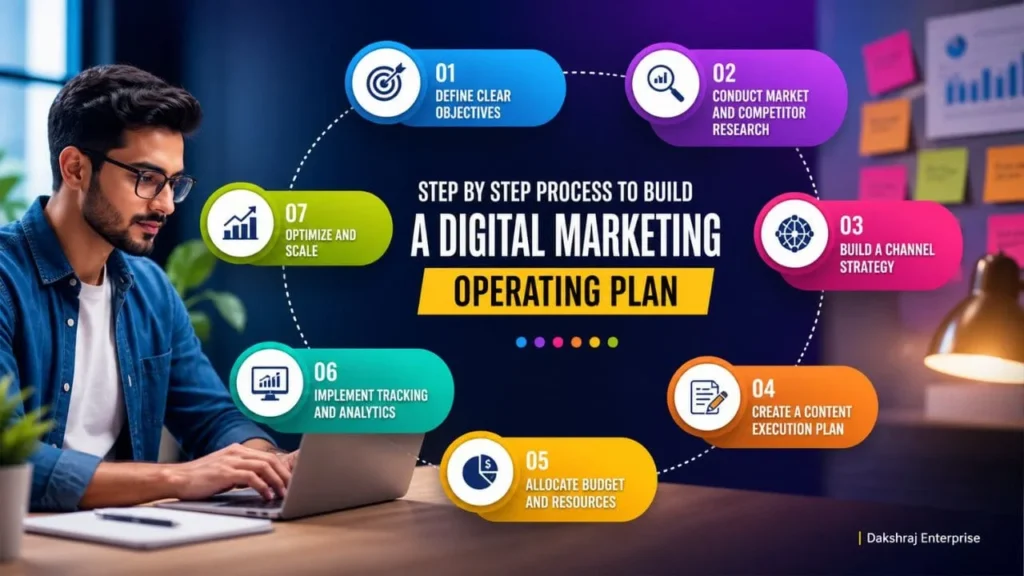
Step by Step Process to Build a Digital Marketing Operating Plan
Step 1 Define Clear Objectives
Set specific goals that align with business priorities. Make sure they are measurable and time bound.
Step 2 Conduct Market and Competitor Research
Understand your market environment.
- Identify trends
- Analyze competitors
- Discover content gaps
This helps you position your efforts effectively.
Step 3 Build a Channel Strategy
Focus on channels that deliver the best return.
- Prioritize SEO for long term results
- Use paid campaigns for immediate visibility
- Combine organic and paid strategies
Step 4 Create a Content Execution Plan
Develop a structured content plan.
- Create an editorial calendar
- Plan different content formats
- Maintain consistency in publishing
Step 5 Allocate Budget and Resources
Distribute your budget based on priorities.
- Invest more in high performing channels
- Allocate resources for content creation
- Plan for tools and automation
Step 6 Implement Tracking and Analytics
Set up tracking systems to measure performance.
- Use analytics tools
- Monitor key metrics
- Evaluate campaign success
Step 7 Optimize and Scale
Review performance regularly.
- Identify what works
- Improve underperforming areas
- Expand successful campaigns
Example Structure of a Digital Marketing Operating Plan
| Component | Key Activities | Tools and Methods |
| Goal Setting | Define KPIs and targets | Analytics tools |
| Audience Research | Study behavior and intent | Keyword tools |
| Content Planning | Build topic clusters | Editorial calendar |
| Channel Strategy | Select platforms | Marketing tools |
| Execution | Launch campaigns | Automation tools |
| Tracking | Monitor performance | Dashboards |
Best Strategies to Improve Effectiveness
To get the most out of your plan, focus on practical strategies that enhance performance.
Focus on Search Intent
Create content that answers user queries clearly. This increases your chances of appearing in featured snippets and AI results.
Build Topical Authority
Cover topics in depth using interconnected content. This improves credibility and ranking potential.
Optimize for Voice Search
Use conversational language and direct answers. Voice queries are often question based, so structure your content accordingly.
Use Structured Data
Implement schema markup to help search engines understand your content better.
Maintain Consistency
Regular updates and consistent execution improve long term results.
Channel Strategy Comparison
| Channel | Short Term Impact | Long Term Value | Best Use Case |
| SEO | Medium | High | Organic visibility |
| Paid Ads | High | Medium | Quick traffic |
| Social Media | Medium | Medium | Engagement |
| Content Marketing | Low | High | Authority building |
Benefits of a Digital Marketing Operating Plan
A well structured approach provides several advantages.
Key Benefits
- Clear direction for marketing activities
- Better use of resources
- Improved tracking and measurement
- Higher return on investment
- Stronger online visibility
It also supports integration of digital marketing services across channels, ensuring consistent messaging and performance.

Role of SEO in Your Marketing Plan
SEO plays a central role in long term growth.
Key Aspects
- Improves organic visibility
- Drives consistent traffic
- Supports content strategy
- Enhances user experience
Integrating SEO services into your plan ensures that your content reaches the right audience at the right time.
Importance of Local Visibility
For businesses targeting specific regions, local optimization is essential.
Local SEO services help improve visibility in location based searches. This ensures your business appears when users search for services nearby.
Social Media and Engagement
Social platforms play an important role in building connections.
Social media marketing services help you:
- Reach a wider audience
- Increase engagement
- Support content distribution
When combined with other channels, they enhance overall performance.
Common Mistakes to Avoid
Even a well planned approach can fail if certain mistakes are not addressed.
Avoid These Issues
- Ignoring data and analytics
- Focusing only on one channel
- Lack of consistency in execution
- Poor content quality
- Not aligning with user intent
- Overlooking common SEO mistakes
Addressing these issues improves overall effectiveness. maintain consistent performance across all marketing efforts.

Voice Search and AI Optimization
Modern search is shifting toward conversational queries.
How to Optimize
- Use question based headings
- Provide clear and concise answers
- Structure content for easy understanding
- Focus on natural language
This improves visibility across AI tools and voice assistants.
Frequently Asked Questions
1. What is a digital marketing operating plan?
It is a structured framework that defines how marketing strategies are executed, tracked, and improved across digital channels.
2. How do you create a marketing operating plan?
Start by setting goals, researching your audience, selecting channels, creating content, tracking performance, and optimizing continuously.
3. Why is a structured marketing plan important?
It ensures better use of resources, consistent execution, and measurable results.
4. How does SEO fit into a marketing plan?
SEO supports long term growth by improving visibility, driving traffic, and enhancing content performance.
5. Can small businesses benefit from this approach?
Yes, a structured plan helps businesses of all sizes manage resources effectively and achieve consistent growth.
Conclusion
Building a structured approach to marketing is no longer optional. It helps connect strategy with execution, ensures better resource management, and improves measurable outcomes.
A well designed digital marketing operating plan allows you to adapt to changing search behavior, including AI and voice driven queries. By focusing on clear goals, consistent execution, and continuous improvement, you create a system that supports long term growth across all digital channels.