When you invest in a landing page, you are not just building another web page. You are creating the moment where attention turns into action. That is why landing page design conversion matters so much. A well-built page can turn paid clicks into leads, search visitors into inquiries, and interested users into paying customers.
Many businesses focus only on traffic and forget that traffic alone does not produce revenue. If your page is confusing, slow, crowded, or unclear, visitors leave before they take the next step. Strong landing page design conversion is what closes that gap. It combines clear messaging, smart Web Design, strong CRO, technical performance, and persuasive structure to help users move forward with confidence.
Whether you are running Pay Per Click Management, building landing pages for SEO campaigns, or improving service pages with better Web Development Services, the goal stays the same: reduce friction and increase action. If you want your page to perform well across search engines, AI search tools, and voice search experiences, you need a page that is easy to understand, easy to trust, and easy to use.
Table of Contents
What Is Landing Page Design Conversion and Why Does It Matter?
At its core, landing page design conversion is the process of designing a page so that more visitors take a desired action. That action might be filling out a form, booking a call, requesting a demo, downloading a guide, or making a purchase.
A good landing page does not try to do everything. It focuses on one goal and removes distractions. This is where strong landing page design conversion separates average pages from high-performing ones. Instead of overwhelming users, it guides them.
When businesses ignore landing page design conversion, they usually make the same mistakes. They add too many messages, too many buttons, or too much clutter. They write headlines that sound nice but say very little. They use forms that ask for too much information. They forget that a large share of users are arriving from mobile devices, which makes mobile-first design in web development essential, not optional.
That is why smart brands often work with experienced Web Design Agencies or a trusted website design company Kolkata businesses can rely on. A page that looks polished but does not convert is not doing enough. A page that balances user experience, persuasion, and performance gives your business a much better chance to grow.
The Core Goal of a High-Converting Landing Page
Every successful landing page starts with one question: what do you want the visitor to do?
If the answer is not crystal clear, the page will struggle. Strong landing page design conversion begins with one focused objective. A landing page should not ask visitors to read a blog, browse ten services, check your social profiles, and contact your team all at once. It should guide them toward one meaningful action.
When your page has one goal, everything becomes easier to design:
- the headline becomes sharper,
- the CTA becomes clearer,
- the layout becomes cleaner,
- and the user journey becomes smoother.
This is especially important if you are sending traffic from ads. Visitors coming from Pay Per Click Management campaigns often expect speed, relevance, and a direct next step. Organic visitors from SEO campaigns may need more information before converting, but they still benefit from structure and clarity. Good landing page design conversion aligns the page with user intent so people do not have to guess what to do next.
The Most Important Landing Page Elements That Improve Conversion
The best landing pages tend to share the same building blocks. They are clear, focused, credible, and technically sound. Here is a quick breakdown of what matters most.
| Element | Best Practice | Conversion Benefit | SEO/GEO/AEO Value |
| Headline | Make it clear, benefit-driven, and specific | Improves first impression and relevance | Helps search engines and AI systems understand page topic |
| Subheadline | Support the main promise with extra context | Reduces bounce and confusion | Adds semantic depth |
| CTA Button | Use one primary CTA with action-led wording | Increases clicks and form completions | Helps answer engines detect intent |
| Hero Section | Combine strong copy, trust, and a clean visual hierarchy | Improves engagement | Better UX signals |
| Form Design | Ask only for essential fields | Reduces friction | Improves completion rates |
| Social Proof | Add reviews, ratings, testimonials, trust badges | Builds credibility | Supports entity trust |
| Visual Hierarchy | Guide the eye using spacing and contrast | Makes decisions easier | Improves usability |
| Mobile Experience | Design for smaller screens first | Captures mobile traffic better | Supports mobile-first indexing |
| Page Speed | Compress assets and reduce clutter | Reduces abandonment | Helps both rankings and UX |
| FAQ Section | Answer real user questions clearly | Removes objections | Strong for AEO and voice search |
Each of these elements contributes to landing page design conversion in a practical way. When they work together, your page feels easier to trust and easier to act on.
Write Headlines and CTAs That Drive Action
Your headline is usually the first thing a visitor notices. If it is vague, generic, or clever without being clear, you lose momentum immediately. Effective landing page design conversion depends on headlines that communicate value fast.
A strong headline should answer at least one of these questions:
- What is this page about?
- What problem does it solve?
- Why should I care?
One of the biggest mistakes in landing page design conversion is using a weak CTA such as “Submit” or “Click Here.” Those phrases do not communicate value. Good CTA copy gives the user a reason to act.
If you want a simple improvement, start here: make your CTA benefit-driven, place it above the fold, repeat it naturally lower on the page, and ensure it stands out visually without overwhelming the design.
Why Visual Hierarchy Matters in Web Design for Conversion?
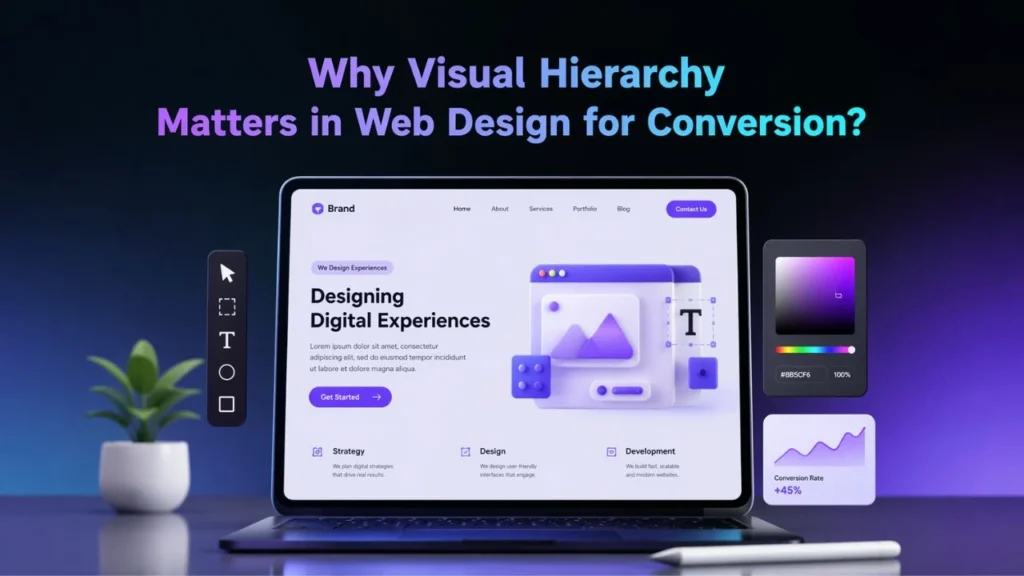
Design is not just about making a page look attractive. It is about guiding attention. Strong Web Design supports landing page design conversion by helping users know where to look, what to read, and what to do next.
Visual hierarchy includes:
- headline size,
- spacing,
- contrast,
- section order,
- button placement,
- and the use of supporting visuals.
When hierarchy is weak, users feel lost. When hierarchy is strong, the page feels intuitive. This is one reason businesses often work with specialized Web Design Agencies or a professional website design company Kolkata brands trust for performance-focused projects.
A conversion-friendly design does not overload users with animation, color, or unnecessary blocks. It keeps attention on the message and the next step. That is what effective landing page design conversion really looks like in practice.
CRO Best Practices That Turn More Visitors Into Leads
Conversion Rate Optimization is one of the most important parts of page performance. If traffic is coming in but conversions are low, optimization is where the biggest gains often happen. Great landing page design conversion is not built on guesswork. It is improved through observation, testing, and refinement.
Start with the basics:
- simplify your form,
- remove extra navigation,
- match the page message to the visitor source,
- add trust signals,
- and test your CTA wording.
Small changes can create meaningful improvements. A shorter form can increase completions. A more specific headline can reduce bounce. Better social proof can improve trust. That is why landing page design conversion and CRO work hand in hand.
If your business is investing in ads, this becomes even more important. A high-performing landing page protects your marketing budget. It helps you get more from Pay Per Click Management and makes every click more valuable.
Mobile-First Design in Web Development Is No Longer Optional
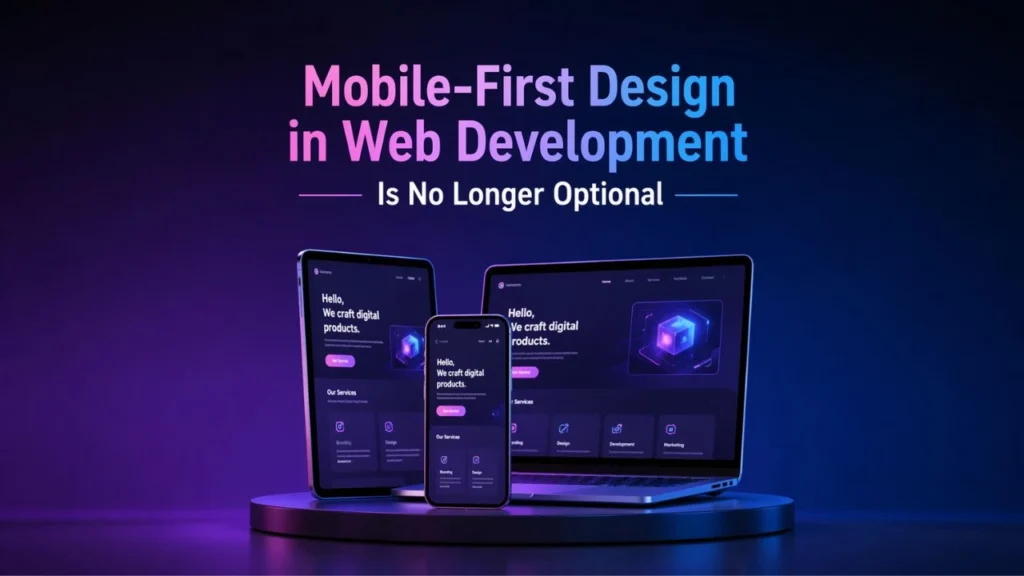
A large share of landing page traffic now comes from smartphones. If your page feels slow, cramped, or difficult to navigate on a mobile device, your results will suffer. This is why mobile-first design in web development should be part of every serious conversion strategy.
Good mobile landing pages use:
- readable font sizes,
- thumb-friendly buttons,
- shorter forms,
- compressed images,
- clean spacing,
- and fast-loading assets.
Strong landing page design conversion depends on smooth mobile interaction. Users should not have to zoom, hunt for the CTA, or struggle with oversized forms. The easier it is for them to act, the higher your chances of conversion.
This is also where strong Web Development Services matter. Design decisions alone are not enough. The page has to function cleanly across devices, browsers, and screen sizes. That technical foundation supports both user experience and search performance.
Page Speed, Technical Structure, and SEO Support Conversion
Speed influences trust more than many businesses realize. A slow landing page creates friction before a visitor even reads your message. That friction hurts landing page design conversion, especially when the user is coming from an ad or a high-intent search.
A fast page usually benefits from:
- optimized images,
- lightweight code,
- cleaner scripts,
- improved hosting,
- and smarter page structure.
Technical quality also supports discoverability. If your page is poorly structured, hard to crawl, or missing basic optimization, it becomes harder to perform well in search. That is why technical SEO in India is increasingly tied to landing page success. Search visibility and conversion performance are no longer separate conversations.
The strongest pages combine Web Development Services, technical SEO in India, and persuasive design. That combination supports better landing page design conversion because it improves both access and action.
Matching Landing Pages With Traffic Source
Not all traffic behaves the same way. A user clicking from a paid ad may arrive ready to act quickly. A user landing from organic search may need more explanation first. Good landing page design conversion accounts for this difference.
For paid traffic, message match is critical. The ad promise, keyword intent, and page content should align. That is why landing pages linked to Pay Per Click Management need clarity, speed, and a focused CTA.
For organic traffic, content depth matters more. Visitors coming from SEO campaigns may want answers, reassurance, or proof before they convert. Including concise explanations, trust signals, and FAQs can improve both engagement and action.
If you sell products or service packages, well-written SEO Product Descriptions can also support conversion. They help visitors understand the offer clearly while supporting search intent at the same time.
The lesson is simple: one landing page should not try to serve every audience in the exact same way. Better alignment improves landing page design conversion because it respects user expectations.
The Role of Trust, Branding, and Consistency
People convert when they feel confident. That confidence comes from more than words. It also comes from consistency, visual identity, and credibility.
A clean brand presentation supports landing page design conversion by making the page feel more professional and more believable. Consistent typography, thoughtful color use, polished layout, and a credible logo all contribute to that trust. This is where support from skilled designers or even logo design agencies in Kolkata can strengthen your overall brand impression.
Branding alone will not save a weak page, but strong branding can reinforce a strong page. If your ad, landing page, and offer all feel aligned, users are more likely to stay and act.
That is one reason many growing businesses choose to work with experienced Web Design Agencies instead of relying on generic templates. Conversion improves when the page feels intentional, not random.
Content Best Practices for Better Conversion
Content should sell without sounding pushy. It should answer real questions, reduce doubt, and help the visitor understand why they should act now.
For better landing page design conversion, your copy should:
- focus on benefits before features,
- stay easy to scan,
- use short paragraphs,
- include clear headings,
- and speak directly to the visitor.
This also helps with AI search and voice search. Clear answers, question-based headings, and structured content make it easier for systems to understand your page. If your service or product page includes offer descriptions, thoughtful SEO Product Descriptions can help users and search systems understand relevance faster.
Strong landing page design conversion happens when design and copy support each other. Great layout with weak content will underperform. Great content inside weak design will also struggle. You need both.
Landing Page Mistakes That Hurt Results
Even good businesses lose conversions because of avoidable mistakes. Some of the most common include:
- cluttered layouts,
- generic headlines,
- confusing forms,
- slow load times,
- weak CTA placement,
- poor mobile usability,
- and low trust.
If your page is trying to do too much, your users usually do nothing. Effective landing page design conversion depends on focus. Clear headline. Clear offer. Clear CTA. Clean structure.
That may sound simple, but simplicity is often what drives the strongest results.
Final Thoughts
The truth is simple: better traffic helps, but better pages convert. If you want stronger results from ads, search, and AI-driven discovery, you need a page that respects the visitor’s time and removes friction from their journey.
That is what strong landing page design conversion does. It combines persuasive copy, focused Web Design, practical CRO, reliable Web Development Services, and search-friendly structure to create a page that works harder for your business.
Whether you are refining service pages, improving campaign performance, or building a new funnel from scratch, the same principles apply. Keep the goal focused. Keep the message clear. Keep the design intuitive. Keep the experience mobile-friendly. And keep testing.
If you want a landing page that is built to convert, support SEO campaigns, strengthen user trust, and perform better across modern search experiences, Request Design Quote.
Frequently Asked Questions
What is landing page design conversion?
Landing page design conversion is the process of designing a landing page so more visitors take a desired action, such as filling out a form, booking a consultation, or making a purchase.
How can I improve landing page design conversion?
You can improve landing page design conversion by using a clear headline, one focused CTA, a short form, strong trust signals, better mobile performance, and regular CRO testing.
Why is mobile-first design important for landing pages?
Mobile-first design in web development matters because many users visit landing pages from smartphones. A poor mobile experience can reduce engagement and lower conversions.
How does page speed affect conversions?
A slow page increases friction. Faster pages improve user experience, reduce bounce, and support better landing page design conversion.
Should I use the same landing page for PPC and SEO traffic?
Not always. Visitors from Pay Per Click Management campaigns often need a faster, more direct path, while visitors from SEO campaigns may need more explanation before converting.
How do Web Development Services support landing page performance?
Professional Web Development Services help ensure your landing page is fast, stable, mobile-friendly, and technically sound, which supports both user experience and landing page design conversion.