If you run a growing company, you have probably heard the phrase Digital Transformation for Small Businesses more times than you can count. It gets used in marketing meetings, software demos, agency proposals, and industry articles. But when you are the one making decisions, the real question is much simpler: where should you actually begin?
For many owners, digital transformation feels bigger than it needs to be. It can sound like a complete overhaul, a massive investment, or a long list of tools you are expected to buy. In reality, the best Digital Transformation for Small Businesses plan starts with small, focused changes that improve how you work, how you reach customers, and how you grow.
That means your first step is not buying random software. It is building a clear Digital Strategy that matches your goals. Once you know where friction exists in your business, you can start improving operations, customer communication, marketing visibility, and sales processes in a way that actually supports growth.
A smart Digital Transformation for Small Businesses approach also goes beyond internal systems. Today, your visibility matters just as much as your workflow. If people cannot find you in search, AI search tools, maps, video platforms, or voice search results, your growth gets limited before the conversation even begins. That is why modern transformation now connects with Global SEO, Local SEO Services, Link Building Services, Generative Engine Optimization, Answer Engine Optimization, YouTube SEO, and stronger Google Rankings.
If you want a practical roadmap instead of vague advice, this guide will help you understand how to move forward step by step. And if you want help turning ideas into execution, you can always Book Strategy Session and build a clear plan around your business goals.
Table of Contents
What Digital Transformation Means for a Small Business
At its core, Digital Transformation for Small Businesses means using digital systems, tools, and processes to improve how your business operates and grows. It is not just about moving files online or opening a social media account. It is about making your business more efficient, more visible, and more responsive to what customers expect today.
For a small business, transformation usually happens across four areas:
- operations
- customer communication
- marketing
- sales
When these areas work together, you save time, reduce wasted effort, and create a better customer experience. That is where a clear Digital Strategy matters. Without it, businesses often add tools without solving actual problems.
This is also where digital strategy consulting can become useful. A good strategy helps you choose the right priorities, avoid unnecessary costs, and focus on actions that improve outcomes rather than just activity.
Why Small Businesses Can No Longer Delay Digital Transformation
Small businesses are competing in a market where customers expect speed, convenience, trust, and visibility. They search before they buy. They compare before they contact. They ask AI tools for recommendations. They use voice search for quick answers. They watch videos before making decisions. If your business is not prepared for that behavior, you lose attention early.
A strong Digital Transformation for Small Businesses plan helps you meet customers where they already are. It improves response times, helps your team stay organized, and supports better decision-making through cleaner data and smarter systems.
It also supports discovery. Search visibility is no longer only about having a website. Today, businesses need a stronger presence through Google Rankings, Answer Engine Optimization, Generative Engine Optimization, and content formats that are easy for both users and machines to understand.
When your business is digitally prepared, you are not just working faster. You are making it easier for people to find, trust, and choose you.
The First Step in Digital Transformation for Small Businesses Owners Should Take
The first step in Digital Transformation for Small Businesses is not technology. It is clarity.
Before you change anything, you need to understand how your business currently works. Look at the full customer journey, from discovery to conversion to follow-up. Where do leads come from? How are inquiries handled? How quickly do you respond? What happens after someone fills out a form or calls your business?
Audit your current processes in areas like:
- lead generation
- sales follow-up
- customer support
- appointment booking
- invoicing
- reporting
- content publishing
Once you map those processes, bottlenecks become easier to spot. You may find that your team spends too much time on manual follow-ups. You may notice that leads are getting missed because forms are not connected to a CRM. Or you may realize your website is not converting because it does not answer the questions people are searching for.
A practical Digital Transformation for Small Businesses journey begins when you identify one clear goal. That goal might be more qualified leads, faster response time, stronger local visibility, or better conversion rates. Start with one outcome, then align your Digital Strategy around it.
Build a Practical Digital Strategy Before Buying Tools
One of the most common mistakes businesses make is buying software first and thinking strategy can come later. It rarely works that way. Tools only perform well when they support a clear business objective.
Your Digital Strategy should answer a few simple questions:
- What do we want to improve first?
- Which process slows us down the most?
- Where are we losing revenue or attention?
- What channels bring the best opportunities?
- How will we measure success?
This is why many small businesses invest in digital strategy consulting before they expand their tech stack. Good planning helps you connect your website, CRM, automation tools, analytics, social channels, and content strategy into one system instead of several disconnected parts.
A practical strategy also helps you prioritize. You may not need ten tools. You may need three tools used properly. You may not need more traffic. You may need better conversion paths. You may not need more content. You may need content structured around search intent, voice queries, and buying-stage questions.
The Core Areas Every Small Business Should Digitally Transform
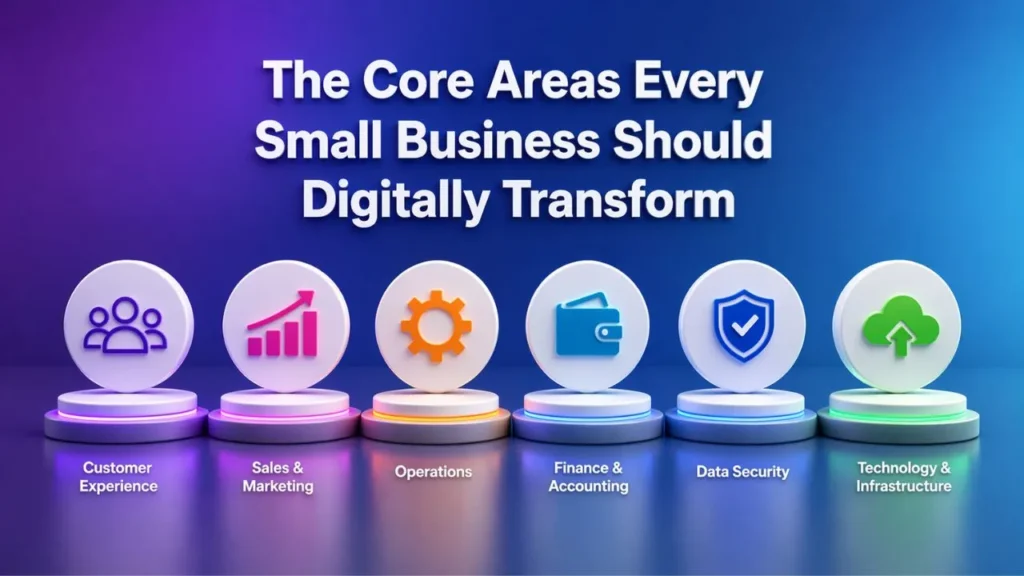
A successful Digital Transformation for Small Businesses plan usually focuses on the parts of the business that affect growth most directly.
Marketing and Lead Generation
Your website should not be a static brochure. It should support discovery, trust, and conversion. That means clear messaging, fast loading pages, strong calls to action, mobile-friendly design, and content that answers real customer questions.
This is where search-focused planning matters. Global SEO helps businesses reach wider audiences when the market is not limited by geography. Local SEO Services help you show up for nearby customers who are ready to take action. Link Building Services strengthen authority and improve how search engines interpret the credibility of your site.
Search Visibility and AI Discoverability
Modern transformation includes being visible across search ecosystems, not just in traditional listings. That is where Generative Engine Optimization and Answer Engine Optimization come in. They help structure your content so it can be understood, summarized, and surfaced more clearly in AI search tools and direct-answer environments.
This does not replace SEO. It strengthens it. The better your content is organized, the easier it is for systems to interpret your expertise, services, and relevance.
Sales and Customer Communication
Digital transformation should make it easier for leads to contact you and easier for your team to respond. CRM tools, live chat, automated follow-ups, quote systems, booking tools, and lead tracking can reduce delays and improve conversion rates.
Operations and Internal Workflow
Many businesses focus only on front-end marketing, but internal efficiency matters just as much. Shared dashboards, project tracking systems, automated reminders, cloud collaboration, and streamlined approval processes can reduce wasted time and improve consistency.
Social and Brand Communication
A business also needs consistent communication where people already spend time. That is why content management and FB Management Services can support a broader digital presence. Social channels can reinforce trust, amplify content, support customer engagement, and create additional touchpoints before a purchase decision.
Where SEO, GEO, AEO, and Voice Search Fit In
A modern Digital Transformation for Small Businesses plan should include discoverability from the beginning. If your systems improve but your visibility stays weak, growth remains limited.
SEO for Traditional Search
Search engine optimization still matters because it connects your business with people actively looking for solutions. Strong SEO includes content relevance, internal linking, site structure, page quality, technical health, and trust signals that support better Google Rankings.
Generative Engine Optimization for AI Search
Generative Engine Optimization helps you prepare content for AI-driven discovery. Clear definitions, well-structured sections, concise explanations, FAQ formatting, and consistent topical authority all improve your chances of being surfaced or referenced in AI-generated responses.
Answer Engine Optimization for Direct Answers
Answer Engine Optimization focuses on making your content easier to use in featured snippets, AI answers, and quick-response experiences. When you create question-based headings and direct, useful answers, you increase your visibility in environments where users want a fast explanation instead of a long search journey.
Voice Search Optimization
Voice search tends to be more conversational. People ask full questions. They use phrases like “where do I start,” “what is the best way,” or “how can I improve my business online.” That means your content should sound natural, include long-tail phrasing, and answer questions clearly. Voice-ready content often overlaps with strong SEO and AEO, which is why this matters in any Digital Transformation for Small Businesses plan.
The Best Digital Channels to Prioritize First
Not every business should do everything at once. A stronger Digital Transformation for Small Businesses roadmap starts with priority channels that give you the best return.
Start With Website and Search
Your website is your core digital asset. It should clearly explain what you do, who you help, and what action users should take next. Build strong service pages, improve page speed, and make sure your content answers real search intent.
Add Local Visibility
If you serve a defined geography, Local SEO Services should be one of your earliest priorities. Strong local visibility supports calls, inquiries, and map-based discovery from people who are already close to a decision.
Expand With Authority Building
Once the basics are strong, invest in content depth and authority. Link Building Services can support your trust profile, while quality content can help you rank for both commercial and informational search queries.
Use Video for Trust and Reach
Video builds familiarity fast. YouTube SEO helps your videos appear in YouTube search, Google video results, and related discovery surfaces. For many small businesses, video can answer objections, explain services, and create stronger engagement than plain text alone.
Support Relationships Through Social
Social media works best when it supports the larger system. FB Management Services can help maintain consistency, improve brand communication, and keep your audience engaged between major buying moments.
Common Mistakes Small Businesses Make
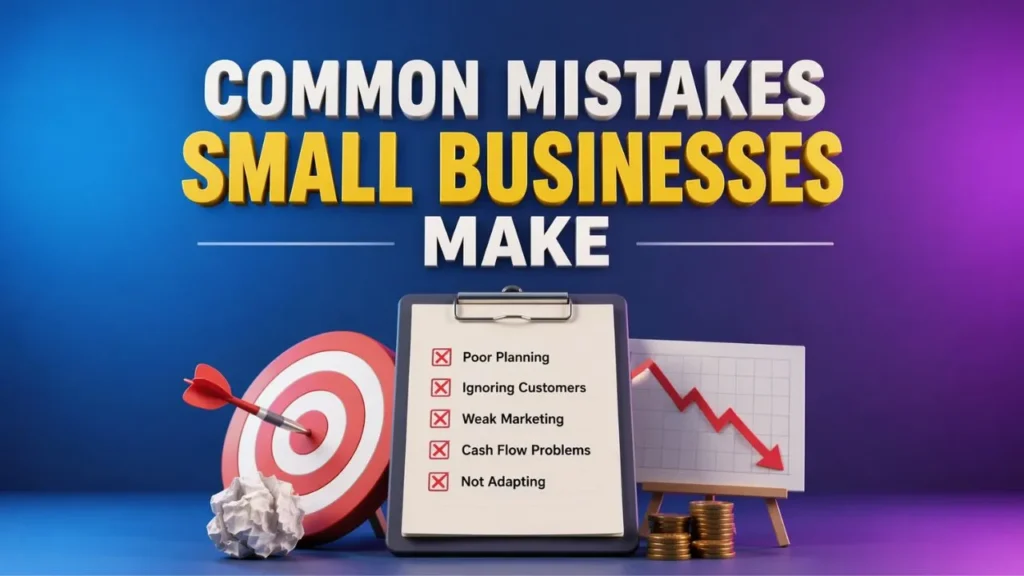
Many businesses approach Digital Transformation for Small Businesses with urgency but without focus. That usually leads to wasted spend and poor execution.
Common mistakes include:
- buying too many tools too early
- ignoring customer journey gaps
- publishing content without strategy
- chasing traffic instead of conversions
- treating SEO as a one-time task
- overlooking Answer Engine Optimization and AI search readiness
- neglecting YouTube SEO even when video can support sales
- failing to track performance consistently
The best transformation plans are simple, measurable, and connected to business goals.
A 90-Day Digital Transformation Roadmap
If you want to make progress without feeling overwhelmed, break your Digital Transformation for Small Businesses plan into phases.
Days 1 to 30: Audit and Prioritize
Review your current systems, website, marketing channels, and customer journey. Identify where leads are coming from, where they drop off, and which processes are still manual. Clarify your main business goal and define baseline metrics.
Days 31 to 60: Implement Core Improvements
Improve your website, clean up your service pages, connect forms to a CRM, set up analytics properly, and begin content optimization. If visibility matters locally, start improving location signals and content with Local SEO Services in mind.
Days 61 to 90: Publish, Promote, and Measure
Launch useful blog content, improve internal linking, support authority with Link Building Services, and expand into video with YouTube SEO considerations. Track what changes actually affect traffic, leads, engagement, and conversion.
If you want a focused plan for the next 90 days instead of trial and error, Book Strategy Session and build your roadmap with purpose.
How to Measure Success
A Digital Transformation for Small Businesses effort only works when you track the right outcomes. Do not measure success only by how many tools you implemented. Measure what changed.
Look at:
- lead volume
- lead quality
- conversion rate
- response time
- organic traffic
- local visibility
- content engagement
- video performance
- return on ad spend if relevant
- Google Rankings for key service terms
You should also measure operational improvements. If your team saves hours every week, follows up faster, or closes more inquiries with the same resources, that is real progress.
When to Get Expert Help
There comes a point where doing everything alone slows growth. That is often when outside support becomes useful. digital strategy consulting can help when you need to prioritize channels, choose the right systems, and connect execution with measurable business goals.
You may need expert help if:
- your website gets traffic but not leads
- you do not know which channel to prioritize
- your local visibility is weak
- your content does not rank
- your business is not showing up well in AI or answer-driven search
- you want better use of Global SEO, Local SEO Services, Generative Engine Optimization, or Answer Engine Optimization
Final Thoughts
The best Digital Transformation for Small Businesses strategy is not the most complicated one. It is the one that solves the right problem first.
You do not need to digitize everything overnight. You need to identify where your business is losing time, visibility, leads, or momentum and fix that with intention. Start with your customer journey. Build a clear Digital Strategy. Improve your website, your communication systems, and your search visibility. Then expand into channels like YouTube SEO, FB Management Services, and stronger authority-building efforts as your foundation becomes stronger.
When you take that approach, digital transformation becomes less intimidating and more practical. It becomes a growth system, not just a tech upgrade.
If you are ready to move from ideas to action, Book Strategy Session and start building a smarter digital foundation for your business.
FAQs
What is digital transformation for a small business?
It is the process of improving how a business operates, markets, sells, and serves customers through digital systems, smarter workflows, and stronger online visibility.
Where should a small business start with digital transformation?
Start by auditing your current processes, identifying bottlenecks, and setting one clear goal. From there, build a Digital Strategy that supports both operations and marketing.
Why is Digital Transformation for Small Businesses growth important today?
Because customers now expect speed, convenience, and easy access to information. Businesses that improve both efficiency and discoverability are in a stronger position to grow.
How does SEO fit into digital transformation?
SEO improves how easily your business is found in search. That includes traditional rankings, local discovery, and content visibility that supports lead generation.
What is the role of Generative Engine Optimization?
Generative Engine Optimization helps your content become easier for AI systems to interpret, summarize, and surface in AI-driven search experiences.
Why does Answer Engine Optimization matter?
Answer Engine Optimization helps your content appear in direct-answer environments by structuring content around clear questions and concise, useful responses.
Are Local SEO Services necessary for small businesses?
If your customers come from a specific city or service area, Local SEO Services can be extremely valuable because they improve local visibility and high-intent discovery.
Can YouTube SEO help a small business grow?
Yes. YouTube SEO can improve visibility for educational, product, service, and trust-building content while also supporting broader search discoverability.
What do Link Building Services do?
Link Building Services help strengthen site authority by improving the quality and quantity of relevant external links pointing to your website.
When should I consider digital strategy consulting?
You should consider digital strategy consulting when your business needs clearer direction, better prioritization, stronger performance tracking, or help connecting all digital channels into one growth system.