
When most businesses think about ecommerce SEO, they often focus on product pages. While product pages are important, category pages frequently have greater potential to attract qualified traffic and drive consistent sales. They target broader commercial keywords, serve as navigation hubs, and help search engines understand the structure of an online store.
This is where Ecommerce Category Page SEO becomes essential. A well-optimized category page can rank for high-volume transactional searches, improve user experience, and guide visitors toward conversion. Whether you manage a small online store or a large ecommerce website, investing in category page optimization can significantly improve your search visibility and revenue.
In today’s search landscape, businesses must optimize not only for traditional search engines but also for AI search tools, answer engines, and voice search platforms. By combining modern ecommerce SEO techniques with user-focused content, category pages can become powerful assets that support long-term growth.
Table of Contents
What Is Ecommerce Category Page SEO?
Ecommerce Category Page SEO refers to the process of optimizing category pages to improve their visibility in search results and increase conversions.
A category page groups related products under a common theme.
Examples include:
- Men’s Running Shoes
- Wireless Headphones
- Office Furniture
- Kitchen Appliances
Unlike product pages, category pages target broader keywords and attract users who are still comparing options before making a purchase.
Effective Ecommerce Category Page SEO involves:
- Keyword optimization
- Content enhancement
- Internal linking
- Technical SEO improvements
- User experience optimization
- Structured data implementation
The goal is simple: help search engines understand the page while making it easier for users to find the products they need.
Why Category Pages Are Important for Ecommerce SEO?
Category pages often receive more organic traffic than individual product pages because they target broader search queries.
Benefits of Optimized Category Pages
| Benefit | Impact |
| Higher keyword reach | Improves visibility |
| Better navigation | Enhances user experience |
| Stronger internal linking | Supports crawling |
| Increased conversions | Drives more sales |
| Improved authority | Strengthens topic relevance |
For many businesses, category pages act as entry points into the website. A visitor searching for “best gaming laptops” may land on a category page rather than a specific product page.
This makes category page optimization an essential part of any ecommerce SEO strategy.
Keyword Research for Ecommerce Category Pages
Successful Ecommerce Category Page SEO starts with proper keyword research.
Focus on Commercial Intent
Category pages should target keywords that indicate buying intent.
Examples include:
- running shoes for men
- wireless earbuds online
- office chairs for home office
- premium kitchen appliances
These keywords signal that users are actively looking for products.
Use Long Tail Keywords
Long tail keywords help attract highly targeted visitors.
Examples:
- best wireless headphones for travel
- lightweight running shoes for beginners
- ergonomic office chair for back support
These phrases often have lower competition and higher conversion potential.
Optimize for Voice Search
Voice searches tend to be conversational.
Examples include:
- What are the best running shoes for beginners?
- Which wireless earbuds have the longest battery life?
- Where can I buy affordable office chairs online?
Including natural language phrases helps category pages perform better in voice search environments.
Category Page Optimization Best Practices
Proper category page optimization involves multiple elements working together.
Optimize URLs
Keep URLs short and descriptive.
Good example:
yourstore.com/running-shoes
Avoid:
yourstore.com/category?id=4587
Clean URLs improve usability and search engine understanding.
Create Effective Title Tags
Your title tag should include the primary keyword naturally.
Example:
Ecommerce Category Page SEO Guide | Improve Rankings and Sales
For product categories:
Men’s Running Shoes | Lightweight and Performance Footwear
Write Persuasive Meta Descriptions
Meta descriptions influence click through rates.
Example:
Discover premium men’s running shoes designed for comfort, speed, and performance. Explore top styles and find the perfect fit today.
Use Header Tags Strategically
A clear heading structure improves readability and SEO.
Structure:
- H1: Main Category
- H2: Product Benefits
- H2: Buying Guide
- H3: Specific Features
Creating Content for Category Pages
- One common mistake is treating category pages as product listings only.
- Search engines increasingly favor pages that provide context and value.
Add Introductory Content
A short introduction helps users understand the category.
For example, a running shoes category page could explain:
- Types of running shoes
- Key features
- Intended users
Include Supporting Content
Additional content below product listings can improve topical relevance.
Topics may include:
- Buying guides
- Frequently asked questions
- Product comparisons
- Maintenance tips
This content strengthens Ecommerce Category Page SEO while helping users make informed decisions.
Use Semantic Keywords
Search engines analyze context rather than individual keywords.
Related terms may include:
- product collections
- shopping categories
- product selection
- buying guide
- product filters
These terms reinforce topical relevance naturally.
Internal Linking for Better Rankings
Internal links help search engines discover content and understand relationships between pages.
Link Related Categories
Examples:
- Running Shoes → Sports Apparel
- Wireless Headphones → Audio Accessories
- Office Furniture → Home Office Storage
Use Blog Content to Support Categories
Digital marketing blogs can strengthen category pages through contextual links.
For example:
A blog discussing ecommerce SEO strategies can link to category-focused resources or service pages.
This approach builds topical authority and improves user navigation.
Use Descriptive Anchor Text
Instead of generic phrases such as “click here,” use meaningful anchor text that describes the destination page.
Technical Ecommerce SEO Factors
Technical SEO plays a major role in category page performance.
Improve Page Speed
Fast-loading pages provide a better user experience and reduce bounce rates.
Focus on:
- Image compression
- Browser caching
- Optimized code
- Content delivery networks
Mobile Optimization
A large percentage of ecommerce traffic comes from mobile devices.
Ensure:
- Responsive design
- Fast mobile performance
- Easy navigation
- Touch-friendly elements
Optimize Crawlability
Search engines must efficiently crawl category pages.
Key areas include:
- XML sitemaps
- Internal linking
- Robots directives
- Clean site architecture
Managing Faceted Navigation and Filters
Filters help users narrow product selections. However, poorly managed filters can create SEO challenges.
Common Issues
- Duplicate URLs
- Thin content pages
- Crawl budget waste
- Indexation problems
Best Practices
- Use canonical tags where appropriate
- Block unnecessary filtered URLs
- Allow indexing only for valuable filter combinations
- Maintain a logical URL structure
These improvements strengthen category page optimization while preserving crawl efficiency.
Schema Markup for Ecommerce Category Pages

Schema markup helps search engines understand page content more effectively.
Useful Schema Types
Breadcrumb Schema
Improves navigation understanding.
ItemList Schema
Helps search engines identify product collections.
Organization Schema
Provides business information.
Product Related Schema
Enhances product visibility where applicable.
Schema can improve eligibility for rich search results and increase click through rates.
AI Search and GEO Optimization
- Search behavior continues to evolve as AI-powered search platforms become more common.
- To succeed in Generative Engine Optimization, category pages should provide clear, structured information.
Use Clear Content Sections
AI systems often prefer content that is easy to understand.
Include:
- Definitions
- Benefits
- Features
- Buying considerations
Build Topical Authority
Create supporting content around major categories.
Examples include:
- Buying guides
- Industry trends
- Product comparisons
- Educational resources
This helps search engines and AI systems recognize expertise.
Strengthen Entity Signals
- Mention relevant industry terms and concepts naturally throughout the content.
- This improves contextual understanding and retrieval performance.
Voice Search Optimization for Category Pages
- Voice search continues to influence ecommerce SEO strategies.
- Users increasingly search using complete questions.
Optimize for Conversational Queries
Examples:
- What are the best running shoes for long distance runners?
- Which office chair is best for remote work?
- What wireless earbuds offer the best sound quality?
Include FAQ Sections
Question and answer formats align well with voice search behavior.
Use Natural Language
- Write content the way people speak.
- Avoid keyword stuffing and focus on clarity.
- This improves both user experience and voice search visibility.
AEO Strategies for Ecommerce Category Pages
Answer Engine Optimization focuses on providing direct, useful answers.
Structure Content Clearly
Use:
- Headings
- Lists
- Tables
- FAQs
These formats help answer engines extract information efficiently.
Create Concise Answers
Provide immediate responses before expanding on the topic.
Improve Featured Snippet Potential
Many featured snippets come from content that:
- Answers questions directly
- Uses structured formatting
- Covers topics comprehensively
This increases visibility across traditional search engines and AI-driven platforms.
Common Ecommerce Category Page SEO Mistakes
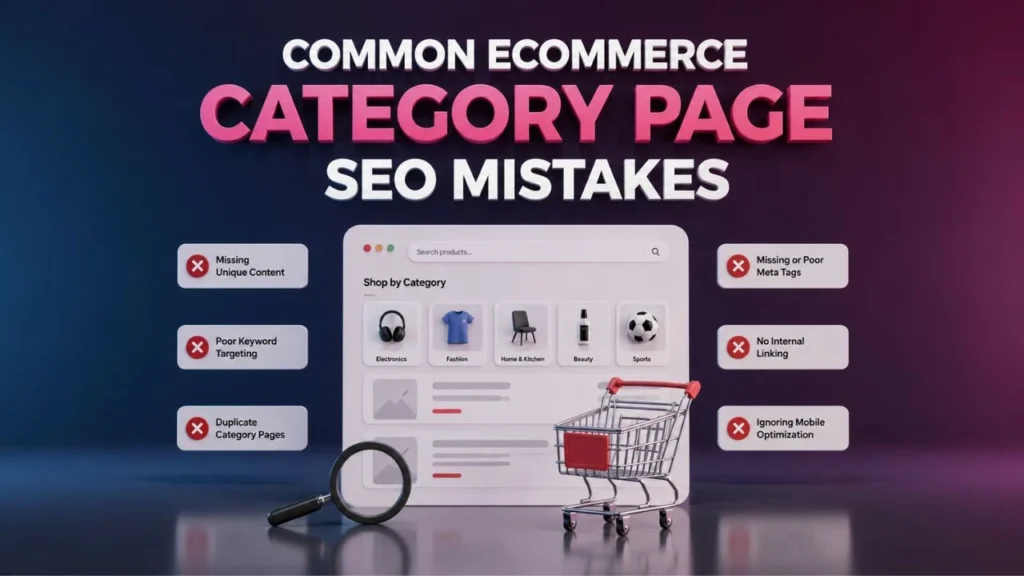
Many businesses struggle with Ecommerce Category Page SEO because of avoidable errors.
Thin Content
Pages with little information often fail to rank.
Duplicate Metadata
Unique titles and descriptions are essential.
Poor Internal Linking
Weak internal linking limits authority distribution.
Ignoring User Experience
SEO success depends on both rankings and usability.
Slow Loading Pages
Performance issues negatively affect engagement and conversions.
Excessive Keyword Usage
Overusing keywords creates a poor reading experience and can reduce effectiveness.
Ecommerce Category Page SEO Checklist
Before publishing or updating a category page, review the following checklist:
| Task | Complete |
| Keyword research performed | ✓ |
| SEO-friendly URL created | ✓ |
| Optimized title tag added | ✓ |
| Meta description written | ✓ |
| Helpful category content included | ✓ |
| Internal links implemented | ✓ |
| Schema markup added | ✓ |
| Mobile optimization completed | ✓ |
| Page speed tested | ✓ |
| FAQ section added | ✓ |
Measuring Success
Tracking performance helps determine whether your category page optimization efforts are working.
Key Metrics to Monitor
- Organic traffic
- Keyword rankings
- Click through rate
- Conversion rate
- Revenue generated
- Bounce rate
- Engagement metrics
Review these metrics regularly and refine your strategy based on data.
Conclusion
Ecommerce Category Page SEO is one of the most effective ways to increase organic visibility and drive more sales. While product pages remain important, category pages often capture broader commercial intent and serve as powerful entry points into an online store.
By focusing on category page optimization, technical improvements, user experience, internal linking, structured data, and content quality, businesses can strengthen their ecommerce SEO performance and improve long-term growth.
As AI search, answer engines, and voice search continue to evolve, category pages that provide clear, comprehensive, and user-focused information will have a stronger chance of earning visibility across multiple search platforms. Investing in Ecommerce Category Page SEO today helps build a foundation for sustainable traffic, better engagement, and increased revenue tomorrow.
Frequently Asked Questions
What is Ecommerce Category Page SEO?
E-commerce Category Page SEO is the process of optimizing category pages to improve search visibility, user experience, and conversions.
Why is category page optimization important?
Category page optimization helps attract qualified traffic, improve navigation, and increase sales opportunities.
Can category pages rank better than product pages?
Yes. Category pages often target broader commercial keywords with higher search volume, making them strong ranking opportunities.
How much content should a category page contain?
There is no fixed length. The content should answer user questions, support buying decisions, and provide useful context.
How does ecommerce SEO benefit from optimized category pages?
Optimized category pages improve visibility, strengthen site architecture, and help distribute authority throughout the website.
How can online store SEO improve sales?
Effective online store SEO attracts targeted visitors who are actively searching for products, increasing the likelihood of conversions.