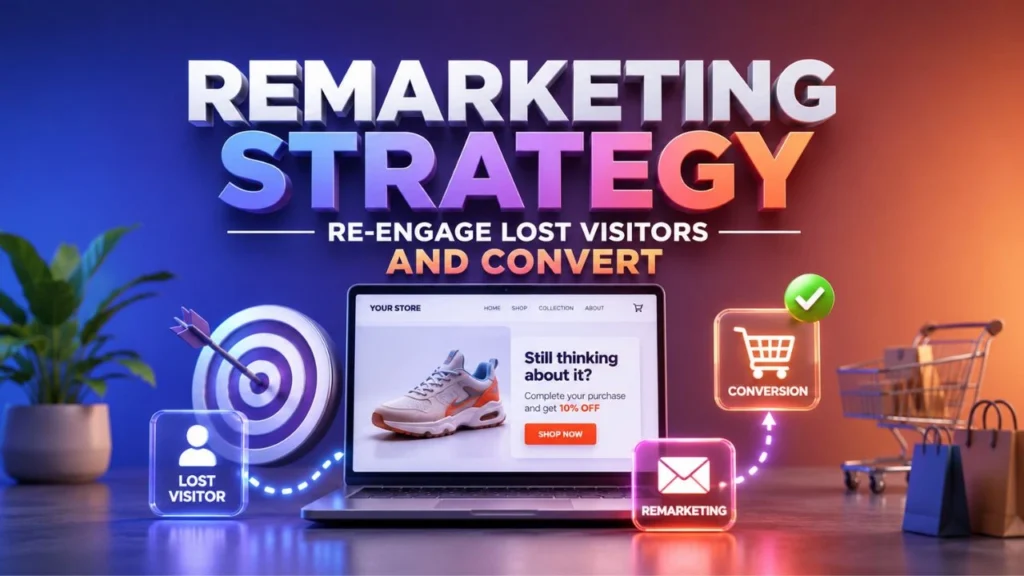
Every business invests time, effort, and budget into driving traffic to its website. Yet most visitors leave without taking action. Some browse product pages and disappear. Others add items to their cart but never complete the purchase. Many read blog posts, compare services, or explore pricing pages before leaving the site entirely.
This is where a strong Remarketing Strategy becomes essential.
Instead of letting valuable traffic disappear, remarketing gives businesses another opportunity to reconnect with interested users. It helps brands stay visible, relevant, and persuasive even after a visitor leaves the website. Whether someone viewed a product, visited a service page, or interacted with an ad, remarketing allows businesses to continue the conversation and guide users back toward conversion.
In today’s highly competitive digital environment, relying only on first visit conversions is no longer enough. Consumers now interact with brands across multiple platforms before making decisions. They search on Google, scroll through social media, compare competitors, and revisit websites several times. Businesses that fail to re engage these users often lose potential revenue.
A well planned remarketing campaign strategy helps solve this problem by delivering targeted ads to users who have already shown interest in a brand. These campaigns improve visibility, strengthen trust, and increase the likelihood of conversion. More importantly, they allow businesses to market more efficiently because the audience already knows the brand.
Modern businesses are also shifting toward conversion focused remarketing because it produces measurable results. Instead of showing generic advertisements to random audiences, remarketing targets users based on behavior, intent, and engagement history. This creates a more personalized experience and supports better conversion driven marketing.
For digital marketers, remarketing is no longer just an optional tactic. It has become an important part of every successful digital advertising strategy.
Table of Contents
What Is a Remarketing Strategy?
A Remarketing Strategy is a digital marketing approach that targets users who previously interacted with a website, mobile app, landing page, or advertisement but did not complete the desired action. The strategy focuses on re engaging those users with highly relevant ads, offers, and messages across different online platforms.
The primary goal of remarketing is to bring potential customers back into the conversion process. Instead of continuously spending money on attracting completely new audiences, businesses can reconnect with users who already demonstrated interest in their products or services.
Many marketers also use the term retargeting strategy interchangeably with remarketing. While both concepts are closely related, they often differ slightly in execution.
| Aspect | Remarketing | Retargeting |
| Main Focus | Re engaging existing visitors | Displaying ads to past visitors |
| Channels | Email, display ads, social ads | Mostly display and social ads |
| Goal | Conversion recovery | Brand recall and engagement |
| Personalization Level | High | Moderate to High |
A successful remarketing strategy combines audience insights, behavioral data, ad personalization, and conversion optimization techniques.
Businesses use these campaigns to reconnect with users who:
- Visited product pages
- Abandoned shopping carts
- Read blog content
- Watched videos
- Downloaded resources
- Engaged with social media ads
This is why smart businesses prioritize personalized marketing campaigns instead of relying on broad targeting alone.
How Remarketing Works in Digital Marketing?
Remarketing works by tracking user interactions through cookies, pixels, and audience data tools. Once a user visits a website or engages with content, businesses can place that user into a specific audience segment.
For example, if someone visits an ecommerce store and views a product without purchasing it, the business can later show relevant ads to that same user on Google, Facebook, YouTube, or other platforms.
This process creates a structured remarketing funnel where users move through different stages based on their behavior and intent.
Key Components of a Remarketing Funnel
Audience Tracking
Businesses collect user behavior data using tracking tools such as Google tags, Meta pixels, and analytics platforms.
Remarketing Audience Segmentation
Users are divided into groups based on:
- Pages visited
- Products viewed
- Time spent on site
- Purchase intent
- Device usage
- Traffic source
This remarketing audience segmentation improves campaign precision and supports ad targeting refinement.
Ad Personalization
Ads are customized according to user behavior. Someone who viewed pricing pages may receive a different message compared to someone who only read informational blog content.
Conversion Optimization
Businesses continuously improve ads, landing pages, and offers through conversion optimization with remarketing techniques.
Why Remarketing Delivers Better ROI?
One of the biggest reasons businesses invest in paid remarketing tactics is because remarketing typically produces higher conversion rates compared to cold audience advertising.
Users who already know a brand are more likely to trust it. They are also more likely to engage with relevant ads because the products or services match their interests.
This explains how remarketing improves ROI across multiple industries.
Benefits of Remarketing Campaigns
| Benefit | Business Impact |
| Higher Conversion Rates | More sales and leads |
| Improved Brand Recall | Stronger customer trust |
| Better Ad Efficiency | Lower wasted ad spend |
| Personalized User Experience | Increased engagement |
| Stronger Customer Retention | Better repeat purchase rates |
Businesses using smart retargeting techniques for businesses often notice:
- Lower customer acquisition costs
- Improved lead quality
- Increased return visits
- Better ecommerce sales performance
- Stronger audience engagement
Remarketing also works exceptionally well when combined with SEO, content marketing, and PPC campaigns.
Google Ads Remarketing vs Facebook Retargeting Ads
Businesses often compare Google Ads remarketing and Facebook retargeting ads when building their advertising strategy. Both platforms offer powerful targeting options, but they work differently depending on campaign goals.
Google Ads Remarketing
Google Ads remarketing allows businesses to reconnect with visitors across:
- Google Search
- YouTube
- Google Display Network
- Gmail
- Mobile apps
These campaigns are highly effective for users actively searching for products or services.
Advantages of Google Ads Remarketing
- Strong search intent targeting
- Massive advertising reach
- Dynamic product ads
- Excellent for ecommerce recovery campaigns
- Better visibility during active buying stages
Facebook Retargeting Ads
Facebook retargeting ads focus heavily on audience engagement and social interaction. Businesses can target users based on:
- Website visits
- Video views
- Social engagement
- Messenger interactions
- Customer lists
Advantages of Facebook Retargeting Ads
- Strong audience personalization
- Visual storytelling opportunities
- Better social engagement
- Advanced audience behavior targeting
- Excellent for brand awareness campaigns
| Platform | Best For | Strength |
| Google Ads Remarketing | High intent users | Conversion focused campaigns |
| Facebook Retargeting Ads | Engagement and awareness | Audience personalization |
The best results often come from combining both platforms within a unified retargeting ads strategy.
How to Build a Conversion Focused Remarketing Campaign Strategy?
Businesses often fail with remarketing because they repeatedly show the same generic ads to every visitor. Effective campaigns require precision, personalization, and audience understanding.
Step 1: Define Clear Conversion Goals
Before launching campaigns, businesses must identify what action they want users to complete:
- Product purchases
- Lead form submissions
- Consultation bookings
- Newsletter signups
- Demo requests
Clear goals improve campaign optimization and measurement accuracy.
Step 2: Use Advanced Audience Segmentation
Not all visitors behave the same way. Businesses should create separate audiences for:
- Cart abandoners
- Returning visitors
- Blog readers
- Product viewers
- Existing customers
Advanced remarketing audience segmentation supports better ad targeting refinement and improves conversion rates.
Step 3: Create Personalized Marketing Campaigns
Users respond better to relevant messaging. Businesses should personalize:
- Headlines
- Ad copy
- Product recommendations
- Offers
- Landing pages
Personalized marketing campaigns increase engagement and build stronger customer trust.
Step 4: Optimize Ad Frequency
Showing too many ads can frustrate users. Frequency capping prevents ad fatigue and improves campaign performance.
Step 5: Improve Landing Page Experience
Strong ads alone cannot guarantee conversions. Businesses must ensure landing pages:
- Load quickly
- Match ad messaging
- Offer clear CTAs
- Work well on mobile devices
This directly supports conversion optimization with remarketing.
Remarketing Strategy for Ecommerce Websites
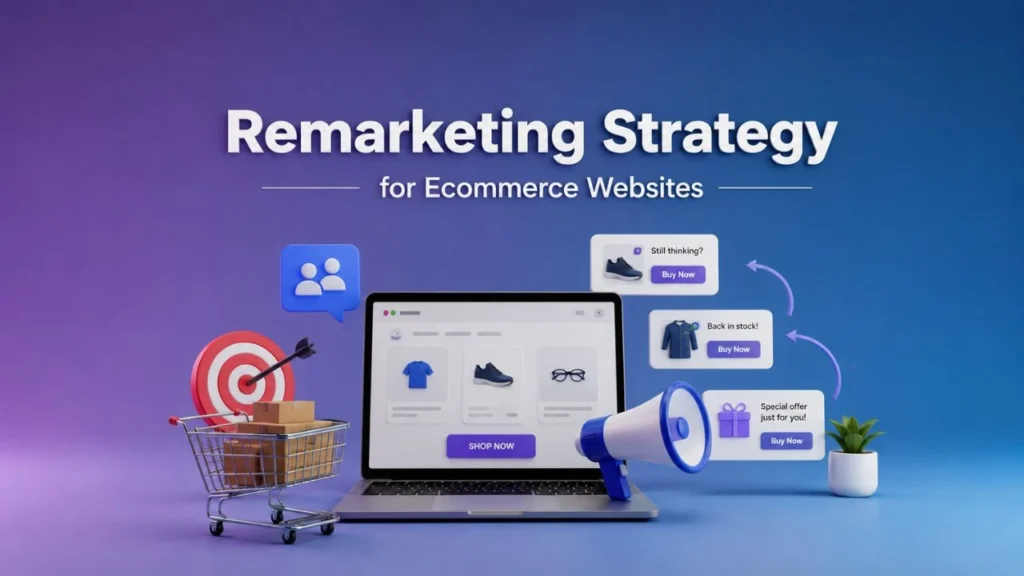
Ecommerce businesses benefit significantly from remarketing because many users abandon carts before completing purchases.
A remarketing strategy for ecommerce websites focuses on bringing those users back through targeted offers and personalized ads.
Effective Ecommerce Remarketing Tactics
Cart Abandonment Campaigns
Businesses can remind users about unfinished purchases with:
- Discount offers
- Limited time deals
- Free shipping incentives
Dynamic Product Remarketing
Dynamic ads automatically display products users previously viewed.
Cross Sell and Upsell Campaigns
Businesses can promote related products to existing customers based on purchase behavior.
Seasonal Retargeting
Holiday campaigns and seasonal offers help businesses reconnect with past buyers.
| Ecommerce Goal | Recommended Remarketing Tactic |
| Recover Abandoned Carts | Dynamic product ads |
| Increase Average Order Value | Upsell campaigns |
| Improve Repeat Purchases | Loyalty remarketing |
| Promote Seasonal Offers | Limited time retargeting campaigns |
Common Remarketing Mistakes Businesses Should Avoid
Even experienced marketers sometimes damage campaign performance with poor remarketing practices.
Showing Ads Too Frequently
Excessive ad repetition creates frustration and lowers engagement.
Ignoring Audience Segmentation
Treating every visitor the same reduces relevance and conversion potential.
Using Generic Messaging
Personalization is essential for modern conversion driven marketing.
Poor Landing Page Experience
Slow or confusing landing pages reduce campaign effectiveness.
Failing to Track Performance
Businesses should monitor:
- CTR
- Conversion rates
- Cost per acquisition
- ROAS
- Audience engagement metrics
Tracking helps improve paid remarketing tactics over time.
PPC vs SEO ROI Comparison for Your Business
Businesses often compare PPC advertising and SEO when planning long term growth strategies.
| Factor | SEO | PPC Remarketing |
| Traffic Speed | Gradual | Immediate |
| Long Term Value | High | Moderate |
| Conversion Potential | Medium | High |
| Brand Recall | Moderate | Strong |
| Audience Targeting | Broad | Highly specific |
The best results usually come from combining both strategies. SEO attracts organic traffic, while remarketing helps convert visitors who did not take action initially.
This balanced approach strengthens digital advertising strategy performance while improving long term visibility.
Final Thoughts
A successful Remarketing Strategy is not just about showing ads repeatedly. It is about understanding user behavior, creating personalized experiences, and guiding potential customers back toward conversion.
Businesses that invest in remarketing campaign strategy, audience segmentation, and conversion optimization often achieve stronger ROI, better customer retention, and more efficient advertising performance.
Whether you use Google Ads remarketing, Facebook retargeting ads, or a multi platform retargeting strategy, the key is relevance. Modern consumers expect personalized experiences that match their interests and intent.
When businesses combine smart retargeting techniques for businesses with SEO, PPC, and conversion focused remarketing, they create a stronger foundation for sustainable digital growth.
In a competitive online environment, remarketing is no longer optional. It has become one of the most effective ways to reconnect with lost visitors, strengthen customer relationships, and increase conversions.
FAQs
What is a Remarketing Strategy in digital marketing?
A Remarketing Strategy is a digital marketing approach used to reconnect with users who previously visited a website, interacted with ads, or engaged with a brand but did not complete a conversion. Businesses use remarketing campaigns to increase brand recall, improve engagement, and encourage users to return and take action.
How does Google Ads remarketing work?
Google Ads remarketing works by tracking website visitors through cookies or audience tags. Once users leave the website, businesses can show them targeted ads across Google Search, YouTube, Gmail, and the Google Display Network. This helps businesses stay visible and improve conversion opportunities.
What is the difference between remarketing and retargeting?
Remarketing and retargeting are closely related concepts, but they often differ slightly in execution. Remarketing usually focuses on reconnecting with previous customers through email campaigns and personalized communication, while a retargeting strategy mainly uses paid display ads to re engage past website visitors.
Why is a Remarketing Strategy important for businesses?
A Remarketing Strategy helps businesses reconnect with interested users instead of losing valuable traffic. Since these users already know the brand, they are more likely to convert compared to completely new audiences. This improves conversion rates, customer retention, and overall advertising efficiency.
How remarketing improves ROI for businesses?
Remarketing improves ROI by targeting users who already showed interest in a product or service. These campaigns usually produce higher engagement and better conversion rates than standard advertising campaigns. Businesses also reduce wasted ad spend because they focus on high intent audiences.
What are the best platforms for remarketing campaigns?
Some of the most effective platforms for remarketing include:
Google Ads remarketing
Facebook retargeting ads
Instagram remarketing campaigns
YouTube video remarketing
LinkedIn retargeting for B2B marketing
The ideal platform depends on business goals, audience behavior, and campaign objectives.
What is remarketing audience segmentation?
Remarketing audience segmentation is the process of dividing website visitors into different groups based on their behavior and intent. Businesses can segment users by:
Pages visited
Products viewed
Cart abandonment
Time spent on site
Previous purchases
Traffic source
This improves ad targeting refinement and campaign relevance.
What are personalized marketing campaigns in remarketing?
Personalized marketing campaigns use customer behavior and preferences to deliver highly relevant ads and offers. Instead of showing generic ads, businesses customize messaging based on user actions, interests, and browsing history. This increases engagement and supports conversion focused remarketing.
How can ecommerce websites benefit from remarketing?
A remarketing strategy for ecommerce websites helps recover abandoned carts, increase repeat purchases, and improve product visibility. Ecommerce businesses often use dynamic product ads, discount campaigns, and personalized recommendations to bring users back and increase sales.
What are smart retargeting techniques for businesses?
Smart retargeting techniques for businesses include:
Dynamic product ads
Sequential ad messaging
Frequency capping
Behavioral audience targeting
AI driven personalization
Cross platform retargeting campaigns
These methods help improve engagement and conversion performance.
How often should businesses show remarketing ads?
Businesses should avoid showing ads too frequently because excessive repetition can create ad fatigue. Most advertisers use frequency capping to control how often users see ads while maintaining visibility and engagement.
What is conversion optimization with remarketing?
Conversion optimization with remarketing focuses on improving campaign performance through better ad creatives, landing pages, audience targeting, and user experience. The goal is to increase conversions while lowering customer acquisition costs.
Are Facebook retargeting ads effective for lead generation?
Yes, Facebook retargeting ads are highly effective for lead generation because they allow businesses to reconnect with users who previously interacted with their website, videos, or social content. These campaigns improve engagement and help nurture leads through personalized marketing campaigns.
How does ad targeting refinement improve remarketing performance?
Ad targeting refinement improves remarketing performance by ensuring businesses show ads to the most relevant audiences. Better targeting reduces wasted ad spend, increases click through rates, and improves overall conversion efficiency.
What role does Google Ads Quality Score play in remarketing?
Google Ads Quality Score and ad relevance influence ad visibility, CPC, and campaign efficiency. Highly relevant remarketing ads with strong landing page experiences often achieve better Quality Scores and lower advertising costs.