Every business reaches a point where its current systems start holding it back. Maybe your servers are expensive to maintain. Maybe your team struggles with slow applications, limited storage, security concerns, or poor remote access. That is often when cloud migration for business becomes part of the conversation.
At its core, cloud migration for business is about moving data, applications, and workloads from traditional on premises infrastructure to a cloud environment. For many organizations, this shift opens the door to better flexibility, stronger performance, and easier scalability. At the same time, it also brings real challenges that need careful planning.
That is why cloud migration for business should never be treated like a simple IT upgrade. It is a strategic business move. When you approach it with the right goals, the right roadmap, and the right support, it can improve the way your business runs today while also preparing you for tomorrow.
In this guide, we will look at the main rewards, the possible risks, and the best ways to make cloud migration for business work for you. If you are thinking about modernization, growth, or long term efficiency, this is a good place to start.
Table of Contents
What Is Cloud Migration for Business?
Cloud migration for business refers to the process of moving digital assets such as applications, databases, files, workloads, and IT resources from local servers or legacy systems to cloud based platforms. In simple terms, it means your business no longer depends only on physical infrastructure in one location.
With Cloud Computing, businesses can access technology resources over the internet instead of managing everything in house. That means computing power, storage, software, and security tools can often be delivered faster and more efficiently. This is one reason cloud migration for business has become a priority for companies that want to grow without being limited by outdated infrastructure.
Many organizations also use cloud computing services to plan and manage the transition. These services help reduce disruption, improve security, and make the migration process more organized.
Common Types of Cloud Migration
There is no single path for cloud migration for business. The right approach depends on your systems, budget, goals, and internal capabilities.
Rehosting
This means moving applications to the cloud with minimal changes. It is often the fastest way to begin cloud migration for business.
Replatforming
This approach makes small adjustments to applications so they can perform better in the cloud without being fully rebuilt.
Refactoring
This is a deeper redesign of applications so they can fully benefit from modern Cloud Computing environments.
Hybrid Migration
Some businesses keep part of their infrastructure on premises and move the rest to the cloud.
Multi Cloud Migration
This strategy involves using more than one cloud provider to avoid overdependence on a single platform.
Why Cloud Migration for Business Matters Today?
The business environment is changing fast. Customers expect smooth digital experiences. Teams expect remote access and real time collaboration. Leaders expect better efficiency, better security, and better cost control. That is why cloud migration for business matters now more than ever.
Traditional systems can slow down progress. They often require high maintenance, expensive upgrades, and constant manual oversight. By contrast, Cloud Computing allows businesses to respond faster to market changes, support distributed teams, and launch new tools with less friction. It also supports Digital Transformation for Small Businesses by giving them more flexible infrastructure, easier data access, and better room to grow without heavy upfront technology costs.
For growing companies, cloud migration for business is also about staying competitive. When your systems are easier to scale, your operations become more agile. When your data is easier to access securely, your team can work smarter. When you use the right cloud computing services, you also gain access to expertise that supports better decision making throughout the transition.
The Biggest Rewards of Cloud Migration for Business
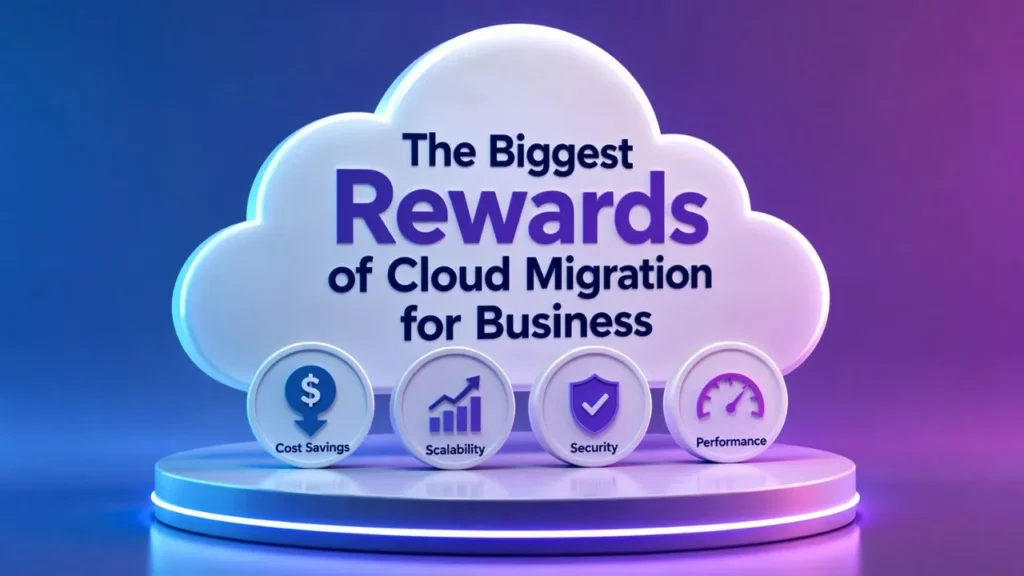
The reason so many companies explore cloud migration for business is simple. The upside can be significant when the move is planned properly.
1. Better Scalability
One of the strongest benefits of cloud migration for business is scalability. Your business needs are not static. Traffic changes. Workloads grow. Storage requirements increase. With Cloud Computing, you can often scale resources up or down based on actual demand.
Strong infrastructure planning also helps you avoid overinvesting in systems you may not always need. It allows your business to handle growth more confidently while keeping resources aligned with real demand.
2. Improved Cost Efficiency
For many organizations, cloud migration for business helps shift spending from large capital investments to more flexible operational costs. Instead of constantly maintaining physical hardware, you can pay for the resources you actually use.
That does not mean the cloud is always cheaper by default. It means the opportunity for smarter cost management becomes stronger when usage is monitored properly. This is another reason businesses rely on professional cloud computing services to keep spending aligned with goals.
3. Greater Flexibility
Modern teams need access from different locations, devices, and departments. Cloud migration for business supports that reality. Cloud based infrastructure helps employees collaborate, share files, access systems securely, and stay productive whether they are in the office or working remotely.
This flexibility can also improve customer service, internal speed, and operational continuity.
4. Faster Innovation
When your business is tied to aging infrastructure, innovation often slows down. New tools take longer to deploy. Integrations become harder. System upgrades feel disruptive. Cloud migration for business can reduce that friction.
With the support of Cloud Computing, your organization can adopt modern tools more easily, improve workflows, and create a stronger foundation for automation, analytics, and future technologies.
5. Better Business Continuity
Downtime can damage revenue, customer trust, and internal productivity. One of the reasons many companies invest in cloud migration for business is to improve resilience. Backup, disaster recovery, and system redundancy are often easier to manage in well designed cloud environments.
The right cloud computing services can help you create a migration strategy that protects business continuity before, during, and after the move.
6. Stronger Access to Security Tools
Security is one of the most important parts of cloud migration for business. A modern cloud environment can give you access to stronger monitoring, user controls, backup options, threat detection tools, and a better cold email infrastructure setup. Of course, these benefits only work when configurations are handled properly.
That is why planning matters. The cloud can improve security posture, but only if your business uses it with discipline and clear governance.
The Main Risks of Cloud Migration for Business
The rewards are real, but the risks are real too. A persuasive discussion of cloud migration for business has to acknowledge both sides.
1. Downtime During Transition
If migration is rushed, systems may go offline temporarily or perform poorly during the move. Even short disruptions can affect your operations and customers. This is why cloud migration for business requires phased execution, testing, and rollback planning.
2. Data Security and Compliance Concerns
Moving critical data to the cloud can raise concerns around privacy, access control, compliance, and governance. Businesses in regulated sectors need to be especially careful. The cloud can be secure, but cloud migration for business must include clear security policies, permission controls, and compliance review.
3. Unexpected Costs
While cloud migration for business can improve cost efficiency, poor planning can produce the opposite result. Migration tools, consulting fees, storage spikes, underused resources, and uncontrolled scaling can all increase costs. Cost visibility is essential from day one.
4. Legacy System Compatibility Issues
Some older applications are not easy to move. They may depend on outdated software, specific hardware, or complex integrations. In those cases, cloud migration for business becomes more than a lift and shift exercise. It may require redesign, replacement, or staged modernization.
5. Vendor Lock In
Some businesses worry that once they commit to one provider, switching later becomes difficult. That concern is valid. A smart cloud migration for business strategy should always consider portability, architecture flexibility, and long term vendor planning.
6. Internal Skill Gaps
Your internal team may be excellent at managing existing infrastructure, but cloud environments require different knowledge. Without the right expertise, configuration mistakes and performance gaps become more likely. That is why many businesses turn to experienced cloud computing services for support.
Cloud Migration for Business: Risks vs Rewards Table
| Factor | Rewards | Risks | How to Manage It |
| Cost | Lower upfront infrastructure spending | Unexpected migration and usage costs | Set budget controls and forecast usage |
| Scalability | Easy resource expansion | Overspending from uncontrolled scaling | Monitor and optimize resources regularly |
| Security | Advanced security tools and backup options | Misconfigurations and compliance issues | Use governance policies and access controls |
| Performance | Better reliability and workload efficiency | Downtime during transition | Run phased migration and pre migration testing |
| Flexibility | Supports remote work and growth | Legacy systems may not adapt well | Audit systems before migration |
| Innovation | Faster access to modern tools and automation | Staff may lack technical readiness | Use expert support and training |
| Vendor Support | Managed infrastructure and service options | Vendor lock in risks | Build a long term cloud strategy |
After looking at both sides, one thing becomes clear. Cloud migration for business is not just about moving systems. It is about reducing risk while increasing value. Request Cloud Consultation if you want help evaluating the right next step.
Signs Your Company May Be Ready for Cloud Migration
Not every business needs to move everything at once. Still, some signals clearly suggest that cloud migration for business deserves serious attention.
You may be ready if:
- Your infrastructure costs keep rising
- Your systems are hard to maintain
- Your team needs better remote access
- Your business is growing faster than your current setup can support
- You face frequent downtime or slow performance
- You want better backup and disaster recovery
- You need more flexibility to launch new products or services
If several of these signs feel familiar, cloud migration for business may be the practical next step rather than a future idea.
How to Plan Cloud Migration for Business the Right Way?
The success of cloud migration for business depends less on intention and more on execution. A clear plan reduces disruption and helps you get better long term value.
Audit What You Have
Before anything moves, review your current environment. Identify applications, dependencies, workloads, storage needs, and performance issues. Not every system should move at the same pace.
Define Your Business Goals
Do you want lower costs, better scalability, improved security, or faster deployment? Your goals should shape the entire cloud migration for business strategy. Without clear priorities, the process can become expensive and directionless.
Choose the Right Cloud Model
Public, private, and hybrid environments all have different strengths. The best choice depends on your regulatory needs, security expectations, operational model, and growth plans.
Build a Phased Roadmap
A phased approach usually works better than trying to migrate everything at once. Start with lower risk workloads, validate performance, and refine the process before moving business critical systems.
Work With the Right Experts
Trusted cloud computing services can help with architecture design, risk reduction, migration sequencing, testing, cost control, and post migration optimization. Expert support does not just make the process easier. It often makes the outcome stronger.
Best Practices to Reduce Cloud Migration Risks
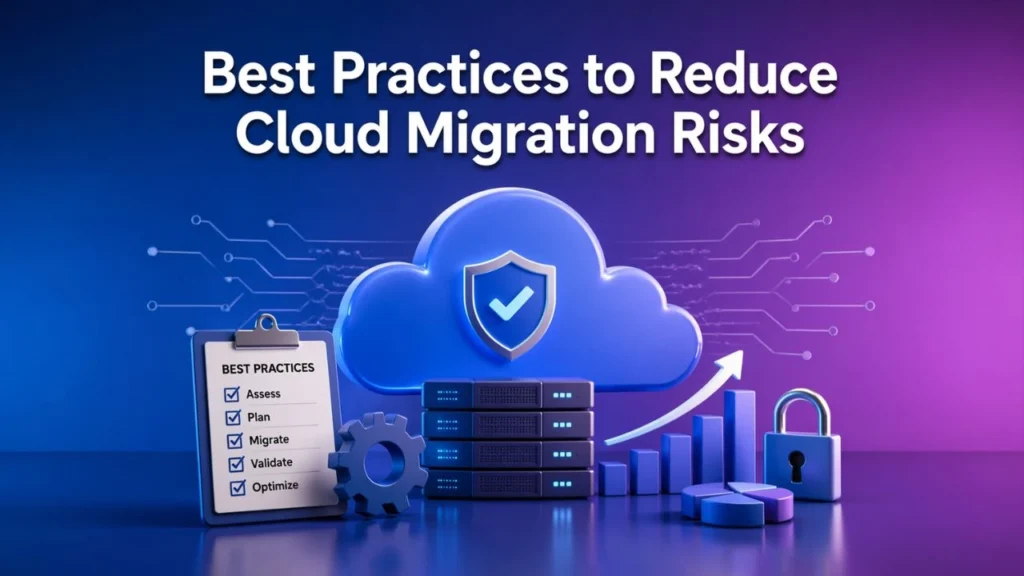
If you want cloud migration for business to deliver more rewards than risks, focus on these best practices:
- Start with a pilot migration to test processes
- Back up all critical data before major changes
- Review application dependencies early
- Create a clear security and compliance framework
- Train internal teams on cloud operations
- Monitor usage and costs continuously
- Test workloads after every major migration phase
- Keep communication clear across technical and business teams
These best practices help turn cloud migration for business into a strategic improvement rather than a stressful transition.
Why Cloud Computing Services Matter More Than Many Businesses Realize
A lot of companies underestimate how much expertise affects migration outcomes. You can have strong internal talent and still benefit from external support. The right cloud computing services bring structure, experience, and visibility to a process that can otherwise become fragmented. For businesses managing customer communication, our B2B email marketing automation guide can also help you understand how better systems, clean data, and connected workflows support stronger outreach results.
They can help your business:
- Assess infrastructure readiness
- Map dependencies and risks
- Choose the right migration model
- Improve security controls
- Prevent avoidable cost overruns
- Optimize the environment after migration
When cloud migration for business is guided by a strategy instead of guesswork, the results are usually more stable, more secure, and more cost effective.
Cloud Migration for Business and Long Term Growth
It is easy to think of cloud migration for business as a technical project, but the long term value is much broader than IT. A stronger technical foundation and better infrastructure foundation support stronger operations, better customer experiences, and faster business adaptation.
With Cloud Computing, businesses can respond to changing demand more effectively. They can support distributed teams more smoothly. They can integrate new tools more quickly. They can also position themselves to compete in a market where agility matters more every year.
That is why cloud migration for business is often not just about solving present limitations. It is about creating future readiness.
Final Thoughts
The real question is not whether cloud migration for business has risks. It does. The better question is whether the rewards outweigh those risks when the process is handled well. In many cases, the answer is yes.
When businesses migrate with a clear roadmap, realistic goals, and the right support, they often gain stronger flexibility, better resilience, improved scalability, and a better foundation for growth. That is the real promise of Cloud Computing. It is not just about moving infrastructure. It is about helping your business operate with more confidence and less limitation.
If your systems are slowing you down, this may be the right time to explore cloud migration for business more seriously. Request Cloud Consultation and take the next step with a strategy built around your business goals.
Frequently Asked Questions
What is cloud migration for business?
Cloud migration for business is the process of moving applications, data, workloads, and IT resources from on premises systems or legacy environments to cloud based platforms. It helps businesses improve flexibility, scalability, performance, and operational efficiency.
What are the main benefits of cloud migration for business?
The main benefits of cloud migration for business include better scalability, improved flexibility, stronger backup capabilities, faster innovation, and the potential for smarter cost management. It also supports modern digital operations and remote collaboration.
What are the risks of cloud migration for business?
The biggest risks of cloud migration for business include downtime, misconfigured security, compliance issues, unexpected costs, compatibility problems with legacy systems, and dependence on one provider if planning is weak.
Is cloud migration suitable for small businesses?
Yes, cloud migration for business can be a strong option for small businesses, especially when they need flexible infrastructure, better remote access, and room to scale without large upfront investment.
How long does cloud migration take?
The timeline for cloud migration for business depends on the size of your infrastructure, the number of applications involved, your internal readiness, and the migration model you choose. Some projects take weeks, while others take months.
Why are cloud computing services important in migration?
Cloud computing services help businesses plan migrations more effectively, reduce risk, improve security, and optimize performance after the move. They are especially valuable when internal cloud expertise is limited.