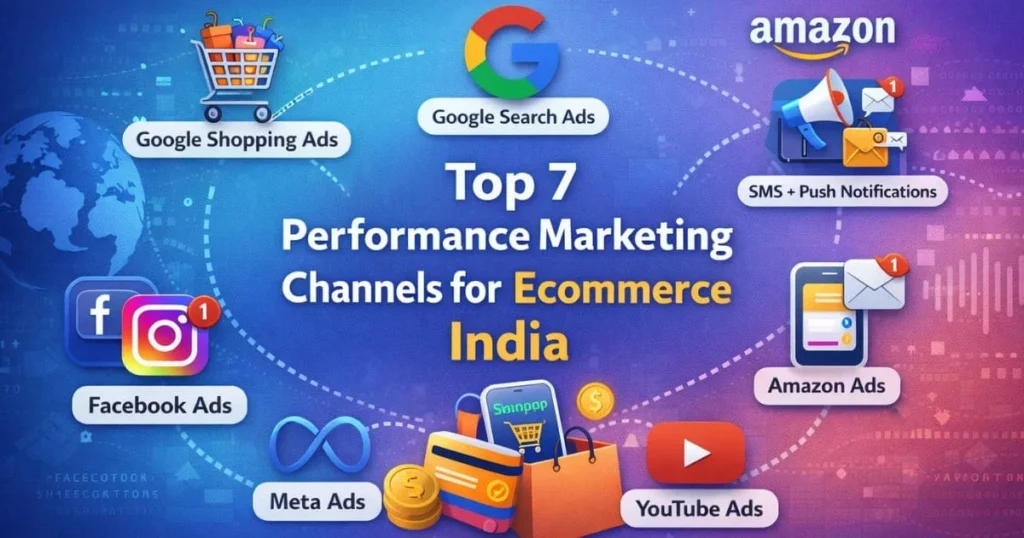
If you want consistent online sales, channel selection matters as much as budget. Many ecommerce brands spend on ads, yet only a few build a channel mix that supports growth, improves return on spend, and brings in buyers at the right stage of the journey. That is where performance marketing channels ecommerce india becomes an important topic for brands that want measurable results.
In India, ecommerce buyers move across search, social media, marketplaces, video platforms, and messaging apps before they place an order. Some people compare products on Google, some discover brands on Instagram, some trust Amazon more, and some ask questions on WhatsApp before buying. Because of this, brands need more than a single ad platform. They need a clear system.
This guide explains the top seven channels that matter most, how each one works, what benefits they offer, and how to choose the right mix for your business. It also shows why paid campaigns work better when they are supported by strong product pages, clean data, and a broader plan that includes Digital marketing services and organic visibility. If you are reviewing options for growth, this is also where performance marketing services can help bring structure to your media plan.
Table of Contents
What performance marketing means for ecommerce brands
Performance marketing is a model where you track outcomes that matter to business growth. Instead of focusing only on reach or impressions, you focus on metrics such as purchases, qualified leads, cost per acquisition, return on ad spend, repeat orders, and revenue contribution.
For ecommerce brands, this approach works well because every click, add to cart, checkout event, and sale can be measured. That means you can compare platforms with more clarity and decide where your money is working best.
Why channel choice matters
Not every channel does the same job.
- Search captures demand from people already looking for a product
- Social media helps people discover products they were not actively searching for
- Marketplaces reach buyers who are ready to compare and purchase
- Video platforms build trust and explain products visually
- Messaging helps remove doubts that stop a sale
That is why the right mix matters more than being present everywhere.
Quick comparison of the top channels
| Channel | Best for | Funnel role | Main KPI |
|---|---|---|---|
| Google Shopping and Performance Max | Product led brands with clean feeds | Capture and scale | ROAS |
| Google Search Ads | High intent category and branded queries | Bottom funnel | CPA and conversion rate |
| Meta Ads | Discovery, catalog browsing, retargeting | Mid to bottom funnel | ROAS and cost per purchase |
| Amazon Ads | Brands selling on Amazon.in | Bottom funnel | Ad sales and TACoS |
| YouTube Ads | Product education and trust building | Upper to mid funnel | View rate and assisted conversions |
| Dynamic Remarketing | Cart abandoners and repeat visitors | Bottom funnel | Return visitor conversion rate |
| WhatsApp and Click to Message Ads | High consideration and assisted sales | Mid to bottom funnel | Cost per qualified conversation |
1 Google Shopping and Performance Max
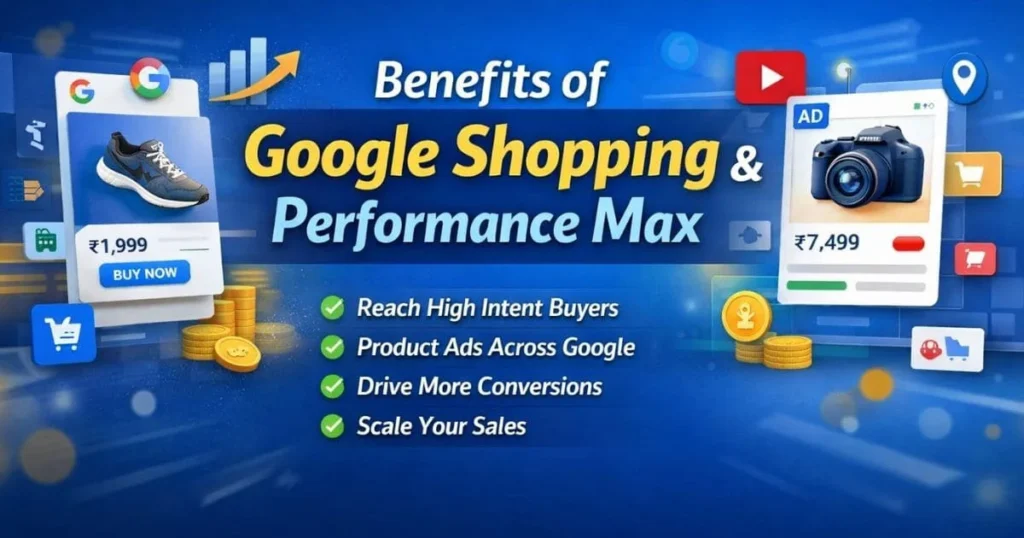
Google Shopping and Performance Max are often among the strongest revenue drivers for ecommerce stores with a solid product feed. These campaigns work well because they match products with active buying intent and offer useful ROAS benchmarks for measuring channel efficiency.
When someone already knows what they want, Shopping ads can bring your product in front of them with price, image, seller details, and more.
Benefits of Google Shopping and Performance Max
- Reaches buyers with purchase intent
- Shows product details before the click
- Supports scale across Google properties
- Works well for large catalogs
- Helps brands compete at the product level
Strategy tips
Keep your product feed clean
Titles, descriptions, images, pricing, availability, and product attributes should be accurate and complete.
Match products to strong landing pages
If the click leads to a weak page, even the best campaign will struggle.
Watch profitability, not just platform numbers
A campaign can look strong inside the ad account and still underperform at the business level if margins are thin.
2 Google Search Ads
Google Search Ads are one of the best choices for capturing users who already know what they want. These campaigns work especially well for branded searches, high intent product terms, category queries, and comparison searches, while also helping brands monitor cost per action more effectively.
For many brands, Google Search is where immediate purchase demand shows up first.
Why Google Search Ads matter
Here is the revised version with Google Ads setup strategy added naturally and without repetition:
- Strong buyer intent
- Better control over keyword targeting
- Useful for branded defense
- Good for category and offer based searches
- Supports a smarter Google Ads setup strategy
- If you want, I can also make all five points sound a bit more premium and blog ready.
Strategy tips
Split brand and non brand campaigns
This makes performance easier to understand and helps control spend.
Use search intent wisely
Group keywords by product need, problem, and buying readiness.
Align ad copy with what shoppers care about
Price, trust, delivery, returns, product quality, and availability often shape the click.
Paid search also works well beside SEO services because the two channels answer different growth needs. Paid search gives speed. SEO gives longer term visibility. Some buyers even search using phrases like SEO srvices when comparing agencies, but the real need is a clear acquisition strategy that supports both paid and organic traffic.
3 Meta Ads for Facebook and Instagram
Meta Ads continue to play a major role in ecommerce because they help people discover products, interact with creative, and return later to buy. This channel is strong for visual storytelling, catalog ads, remarketing, and reaching new audiences.
Benefits of Meta Ads
- Strong for demand generation
- Useful for creative testing
- Excellent for catalog based promotion
- Helps brands retarget interested visitors
- Supports scaling when creative quality is high
Strategy tips
Test multiple creative angles
Use product benefits, problem solving angles, social proof, offers, and visual product use.
Separate cold and warm audiences
New audiences need education. Warm audiences need stronger conversion intent messaging.
Use catalog ads for product relevance
Dynamic catalog ads can help show users the products they already viewed or closely related items.
For brands asking how performance marketing channels ecommerce india should be selected, Meta is usually a demand creation and conversion support channel rather than a pure demand capture channel.
4 Amazon Ads
Amazon Ads are valuable for brands that sell on Amazon and want stronger visibility within the marketplace. Users on Amazon are often closer to purchase than users on open web social media platforms. That makes the platform useful for both competitive categories and brands that want faster marketplace traction, backed by a strong Amazon SEO ranking blueprint.
Why Amazon Ads deserve a place in the mix
- Reaches shoppers who are already comparing products
- Supports visibility at the point of purchase
- Helps brands improve marketplace presence
- Useful for product launches and competitive slots
Strategy tips
Support ads with listing quality
Your title, images, bullet points, pricing, reviews, and product page quality shape conversion.
Use the right campaign types
Sponsored Products, Sponsored Brands, and brand store support can work together.
Measure total business impact
Do not look only at direct ad sales. Review how ads help product visibility, repeat buying, and organic ranking inside the marketplace.
5 YouTube Ads
YouTube Ads are often underestimated in ecommerce. Yet they can play a strong role in product education, category awareness, trust building, and assisted conversions. For products that need explanation, demonstration, or confidence building, this channel can support the full journey.
Benefits of YouTube Ads
- Helps explain products clearly
- Builds trust before purchase
- Supports remarketing later
- Extends reach beyond standard search
- Improves assisted conversions for considered purchases
Strategy tips
Lead with clarity
The opening moments should show the product, the problem, and the value.
Build audiences for follow up
Video viewers can later be retargeted through search, social, or display.
Use shorter and focused formats
Clear, relevant video often works better than complex storytelling for performance goals.
6 Remarketing
Remarketing is not optional for most ecommerce brands. Many visitors do not buy on the first session. They compare, leave, return later, or wait until they feel more confident. Remarketing helps bring those shoppers back.
Why remarketing matters
- Recovers missed opportunities
- Lifts overall conversion rate
- Improves efficiency of earlier campaigns
- Helps move warm visitors to purchase
Strategy tips
Build audience segments by behavior
Separate product viewers, cart abandoners, checkout abandoners, and repeat buyers.
Control message frequency
Too much repetition can create fatigue.
Match creative to user intent
A product viewer needs a different message than someone who already reached checkout.
For any brand studying performance marketing channels ecommerce india, remarketing usually plays a support role that improves the value of traffic generated by search, social, and marketplace campaigns.
7 WhatsApp and Click to Message Ads
In India, messaging remains a strong conversion support channel. Many shoppers want quick answers before they buy. Questions about delivery, returns, stock, size, payment, authenticity, or custom options can delay a sale. Messaging helps remove that friction.
Benefits of WhatsApp and Click to Message Ads
- Supports assisted sales
- Builds trust quickly
- Helps answer buyer doubts
- Useful for high consideration products
- Can improve lead to order movement
Strategy tips
Respond quickly
Fast replies increase the chance of conversion.
Use structured conversation flows
Keep the path simple from question to product to order.
Qualify without creating friction
Ask only what is needed to move the user closer to purchase.
How to choose the right channel mix
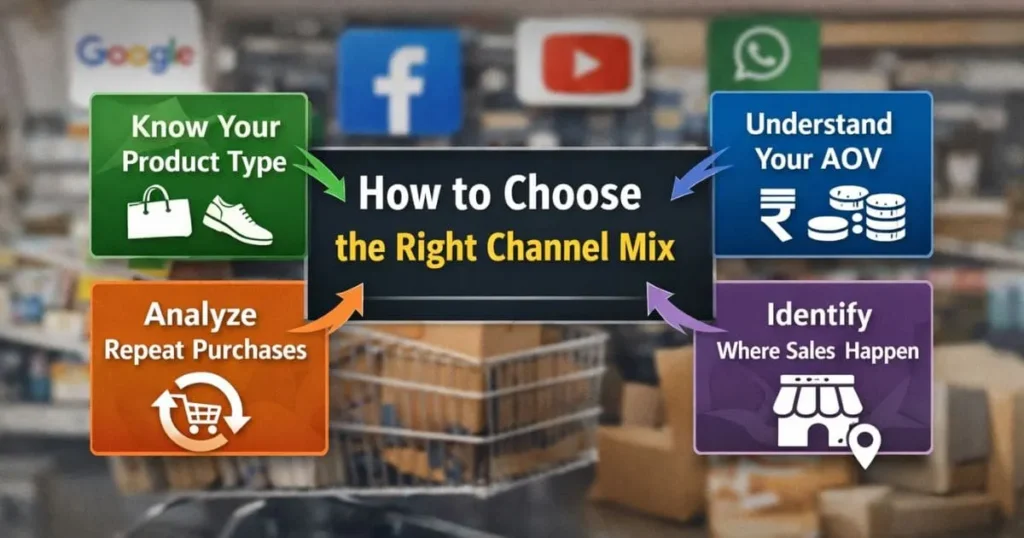
There is no one channel mix that fits every ecommerce brand. The right combination depends on product type, average order value, repeat purchase pattern, brand maturity, where the sale happens, and your Google Ads budget strategy.
Choose by business model
D to C brands
Focus on Google Shopping, Search, Meta, and remarketing.
Marketplace first brands
Focus on Amazon Ads, Meta for product discovery, and YouTube for trust.
Hybrid brands
Use both owned store campaigns and marketplace support campaigns, but measure each path separately.
Higher value products
Use Search, YouTube, and WhatsApp where buyers need more reassurance.
A practical channel selection table
| Brand situation | Best starting channel mix | Why it works |
|---|---|---|
| New D2C ecommerce brand | Meta Ads, Google Search, remarketing | Builds discovery, captures intent, recovers lost visitors |
| Established catalog brand | Shopping, Performance Max, Meta catalog ads | Stronger scale with product feeds and dynamic creative |
| Amazon first seller | Amazon Ads, Meta Ads, YouTube | Captures marketplace demand and builds external product interest |
| High AOV niche brand | Google Search, YouTube, WhatsApp | Helps educate and close cautious buyers |
| Repeat purchase brand | Meta Ads, remarketing, email or messaging support | Improves retention and LTV |
Key benefits of using multiple channels together
A single platform can drive growth, but a connected system usually performs better.
- Search captures ready demand
- Social creates demand and retargets interest
- Video builds trust and recall
- Marketplaces improve product level visibility
- Messaging supports purchase decisions
- Remarketing increases conversion efficiency
A strong ecommerce SEO strategy supports these channels by improving long term visibility and bringing in high intent traffic.
When these channels work together, the business becomes less dependent on one source of traffic. That helps reduce risk and improve stability.
If you want, I can make it sound more polished and blog ready in one paragraph too.
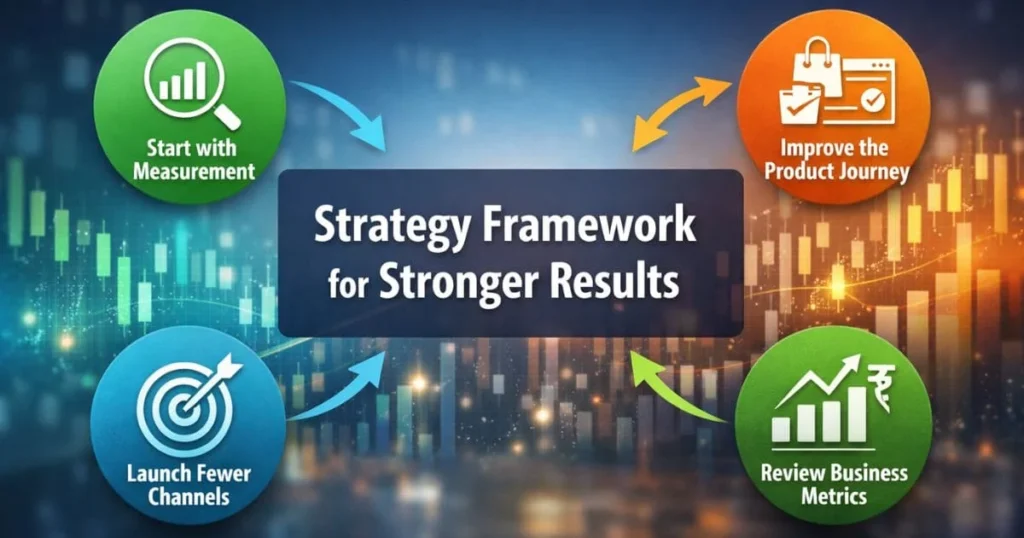
Strategy framework for stronger results
Start with measurement
Set up conversion tracking properly and follow a Google Search Console audit guide, because without clean data, channel comparison becomes guesswork.
Improve the product journey
Product pages, price visibility, images, trust elements, and checkout flow influence campaign performance.
Launch fewer channels with more focus
It is better to manage two or three channels well than to spread budget across seven channels too early.
Review business metrics, not vanity metrics
Look at profit, customer acquisition cost, average order value, repeat purchase rate, and total revenue contribution.
Connect paid and organic growth
Paid campaigns can bring quick traffic, but long term growth usually improves when brands also invest in Digital marketing services and relevant content that supports demand capture across search and AI led discovery.
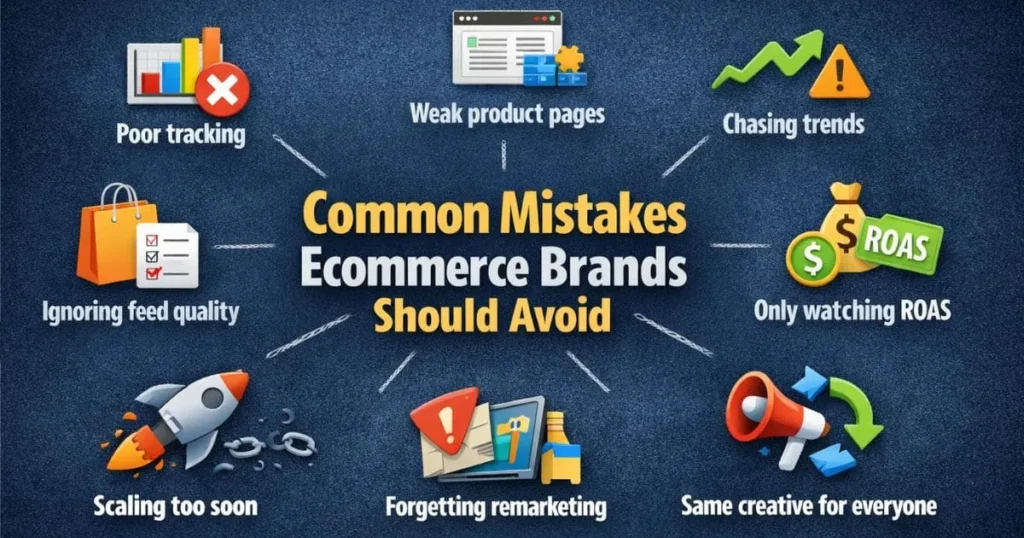
Common mistakes ecommerce brands should avoid
- Running ads without clean tracking
- Sending traffic to weak product pages
- Choosing platforms based on trend instead of fit
- Ignoring feed quality for Shopping campaigns
- Looking only at direct platform ROAS
- Scaling before conversion efficiency is stable
- Forgetting remarketing
- Treating all products the same
- Using the same creative for every audience
Questions brands ask about channel selection
Which channel is best for ecommerce in India
Google Shopping and Search are often strong for ready demand. Meta is strong for discovery and retargeting. Amazon is strong for marketplace focused sellers. The best answer depends on where your buyers are closest to purchase.
Is Meta better than Google for ecommerce
Meta is often better for discovery. Google is often better for demand capture. Most growing brands need both.
Are Amazon Ads worth it
Yes, if Amazon is an active sales channel for your brand and your listings are well built.
When should a brand use WhatsApp ads
Use them when buyers need answers before purchase or when assisted selling improves trust.
These direct answers help make the article more useful for AI summaries, voice search optimization responses, and quick answer results.
Conclusion
The strongest ecommerce growth plans are built on clarity, not guesswork. Brands that understand intent, platform role, and buyer behavior usually make better media decisions. That is why performance marketing channels ecommerce india is not just a topic for marketers. It is a business decision that affects revenue, cost control, and long term growth.
If you are evaluating the right mix of Search, Shopping, Meta, Amazon, YouTube, remarketing, and messaging, start with your buying journey and margins first. Then choose channels that match the way your customers actually shop.
If you want a structured plan built around growth, measurement, and channel fit, explore our performance marketing channels ecommerce india.
FAQ
Q: What are the best performance marketing channels for ecommerce brands in India?
Ans: The best mix often includes Google Shopping, Google Search, Meta Ads, Amazon Ads, YouTube Ads, remarketing, and WhatsApp support. The right choice depends on your products, margins, and where sales happen.
Q: Why is performance marketing important for ecommerce?
Ans: It helps measure what matters such as purchases, revenue, cost per acquisition, and return on ad spend. That gives brands more control over budget decisions.
Q: How many channels should a new ecommerce brand start with?
Ans: Most new brands should begin with two or three channels that match buyer intent and then expand after tracking and conversion quality become stable.
Q: Is remarketing necessary for ecommerce brands?
Ans: In most cases, yes. Many users do not purchase on the first visit. Remarketing helps recover those lost opportunities.
Q: Can paid ads work well with SEO?
Ans: Yes. Paid ads can drive short term traffic, while SEO supports long term visibility. Together, a PPC vs SEO ROI comparison helps brands improve overall acquisition efficiency.
Q: How do I choose the right channel mix?
Ans: Look at your business model, average order value, repeat purchase pattern, margins, and whether your customers buy on your site, on marketplaces, or through assisted conversations.
Q: Should every ecommerce brand use all seven channels?
Ans: No. Brands should choose channels based on fit, resources, and buying behavior. Focus beats overexpansion.
Q: What is the role of performance marketing channels ecommerce india for growth?
Ans: The role is to help brands connect budget with measurable outcomes across search, social, marketplaces, video, remarketing, and messaging so that growth becomes more predictable and more efficient.