The ecommerce industry continues to evolve as brands compete for visibility across marketplaces, search platforms, and digital commerce ecosystems. Traditional advertising methods no longer provide the same level of targeting precision or purchase intent data that modern ecommerce businesses require. This shift has increased the importance of Retail Media Networks in digital marketing strategies.
Retail Media Networks are transforming how brands approach online retail advertising. Instead of relying only on external traffic sources, businesses are now investing in retail media advertising directly within ecommerce platforms where shoppers actively search for products. This approach creates stronger purchase intent, higher conversion opportunities, and better customer targeting.
As ecommerce competition increases, businesses are looking for smarter ways to improve ecommerce brand visibility, marketplace traffic generation, and ecommerce customer acquisition. Retail Media Networks help brands achieve these goals through data driven retail marketing, sponsored product ads, retail audience targeting, and omnichannel retail marketing strategies.
The growing adoption of marketplace advertising solutions has also changed how brands approach performance marketing for ecommerce. Businesses now focus on customer purchase insights, first party data marketing, conversion driven advertising, and digital shelf optimization to improve campaign effectively.
Retail media platforms in India are also expanding rapidly as online shopping behavior continues to shift toward ecommerce marketplaces. Brands are using Amazon ads strategy, Flipkart ad campaigns, and other retail ad platforms to strengthen marketplace seller growth and improve ecommerce sales optimization.
This guide explains how Retail Media Networks support ecommerce growth marketing, improve online marketplace promotions, and help businesses scale through retail media strategy and digital commerce advertising.
Table of Contents
What Are Retail Media Networks?
Retail Media Networks are advertising ecosystems created by ecommerce marketplaces and retailers that allow brands to promote products directly within online shopping platforms. These platforms use shopper data, customer purchase insights, and online shopping behavior insights to help businesses run highly targeted advertising campaigns.
Retail media advertising gives brands the ability to connect with consumers during the buying journey. Unlike traditional advertising channels, Retail Media Networks place advertisements in environments where users already demonstrate strong purchase intent.
The retail media ecosystem includes various advertising formats such as:
- Sponsored product ads
- Sponsored brand campaigns
- Retail sponsored listings
- Programmatic retail advertising
- Paid marketplace promotions
- Display advertising
- Product recommendation advertising
Retail ad platforms use first party data marketing to improve audience targeting accuracy. Since ecommerce marketplaces collect extensive shopper behavior data, brands can create highly refined shopper targeting strategy campaigns.
Understanding the Retail Media Ecosystem
The retail media ecosystem combines ecommerce data, advertising technology, and consumer behavior analysis into one advertising framework. This ecosystem helps brands increase ecommerce brand visibility while improving campaign performance.
Several components shape modern Retail Media Networks:
| Component | Purpose |
| Sponsored Product Ads | Improve product visibility |
| Sponsored Brand Campaigns | Increase brand awareness |
| Retail Audience Targeting | Reach high intent shoppers |
| Retail Marketing Analytics | Measure campaign performance |
| Digital Shelf Optimization | Improve marketplace visibility |
| Programmatic Retail Advertising | Automate ad delivery |
Retail media solutions for brands focus heavily on conversion driven advertising. Since shoppers are already browsing products, retail media campaigns often generate stronger engagement than broad display advertising.
Why Retail Media Networks Matter?
Retail Media Networks help businesses:
- Improve ecommerce customer acquisition
- Increase online retail advertising efficiency
- Strengthen marketplace seller growth
- Optimize ecommerce sales optimization
- Enhance omnichannel retail marketing
- Improve ROI focused ecommerce ads
- Scale digital commerce advertising
Brands that invest in retail media strategy often gain better visibility across competitive marketplaces while using customer purchase insights to refine targeting.
Why Ecommerce Brands Use Retail Media?
Ecommerce competition has increased significantly across online marketplaces. Businesses now compete for product visibility, customer attention, and marketplace rankings. Retail Media Networks help solve these challenges through targeted marketplace advertising solutions.
Better Ecommerce Brand Visibility
One of the main reasons ecommerce brands use retail media is improved visibility. Organic visibility within marketplaces can fluctuate due to competition, pricing changes, and search algorithm updates. Retail media advertising helps brands maintain stronger positioning.
Sponsored product ads and sponsored brand campaigns improve product exposure across:
- Search result pages
- Product recommendation sections
- Category pages
- Marketplace homepages
- Product detail pages
This increased visibility supports marketplace traffic generation and ecommerce growth marketing efforts.
Stronger Purchase Intent Targeting
Retail audience targeting is one of the strongest advantages of Retail Media Networks. Since users actively search for products within ecommerce marketplaces, brands reach consumers closer to purchase decisions.
Shopper targeting strategy becomes more effective because retail media platforms in India and global marketplaces collect:
- Search history
- Product browsing behavior
- Purchase history
- Cart activity
- Category preferences
This first party data marketing approach improves conversion driven advertising performance.
Benefits of Retail Media Advertising for Ecommerce
Retail media advertising offers several advantages for ecommerce businesses:
Higher Conversion Potential
Users browsing marketplaces often demonstrate stronger buying intent compared to general website visitors. This improves ecommerce sales optimization opportunities.
Better Customer Insights
Retail marketing analytics provide valuable information about shopper preferences and online shopping behavior insights.
Improved Advertising Efficiency
Data driven retail marketing allows brands to optimize spending and improve campaign performance.
Enhanced Marketplace Seller Growth
Retail Media Networks help businesses improve visibility in highly competitive ecommerce environments.
Increased Brand Awareness
Sponsored brand campaigns improve recognition and strengthen long term marketplace positioning.
Types of Retail Media Advertising Formats
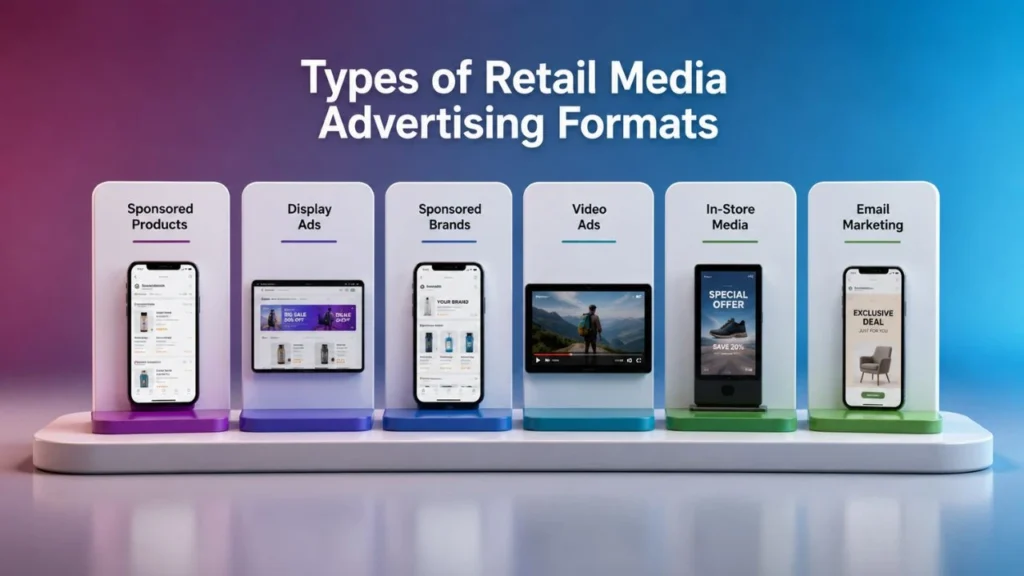
Retail Media Networks offer multiple advertising formats designed for different business objectives.
Sponsored Product Ads
Sponsored product ads are one of the most widely used forms of retail media advertising. These ads promote individual products directly within marketplace search results and product pages.
Benefits include:
- Improved product visibility
- Better marketplace traffic generation
- Increased ecommerce customer acquisition
- Stronger ecommerce brand visibility
Sponsored product ads are especially valuable for ecommerce sales optimization because they target users already searching for related products.
Sponsored Brand Campaigns
Sponsored brand campaigns focus on improving overall brand awareness within ecommerce marketplaces. These campaigns often display brand logos, multiple products, and promotional messaging.
Advantages include:
- Better brand growth through retail media
- Increased visibility across categories
- Improved customer recognition
- Enhanced online marketplace promotions
Sponsored brand campaigns also support omnichannel retail marketing strategies.
Retail Sponsored Listings
Retail sponsored listings help brands secure premium placements within marketplace environments. These placements improve visibility during high traffic periods and competitive search results.
Programmatic Retail Advertising
Programmatic retail advertising uses automation and machine learning to optimize campaign delivery. Retail ad platforms use customer purchase insights and audience behavior data to improve ad targeting.
Programmatic campaigns help businesses:
- Scale ecommerce advertising strategy
- Improve retail audience targeting
- Reduce wasted ad spend
- Increase ROI focused ecommerce ads
Best Retail Media Strategies for Online Stores
Building an effective retail media strategy requires a combination of targeting, optimization, analytics, and marketplace advertising solutions.
Build a Strong Ecommerce Advertising Strategy
A successful ecommerce advertising strategy starts with clear campaign goals.
Brands should focus on:
- Ecommerce customer acquisition
- Marketplace traffic generation
- Ecommerce brand visibility
- Conversion driven advertising
- Long term marketplace seller growth
Retail Media Networks work best when campaigns align with broader ecommerce growth marketing objectives.
Focus on Digital Shelf Optimization
Digital shelf optimization improves how products appear across marketplaces.
Important digital shelf optimization elements include:
Product Titles
Optimized product titles improve discoverability and search relevance.
Product Images
High quality visuals support online retail advertising performance.
Product Descriptions
SEO focused descriptions improve ecommerce sales optimization.
Ratings and Reviews
- Positive reviews strengthen conversion driven advertising efforts.
- Digital shelf optimization directly impacts retail media campaigns that increase sales.
Improve Retail Audience Targeting
Retail audience targeting helps businesses reach consumers with strong purchase intent.
Effective shopper targeting strategy methods include:
- Category targeting
- Behavioral targeting
- Retargeting campaigns
- Search based targeting
- Interest segmentation
Using first party data marketing improves campaign precision and advertising efficiency.
Use Retail Marketing Analytics
Retail marketing analytics help businesses measure:
- Conversion rates
- Advertising performance
- Customer acquisition costs
- Marketplace traffic generation
- ROI focused ecommerce ads
Analytics also support data driven retail marketing improvements.
Amazon Ads Strategy for Ecommerce Growth
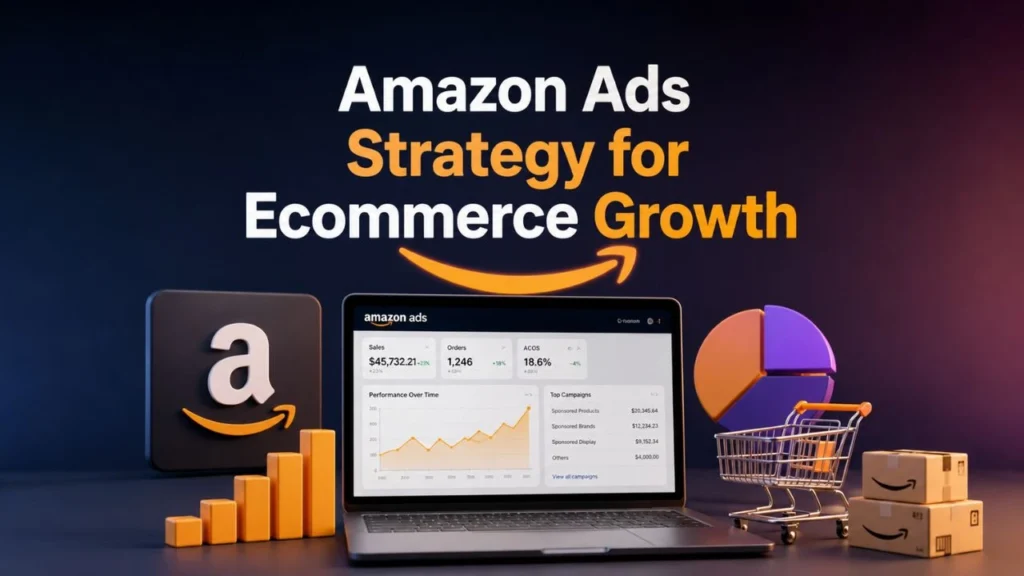
Amazon remains one of the largest Retail Media Networks globally. Brands use Amazon ads strategy to improve ecommerce brand visibility and strengthen marketplace seller growth.
Sponsored Products Advertising
Sponsored Products help businesses promote individual products within Amazon search results.
Benefits include:
- Increased product exposure
- Better ecommerce customer acquisition
- Higher marketplace traffic generation
- Improved ecommerce sales optimization
Sponsored Brand Campaigns on Amazon
Sponsored brand campaigns help businesses strengthen brand awareness within Amazon’s retail media ecosystem.
These campaigns support:
- Brand growth through retail media
- Online marketplace promotions
- Retail audience targeting
- Conversion driven advertising
Amazon DSP and Programmatic Advertising
Amazon DSP supports programmatic retail advertising across Amazon owned properties and external websites.
This helps brands:
- Improve omnichannel retail marketing
- Reach broader audiences
- Retarget previous shoppers
- Scale ecommerce growth marketing
Retail Media Strategy for Amazon Sellers
A strong Amazon ads strategy should include:
| Strategy Element | Purpose |
| Keyword Targeting | Improve visibility |
| Sponsored Product Ads | Drive conversions |
| Sponsored Brand Campaigns | Build awareness |
| Digital Shelf Optimization | Improve rankings |
| Retail Marketing Analytics | Measure ROI |
Retail Media Networks like Amazon provide valuable marketplace advertising solutions for long term ecommerce growth.
Flipkart Ad Campaigns for Online Brands
Flipkart ad campaigns play an important role in retail media platforms in India. Businesses use Flipkart advertising to improve ecommerce brand visibility and online retail advertising performance.
How Flipkart Advertising Works?
Flipkart offers several retail media advertising options, including:
- Sponsored product placements
- Banner advertising
- Product recommendation ads
- Search result promotions
These tools support marketplace seller growth and ecommerce sales optimization.
Benefits of Flipkart Ad Campaigns
Flipkart ad campaigns help businesses:
- Improve marketplace traffic generation
- Increase ecommerce customer acquisition
- Strengthen retail audience targeting
- Improve online marketplace promotions
Retail Media Networks in India continue expanding as ecommerce adoption increases.
Retail Media Networks for D2C Brands
Retail Media Networks are especially valuable for D2C businesses looking to scale quickly.
Benefits for D2C brands include:
- Faster marketplace visibility
- Better audience targeting
- Improved ecommerce advertising strategy
- Stronger conversion driven advertising
- Better marketplace seller growth
Retail media solutions for brands support sustainable ecommerce expansion without relying entirely on external advertising channels.
Role of First Party Data in Retail Media Advertising
First party data marketing has become one of the most important aspects of modern ecommerce advertising strategy.
Retail Media Networks collect extensive customer behavior data directly from ecommerce platforms. This data improves retail audience targeting and campaign performance.
Why First Party Data Matters?
Third party data restrictions continue changing the digital advertising landscape. Retail Media Networks provide businesses with valuable customer purchase insights through first party data.
This helps brands:
- Improve shopper targeting strategy
- Increase advertising relevance
- Strengthen ecommerce customer acquisition
- Enhance omnichannel retail marketing
Customer Purchase Insights and Advertising
Customer purchase insights allow brands to understand:
- Shopping preferences
- Product interests
- Seasonal demand patterns
- Repeat purchase behavior
- Category engagement
These insights support data driven retail marketing strategies.
Personalized Advertising Campaigns
Retail media advertising becomes more effective when campaigns use personalized targeting.
Personalized campaigns improve:
- Ecommerce brand visibility
- Conversion driven advertising
- Marketplace traffic generation
- ROI focused ecommerce ads
Omnichannel Retail Marketing and Retail Media
Modern ecommerce businesses rarely depend on one marketing channel. Omnichannel retail marketing combines multiple channels into a unified strategy.
Retail Media Networks support omnichannel retail marketing by integrating marketplace advertising with broader ecommerce growth marketing efforts.
Combining Retail Media with Other Channels
Brands often integrate Retail Media Networks with:
- Search marketing
- Social media advertising
- Email marketing
- Content marketing
- Influencer campaigns
This creates stronger digital commerce advertising strategies.
Benefits of Omnichannel Retail Marketing
Omnichannel retail marketing helps businesses:
- Improve customer engagement
- Increase ecommerce customer acquisition
- Strengthen brand consistency
- Improve conversion rates
- Scale marketplace seller growth
Retail media campaigns that increase sales often work best alongside integrated marketing strategies.
Ecommerce Advertising Trends Shaping Retail Media
The retail media ecosystem continues evolving as ecommerce behavior changes.
AI Driven Retail Media Advertising
Artificial intelligence is transforming retail media advertising through:
- Automated bidding
- Audience prediction
- Dynamic targeting
- Smart campaign optimization
AI supports better ecommerce sales optimization and data driven retail marketing.
Growth of Programmatic Retail Advertising
Programmatic retail advertising allows brands to automate campaign delivery and targeting.
Benefits include:
- Faster campaign scaling
- Improved audience segmentation
- Better conversion optimization
- Increased advertising efficiency
Retail Media Monetization Expansion
Retail media monetization is becoming a major revenue stream for ecommerce platforms.
More retailers are building retail ad platforms to support:
- Sponsored listings
- Marketplace advertising solutions
- Digital commerce advertising
- Online retail advertising
Ecommerce Advertising Trends in India
Retail media platforms in India continue expanding due to:
- Increased online shopping adoption
- Marketplace competition
- Mobile commerce growth
- Rising ecommerce customer acquisition costs
Brands are investing more heavily in retail media strategy to remain competitive.
Common Retail Media Advertising Mistakes
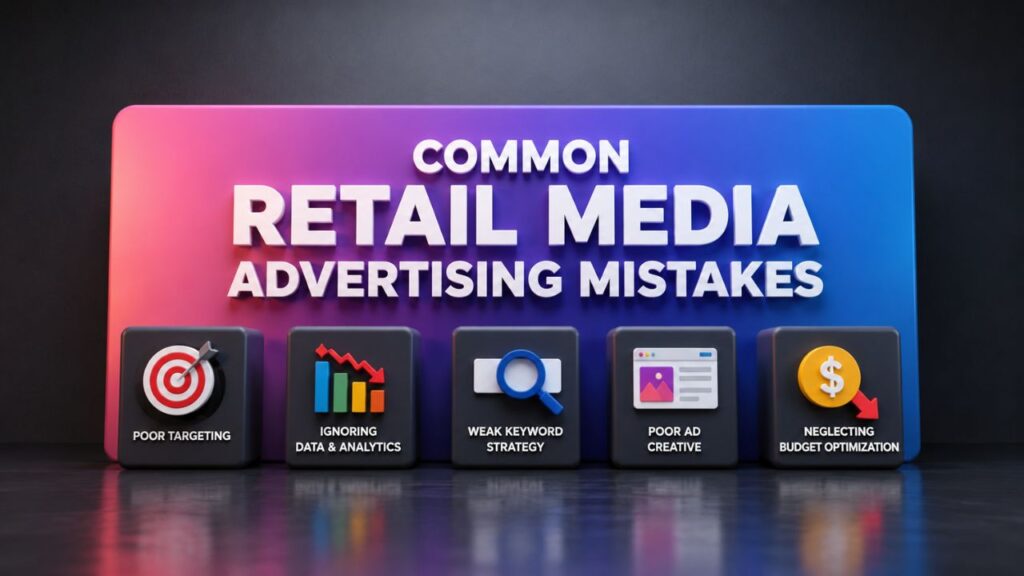
Many businesses struggle with retail media advertising because they overlook key optimization factors.
Ignoring Digital Shelf Optimization
Without proper digital shelf optimization, even strong advertising campaigns may underperform.
Weak Audience Targeting
Retail audience targeting should focus on purchase intent and customer behavior insights.
Poor Campaign Measurement
Retail marketing analytics are essential for improving ecommerce growth marketing performance.
Lack of Omnichannel Integration
Retail Media Networks perform better when integrated into broader omnichannel retail marketing strategies.
Inconsistent Ecommerce Advertising Strategy
Brands need consistent marketplace advertising solutions and long term retail media strategy planning.
How to Build a Retail Media Strategy That Delivers Results?
An effective retail media strategy focuses on visibility, targeting, optimization, and analytics.
Set Clear Objectives
Businesses should define goals related to:
- Ecommerce customer acquisition
- Marketplace traffic generation
- Ecommerce sales optimization
- Brand growth through retail media
Choose the Right Retail Ad Platforms
Different retail ad platforms support different campaign goals. Brands should evaluate:
- Audience reach
- Advertising formats
- Targeting capabilities
- Analytics tools
Improve Conversion Driven Advertising
Conversion driven advertising focuses on improving product visibility and customer engagement during the buying journey.
Strategies include:
- Sponsored product ads
- Retail sponsored listings
- Personalized targeting
- Digital shelf optimization
Measure Campaign Performance
Retail marketing analytics help businesses improve campaign effectiveness over time.
Key metrics include:
| Metric | Importance |
| ROAS | Measures profitability |
| Conversion Rate | Tracks campaign efficiency |
| CTR | Measures engagement |
| Customer Acquisition Cost | Tracks spending efficiency |
| Impression Share | Measures visibility |
Future of Retail Media Networks in Ecommerce
The future of Retail Media Networks looks increasingly important within digital commerce advertising.
Several factors continue driving growth:
- Expansion of ecommerce marketplaces
- Rising demand for first party data marketing
- Growth of omnichannel retail marketing
- Increased competition in online retail advertising
- Greater focus on conversion driven advertising
Retail Media Networks are expected to become even more integrated into ecommerce growth marketing strategies.
Retail Media Networks and AI Search
As AI search tools evolve, ecommerce brands will need stronger marketplace visibility and retail media strategy alignment.
Retail media advertising helps brands maintain visibility within commerce focused search environments.
Retail Media Solutions for Brands
Future retail media solutions for brands will likely include:
- Advanced audience targeting
- AI powered optimization
- Predictive analytics
- Cross platform advertising integration
- Improved ecommerce sales optimization tools
Brands investing early in retail media ecosystem strategies may gain stronger long term visibility advantages.
Conclusion
Retail Media Networks have become an important part of modern ecommerce advertising strategy. Businesses are increasingly using retail media advertising to improve ecommerce brand visibility, marketplace seller growth, and conversion driven advertising performance.
The ability to use first party data marketing, customer purchase insights, and shopper targeting strategy techniques makes Retail Media Networks highly valuable for ecommerce growth marketing. Brands can improve online retail advertising performance while strengthening marketplace traffic generation and ecommerce customer acquisition.
As ecommerce advertising trends continue evolving, Retail Media Networks will likely remain central to digital commerce advertising and omnichannel retail marketing strategies. Businesses focusing on digital shelf optimization, retail audience targeting, sponsored product ads, and retail marketing analytics can improve long term ecommerce sales optimization and marketplace visibility.
Brands that invest in data driven retail marketing and marketplace advertising solutions are better positioned to adapt to changing online shopping behavior insights and future retail media ecosystem developments.
Frequently Asked Questions
What are Retail Media Networks?
Retail Media Networks are advertising platforms created by ecommerce retailers and marketplaces that allow brands to promote products directly within shopping environments.
How retail media networks help online brands?
Retail Media Networks help online brands improve ecommerce brand visibility, customer acquisition, marketplace traffic generation, and ecommerce sales optimization.
Why ecommerce brands use retail media?
Ecommerce brands use retail media advertising because it provides high intent audience targeting, better conversion opportunities, and stronger customer purchase insights.
What are the benefits of retail media advertising for ecommerce?
Benefits include improved marketplace visibility, stronger conversion driven advertising, enhanced audience targeting, and better ecommerce growth marketing performance.
What is digital shelf optimization?
Digital shelf optimization refers to improving product listings, descriptions, visuals, and reviews to increase visibility and conversions within ecommerce marketplaces.
Why is first party data marketing important in Retail Media Networks?
First party data marketing improves retail audience targeting and helps brands create more personalized advertising campaigns.
What are sponsored product ads?
Sponsored product ads are paid product placements within ecommerce marketplaces that improve product visibility in search results and category pages.
How do Amazon ads strategy and Flipkart ad campaigns improve sales?
Amazon ads strategy and Flipkart ad campaigns improve visibility, increase traffic generation, strengthen marketplace seller growth, and support ecommerce sales optimization.
What is programmatic retail advertising?
Programmatic retail advertising uses automation and machine learning to optimize ad delivery and audience targeting across retail media platforms.
What is the future of Retail Media Networks in ecommerce?
The future of Retail Media Networks includes stronger AI integration, advanced audience targeting, improved retail media monetization, and expanded omnichannel retail marketing capabilities.