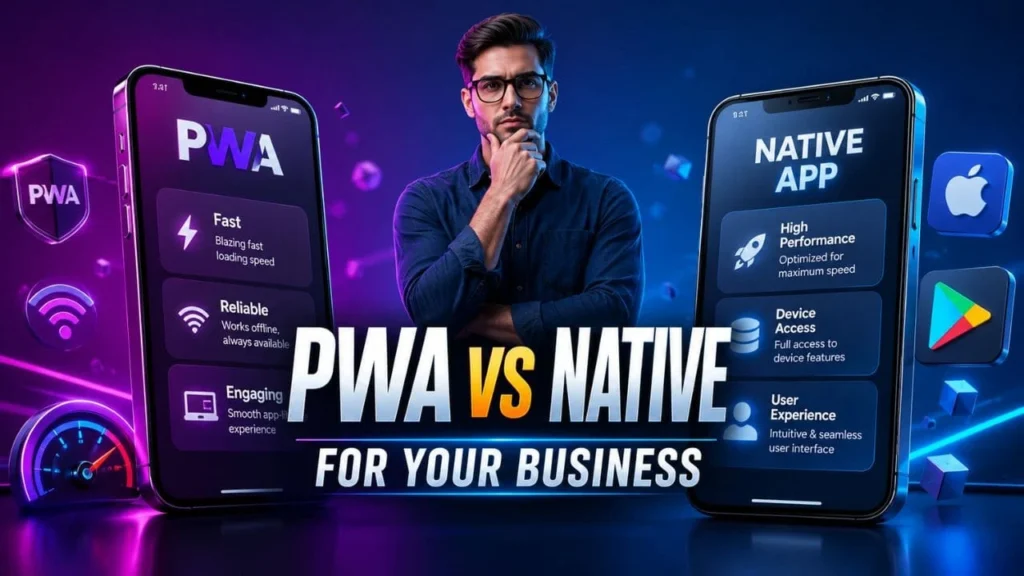
Choosing between a progressive web app and a native app is one of the most important decisions a business can make before investing in digital growth. The choice affects development cost, user experience, speed, visibility, updates, maintenance and long term customer engagement.
The topic of progressive web app vs native is not only about technology. It is about business goals. A company that wants faster launch, lower cost and search visibility may need a progressive web app. A company that needs deep device access, advanced performance and app store presence may need a native app.
Many business owners compare progressive web app vs native because mobile users expect fast, simple and reliable digital experiences. They do not want slow pages, confusing navigation or unnecessary download steps. At the same time, some businesses need advanced mobile features that only a native app can handle properly.
This guide explains progressive web app vs native in simple language so you can understand which option is better for your business.
Table of Contents
What Is a Progressive Web App?
A progressive web app is a web based application that works like an app on mobile and desktop devices, offering a fast loading mobile experience. Users can open it through a browser, install it on their home screen and access app like features without downloading it from an app store.
A progressive web app uses web technologies such as HTML, CSS and JavaScript. It can feel similar to a mobile app because it may support push notifications, caching, faster loading and limited offline access when developed properly.
For many companies, a progressive web app for business is useful because it reduces barriers for users. People can visit the website, use the app like interface and return later without going through a long installation process.
What Is a Native App?
A native app is built for a specific operating system, such as Android or iOS. Users usually download it from Google Play or the Apple App Store. Native apps are developed with platform specific technologies and can connect deeply with device features.
Native app development is often preferred when a business needs advanced functions such as camera access, GPS tracking, biometric login, Bluetooth, complex animations, advanced storage or heavy processing.
A native mobile app for business can be valuable when the company wants strong app based engagement, regular returning users and a dedicated presence in app stores.
Progressive Web App vs Native App
The progressive web app vs native app comparison depends on what your users need, what your business wants to achieve, and your website conversion rate. A progressive web app is usually easier to access because users can open it through a browser. A native app usually gives stronger control over the device experience.
Here is a simple comparison.
| Comparison Point | Progressive Web App | Native App |
|---|---|---|
| Access | Opened through browser and can be installed on home screen | Downloaded from app stores |
| Development | One web based solution can serve many users | Separate platform focused development may be needed |
| Cost | Usually lower than native apps | Usually higher because of platform specific work |
| Performance | Good for common business needs | Stronger for complex and heavy features |
| SEO | Can be indexed by search engines | Depends more on app store visibility |
| Updates | Updates can be pushed through the web | Updates may need store review |
| Device Access | Limited compared to native apps | Better access to hardware and system features |
| Best Use | Content, ecommerce, booking, lead generation and service websites | Finance, delivery, gaming, advanced tools and high engagement apps |
This progressive web app vs native comparison shows that neither option is always better. The right choice depends on your budget, users, features and growth plan.
Why Businesses Compare PWA vs Native App
The term PWA vs native app is searched because businesses want a clear answer before spending money. Building an app requires planning, design, content, development, testing, updates and marketing. A wrong choice can increase cost and reduce user adoption. This decision also directly impacts your ecommerce SEO strategy, as the platform you choose can influence site speed, user experience, and overall search visibility.
A business should ask a few direct questions before choosing:
- Do users need to download the app?
- Will the app need advanced device features?
- Is search engine visibility important?
- What is the available budget?
- How quickly should the app launch?
- Will users return often?
- Does the app need offline access?
- Is app store presence important for trust?
When these questions are clear, the progressive web app vs native decision becomes easier.
Benefits of a Progressive Web App
There are many progressive web app benefits for businesses that want speed, reach and simple access. A PWA can give users an app like experience without forcing them to download a full native app.
Lower Development Cost
A progressive web app can reduce development cost because it uses web technologies and can work across different devices. This makes it useful for small businesses, startups and service companies that want a strong mobile experience without building separate apps for Android and iOS.
Faster Launch
PWA app development can be faster than building a full native app because the business can create one main web based experience. Updates can also be released more easily because the app runs through the web.
Better Search Visibility
A progressive web app can support SEO because it is connected to the website. Search engines can crawl and index pages when the site is properly built. This is helpful for businesses that depend on organic traffic, local SEO, service pages and blog content.
Simple User Access
Users can open a PWA through a link, search result, social media post or browser. They do not need to visit an app store first. This helps reduce friction and can improve early user interaction.
Good for Fast Loading Mobile Apps
Businesses that want fast loading mobile apps can benefit from a well built PWA. Speed matters because users often leave when a page or app takes too long to load. A PWA can improve mobile access when caching, design and performance are handled correctly.
Benefits of a Native App
Native apps are still important for many businesses. They are useful when the product needs strong performance, deep mobile features and a polished platform specific experience.
Stronger Performance
Native app performance is usually better for complex tasks. Apps that need advanced animations, live tracking, gaming features, media processing or heavy data handling may perform better as native apps.
Better Device Access
Native apps can access device features more deeply. This includes camera, GPS, microphone, biometric login, contacts, storage, Bluetooth and system level notifications. This is why many high function apps choose native development.
App Store Presence
App store publishing helps businesses appear in places where users already search for apps. Some users also trust brands more when they see a proper app listing, reviews, ratings and update history.
Better for Complex Engagement
Native apps are useful when the business wants high mobile app user engagement. This may include loyalty programs, order tracking, in app messaging, personalized dashboards and repeated daily use.
Progressive Web App vs Native: Cost Comparison
Cost is one of the biggest reasons businesses compare progressive web app vs native. A progressive web app often costs less because it can work across devices from one main codebase. A native app may cost more because it often needs platform specific work, separate testing and more maintenance. The SEO comparison of ecommerce platforms also plays a key role, as visibility and search performance can directly impact long-term business growth alongside development costs.
| Cost Factor | Progressive Web App | Native App |
|---|---|---|
| Initial Development | Lower to moderate | Moderate to high |
| Android and iOS Support | One main build can support both | Separate builds may be needed |
| Maintenance | Easier to manage | More effort across platforms |
| Updates | Faster web based changes | Store based review may be required |
| Testing | Browser and device testing | Platform specific testing |
| Best Fit | Small and mid sized businesses | Businesses with larger budgets and complex needs |
An app development cost comparison should not only include the first build. You should also consider future updates, security, design changes, bug fixes, content updates and feature expansion.
The PWA cost vs native app cost difference can be large when the business needs both Android and iOS versions. However, if the native app is central to the business model, the higher cost may still be justified.
Progressive Web App Performance
Progressive web app performance depends on how well the app is built. A properly developed PWA can load quickly, respond smoothly and support a good browsing experience. It works well for ecommerce, appointment booking, lead generation, content platforms, local service websites and dashboards with moderate features.
However, a PWA may not be the best option for apps that require heavy graphics, advanced device hardware or complex background activity. Browser and operating system limitations can affect what a PWA can do.
This is why the progressive web app vs native decision should include performance testing before final development.
Native App Performance
Native apps are built closer to the operating system. This gives them stronger control over performance, transitions, storage, device access and background tasks. If your business needs high speed interaction, advanced personalization or complex real time features, native may be the better option.
For example, apps related to gaming, health tracking, live delivery, finance, navigation and media editing may need the strength of native technology. In these cases, native performance can create a smoother and more reliable experience.
Web App vs Mobile App: Which Is Easier for Users?
The web app vs mobile app question is mainly about access and behavior. A web app or PWA is easier to open because users only need a browser link. A mobile app may need a download, permission approval and storage space.
For first time users, a PWA often feels easier. They can visit the page, check information, fill out a form, book a service or make an enquiry without extra steps.
For repeat users, a native app can be stronger. It sits on the device, sends notifications and supports deeper engagement. So the right choice depends on whether your users need quick access or long term app based usage.
PWA vs Mobile App for Business Growth
The PWA vs mobile app choice should match your growth channel. If your business gets leads from Google Search, local SEO, content marketing or social media links, a PWA can support that journey well. Users can land on the page and take action quickly.
If your business wants users to log in regularly, track orders, manage accounts or use advanced features every day, a native app may be better.
A business mobile app solution should not be selected only because it looks modern. It should solve a real user problem and support measurable business goals.
Cross Platform App Development and PWA
Cross platform app development is another option businesses consider. It allows developers to build apps for multiple platforms using shared technology. This can reduce some cost compared to fully separate native apps.
A PWA also supports cross device access, but it works through the web. The difference is that cross platform apps are still usually distributed as mobile apps, while PWAs are web based and easier to access through browsers.
For businesses with limited budgets, a PWA may be the first step. Later, the company can build a native or cross platform app if users need more advanced features.

Mobile User Experience Matters Most
No matter which option you choose, mobile user experience should guide the decision. Users care about speed, clarity, trust, simple navigation and easy action. They do not care whether the backend is PWA or native.
A poor native app can fail. A well built PWA can perform well. A slow PWA can lose users. A strong native app can improve retention. The technology is important, but the user journey is more important.
Your business should focus on:
- Fast loading pages
- Clear buttons
- Simple forms
- Easy login
- Secure experience
- Clean design
- Helpful content
- Smooth navigation
- Strong calls to action
A responsive web application should adjust properly to mobile, tablet and desktop screens. If the layout breaks or the content is difficult to read, users may leave before taking action.
Offline App Functionality
Offline app functionality is useful when users may have poor internet access or need to continue using some features without a connection. PWAs can support offline access through caching, but the level of offline use depends on how the system is developed.
Native apps can usually provide stronger offline support because they can store more data locally and interact more deeply with the device. This makes native apps useful for travel, field work, education, finance and productivity tools.
If offline usage is a major business need, test both options carefully before making a final decision.
PWA Advantages and Disadvantages
PWA advantages and disadvantages should be reviewed before development starts.
Advantages include:
- Lower development cost
- Faster launch
- Easier updates
- Better search discoverability
- No app store dependency for basic access
- Good mobile browsing experience
- Home screen installation
Disadvantages include:
- Limited device access compared to native apps
- Browser based limitations
- Less app store visibility
- Possible differences across browsers
- Not ideal for highly complex apps
A PWA works best when the business needs reach, speed and search visibility more than advanced device control.
Native App Advantages and Disadvantages
Native app advantages and disadvantages are also important.
Advantages include:
- Strong performance
- Better device integration
- Better support for advanced features
- Strong app store presence
- Better fit for repeated user engagement
- More control over platform specific design
Disadvantages include:
- Higher development cost
- More maintenance
- Longer approval process
- Separate updates for platforms
- More effort for testing and support
A native app works best when the business depends on advanced features, frequent usage and a dedicated app experience.
Case Study: Service Business Choosing Between PWA and Native
A service based business wanted more enquiries from mobile users. Most website visitors were coming from smartphones, but many users were leaving before submitting a form or calling the team.
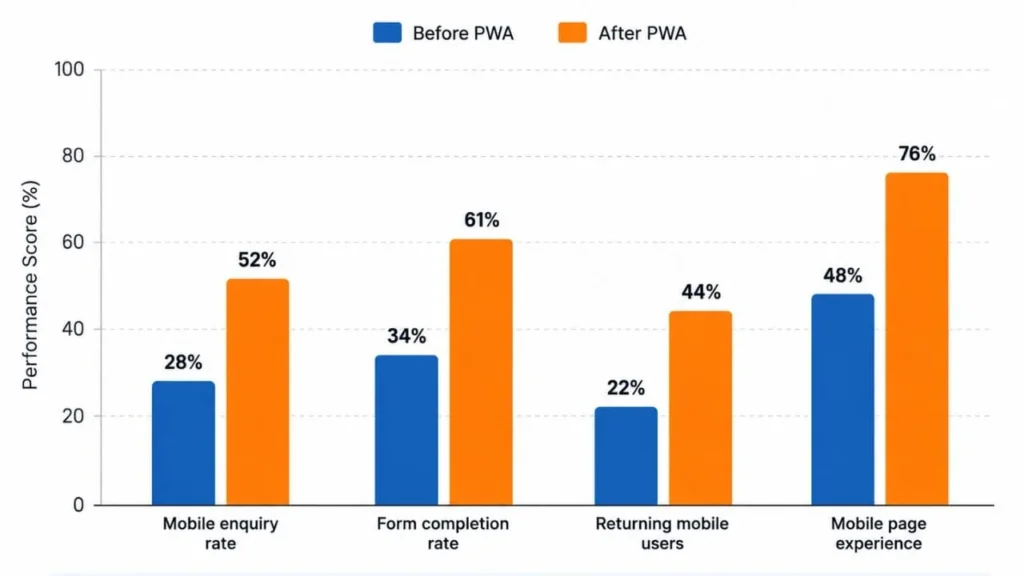
The business first considered a native app. However, after reviewing user needs, the team found that customers did not need complex app features. They mainly wanted to check services, read details, request a quote and contact the business quickly.
The company selected a progressive web app because it offered faster launch, lower cost and better search visibility. The team improved the mobile layout, simplified the contact form, added clear call buttons and created an app like browsing experience.
After the launch, users could access information faster from mobile search. Returning visitors could save the app on their home screen. The business received more qualified enquiries because the mobile journey became simpler and faster.
This case shows that progressive web app vs native should not be decided by trend. It should be decided by user need, cost, performance and business goals.
When Should You Choose a Progressive Web App?
Choose a progressive web app if your business:
- Needs faster launch
- Has a limited budget
- Depends on SEO traffic
- Wants easy mobile access
- Does not need heavy device features
- Wants users to take quick action
- Runs a service, ecommerce, booking or content based website
- Wants one digital experience for many devices
For many small and mid sized companies, progressive web app vs native often points toward PWA when the main goal is traffic, enquiries and simple mobile access.
When Should You Choose a Native App?
Choose a native app if your business:
- Needs advanced device features
- Requires high performance
- Depends on frequent user login
- Wants strong app store visibility
- Needs complex workflows
- Has a budget for long term maintenance
- Offers services that users access repeatedly
- Needs deep personalization and notifications
Native is better when the app itself is a central part of the business model.

Common Mistakes Businesses Should Avoid
Many businesses make the wrong choice because they focus on trends instead of user behavior and ignore audit internal links. Avoid these mistakes:
Choosing an App Only Because Competitors Have One
Your business may not need the same app type as your competitor. Your users, budget and goals may be different.
Ignoring Search Visibility
If your customers mostly come from Google, a PWA may support discovery better than a native only approach.
Underestimating Maintenance
Apps need updates, testing, security checks and performance improvements. The cost does not end after launch.
Adding Features Users Do Not Need
Too many features can make the app slower and harder to use. Build what users actually need.
Forgetting Conversion Goals
The app should help users take action. Calls, forms, bookings, purchases and signups should be easy to complete.
Final Verdict on Progressive Web App vs Native
The progressive web app vs native decision should be based on real business needs. A progressive web app is usually better for businesses that want faster launch, lower cost, SEO value and simple mobile access. A native app is better for businesses that need advanced performance, deeper device access, app store visibility and stronger long term engagement.
If your goal is to improve mobile access, increase enquiries and support organic visibility, a PWA may be the better choice. If your goal is to build a feature rich product that users open every day, a native app may be worth the investment.
The best decision is not about which technology sounds more advanced. It is about which option helps your users complete their goals with less friction. When your users get a faster, clearer and more useful experience, your business gets better results.
FAQs
Q: What is the main difference in progressive web app vs native?
The main difference is that a progressive web app runs through the web and can be installed on a device, while a native app is built for a specific operating system and usually downloaded from an app store.
Q: Is a progressive web app better than a native app?
A progressive web app is better for lower cost, faster launch and SEO visibility. A native app is better for advanced features, strong performance and deeper device access.
Q: Which is more affordable for small businesses?
A progressive web app is usually more affordable because one web based build can serve users across many devices. Native apps often require more platform specific development and testing.
Q: Can a progressive web app work offline?
Yes, a progressive web app can work offline for selected features when caching and service workers are set up properly. However, full offline support depends on the app structure.
Q: Is a native app better for user engagement?
A native app can be better for regular engagement because it supports deeper device features, notifications and platform specific experiences. This is useful when users need to return often.
Q: Which option is better for SEO?
A progressive web app is generally better for SEO because it works through the web and can be discovered through search engines. Native apps depend more on app store rankings, reviews and downloads.
Q: Should every business build a mobile app?
No. Every business does not need a native app. Some businesses only need a strong mobile website or PWA. The right option depends on user needs, budget, features and growth goals.
Q: How should a business choose between PWA and native?
A business should review goals, user behavior, budget, required features, performance needs and marketing channels. If search visibility and quick access matter most, choose PWA. If advanced features and frequent usage matter most, choose native.