In today’s digital world, your website is more than just an online presence. It acts as a marketing hub, a sales channel, a customer service platform, and often the first impression people have of your business. Whether you run a startup, a local company, an ecommerce store, or a growing enterprise, choosing the right website solution can significantly influence your online success.
One of the most common questions business owners ask is: Custom Website vs Website Builder: Which Is Better?
The answer depends on your goals, budget, growth plans, and digital marketing strategy. While a website builder platform offers convenience and affordability, custom website development provides flexibility, scalability, and greater control over performance.
This guide explores every important aspect of the debate, from website development cost and search engine optimization to website scalability and customer experience design. By the end, you’ll understand which option aligns best with your business objectives.
Table of Contents
Custom Website vs Website Builder
If you need a simple website quickly and have a limited budget, a DIY website builder can be a practical solution.
If your goal is long term business growth online, advanced functionality, strong SEO performance, and complete branding control, a custom website is usually the better investment.
Comparison Snapshot
| Factor | Custom Website | Website Builder |
| Design Flexibility | Excellent | Limited |
| SEO Potential | High | Moderate |
| Scalability | Excellent | Limited |
| Website Ownership and Control | Full | Partial |
| Initial Cost | Higher | Lower |
| Long Term Value | High | Moderate |
| Performance Optimization | Extensive | Limited |
| Integrations | Unlimited | Platform Dependent |
| Branding Opportunities | Extensive | Template Based |
What Is a Custom Website?
A custom website is built specifically for a business based on its unique requirements. Instead of relying on prebuilt templates, developers create the website architecture, design elements, functionality, and integrations from the ground up.
Custom website development allows businesses to create highly personalized digital experiences that align with branding goals and customer expectations.
Understanding Custom Website Development
Unlike template based solutions, custom web design focuses on creating a unique experience for visitors. Every design element, feature, and interaction is tailored to support specific business objectives.
This approach is often preferred by organizations seeking:
- Advanced functionality
- Unique branding
- Better user experiences
- Stronger SEO capabilities
- Greater website scalability
Key Components of a Custom Website
Professional Website Design
Professional website design ensures that every visual element reflects your brand identity. Colors, layouts, typography, and user journeys are developed specifically for your audience.
Responsive Website Design
Modern users browse websites from desktops, tablets, and smartphones. Responsive website design ensures a seamless experience across all devices.
Custom Coding
One major difference in the custom website vs website builder debate is the ability to implement custom coding. Businesses can develop unique features that are not available through template based systems.
Website Features and Integrations
Custom websites can integrate with:
- CRM systems
- Marketing automation platforms
- Analytics tools
- Payment gateways
- ERP software
- Customer support platforms
Custom Website Benefits
Businesses often choose custom website development because of the following advantages:
Greater Website Design Flexibility
A custom website allows businesses to create exactly what they need without template restrictions.
Better SEO Opportunities
SEO friendly websites benefit from cleaner code structures, optimized architecture, and advanced technical SEO for websites.
Improved Website Performance
Website performance optimization becomes easier when developers control every aspect of the codebase.
Stronger Brand Identity
A brand identity website stands out because it is built around the company’s unique positioning rather than generic templates.
Future Growth Readiness
Scalable website development enables businesses to expand functionality as requirements evolve.
What Is a Website Builder?
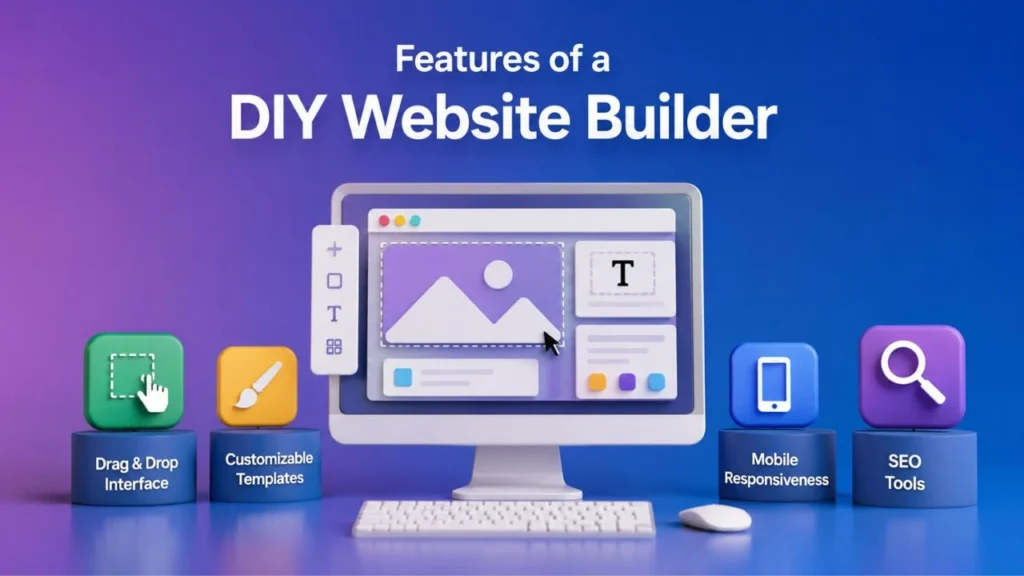
A website builder platform enables users to create websites using drag and drop functionality without requiring extensive coding knowledge.
Popular builders offer ready made templates, hosting services, and content management features within a single package.
For startups and small businesses with limited resources, this can be an attractive option.
Understanding a Website Builder Platform
Website builders are designed to simplify website creation.
Instead of writing code, users can:
- Select templates
- Drag elements into place
- Add content
- Publish websites quickly
This makes them accessible even for non technical users.
Features of a DIY Website Builder
Templates
Most website builders provide professionally designed templates that can be customized to a certain extent.
Content Management System
Built in content management system functionality allows users to update pages without technical expertise.
Hosting Services
Many website builder platforms include hosting as part of their subscription plans.
Plugins and Extensions
Additional functionality can often be added through third party applications and plugins.
Website Builder Advantages
There are several reasons businesses choose website builders.
Lower Initial Investment
Website builder pricing is generally more affordable than custom website cost during the early stages.
Faster Deployment
Businesses can launch a website within days rather than weeks or months.
Beginner Friendly Management
Website builders simplify content updates and routine website maintenance requirements.
All in One Convenience
Many providers bundle hosting, security, templates, and support into a single package.
Custom Website vs Website Builder: Detailed Comparison
Choosing between these two options requires evaluating several critical areas.
Website Design Flexibility
Website design flexibility is often one of the biggest deciding factors.
Custom Website Design Flexibility
Custom websites allow businesses to create unique experiences without limitations imposed by templates.
This flexibility supports:
- Unique layouts
- Custom functionality
- Advanced user journeys
- Specialized integrations
Template Based Website Design
Website builders generally rely on templates. While templates can look professional, they may limit branding opportunities and functionality.
This is a key distinction when comparing a custom website vs template website.
Website Customization Options
Custom Coding vs Drag and Drop Builder
Custom coding gives businesses complete control over functionality. A drag and drop builder offers convenience but often restricts deeper modifications.
Website Functionality
If your business requires specialized tools, custom dashboards, advanced forms, or unique customer interactions, custom development typically provides a better solution.
Website Ownership and Control
Website ownership and control is another major consideration.
With a custom website, businesses generally own:
- Design assets
- Website files
- Source code
- Hosting choices
With some website builders, migration limitations and platform dependencies can affect future flexibility.
Website Features and Integrations
Marketing success increasingly depends on connected systems.
Custom websites can support advanced integrations with:
- CRM software
- Email marketing platforms
- Ecommerce tools
- Analytics systems
- Customer support solutions
For businesses focused on lead generation website performance, these integrations can significantly improve marketing effectiveness.
SEO Comparison: Which Option Performs Better?
When evaluating Custom Website vs Website Builder, search visibility should be one of your top priorities. Even the most attractive website will struggle to generate leads if potential customers cannot find it through search engines.
Today, search engine optimization influences how websites appear in traditional search results, AI search platforms, answer engines, and voice search devices. Therefore, choosing a website solution that supports long term SEO growth is essential.
SEO Friendly Websites Explained
SEO friendly websites are designed and developed with search engine requirements in mind. They make it easier for search engines to crawl, understand, and rank content.
An SEO friendly website includes:
- Fast loading pages
- Mobile responsiveness
- Clean code structure
- Optimized URL architecture
- Internal linking strategy
- Schema markup
- Secure connections
- Strong user experience
The ability to implement these elements often differs significantly between custom websites and website builders.
Search Engine Optimization Capabilities
Technical SEO for Websites
Technical SEO forms the foundation of online visibility.
A custom website gives developers full control over:
- URL structure
- Redirect management
- Schema implementation
- XML sitemaps
- Canonical tags
- Crawl directives
- Page architecture
Most website builder platforms offer technical SEO features, but they may have restrictions that limit customization.
URL Structure Optimization
Search engines prefer descriptive and clean URLs.
Custom websites provide complete freedom over URL creation, while some website builders impose structural limitations that may affect optimization efforts.
Schema Markup Integration
Schema markup helps search engines understand content more effectively.
Custom website development makes it easier to implement advanced schema types for:
- Products
- Services
- FAQs
- Reviews
- Organizations
- Local businesses
These enhancements can improve visibility in rich search results.
Crawlability and Indexability
Search engines must efficiently crawl and index website pages.
Custom websites allow developers to optimize site architecture specifically for search engine performance, which can improve overall visibility.
Website Speed Optimization
Website speed has become a critical ranking factor. Users expect websites to load quickly, and search engines reward sites that provide fast experiences.
Core Web Vitals Performance
Core Web Vitals measure important aspects of user experience including:
- Loading performance
- Interactivity
- Visual stability
Businesses investing in custom website development often have greater opportunities to optimize Core Web Vitals because developers can directly control code efficiency.
Website Loading Speed
Website loading speed impacts:
- User engagement
- Bounce rates
- Conversion rates
- Search rankings
Custom websites can be optimized specifically for speed, while website builders may include unnecessary scripts and platform related code that can affect performance.
Website Performance Optimization
Effective website performance optimization includes:
- Code minimization
- Image compression
- Server optimization
- Database optimization
- Caching implementation
Custom development provides more flexibility to implement these improvements.
Mobile Friendly Website Performance
Mobile traffic continues to dominate many industries.
A mobile friendly website is no longer optional. It directly affects both user experience and search rankings.
Although most modern website builder platforms offer responsive templates, custom websites allow businesses to optimize every mobile interaction according to customer behavior.
Website Performance Comparison
| Performance Factor | Custom Website | Website Builder |
| Code Efficiency | High | Moderate |
| Page Speed Optimization | Extensive | Limited |
| Core Web Vitals Control | High | Moderate |
| Technical SEO Control | Complete | Partial |
| Mobile Optimization | Customizable | Template Based |
| Advanced SEO Features | Unlimited | Platform Dependent |
Which Platform Helps Rank Higher?
There is no guarantee that either option will automatically rank better. However, custom websites often provide stronger SEO foundations because they offer:
- Better technical optimization
- Faster performance potential
- Greater flexibility
- Enhanced scalability
- Complete customization
For businesses that view search visibility as a long term growth strategy, custom website benefits often outweigh the convenience of a website builder.
Website Development Cost Comparison
Cost is often the first factor businesses consider when choosing between a custom website and a website builder. While website builders generally appear less expensive initially, evaluating the total cost of ownership provides a more accurate picture.
Understanding Website Development Budget
Your website development budget should account for more than the launch cost.
Businesses should evaluate:
- Initial setup expenses
- Hosting fees
- Maintenance costs
- Marketing requirements
- Redesign costs
- Future scalability investments
A lower upfront investment does not always translate into lower long term expenses.
Custom Website Cost Breakdown
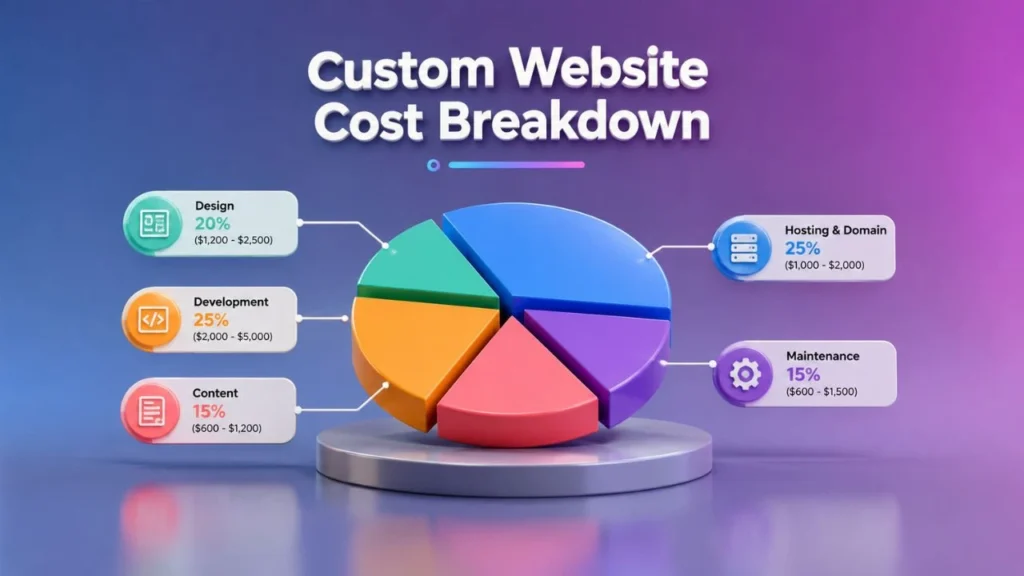
The custom website cost varies depending on complexity, functionality, and business requirements.
Design Costs
Professional website design typically involves:
- Research
- Wireframing
- User experience planning
- Visual design
Because every element is created specifically for the business, design investments tend to be higher.
Development Costs
Development expenses depend on:
- Number of pages
- Custom functionality
- Integrations
- Ecommerce capabilities
- Security requirements
Website Hosting Costs
Businesses usually select hosting providers independently.
Website hosting costs vary based on:
- Traffic volume
- Performance requirements
- Security needs
- Storage requirements
Website Maintenance Costs
Website maintenance costs may include:
- Security updates
- Software updates
- Technical support
- Performance monitoring
Although these costs exist, they often support long term performance and stability.
Website Builder Pricing Breakdown
Website builder pricing generally follows a subscription model.
Monthly fees often include:
- Hosting
- Templates
- Basic support
- Security features
This approach can make budgeting easier for small businesses.
Subscription Fees
Most website builders offer multiple pricing tiers based on features and functionality.
Premium Add Ons
Additional costs may arise from:
- Premium templates
- Marketing tools
- Ecommerce features
- Third party integrations
Ecommerce Fees
Some platforms charge transaction fees in addition to monthly subscriptions, increasing overall costs as sales grow.
Hidden Expenses to Consider
Businesses frequently focus only on launch costs while overlooking future expenses.
Website Hosting Costs
Hosting requirements may increase as traffic grows.
Website Maintenance Costs
Regular updates are necessary regardless of the platform chosen.
Website Redesign Expenses
Many businesses eventually redesign their websites as branding, marketing strategies, and customer expectations evolve.
Website builders can sometimes require rebuilding significant portions of the website when design limitations become restrictive.
Long Term Website Investment Analysis
The most effective decision often comes down to long term value rather than short term savings.
| Cost Category | Custom Website | Website Builder |
| Initial Investment | Higher | Lower |
| Monthly Costs | Variable | Fixed |
| Scalability Costs | Lower Long Term | Higher Long Term |
| Redesign Costs | Flexible | Potentially Significant |
| Long Term ROI | High | Moderate |
When evaluating a long term website investment, businesses should consider growth objectives rather than focusing exclusively on initial expenses.
Scalability and Business Growth Comparison
A website that meets today’s requirements may not support tomorrow’s goals. This is where website scalability becomes important.
What Is Scalable Website Development?
Scalable website development refers to building a website that can grow alongside a business.
Growth may involve:
- Increased traffic
- New products
- Additional services
- Expanded content
- Advanced integrations
- New marketing channels
A scalable website can adapt without requiring a complete rebuild.
Website Scalability Factors
Traffic Growth
As search engine visibility improves and marketing campaigns become more successful, website traffic typically increases.
Custom websites can be optimized to handle significant traffic growth without sacrificing performance.
Feature Expansion
Growing businesses often need:
- Customer portals
- Booking systems
- Membership areas
- Ecommerce functionality
- Marketing automation
Custom development makes these additions easier to implement.
Marketing Integrations
Modern digital marketing depends on connected systems.
Businesses frequently integrate:
- CRM software
- Email marketing tools
- Analytics platforms
- Customer support systems
- Advertising platforms
Custom websites provide greater flexibility for these integrations.
Best Website Solution for Growing Businesses
Businesses focused on growth should prioritize future requirements rather than current limitations.
A custom website often becomes the preferred choice when:
- Lead generation is a priority
- SEO drives significant revenue
- Brand differentiation matters
- Advanced functionality is required
- Long term scalability is important
Business Growth Online Requirements
Successful business growth online typically depends on:
- Search visibility
- Conversion optimization
- Strong user experiences
- Performance optimization
- Marketing automation
The more ambitious the growth goals, the more valuable website flexibility becomes.
Digital Presence Strategy Considerations
Your website should support your overall digital presence strategy.
Before making a decision, consider:
- Expected business growth
- Marketing objectives
- Content strategy
- Ecommerce plans
- Customer acquisition goals
A website is not simply a digital brochure. It is a business asset that should evolve alongside your organization.
For businesses seeking long term scalability, advanced SEO capabilities, and greater marketing flexibility, custom website development often provides a stronger foundation for sustainable growth.
User Experience Comparison
A website’s success is not determined solely by its appearance. The way users interact with the website plays an equally important role. Search engines increasingly evaluate user experience signals when determining rankings, making customer satisfaction an essential part of any digital marketing strategy.
When comparing Custom Website vs Website Builder, user experience can significantly influence engagement, lead generation, and conversions.
Website Usability
Website usability refers to how easily visitors can navigate, understand, and interact with your website.
A user friendly website should help visitors accomplish their goals without confusion.
Key usability factors include:
- Clear navigation
- Fast page loading
- Logical content structure
- Mobile responsiveness
- Accessible design
- Simple conversion paths
Custom websites provide more flexibility to optimize usability based on customer behavior and business objectives.
Website Navigation
Website navigation directly impacts customer journeys.
Poor navigation often leads to:
- Higher bounce rates
- Reduced engagement
- Lower conversion rates
Custom websites allow businesses to design navigation structures specifically around customer needs.
Website builders typically offer predefined navigation systems that may limit customization opportunities.
Interactive Website Design
Interactive website design helps engage users through:
- Dynamic content
- Interactive forms
- Calculators
- Quizzes
- Personalized experiences
- Product configurators
These elements can improve engagement and support lead generation efforts.
Custom website development makes it easier to create highly interactive experiences tailored to target audiences.
Customer Experience Design
Customer experience design focuses on creating smooth and enjoyable interactions throughout the user journey.
A positive experience often leads to:
- Longer session durations
- Increased trust
- Higher conversion rates
- Better customer retention
Custom websites provide businesses with complete control over every customer interaction.
Conversion Focused Website Performance
Many businesses build websites primarily to generate leads, sales, or inquiries.
A conversion focused website prioritizes actions that contribute directly to business growth.
Landing Page Optimization
Custom websites make it easier to build high converting landing pages that align with marketing campaigns.
Lead Capture Forms
Advanced lead capture forms can be designed to improve data collection while reducing friction.
Conversion Rate Optimization
Custom development supports advanced conversion rate optimization techniques such as:
- Personalized experiences
- Dynamic content
- A B testing
- Behavioral targeting
These capabilities often contribute to stronger marketing performance over time.
Custom Website vs Website Builder for Small Business
Small business owners frequently face budget limitations while trying to establish a professional online presence.
This raises an important question:
Custom website vs website builder for small business: which option delivers better value?
Small Business Website Requirements
Most small business websites require:
- Professional branding
- Mobile responsiveness
- SEO capabilities
- Contact forms
- Service pages
- Lead generation tools
The ideal solution depends on current needs and future growth expectations.
When Small Businesses Should Choose a Website Builder
A website builder platform may be suitable when:
- Budget is extremely limited
- Launch speed is a priority
- Functionality requirements are basic
- Internal resources are limited
For businesses seeking affordable website solutions, website builders can provide a practical starting point.
When Small Businesses Should Invest in Custom Website Development
Custom website development becomes more attractive when:
- Lead generation is critical
- SEO drives customer acquisition
- Competitive differentiation matters
- Future growth is expected
- Advanced integrations are needed
Businesses that view their website as a revenue generating asset often benefit from custom development.
Ecommerce Website Development Comparison
Ecommerce businesses face unique challenges that require careful consideration.
Choosing the wrong platform can limit growth, affect customer experiences, and reduce profitability.
Ecommerce Website Needs
Modern ecommerce websites typically require:
- Product management
- Secure checkout systems
- Payment gateway integrations
- Inventory tracking
- Customer accounts
- Marketing automation
The complexity of these requirements often influences platform selection.
Website Builder or Custom Website for Ecommerce
For small online stores with limited product catalogs, website builders can provide an accessible entry point.
However, larger ecommerce operations often benefit from custom website development because of greater flexibility and scalability.
Payment Gateway Flexibility
- Custom websites can integrate with a wide variety of payment providers and business systems.
- Website builders may restrict available payment options depending on platform capabilities.
Product Catalog Scalability
As product inventories grow, businesses often require:
- Advanced filtering
- Search functionality
- Product recommendation systems
- Dynamic pricing
Custom development offers greater flexibility for managing these requirements.
Checkout Optimization
Custom websites allow businesses to optimize:
- Checkout flows
- Form fields
- User journeys
- Conversion paths
These improvements can contribute to higher sales performance.
Security Considerations
- Security remains a critical concern for ecommerce website development.
- Custom websites can implement specialized security measures tailored to business requirements.
- Website builders generally include standard security features but may offer limited customization.
Website Builder vs Web Developer: Which Delivers More Value?
- Businesses often compare a website builder vs web developer when evaluating website creation options.
- While both approaches can produce functional websites, the long term value may differ significantly.
Comparing Expertise
- A website builder provides tools.
- A web developer provides expertise.
Developers bring knowledge related to:
- User experience
- Search engine optimization
- Performance optimization
- Security
- Scalability
These factors can influence long term business outcomes.
Marketing Performance Impact
Digital marketing campaigns often depend on website performance.
Custom websites provide greater opportunities to improve:
- Conversion rates
- Search visibility
- User engagement
- Customer journeys
SEO and Lead Generation Capabilities
Lead generation website performance frequently depends on technical and strategic optimization.
Custom websites often provide greater flexibility for implementing advanced marketing initiatives.
Long Term Growth Potential
Businesses planning significant growth may find that custom development offers a stronger foundation for future expansion.
Pros and Cons of Website Builders
Understanding the pros and cons of website builders helps businesses make informed decisions.
Website Builder Advantages
Lower Initial Cost
Website builders generally require less upfront investment.
Faster Website Launch
Businesses can launch websites quickly without extensive development timelines.
Easier Management
Content updates can often be completed without technical expertise.
Built In Infrastructure
Hosting, security, and maintenance services are frequently included.
Website Builder Limitations
Limited Customization
Website customization options may be restricted by platform capabilities.
Scalability Challenges
As businesses grow, platform limitations may become more apparent.
Performance Constraints
Website performance optimization opportunities can be limited.
Platform Dependency
Businesses may face migration challenges when moving away from certain website builder platforms.
Benefits of Custom Web Development
- The benefits of custom web development extend beyond aesthetics.
- A custom website can support long term business objectives more effectively than many template based alternatives.
Better Branding Opportunities
A custom website helps businesses establish a unique digital identity.
Stronger SEO Foundation
SEO friendly websites often benefit from custom architecture and technical optimization.
Greater Website Functionality
Businesses can implement specialized features that align with specific operational requirements.
Improved Website Performance
Custom development supports advanced website speed optimization and performance enhancements.
Future Ready Scalability
Scalable website development enables businesses to adapt as markets, technologies, and customer expectations evolve.
Custom Website vs WordPress Website
Another common comparison involves custom website vs WordPress website.
Understanding the Difference
- A custom website is built specifically around unique requirements.
- WordPress is a content management system that can support both template based and custom development approaches.
WordPress Customization Possibilities
WordPress offers significant flexibility through:
- Themes
- Plugins
- Custom development
This makes it more adaptable than many traditional website builder platforms.
SEO and Performance Comparison
- A properly optimized WordPress website can perform very well in search results.
- However, highly customized websites may provide greater control over performance and technical optimization.
Which Option Is Better for Digital Marketing?
- The answer depends on project requirements.
- For many businesses, a custom WordPress implementation can provide an effective balance between flexibility and cost efficiency.
Decision Framework: Which Website Option Is Right for You?
Choosing between a custom website and a website builder becomes easier when you evaluate your business priorities.
Choose a Website Builder If:
- Budget is limited
- Launch speed is important
- Functionality needs are basic
- Internal resources are minimal
Choose a Custom Website If:
- SEO is a major growth channel
- Lead generation drives revenue
- Branding is important
- Scalability matters
- Advanced functionality is required
Best Website Solution for Growing Businesses
- Growing businesses often benefit from solutions that support long term expansion rather than short term convenience.
- This is one reason many organizations eventually transition from website builders to custom website development.
Conclusion
The debate surrounding Custom Website vs Website Builder ultimately comes down to business goals, growth plans, and digital marketing priorities.
Website builders offer convenience, affordability, and quick deployment. They can be excellent choices for startups, freelancers, and businesses with relatively simple requirements.
However, businesses seeking stronger search visibility, advanced functionality, greater website ownership and control, enhanced website design flexibility, and long term scalability often find greater value in custom website development.
If your objective is to create a lead generation website, strengthen your brand identity website, improve customer experience design, support business growth online, and maximize search engine optimization opportunities, a custom website is often the stronger long term investment.
Rather than focusing solely on upfront costs, evaluate your website as a strategic business asset. The right decision today can influence your digital presence strategy, customer acquisition efforts, and growth potential for years to come.
When long term performance, scalability, and marketing effectiveness are priorities, custom website benefits frequently outweigh the short term savings associated with many website builder platforms.
Frequently Asked Questions
Is a custom website better than a website builder?
A custom website typically offers greater flexibility, scalability, performance optimization opportunities, and SEO capabilities. Website builders are often better suited for simple projects with limited budgets.
Should I choose a custom website or website builder?
Choose a website builder if affordability and speed are your primary concerns. Choose a custom website if you need long term growth, branding control, and advanced functionality.
What are the benefits of custom web development?
The benefits of custom web development include better scalability, stronger SEO capabilities, greater flexibility, improved branding opportunities, and enhanced performance.
What are the pros and cons of website builders?
Website builders offer affordability, ease of use, and fast deployment. Their disadvantages may include limited customization, scalability challenges, and platform restrictions.
Which option is more SEO friendly?
Custom websites generally provide greater control over technical SEO, website speed optimization, and Core Web Vitals, making them highly SEO friendly websites.
What is the difference between custom coding and a drag and drop builder?
Custom coding provides complete flexibility and functionality control, while drag and drop builders focus on simplicity and ease of use.
Which is better for ecommerce websites?
Small ecommerce stores may succeed with website builders, while larger stores often benefit from custom website development because of scalability and customization advantages.
How much does a custom website cost?
Custom website cost varies significantly depending on design complexity, functionality requirements, integrations, and development scope.
Are website builders good for SEO?
Many modern website builders support basic search engine optimization. However, custom websites often provide greater optimization opportunities.