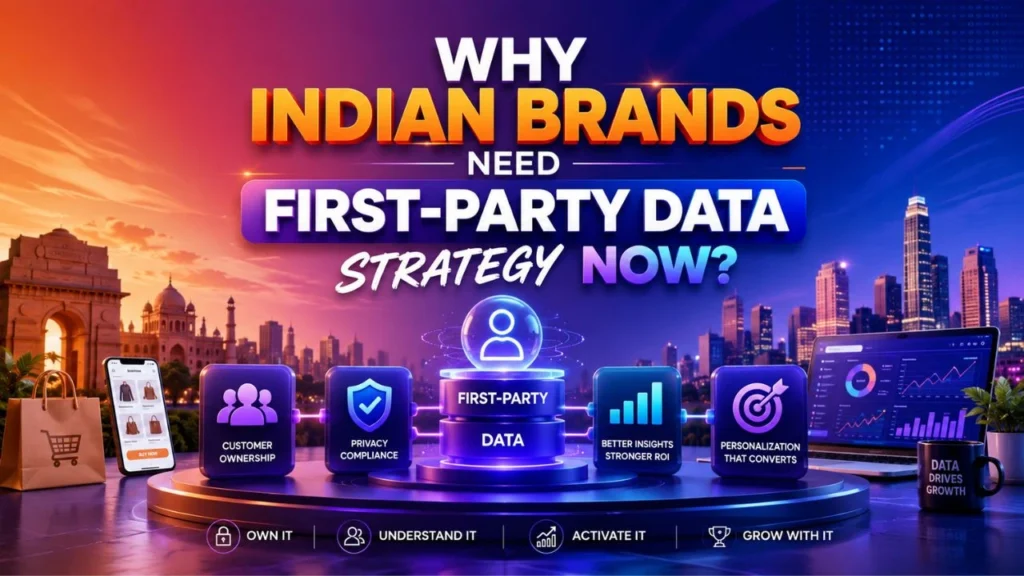
Digital marketing in India is changing rapidly. Brands that once depended heavily on third party cookies, broad audience targeting, and platform controlled advertising are now entering a completely different era. Today, customer privacy, AI driven search marketing, personalized experiences, and search intent optimization are shaping how businesses connect with consumers online.
This is exactly why having a strong First-Party Data Strategy is no longer optional for Indian brands.
Whether you run an ecommerce business, a D2C startup, a SaaS company, or a service based brand, your long term growth increasingly depends on how effectively you collect, manage, and use first-party customer data. Businesses that understand their audience deeply are now gaining a major competitive advantage in SEO, performance marketing, customer retention marketing, and omnichannel customer experience delivery.
At the same time, search engines and AI powered platforms are evolving. Consumers now expect highly relevant experiences, personalized recommendations, and faster answers. Search behavior analysis, AI in customer data strategy, and data centric SEO strategy are becoming essential parts of modern digital marketing.
Indian brands that fail to adapt may struggle with rising ad costs, lower engagement, reduced targeting accuracy, and declining customer trust. On the other hand, businesses that invest in a scalable First-Party Data Strategy can build stronger customer relationships, improve targeted digital marketing campaigns, and future proof their growth in the evolving AI era.
In this article, we will explore why first-party data matters for brands, how Indian companies use customer data effectively, and how businesses can create a future proof marketing strategy using audience insights, customer behavior tracking, AI driven personalization, and performance focused marketing techniques.
Table of Contents
What Is a First-Party Data Strategy?
A First-Party Data Strategy refers to the process of collecting, organizing, analyzing, and using data directly gathered from your customers through owned channels such as websites, apps, CRM systems, emails, surveys, purchase history, and customer interactions.
Unlike third party data, which is purchased from external platforms, first-party customer data comes directly from your audience. This makes the information more reliable, privacy compliant, accurate, and valuable for long term marketing success.
For Indian businesses, an effective audience data strategy helps improve:
- Audience segmentation strategy
- Customer retention marketing
- Search intent optimization
- AI driven search marketing
- Personalized customer experiences
- Data centric SEO strategy
- Conversion focused campaigns
Today, the importance of first-party data in marketing continues to grow because privacy regulations, AI search systems, and changing consumer expectations are transforming digital advertising worldwide.
Types of First-Party Customer Data Brands Can Collect
Indian brands can collect multiple types of customer data to strengthen their marketing strategies.
Website Behavioral Data
This includes:
- Pages visited
- Time spent on website
- Product views
- Click patterns
- Search queries
- User journeys
This type of customer behavior tracking helps businesses understand audience interests and optimize website content accordingly.
CRM and Purchase Data
Customer relationship management systems store valuable information such as:
- Purchase history
- Repeat orders
- Customer lifetime value
- Support interactions
- Subscription data
Brands use this information for customer retention marketing and personalized communication.
Email Engagement Data
Email marketing still remains one of the most effective performance marketing channels. Tracking:
- Open rates
- Click rates
- Content preferences
- Download activity
helps businesses refine their audience segmentation strategy and improve targeted digital marketing.
Social Media Interaction Data
Brands can also analyze:
- Engagement behavior
- Comments
- Shares
- Poll responses
- Ad interactions
to improve content relevance and audience understanding.
Why Indian Brands Need First-Party Data Strategy Now?
The Indian digital ecosystem is evolving faster than ever. Consumer expectations are changing, AI search engines are becoming more intelligent, and privacy focused marketing is now becoming a major industry standard.
Because of this shift, businesses can no longer rely only on rented audiences from ad platforms.
Decline of Third Party Cookies
One of the biggest reasons behind the growing importance of First-Party Data Strategy is the gradual decline of third party cookies.
For years, advertisers used third party tracking to target users across websites. However, growing concerns around GDPR and consumer privacy have changed how customer data can be collected and used.
Modern consumers want:
- Greater transparency
- Better privacy protection
- More control over their information
Search engines and browsers are responding by limiting third party tracking capabilities. This creates a major challenge for businesses that rely heavily on external audience data.
Brands that build their own first-party customer data ecosystem can continue delivering personalized experiences without depending entirely on third party platforms.
Rise of AI Driven Search Marketing
Another major reason Indian businesses need a stronger audience data strategy is the rise of AI powered search experiences.
Search engines are becoming increasingly intelligent. AI systems now analyze:
- Search behavior analysis
- User intent
- Contextual signals
- Personal preferences
- Engagement patterns
This means generic marketing campaigns are becoming less effective. AI driven search marketing rewards brands that understand customer intent deeply and create relevant content experiences based on actual audience needs.
Businesses using AI in customer data strategy can:
- Improve content personalization
- Increase search visibility
- Deliver better recommendations
- Optimize customer journeys
- Improve conversion rates
As AI search continues growing, first-party data in the AI era will become one of the strongest assets for long term business growth.
Growing Competition Among Indian Brands
The digital economy in India is highly competitive today. D2C brands, ecommerce companies, startups, SaaS platforms, and local businesses are all competing for the same audience attention.
Because advertising costs continue rising, businesses need smarter ways to improve efficiency and customer retention.
A strong First-Party Data Strategy helps brands:
- Reduce wasted ad spend
- Improve audience targeting
- Build stronger customer relationships
- Create personalized campaigns
- Increase repeat purchases
- Improve long term profitability
This is particularly important for businesses building a D2C brand growth strategy or an Indian startup marketing strategy.
Benefits of First-Party Data Strategy
The benefits of first-party data strategy extend far beyond advertising. Businesses that invest in customer data infrastructure often improve multiple areas of marketing performance simultaneously.
| Benefit | Marketing Impact | Business Outcome |
| Better Audience Insights | Improved targeting | Higher conversions |
| Customer Personalization | Stronger engagement | Better retention |
| AI Optimization | Smarter automation | Improved efficiency |
| SEO Improvements | Better search visibility | More organic traffic |
| Privacy Compliance | Increased trust | Long term sustainability |
Better Audience Segmentation Strategy
Audience segmentation strategy becomes significantly more effective when brands use first-party customer data.
Instead of targeting broad demographic groups, businesses can create highly specific audience segments based on:
- Purchase behavior
- Search interests
- Website activity
- Customer intent
- Engagement history
This allows more targeted digital marketing campaigns that feel relevant and personalized.
Improved Customer Retention Marketing
Acquiring new customers is becoming increasingly expensive. This is why customer retention marketing is now a major priority for Indian businesses.
Brands using first-party customer data can:
- Predict customer behavior
- Identify inactive users
- Create loyalty programs
- Send personalized offers
- Improve post purchase engagement
This strengthens customer relationships while increasing lifetime value.
Stronger Omnichannel Customer Experience
Modern customers interact with brands across multiple platforms.
They may discover a product through:
- Google search
- YouTube
- Email campaigns
- AI search engines
A strong First-Party Data Strategy helps businesses create a seamless omnichannel customer experience across all these touchpoints.
Customers receive:
- Consistent messaging
- Personalized recommendations
- Relevant offers
- Better support experiences
This improves trust, engagement, and brand loyalty.
AI in Customer Data Strategy
Artificial intelligence is transforming digital marketing at every level. Today, AI tools can process enormous amounts of customer information to identify patterns, predict intent, and optimize campaigns automatically.
This is why AI in customer data strategy is becoming increasingly important for Indian brands.
Search Intent Optimization Using AI
Search intent optimization focuses on understanding what users actually want when they search online.
AI systems now analyze:
- Query patterns
- Engagement signals
- User journeys
- Behavioral trends
- Conversion paths
Brands using first-party customer data gain deeper insights into audience intent, allowing them to create more relevant SEO content and marketing campaigns.
This improves:
- Organic rankings
- User engagement
- Conversion rates
- AI search visibility
Data Centric SEO Strategy
Traditional SEO focused mainly on keywords. Modern SEO increasingly depends on user behavior, engagement quality, topical authority, and customer relevance.
A data centric SEO strategy combines:
- Search behavior analysis
- Audience insights
- Engagement data
- AI optimization
- Personalization signals
This helps businesses create content that aligns with both search engine algorithms and real customer expectations.
As AI search engines continue evolving, brands with stronger first-party customer data systems will gain a major SEO advantage.
How to Collect First-Party Data Effectively?
Businesses must collect customer data ethically, transparently, and strategically.
Here are some effective methods Indian brands use today:
| Data Collection Method | Purpose | Best For |
| Email Signup Forms | Lead generation | Content marketing |
| Loyalty Programs | Retention | Ecommerce brands |
| Surveys and Polls | Audience insights | Product improvement |
| CRM Systems | Customer management | Sales teams |
| Website Analytics | Search behavior analysis | SEO optimization |
Website Forms and Lead Magnets
Offering:
- Free guides
- Webinars
- Templates
- Discounts
- Newsletters
encourages users to share valuable first-party customer data willingly.
Interactive Content
Quizzes, polls, surveys, and feedback forms help businesses collect:
- Customer preferences
- Pain points
- Product interests
- Purchase motivations
This improves audience segmentation strategy significantly.
CRM Integration
Centralized CRM systems help brands organize and activate customer data more effectively for:
- Customer retention marketing
- Performance campaigns
- Personalized communication
- Omnichannel engagement
Final Thoughts
The future of digital advertising is becoming increasingly privacy focused, AI powered, and data driven.
Indian brands that continue depending entirely on third party platforms may struggle to maintain long term marketing efficiency. However, businesses that build a scalable First-Party Data Strategy can create stronger customer relationships, improve personalization, optimize SEO performance, and future proof their growth.
From AI driven search marketing to customer behavior tracking, search intent optimization, and omnichannel customer experience delivery, first-party customer data is becoming the foundation of modern digital marketing success.
As competition continues growing across ecommerce, D2C, SaaS, and startup ecosystems, brands that understand their audiences deeply will gain a major advantage in visibility, engagement, retention, and profitability.
The importance of first-party data in marketing will only continue increasing in the AI era.
Businesses that start investing today will be better positioned for sustainable long term growth tomorrow.
FAQs
What is first-party data in digital marketing?
First-party data refers to information collected directly from customers through owned platforms such as websites, apps, CRM systems, surveys, email marketing, and purchase interactions.
Why is first-party data important for Indian brands?
First-party data helps Indian brands improve personalization, customer targeting, SEO performance, customer retention marketing, and AI driven search visibility while reducing dependency on third party platforms.
How does first-party data improve SEO?
First-party customer data improves search intent optimization, audience understanding, content relevance, and user engagement, all of which support stronger SEO performance.
How can businesses collect first-party customer data?
Businesses can collect data through:
Email subscriptions
CRM systems
Website forms
Loyalty programs
Surveys
Customer interactions
Website analytics
What is the future of digital advertising without cookies?
The future of digital advertising will focus more on privacy safe audience targeting, AI powered personalization, first-party customer data, and contextual marketing strategies.