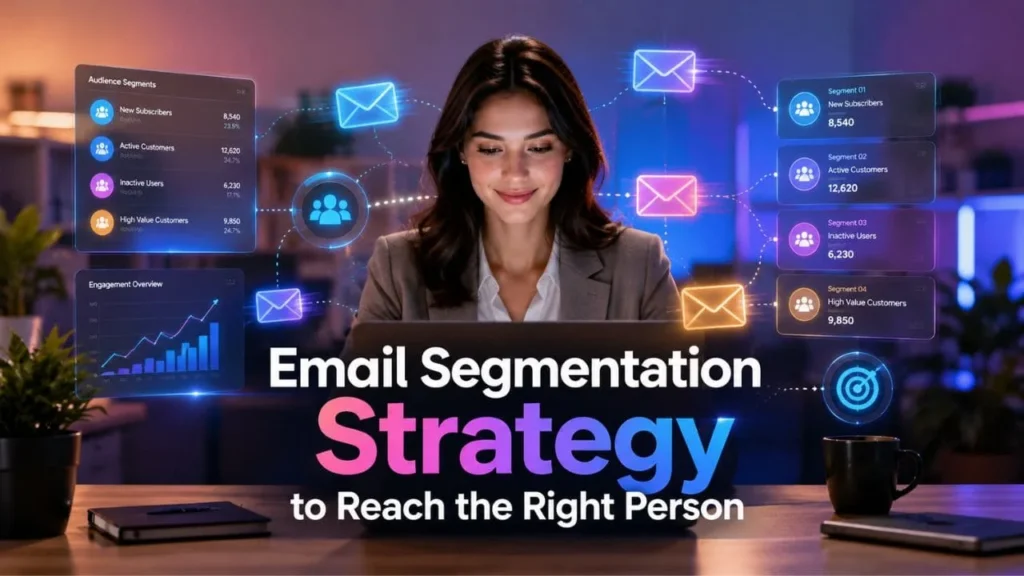
Sending the same email to every subscriber may look simple, but it rarely gives strong results. People join your email list for different reasons. Some want helpful information, some are comparing services, some are ready to buy, and some may need more time before taking action. This is why an email segmentation strategy matters.
An email segmentation strategy helps you divide your email list into smaller groups based on data, interest, behavior, location, engagement, or customer stage. Instead of sending one generic message to everyone, you can send content that matches what each group needs.
For businesses that want better engagement, stronger lead nurturing, and higher conversions, email segmentation is not just a useful tactic. It is an important part of modern email marketing. It helps your message feel more relevant, more timely, and more helpful to the reader.
In this guide, you will learn what email segmentation means, why it matters, how to create useful audience groups, what mistakes to avoid, and how to build an email segmentation strategy that supports search visibility, AI search answers, voice search, and better customer communication.
Table of Contents
What Is an Email Segmentation Strategy?
An email segmentation strategy is the process of dividing your email subscribers into smaller groups so you can send more relevant emails to each group. These groups can be based on customer behavior, interests, location, buying stage, email activity, service interest, or past interactions.
Simple Meaning of Email Segmentation
Email segmentation means grouping people by shared qualities or actions. For example, a new subscriber should not receive the same email as a customer who has already purchased from you. A person who clicked on your pricing page may need a different message from someone who only reads your blog.
A strong email segmentation strategy helps you answer three simple questions:
• Who is the subscriber?
• What do they need right now?
• What message will help them take the next step?
Why It Matters for Modern Email Marketing
People receive many emails every day. If your message does not feel useful, they may ignore it, delete it, or unsubscribe. Segmentation helps you avoid this problem by making your emails more relevant.
When your email matches the reader’s interest, they are more likely to open it, click it, reply to it, and trust your business. This is why segmentation is useful for service businesses, ecommerce brands, B2B companies, local businesses, and brands that want to support follow up campaigns for topics like rank Google Maps in Kolkata.
Quick Answer for AI Search
An email segmentation strategy helps businesses divide subscribers into focused groups based on behavior, interest, lifecycle stage, and engagement. This allows brands to send the right message to the right person at the right time.
Benefits of Email Segmentation Strategy
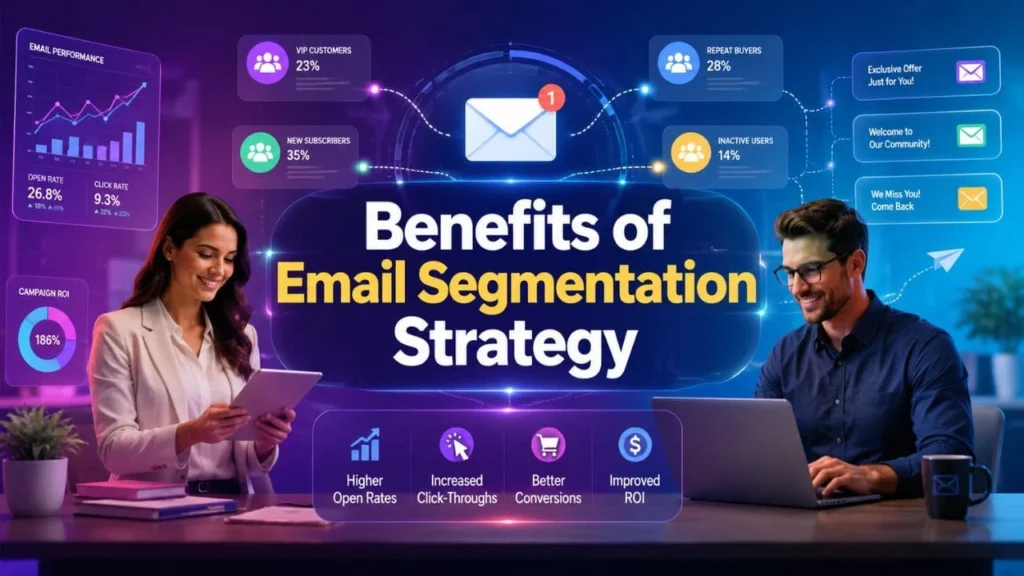
A good email segmentation strategy improves how your audience receives and responds to your emails. It also helps your business use email data in a more meaningful way, while supporting zero click funnel lead generation by nurturing users before they visit your website or contact your team.
Better Message Relevance
When your emails match the reader’s need, your message feels more personal. A new lead may need educational content, while a ready buyer may need service details. Segmentation helps you send both types of messages without mixing the audience.
Higher Open Rates and Clicks
Relevant emails often perform better because the subject line, offer, and call to action match the user’s interest. If someone has shown interest in email marketing, they are more likely to click a related guide than a general business update.
Better Lead Nurturing
Not every lead is ready to buy. Some need awareness, some need comparison, and some need trust. An email segmentation strategy helps you guide people through the customer journey with useful content at every stage.
Better Customer Retention
Existing customers should receive messages that support repeat engagement. You can send them service updates, renewal reminders, loyalty content, helpful resources, or product recommendations based on their past actions.
Stronger Email Deliverability
Email deliverability improves when people engage with your messages. Sending relevant emails to active users can reduce spam complaints and unsubscribes. A proper cold email infrastructure setup also helps protect sender reputation, while reducing unnecessary emails to people who no longer engage.
Types of Email Segmentation You Should Use
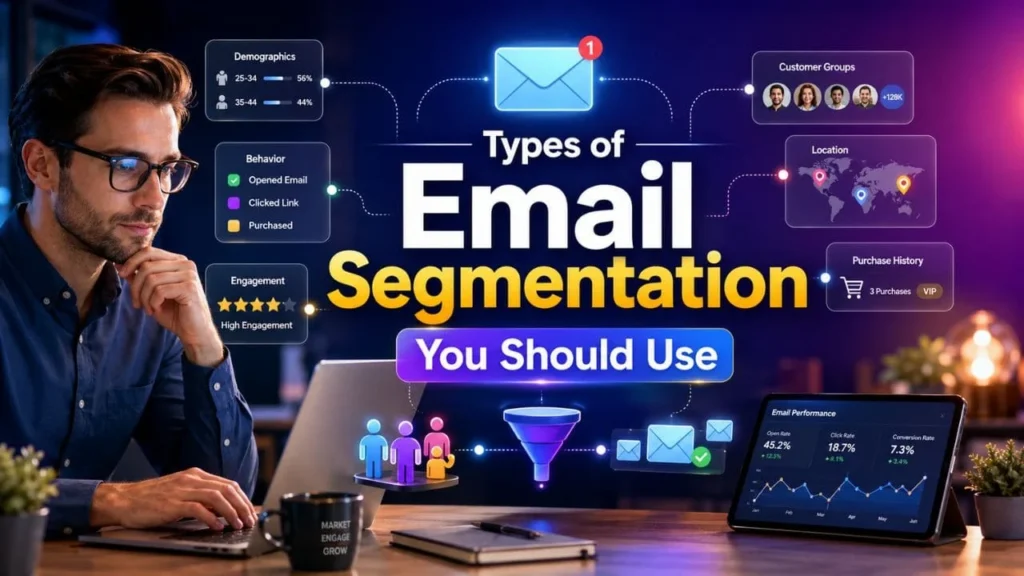
Different businesses need different segmentation models. The best approach is to start simple, review performance, and improve your segments over time.
Demographic Segmentation
Demographic segmentation groups people based on information such as age, gender, job title, income group, company size, or industry.
This is useful when your message changes based on the type of audience. For example, a small business owner may need a different email than a marketing manager at a larger company.
Geographic Segmentation
Geographic segmentation groups subscribers by city, region, country, or time zone. This helps you send location based updates, local offers, event details, or service messages.
For local businesses, geographic data is very useful. If your company offers Local SEO services, you can send different email content to subscribers from Kolkata, other parts of India, or international locations.
Behavioral Segmentation
Behavioral segmentation is based on user actions. These actions may include website visits, page views, email clicks, form submissions, downloads, purchases, or abandoned carts.
This is one of the most useful forms of segmentation because it shows what the person is actually interested in.
Engagement Based Segmentation
Engagement based segmentation groups subscribers according to how they interact with your emails.
You can create segments such as:
• People who open emails regularly
• People who click links often
• People who have not opened emails recently
• People who reply to campaigns
• People who only engage with specific topics
This helps you protect your list quality and improve future campaigns.
Lifecycle Stage Segmentation
Lifecycle segmentation is based on where the person is in the customer journey.
Common lifecycle segments include:
• New subscriber
• New lead
• Interested prospect
• Sales ready lead
• First time customer
• Repeat customer
• Inactive customer
A clear email segmentation strategy should include lifecycle stages because each stage needs a different message.
Purchase History Segmentation
Purchase history segmentation is useful for ecommerce and service based businesses. You can group people by what they purchased, how often they bought, how much they spent, or when they last purchased.
This helps you send renewal reminders, product suggestions, related service emails, and retention campaigns.
Email Segmentation Types and Best Use Cases
| Segmentation Type | Best For | Example Message |
|---|---|---|
| Demographic segmentation | Audience profiling | “Solutions for small business owners” |
| Geographic segmentation | Local targeting | “Service updates for Kolkata businesses” |
| Behavioral segmentation | Intent based targeting | “Still interested in this service?” |
| Engagement segmentation | Email performance improvement | “We saved this guide for you” |
| Lifecycle segmentation | Lead nurturing | “Next steps after your consultation request” |
| Purchase history segmentation | Retention and repeat sales | “Recommended services based on your last purchase” |
How to Build an Email Segmentation Strategy
A good email segmentation strategy does not begin with tools. It begins with a clear goal, useful data, and a proper understanding of your audience.
Step 1: Define Your Campaign Goal
Before you create segments, decide what you want your campaign to achieve.
Your goal may be:
• Increase email opens
• Improve click rate
• Generate more leads
• Nurture service inquiries
• Recover inactive subscribers
• Encourage repeat purchases
• Promote a new service
• Improve customer retention
When the goal is clear, it becomes easier to choose the right audience group.
Step 2: Collect Useful Customer Data
Your segmentation is only as good as your data. You need to collect information that helps you understand your subscribers better.
Useful data sources include:
• Signup forms
• Website analytics
• CRM data
• Email campaign activity
• Purchase history
• Service inquiry forms
• Lead source
• Customer feedback
• Content downloads
Avoid asking for too much information at once. Start with useful fields and add more data over time.
Step 3: Create Simple Audience Segments
Many businesses make the mistake of creating too many segments too early. Start with simple groups that are easy to manage.
For example:
• New subscribers
• Engaged subscribers
• Inactive subscribers
• Service page visitors
• Existing customers
• High interest leads
• Location based leads
Once your list grows, you can make your segmentation more detailed.
Step 4: Match the Right Message With Each Segment
A segment is only useful when the email message matches it.
For example:
• New subscribers can receive a welcome email
• Blog readers can receive educational content
• Service page visitors can receive service related emails
• Inactive users can receive a reactivation message
• Existing customers can receive retention content
This is where an email segmentation strategy becomes powerful. It helps you avoid random communication and gives every email a clear purpose.
Step 5: Use Automation for Better Timing
Automation helps you send emails based on actions and timing. When segmentation and automation work together, your emails become more timely and relevant.
Useful automation workflows include:
• Welcome email sequence
• Lead nurturing sequence
• Abandoned form reminder
• Product interest follow up
• Reactivation sequence
• Customer retention sequence
• Post purchase communication
For deeper planning, you can refer to email marketing segmentation and automation services to understand how segmentation and automation can work together in a structured way.
Step 6: Measure Results by Segment
Do not measure every campaign as one single result. Review how each segment performs.
Track these metrics:
• Open rate
• Click rate
• Reply rate
• Conversion rate
• Unsubscribe rate
• Bounce rate
• Spam complaint rate
• Revenue or lead quality by segment
This helps you understand which audience groups are most engaged and which messages need improvement.
Email Segmentation Strategy Checklist
| Segmentation Type | Best For | Example Message |
|---|---|---|
| Demographic segmentation | Audience profiling | “Solutions for small business owners” |
| Geographic segmentation | Local targeting | “Service updates for Kolkata businesses” |
| Behavioral segmentation | Intent based targeting | “Still interested in this service?” |
| Engagement segmentation | Email performance improvement | “We saved this guide for you” |
| Lifecycle segmentation | Lead nurturing | “Next steps after your consultation request” |
| Purchase history segmentation | Retention and repeat sales | “Recommended services based on your last purchase” |
Best Email Segmentation Strategy Ideas for Businesses
Every business can use segmentation, but the best segments depend on audience behavior and business goals.
Segment by New Subscribers
New subscribers are still learning about your business. They need simple and helpful content.
You can send:
• A welcome email
• A short brand introduction
• Useful resources
• Popular blog links
• A preference question
• A soft next step
Segment by Lead Source
People coming from different channels may have different intent. A lead from organic search may need education, while a lead from paid ads may be closer to decision making.
Digital marketing services can also benefit from this approach because leads from SEO, paid search, social media, and referral sources often need different messages.
Segment by Website Behavior
Website behavior gives strong clues about what someone wants. If a user visits your email marketing service page, they may need content about campaign planning, segmentation, and automation.
If someone visits your SEO services page, they may need information about ranking improvement, content planning, or technical fixes.
Segment by Email Engagement
People who regularly open and click your emails should receive more advanced content. People who do not engage should receive a simple reactivation message or fewer emails.
This helps you protect your email reputation and reduce unwanted communication.
Segment by Buyer Intent
Some subscribers are just learning. Some are comparing. Some are ready to contact your business.
Your email segmentation strategy should separate these users so each person receives content that matches their stage.
Segment by Service Interest
Service based businesses can segment users by the pages they visit or the forms they submit.
For example, if a user shows interest in Technical SEO, you can send content about site audits, crawlability, indexation, schema, page speed, and Core Web Vitals.
If someone shows interest in social media marketing services, you can send content about engagement, brand visibility, content planning, and platform growth.
Email Segmentation for B2B Brands
B2B email segmentation needs a more careful approach because the decision process may involve more than one person. A founder, marketing head, sales manager, and operations team may not respond to the same message. This is also true for B2B social media marketing, where content must match the role, intent, and decision stage of each audience group.
Segment by Industry
Industry based segmentation helps you create more relevant messages. A real estate business may need different email content than a healthcare company or a software business.
Segment by Company Size
Small businesses may care about cost, speed, and simple execution. Larger companies may focus on process, reporting, integration, and team coordination.
Segment by Decision Maker Role
Role based segmentation helps you write more useful content.
You can group subscribers by:
• Founder
• Marketing manager
• Sales head
• Business development manager
• Operations manager
• Agency partner
Each role has different questions, goals, and concerns.
Segment by Buying Stage
A B2B lead may move through awareness, interest, comparison, and decision stages. Your emails should support each stage with the right type of content.
Businesses planning outbound email and lead nurturing can read this B2B email marketing automation guide for a deeper understanding of automation planning.
Voice Search Friendly Questions
Voice search queries are usually conversational. Your content should answer direct questions clearly and simply.
What is the best way to segment an email list?
The best way to segment an email list is to group subscribers by behavior, interest, engagement level, lifecycle stage, location, and purchase history. Start with simple groups, send relevant content, and improve your segments based on performance data.
Why is email segmentation important?
Email segmentation is important because it helps businesses send more relevant emails to the right people. This can improve open rates, clicks, conversions, customer retention, and email deliverability.
How do I create an email segmentation strategy?
To create an email segmentation strategy, define your goal, collect useful customer data, create clear audience groups, write messages for each group, use automation triggers, and measure results by segment.
What are common email segmentation examples?
Common email segmentation examples include new subscribers, active users, inactive users, repeat buyers, location based leads, website visitors, high interest leads, and customers at different lifecycle stages.
Common Email Segmentation Mistakes to Avoid
Even a good plan can fail if the segmentation is not managed properly. Avoid these common mistakes.
Creating Too Many Segments Too Soon
Too many segments can make email planning confusing. Start with a few meaningful groups. Add more only when you have enough data and a clear reason.
Using Outdated Data
Old data can send the wrong message to the wrong person. Review your email list regularly and update user activity, service interest, and customer stage.
Ignoring Inactive Subscribers
Inactive subscribers can reduce email performance. You can try a reactivation campaign, reduce send frequency, or remove contacts who never engage.
Sending the Same Message to Every Segment
Segmentation loses value if every group receives the same content. Each segment should receive a message based on its need, action, or stage.
Not Testing Subject Lines and Calls to Action
Different groups respond to different wording. Test subject lines, email format, content length, and calls to action to see what works for each segment.
How Email Segmentation Supports SEO, GEO, AEO, and Voice Search
Email marketing segmentation and automation services may not directly rank a page on Google, but it supports wider digital visibility. When users receive useful content, they are more likely to visit your website, read your blog, engage with resources, and return later.
SEO Value
Segmented emails can bring qualified users back to important pages. This supports content visibility, service awareness, and audience engagement. If your business offers SEO services, you can segment users by interest and send them content about audits, on page SEO, local rankings, and content planning.
GEO Value
Generative engines prefer clear, well structured, answer focused content. If your email campaigns send users to helpful guides, FAQs, checklists, and service pages, your content ecosystem becomes stronger.
AEO Value
Answer engine optimization depends on clear answers. Email campaigns can promote pages that answer common customer questions, while structured data AI AEO helps search engines understand those answers more clearly. This improves content usefulness and helps your audience find information faster.
Voice Search Value
Voice search users ask natural questions. When your blog includes simple question based sections, it becomes easier for users and search systems to understand the answer.
AI Search Friendly Summary
Key Summary
An email segmentation strategy helps businesses send relevant emails to smaller audience groups based on behavior, interest, lifecycle stage, location, and engagement. It improves message relevance, lead nurturing, customer retention, email deliverability, and campaign performance. The best strategy starts with clean data, simple segments, automation workflows, and regular tracking.
Practical Email Segmentation Checklist Before Sending
Before sending your next campaign, review this checklist:
• Is the campaign goal clear?
• Is the audience segment relevant?
• Is the email list clean?
• Is the subject line written for that segment?
• Is the message useful for the reader’s stage?
• Is the call to action clear?
• Is the email easy to read on mobile?
• Is the link working properly?
• Is tracking set up?
• Is the unsubscribe option easy to find?
• Is the sender name trustworthy?
• Is the content free from unnecessary repetition?
FAQ
What is an email segmentation strategy?
An email segmentation strategy is a planned method of dividing subscribers into smaller groups based on behavior, interest, location, lifecycle stage, or engagement so each group receives more relevant emails.
Why does email segmentation improve campaign performance?
Email segmentation improves campaign performance because people are more likely to engage with emails that match their needs, interests, and stage in the customer journey.
What are the main types of email segmentation?
The main types include demographic segmentation, geographic segmentation, behavioral segmentation, engagement based segmentation, lifecycle segmentation, and purchase history segmentation.
How often should email segments be updated?
Email segments should be updated regularly. Review them after major campaigns, new form submissions, purchases, service inquiries, and changes in email engagement.
Can small businesses use email segmentation?
Yes. Small businesses can start with simple segments such as new subscribers, active users, inactive users, local leads, service page visitors, and existing customers.
What is the difference between segmentation and personalization?
Segmentation groups subscribers based on shared traits or actions. Personalization uses that data to make the email message, subject line, offer, or content more relevant to the reader.
Does email segmentation help deliverability?
Yes. Segmentation can help deliverability by sending relevant emails to engaged users, reducing unwanted messages, and lowering the chance of unsubscribes or spam complaints.
What is the best first segment to create?
The best first segment is usually active subscribers or new subscribers. These groups are easy to identify and useful for welcome emails, educational content, and early engagement.
Conclusion
A successful email campaign is not only about writing a good message. It is also about sending that message to the right person at the right time. That is why an email segmentation strategy is so valuable.
When you group subscribers by behavior, interest, location, lifecycle stage, and engagement, your emails become more useful. Readers get content that matches their needs, and your business gets better engagement, stronger lead nurturing, and more meaningful results.
Start with simple segments. Keep your data clean. Use automation carefully. Track results by audience group. Over time, your email segmentation strategy can help you build stronger customer relationships and create campaigns that support better visibility across search engines, AI search, answer engines, and voice search.