Search is changing faster than most businesses expected. Traditional blue links are no longer the only way people discover information online. Today, users increasingly rely on AI generated summaries, conversational search tools, and voice assistants to get quick answers. As a result, businesses and publishers now face a new challenge: how to structure content so AI systems actually reference, summarize, and quote their pages.
That is where understanding the concept of AI Overviews Quote becomes important.
When your page gets quoted inside AI generated search summaries, it can improve visibility, trust, authority, and even brand recognition across multiple search environments. But getting cited by AI systems is not about chasing shortcuts or gaming algorithms. It is about creating genuinely useful, well structured, people first content that search engines and AI systems can confidently understand.
In this guide, you will learn how to structure your content for modern search experiences while staying aligned with strong SEO fundamentals. We will also explore how AI driven search is changing content optimization, why user focused content matters more than ever, and how businesses can prepare for the future of AI search.
Table of Contents
Understanding AI Overviews and Why They Matter
What Are AI Overviews?
AI Overviews are AI generated summaries that appear directly inside search results. Instead of showing only traditional links, search engines now provide synthesized answers created from multiple trusted sources.
These summaries aim to save users time by delivering direct information quickly. In many cases, AI systems extract insights, definitions, lists, and explanations from high quality webpages.
This means your content now competes not only for rankings but also for inclusion in AI generated answers.
If your content structure is clear, trustworthy, and genuinely useful, your chances of earning an AI Overviews Quote become much higher.
Why AI Search Is Different From Traditional Search?
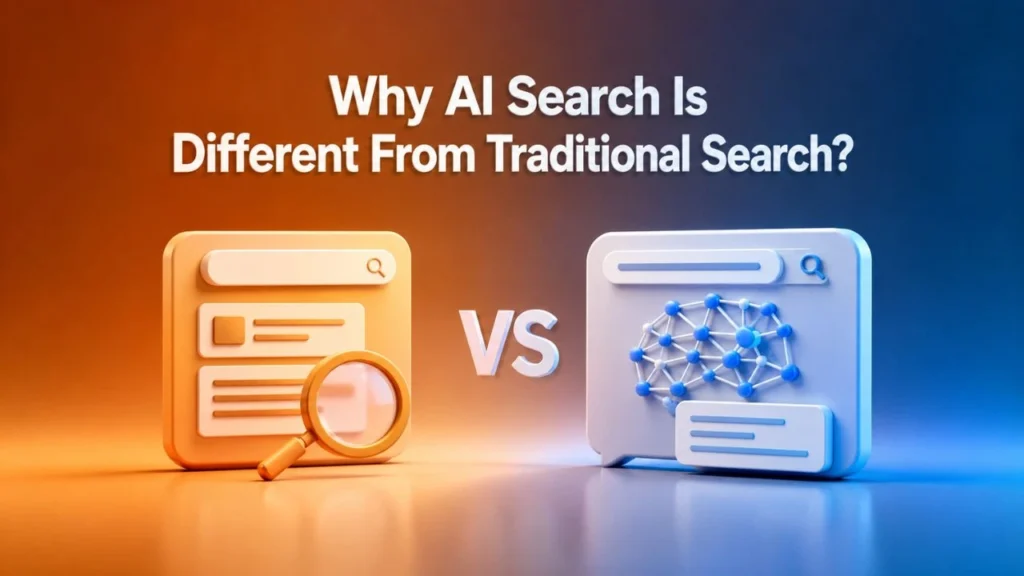
Traditional SEO mainly focused on rankings and clicks. AI driven search focuses more on comprehension, context, and answer quality.
AI systems analyze:
- Semantic relevance
- Content structure
- User intent
- Topical authority
- Clarity of explanations
- Trust signals
- Conversational relevance
This shift means content creators must think beyond keywords alone. You now need content that helps both humans and AI systems understand information efficiently.
Why People First Content Matters More Than Ever?
Google has repeatedly emphasized one important principle: create content for people first. That advice becomes even more important in AI search environments.
AI systems prefer pages that demonstrate:
- Real expertise
- Clear explanations
- Original insights
- Practical usefulness
- Reliable information
- Strong user experience
Generic content filled with repetitive keywords rarely performs well long term. AI systems increasingly recognize shallow information and prioritize pages that provide meaningful value.
If your goal is to earn an AI Overviews Quote, your content should solve problems clearly rather than simply target algorithms.
How AI Systems Choose Which Pages to Quote?
Content Clarity
AI systems favor content that is easy to interpret. Clear headings, logical organization, and concise explanations improve extractability.
When your article is structured properly, AI can understand relationships between topics more effectively.
Semantic Relevance
Search engines no longer rely only on exact keyword matching. They evaluate topic depth and contextual relationships.
For example, an article discussing:
- AI search optimization
- semantic SEO
- voice search
- user intent
- structured content
- topical authority
creates stronger relevance signals than a page repeatedly stuffing one keyword.
Trust and Authority Signals
AI generated summaries prefer trustworthy sources. Your content should demonstrate credibility through:
- Accurate information
- Updated insights
- Expert level explanations
- Transparent authorship
- Helpful user experience
Structured Formatting
Pages with organized formatting are easier for AI systems to interpret.
That includes:
- Proper heading hierarchy
- Short paragraphs
- Bullet lists
- Tables
- Question based sections
- Logical flow
Well formatted content increases the likelihood of appearing in an AI Overviews Quote because AI systems can extract useful information more confidently.
SEO Foundations Still Matter
Some marketers believe AI search requires entirely new optimization tactics. In reality, strong foundational SEO remains essential.
You do not need gimmicks or artificial AI focused tricks.
Instead, focus on:
- High quality content
- Technical SEO
- Search intent alignment
- User experience
- Authority building
- Semantic relevance
These fundamentals continue to drive visibility across both traditional and AI powered search systems.
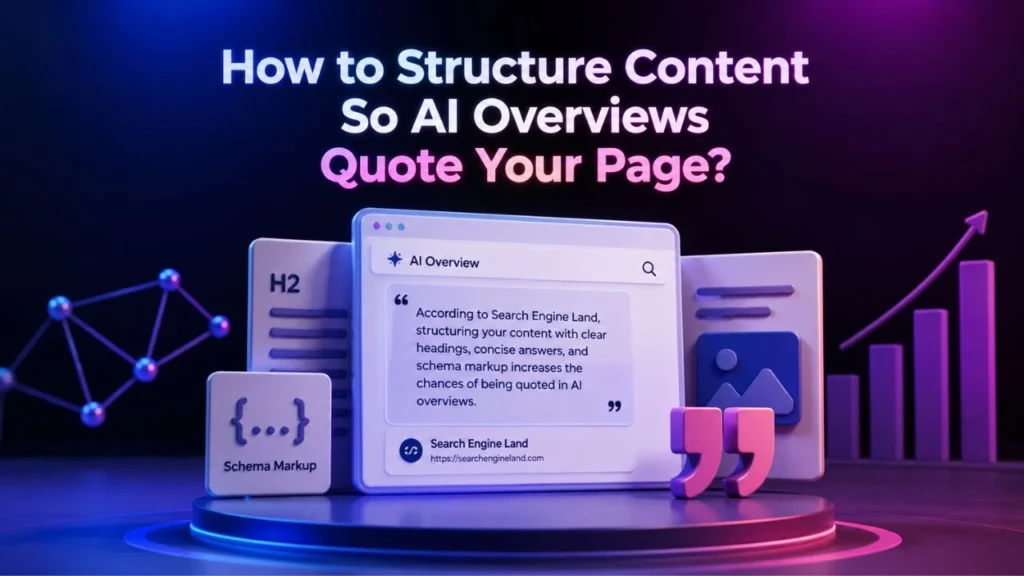
How to Structure Content So AI Overviews Quote Your Page?
Use a Strong Heading Hierarchy
Your article structure should guide readers naturally from one idea to another.
A clear hierarchy helps both users and AI systems understand content organization.
Best Practices
| Heading Level | Purpose |
| H1 | Main article topic |
| H2 | Major sections |
| H3 | Supporting subtopics |
| H4 | Detailed breakdowns |
Avoid confusing heading structures or skipping heading levels unnecessarily.
Answer Questions Directly
AI systems frequently extract concise answers from webpages.
That means your article should immediately address important questions rather than hiding answers inside long introductions.
For example:
What Helps AI Quote a Page?
AI systems usually quote pages that provide:
- Clear explanations
- Helpful formatting
- Reliable information
- Strong topical relevance
- Concise answers
- Good user experience
Direct responses improve readability and increase extraction potential.
Keep Paragraphs Focused
Large walls of text reduce readability.
Instead:
- Focus on one idea per paragraph
- Use concise explanations
- Maintain logical transitions
- Write naturally and conversationally
This improves both user experience and AI comprehension.
Add Lists and Tables
Structured elements make content easier to scan.
AI systems also extract list based content more efficiently.
Example Table: Traditional SEO vs AI Focused Optimization
| Traditional SEO | AI Focused Optimization |
| Ranking focused | Answer focused |
| Exact keywords | Semantic relevance |
| Search engine priority | User understanding priority |
| Basic formatting | Highly structured formatting |
| Click optimization | Citation optimization |
Why Conversational Content Performs Better?
- AI search increasingly mirrors natural human conversation.
- That means robotic writing styles often underperform.
- Instead of sounding overly optimized, your content should feel natural and engaging.
Good conversational writing:
- Improves readability
- Supports voice search
- Matches natural query patterns
- Enhances trust
- Increases retention
For example, users now search using conversational questions like:
- How do AI Overviews choose sources?
- Why does AI quote some websites?
- How can businesses optimize for AI search?
Your content should reflect these natural patterns.
Voice Search and AI Search Are Closely Connected
- Voice search optimization is becoming increasingly important because conversational AI experiences continue growing rapidly.
- People now ask devices complete questions instead of typing short phrases.
- That changes how content should be structured.
Voice Search Optimization Tips
Use Natural Language
- Write the way people speak.
- Avoid awkward keyword insertion.
Add Question Based Headings
Questions naturally align with voice queries.
Examples include:
- What is generative engine optimization for business?
- How does AI choose trusted sources?
- Why does structured content matter?
Provide Concise Answers
- Voice assistants often prefer short, direct responses.
- Aim for clarity rather than excessive complexity.
The Role of Topical Authority
- One isolated article rarely builds strong authority alone.
- AI systems often prefer websites that demonstrate consistent expertise across an entire topic category.
- That means you should create supporting content around related subjects.
For example:
- semantic SEO
- content structure
- AI search optimization
- entity optimization
- voice search SEO
- search intent strategy
- user experience optimization
Together, these articles strengthen topical relevance.
Google AI Overviews Optimization Guide for Modern Websites
Businesses searching for a practical Google AI Overviews optimization guide should focus on sustainable content quality rather than shortcuts.
The best strategy is building genuinely useful resources that help users solve real problems.
Prioritize User Intent
Every page should align with a clear purpose. Common intent categories include:
| Search Intent | Example Query |
| Informational | What are AI Overviews? |
| Commercial | Best AI optimization services |
| Educational | How to optimize content for AI search |
| Conversational | Why does AI quote webpages? |
When content aligns with user intent naturally, it becomes easier for AI systems to understand relevance.
Improve Readability
Readable content performs better across all search environments.
Focus on:
- Short sentences
- Clear structure
- Logical organization
- Scannable formatting
- Simple explanations
Readable content also improves accessibility and user satisfaction.
Optimize Technical SEO
Technical SEO still matters. Important areas include:
- Mobile responsiveness
- Fast page speed
- Crawlability
- Structured data
- Clean internal linking
- Secure browsing experience
AI systems rely on accessible, properly indexed content.
AI Overviews Content Optimization Services Explained
Many businesses now invest in AI Overviews content optimization services to improve visibility in modern search experiences.
However, effective optimization is not about manipulating AI systems. Real optimization focuses on:
- Content clarity
- Search intent alignment
- Semantic relevance
- User experience
- Structured formatting
- Authority development
Strong optimization services help businesses create scalable, helpful, people first content strategies.
Generative Engine Optimization for Business Growth
The rise of AI search has introduced a new concept known as generative engine optimization for business.
This refers to optimizing content for AI powered discovery systems, conversational interfaces, and generative search environments.
Unlike traditional SEO alone, generative optimization focuses heavily on:
- Contextual understanding
- Conversational relevance
- Entity relationships
- Semantic depth
- User satisfaction
Businesses that adapt early can improve visibility across:
- AI search tools
- voice assistants
- conversational engines
- AI generated summaries
- intelligent browser experiences
Why Superficial AI SEO Hacks Often Fail?
Many websites chase trends instead of building quality.
That includes tactics like:
- Creating unnecessary AI specific text files
- Over engineering content chunking
- Forcing artificial mentions
- Stuffing AI keywords unnaturally
- These approaches rarely create sustainable value.
- Search engines continue rewarding content that genuinely helps users.
- If your page deserves an AI Overviews Quote, it should earn that visibility because the information is useful, trustworthy, and well organized.
The Importance of Original Insights
AI systems increasingly value unique perspectives. Generic rewritten content provides little value because similar information already exists everywhere online.
Instead, focus on:
- Expert analysis
- Clear frameworks
- Industry observations
- Process explanations
- Practical guidance
Unique value differentiates your content from competitors.
Emerging Agentic Search Experiences
AI search is evolving beyond static results. Modern AI systems increasingly interact with websites more dynamically through intelligent browsing and agentic experiences.
This means future optimization may involve:
- Better structured site architecture
- Machine understandable workflows
- Improved accessibility
- Interactive experiences
- AI compatible interfaces
Businesses should stay informed about these developments rather than relying solely on outdated SEO tactics.
Common Mistakes That Reduce AI Visibility
Keyword Stuffing
- Overusing keywords creates poor readability and weak user experience.
- Natural writing always performs better long term.
Thin Content
- Surface level articles rarely earn trust.
- Comprehensive, valuable content performs better across AI systems and traditional search engines.
Poor Formatting
- Disorganized content becomes difficult for both users and AI systems to interpret.
- Structure matters significantly.
Ignoring User Experience
Even great content can struggle if pages:
- load slowly
- display poorly on mobile
- contain intrusive popups
- create navigation frustration
User satisfaction remains critical.
Practical Framework for Creating AI Friendly Content
Step 1: Understand User Intent
Start with what users actually want to learn.
Step 2: Build Comprehensive Topic Coverage
Cover the subject deeply and naturally.
Step 3: Structure Information Clearly
Use headings, lists, tables, and logical flow.
Step 4: Write Conversationally
Natural language supports both users and voice search.
Step 5: Improve Technical SEO
Ensure accessibility, speed, and crawlability.
Step 6: Update Content Regularly
Fresh, accurate content maintains relevance.
Future of AI Search Optimization
Search behavior will continue evolving rapidly.
As AI generated answers become more common, businesses must adapt by creating:
- trustworthy content
- structured information
- conversational experiences
- semantic relevance
- user focused resources
The websites that succeed long term will not be those chasing shortcuts. They will be the ones consistently publishing genuinely helpful content designed for real people.
That is ultimately the strongest strategy for earning an AI Overviews Quote and building long term visibility across modern search ecosystems.
Conclusion
AI powered search is transforming how users discover information online. But despite all the technological changes, one principle remains consistent: useful content wins.
If you want your page to earn an AI Overviews Quote, focus on creating clear, trustworthy, well structured content that genuinely helps users solve problems.
Avoid shortcuts. Avoid gimmicks. Avoid robotic writing.
Instead, invest in strong SEO fundamentals, conversational formatting, semantic relevance, and user focused experiences.
That approach not only improves visibility in traditional search engines but also strengthens your presence across AI search tools, voice assistants, and future generative search experiences.
Frequently Asked Questions
How do AI Overviews choose which pages to quote?
AI systems usually prioritize pages with strong structure, topical relevance, trust signals, and helpful content.
Does structured formatting improve AI visibility?
Yes. Clear headings, lists, tables, and concise explanations make content easier for AI systems to interpret.
Is voice search optimization important for AI search?
Absolutely. Conversational content increasingly aligns with how users interact with AI assistants and voice enabled devices.Absolutely. Conversational content increasingly aligns with how users interact with AI assistants and voice enabled devices.
What is generative engine optimization for business?
It refers to optimizing content for AI powered discovery systems and conversational search experiences.
Should businesses focus only on AI optimization?
No. Strong foundational SEO and people first content remain the most important long term strategies.