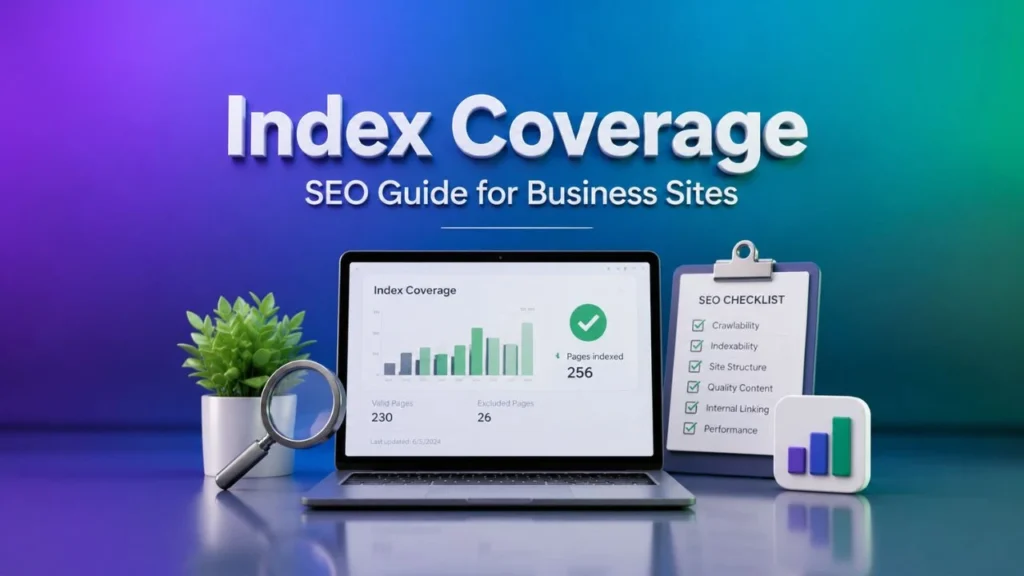
Getting your pages indexed is one of the most important steps in search engine optimization. No matter how valuable your content is, it cannot rank if search engines fail to include it in their index. This is why index coverage SEO has become a critical focus area for businesses that rely on organic traffic.
Many websites invest heavily in content creation, technical improvements, and link building, yet they continue to struggle with visibility. In many cases, the root cause is not content quality or competition. Instead, it is an indexing problem. Pages that are not indexed cannot generate impressions, attract clicks, or contribute to business growth.
As search engines become more sophisticated, understanding how Google indexing works is no longer optional. Search engines evaluate crawlability, content quality, technical signals, user experience, and overall site health before deciding whether a page deserves a place in the index.
At the same time, AI powered search platforms and voice search technologies depend heavily on indexed content. If your pages are not discoverable through search engine indexes, they are far less likely to appear in AI generated answers, voice responses, or featured search experiences.
This comprehensive guide explains everything businesses need to know about index coverage SEO, including how indexing works, how to use GSC coverage reports effectively, and how indexability SEO influences long term organic growth.
Table of Contents
Quick Overview of Index Coverage SEO
| SEO Element | Purpose | Impact on Rankings |
| Google Indexing | Allows pages to appear in search results | High |
| GSC Coverage Report | Detects indexing issues | High |
| Crawlability | Helps search engines discover pages | High |
| Indexability SEO | Determines whether pages can be indexed | High |
| XML Sitemap | Supports content discovery | Medium |
| Internal Linking | Improves page discovery | High |
| Canonical Tags | Prevent duplicate indexing | High |
| Robots Directives | Controls crawler access | High |
What Is Index Coverage SEO?
Index coverage SEO refers to the process of ensuring that search engines can discover, crawl, evaluate, and successfully index important pages on a website.
In simple terms, index coverage shows how many pages on your website are included in Google’s index and identifies pages that are excluded or experiencing indexing problems.
When businesses focus on index coverage SEO, they improve the likelihood that important landing pages, service pages, blog posts, and product pages appear in search results.
Understanding the Difference Between Crawling and Indexing
Many website owners mistakenly assume that if Google crawls a page, it will automatically be indexed. This is not always true.
The process generally follows these stages:
- Discovery of a URL
- Crawling the page
- Rendering the content
- Evaluating quality and relevance
- Indexing the page
- Ranking the page for relevant searches
A page may be crawled successfully but still fail to enter Google’s index due to quality concerns, duplication issues, technical barriers, or weak content signals.
This is where indexability SEO becomes important. It helps search engines understand that a page should be included in search results.
Why Index Coverage SEO Matters for Business Websites?
Businesses often publish dozens or hundreds of pages over time. If indexing problems remain unnoticed, valuable content can become invisible to potential customers.
Effective index coverage SEO helps businesses:
- Improve organic visibility
- Increase qualified traffic
- Strengthen content discoverability
- Enhance lead generation opportunities
- Improve ROI from content marketing
- Support AI search visibility
When important pages remain unindexed, even the best marketing strategies can produce disappointing results.
Understanding the Google Indexing Process
Before fixing indexing issues, it helps to understand how Google indexing actually works.
URL Discovery
Search engines first discover URLs through:
- Internal links
- XML sitemaps
- External backlinks
- Previous crawls
- URL submissions
Strong internal linking significantly improves page discovery.
Crawling
Once discovered, Googlebot visits the page and collects information about its content.
During this phase, search engines evaluate:
- Page accessibility
- Server response
- Robots directives
- Site architecture
Any obstacles at this stage can affect index coverage SEO.
Rendering
Modern websites often use JavaScript elements.
Google renders the page to understand:
- Visual content
- Interactive components
- Hidden text
- Dynamic elements
Rendering issues may prevent proper content evaluation.
Content Evaluation
Google assesses whether a page provides value.
Factors include:
- Originality
- Depth
- Relevance
- Expertise
- User experience
Low quality pages may remain unindexed despite being crawled.
Indexing
If Google determines that a page deserves inclusion, it enters the index.
This stage is heavily influenced by indexability SEO signals such as:
- Canonical tags
- Meta robots directives
- Internal links
- Content quality
- Technical health
Ranking
- Only indexed pages become eligible to appear in search results.
- Strong indexing creates the foundation for ranking improvements.
What Is the GSC Coverage Report?
The GSC coverage report inside Google Search Console helps website owners understand how Google processes their pages.
It provides visibility into:
- Indexed pages
- Excluded pages
- Errors
- Warnings
- Crawling issues
For digital marketers, the GSC coverage report is one of the most valuable diagnostic tools available.
Main Coverage Categories
Error
Pages with critical problems that prevent indexing.
Examples include:
- Server errors
- Redirect loops
- DNS failures
Valid
- Pages successfully indexed by Google.
- These pages are eligible for ranking.
Valid With Warning
Pages that are indexed but may have issues requiring attention.
Excluded
- Pages intentionally or unintentionally excluded from Google’s index.
- This section often contains the most important insights for improving index coverage SEO.
Common Index Coverage SEO Issues Found in Business Sites
Many indexing problems appear repeatedly across business websites.
Crawled Currently Not Indexed
Google has visited the page but decided not to index it.
Common causes include:
- Thin content
- Duplicate content
- Weak value signals
- Poor user experience
Discovered Currently Not Indexed
Google knows the page exists but has not crawled it yet.
Potential causes include:
- Crawl budget limitations
- Weak internal linking
- Large site size
Duplicate Without User Selected Canonical
- Multiple similar versions of content confuse search engines.
- Proper canonical implementation can resolve these issues.
Soft 404 Pages
- Pages appear functional but provide little meaningful content.
- Google may treat them as low value pages.
Blocked by Robots.txt
Incorrect robots directives can prevent important pages from being crawled.
Noindex Tags
Accidental noindex directives remain a common issue during site redesigns and migrations.
Orphan Pages
- Pages without internal links often struggle with discovery and indexing.
- Reducing orphan pages can significantly improve Google indexing performance.
Indexability SEO Fundamentals Every Business Website Needs
Achieving strong indexing performance starts with a solid technical foundation. Even high quality content can struggle to appear in search results when important indexability SEO factors are overlooked.
Businesses that consistently monitor these fundamentals often experience better visibility, faster indexing, and stronger organic growth.
Optimized Site Architecture
Site architecture determines how content is organized and connected across a website.
A well structured website helps search engines:
- Discover pages efficiently
- Understand topical relationships
- Prioritize important content
- Allocate crawl resources effectively
An organized structure also improves user experience, making it easier for visitors to navigate through the website.
Best practices include:
- Creating logical content categories
- Maintaining a clear hierarchy
- Limiting unnecessary page depth
- Using descriptive URLs
When site architecture is weak, even important pages can remain undiscovered, negatively affecting index coverage SEO.
Strong Internal Linking
- Internal links play a major role in both crawlability and indexing.
- Search engines rely on links to discover new pages and understand content relationships.
Benefits of strong internal linking include:
- Faster page discovery
- Better distribution of authority
- Improved crawl efficiency
- Reduced orphan pages
- Enhanced topical relevance
Every important page should receive contextual internal links from relevant content.
Crawl Depth Optimization
- Crawl depth refers to the number of clicks required to reach a page from the homepage.
- Pages buried deep within a website often receive less attention from search engine crawlers.
For most business websites:
- Important pages should be accessible within three clicks
- Service pages should remain close to the homepage
- Blog categories should support easy navigation
Shallow site structures generally improve Google indexing efficiency.
Canonical Tag Implementation
- Duplicate content can confuse search engines.
- Canonical tags help indicate the preferred version of similar pages.
Common situations requiring canonical tags include:
- Product variations
- Tracking parameters
- Filtered URLs
- Pagination scenarios
Correct canonical implementation strengthens indexability SEO by helping search engines focus on the right version of a page.
Mobile Friendly Design
- Google primarily evaluates websites using mobile first indexing.
- If a site performs poorly on mobile devices, indexing and rankings may suffer.
Key mobile optimization factors include:
- Responsive design
- Readable text
- Fast loading pages
- Easy navigation
- Mobile friendly layouts
Mobile usability has become a fundamental component of modern index coverage SEO.
Core Web Vitals
Page experience influences how search engines evaluate content quality.
Core Web Vitals focus on:
- Loading performance
- Visual stability
- Interactivity
While these metrics are not direct indexing factors, poor performance can impact overall site quality signals.
How User Experience Influences Indexability?
Search engines increasingly prioritize websites that provide valuable user experiences.
Factors influencing quality assessment include:
- Page speed
- Content accessibility
- Mobile usability
- Navigation clarity
- Content relevance
Improving user experience supports both rankings and Google indexing success.
How to Audit Index Coverage SEO Using Google Search Console?
A regular audit helps identify indexing issues before they impact traffic and visibility. The GSC coverage report provides valuable insights into how Google processes your website.
Accessing the Coverage Report
Within Google Search Console:
- Open your property.
- Navigate to the Pages report.
- Review indexed and non indexed pages.
- Analyze trends over time.
This report serves as the central dashboard for monitoring index coverage SEO.
Finding Indexing Errors
Pay close attention to pages classified as:
- Not indexed
- Excluded
- Error
- Warning
These categories often reveal hidden technical issues affecting visibility.
Reviewing Excluded Pages
Not every excluded page requires action.
Examples of intentional exclusions include:
- Admin pages
- Thank you pages
- Duplicate URLs
- Staging environments
However, important business pages appearing under excluded categories should be investigated immediately.
Validating Fixes
After correcting issues:
- Submit affected URLs for reindexing
- Validate fixes in Search Console
- Monitor status changes
This process helps accelerate Google indexing updates.
Monitoring Index Growth
Successful websites typically show gradual growth in indexed pages over time.
Track:
- Indexed page count
- Crawl activity
- Excluded URLs
- Error trends
Consistent monitoring supports long term indexability SEO improvements.
Recommended Audit Frequency
| Website Size | Audit Frequency |
| Small Business Sites | Monthly |
| Medium Sites | Every Two Weeks |
| Large Sites | Weekly |
| Enterprise Websites | Continuous Monitoring |
Technical SEO Factors That Affect Google Indexing
- Technical SEO creates the environment that allows search engines to access and process content efficiently.
- Several technical elements directly influence index coverage SEO.
XML Sitemaps
XML sitemaps help search engines discover important URLs.
A strong sitemap should:
- Include indexable pages
- Exclude redirected URLs
- Exclude noindex pages
- Update automatically
Submitting XML sitemaps supports faster Google indexing.
Robots.txt Optimization
- Robots.txt files control crawler access.
- Improper configurations can accidentally block valuable content.
- Review robots directives regularly to ensure important pages remain accessible.
Structured Data
Structured data helps search engines better understand content.
Benefits include:
- Improved content interpretation
- Enhanced search features
- Better eligibility for rich results
Structured data also supports AI driven search systems.
Canonicalization
- Canonical tags prevent duplicate content confusion.
- Every business website should routinely audit canonical implementation to avoid indexing inefficiencies.
JavaScript SEO
Modern websites often depend on JavaScript frameworks.
However, rendering challenges can affect:
- Content discovery
- Crawlability
- Indexing
Important content should remain accessible even if JavaScript rendering encounters delays.
HTTPS Security
- Secure websites establish trust with both users and search engines.
- HTTPS has become a standard expectation for modern websites.
Technical Signals That Improve Indexability SEO
Strong technical foundations often include:
- Clean URL structures
- Fast page speed
- Secure connections
- Proper canonicalization
- Structured data implementation
- Optimized internal linking
Together, these elements contribute significantly to indexability SEO success.
Internal Linking Strategies for Better Index Coverage SEO
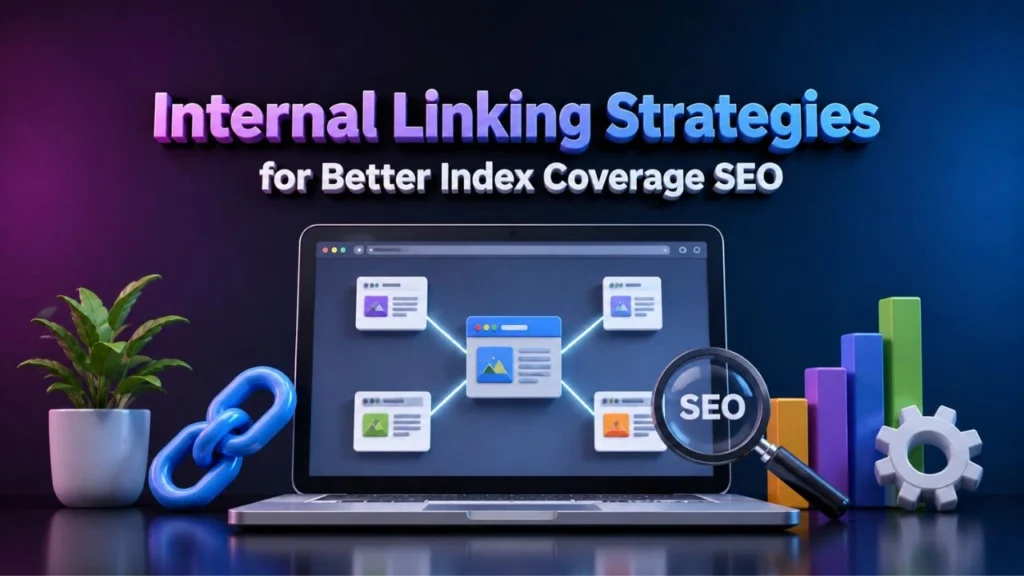
- Internal links remain one of the most overlooked tools for improving indexing.
- A strategic internal linking structure helps search engines understand which pages matter most.
Creating Topic Clusters
Topic clusters connect related content around a central theme.
For example:
- Pillar page
- Supporting articles
- Related resources
- Service pages
This structure strengthens content relationships and improves crawl efficiency.
Reducing Orphan Pages
- Orphan pages receive no internal links from other content.
- These pages often experience indexing challenges because search engines struggle to discover them.
- Regular site audits should identify and eliminate orphan pages.
Distributing Link Equity
Internal links help distribute authority throughout the website.
Important pages should receive links from:
- High traffic blog posts
- Category pages
- Resource sections
- Relevant service pages
This improves both rankings and Google indexing performance.
Using Descriptive Anchor Text
Anchor text provides context for search engines.
Effective anchors:
- Describe destination pages
- Support topical relevance
- Improve content understanding
Generic phrases such as “click here” offer limited value.
Internal Linking Best Practices for Large Business Sites
For larger websites:
- Build topic hubs
- Link related content naturally
- Audit orphan pages regularly
- Prioritize high value pages
- Update older content with new links
These strategies support sustainable index coverage SEO improvements across thousands of pages.
How AI Search Engines Evaluate Indexed Content
- Search behavior continues to evolve as AI powered search experiences become more common.
- However, indexing remains foundational.
- If content is not indexed, AI systems often have fewer opportunities to discover and reference it.
Why Indexing Still Matters for AI Search
- AI search engines depend on accessible information.
- Strong index coverage SEO increases the likelihood that content becomes part of the searchable web ecosystem.
Content Accessibility and Retrieval
AI systems favor content that is:
- Easy to crawl
- Well structured
- Clearly organized
- Semantically relevant
Indexing is often the first step toward retrieval.
Entity Based SEO
Modern search engines increasingly rely on entities rather than isolated keywords.
Business websites should clearly establish:
- Services
- Products
- Industries
- Locations
- Expertise areas
Strong entity signals improve discoverability across traditional and AI search environments.
Structured Content Optimization
Well structured content supports machine understanding.
Useful formatting includes:
- Headings
- Tables
- Lists
- FAQs
- Definitions
These elements make content easier for AI systems to interpret.
Semantic Search Signals
- Search engines evaluate context, relationships, and topical depth.
- Comprehensive coverage often outperforms content focused solely on keyword repetition.
Improving Content Discoverability for AI Systems
To support AI search visibility:
- Maintain strong indexing health
- Publish authoritative content
- Use structured data
- Build topic clusters
- Improve internal linking
These strategies complement traditional Google indexing efforts while preparing content for emerging search technologies.
Voice Search and Indexability SEO
Voice search has changed how people interact with search engines. Instead of typing short keywords, users often ask complete questions using natural language.
As voice enabled devices continue to grow in popularity, businesses need to understand how voice search connects with indexability SEO and Google indexing.
The reality is simple. If a page is not indexed, it cannot appear in voice search results. Strong indexing remains the foundation of every successful voice search strategy.
How Voice Search Uses Indexed Content?
Voice assistants typically pull answers from content that search engines have already indexed and evaluated.
When users ask questions such as:
- What is index coverage SEO?
- How does Google indexing work?
- Why are pages not indexed?
Search engines attempt to provide concise, trustworthy answers from indexed pages.
This makes index coverage SEO essential for businesses seeking visibility beyond traditional search results.
Featured Snippets and Voice Results
Many voice responses originate from featured snippets.
To improve your chances of appearing in voice search:
- Answer questions directly.
- Use clear headings.
- Include concise definitions.
- Structure content logically.
- Create dedicated FAQ sections.
Well optimized content often performs better across both voice search and AI powered search experiences.
Conversational Content Optimization
Voice searches are usually longer and more conversational.
For example:
Typed search:
“index coverage seo”
Voice search:
“How can I improve index coverage SEO for my business website?”
Content should naturally address these conversational queries without sacrificing readability.
FAQ Optimization
Frequently asked questions help search engines identify concise answers.
FAQ sections also support:
- Voice search visibility
- Featured snippets
- AI generated answers
- User engagement
Voice Search Best Practices for Business Websites
To improve visibility in voice search:
- Focus on user intent.
- Answer questions clearly.
- Use conversational language.
- Optimize page speed.
- Maintain strong indexing health.
- Create structured FAQ sections.
Businesses that combine voice search optimization with strong indexability SEO often gain broader search visibility.
Best Practices to Improve Index Coverage SEO
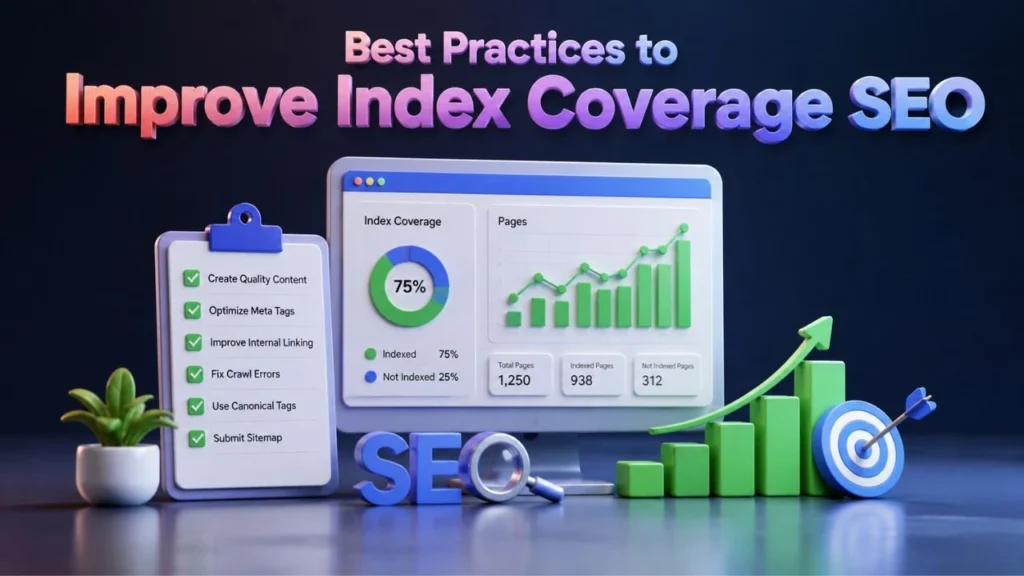
- Many indexing problems can be prevented through consistent SEO maintenance.
- The following best practices help strengthen index coverage SEO and improve overall search performance.
Publish High Quality Content Consistently
Search engines prioritize content that provides genuine value.
Quality content typically demonstrates:
- Expertise
- Relevance
- Originality
- Depth
- User focus
Publishing useful content consistently encourages more efficient crawling and indexing.
Update Existing Pages
Content freshness can influence how frequently search engines revisit pages.
Regular updates may include:
- New information
- Improved statistics
- Expanded explanations
- Additional FAQs
- Updated examples
Refreshing content helps maintain long term relevance.
Improve Internal Linking
- Internal links remain one of the most effective methods for improving Google indexing.
- Every important page should be connected to the broader website structure.
Remove Thin Content
Thin pages often contribute little value to users.
Common examples include:
- Short placeholder pages
- Duplicate pages
- Low quality archive pages
- Automatically generated content
Consolidating or improving weak pages can strengthen overall site quality.
Optimize Crawl Budget
Crawl budget becomes increasingly important for larger websites.
Ways to improve crawl efficiency include:
- Removing duplicate URLs
- Fixing redirect chains
- Updating XML sitemaps
- Improving internal links
- Reducing unnecessary pages
Efficient crawling often leads to better index coverage SEO outcomes.
Fix Technical Errors Quickly
Technical issues can prevent important pages from being indexed.
Regular monitoring helps identify:
- Server errors
- Redirect issues
- Canonical conflicts
- Robots directives
- Broken internal links
Addressing these problems promptly protects visibility.
Building a Sustainable Google Indexing Strategy
Successful indexing is not a one time task.
Businesses should establish ongoing processes for:
- Monitoring indexing reports
- Publishing quality content
- Auditing technical SEO
- Updating internal links
- Maintaining site health
A sustainable approach creates long term growth opportunities.
Advanced Index Coverage SEO Strategies
Once foundational SEO elements are in place, advanced techniques can further improve indexing efficiency.
Log File Analysis
Log files reveal how search engine crawlers interact with a website.
Analysis can uncover:
- Crawl waste
- Frequently visited pages
- Ignored sections
- Crawl bottlenecks
These insights help prioritize optimization efforts.
Crawl Budget Optimization
Large websites often contain thousands of URLs competing for crawler attention.
Improving crawl budget efficiency involves:
- Removing duplicate content
- Blocking unnecessary URLs
- Strengthening internal linking
- Prioritizing important pages
This ensures search engines focus on content that matters most.
Faceted Navigation Management
Ecommerce and large content sites frequently generate multiple URL variations.
Without proper controls, faceted navigation can create:
- Duplicate content
- Crawl inefficiencies
- Index bloat
Managing these URLs improves indexability SEO and site efficiency.
Large Scale Indexation Control
Growing websites often accumulate outdated or low value pages.
Regular audits help determine whether pages should:
- Remain indexed
- Be consolidated
- Be redirected
- Be removed
Strategic index management supports stronger overall quality signals.
Enterprise SEO Considerations
Enterprise websites face unique indexing challenges due to:
- Massive page counts
- International content
- Multiple subdomains
- Complex site architecture
Advanced monitoring becomes essential for maintaining healthy Google indexing across large digital properties.
Measuring Long Term Indexing Performance
Important metrics include:
| Metric | Why It Matters |
| Indexed Pages | Measures visibility growth |
| Excluded Pages | Identifies indexing barriers |
| Crawl Activity | Indicates search engine engagement |
| Organic Traffic | Reflects indexing success |
| Impression Growth | Shows search visibility trends |
| Coverage Errors | Highlights technical issues |
Monitoring these metrics provides valuable insight into indexing performance over time.
Index Coverage SEO Checklist
The following checklist can help businesses maintain healthy indexing and search visibility.
| Task | Priority | Frequency |
| Review GSC Coverage Reports | High | Weekly |
| Check Indexing Errors | High | Weekly |
| Validate XML Sitemap | High | Monthly |
| Audit Internal Links | High | Monthly |
| Fix Broken Links | Medium | Monthly |
| Review Canonical Tags | High | Monthly |
| Monitor Crawl Budget | Medium | Monthly |
| Update Important Content | Medium | Quarterly |
| Review Robots.txt | High | Monthly |
| Remove Thin Content | Medium | Quarterly |
| Check Mobile Usability | High | Monthly |
| Monitor Core Web Vitals | Medium | Monthly |
Businesses that follow this checklist consistently often experience stronger index coverage SEO performance and improved organic visibility.
Conclusion
Strong index coverage SEO is the foundation of sustainable organic growth. Search engines cannot rank pages they cannot index, making indexing health one of the most important aspects of technical SEO.
Throughout this guide, we explored how Google indexing works, why the GSC coverage report is essential for monitoring performance, and how indexability SEO influences visibility across traditional search engines, AI search platforms, and voice search technologies.
Businesses that actively monitor indexing performance gain several advantages. They discover technical issues faster, improve content discoverability, strengthen crawl efficiency, and maximize the return on their content marketing investments.
As search evolves toward AI generated experiences and conversational search interfaces, indexing remains a critical requirement. Search engines and AI systems still need accessible, well structured, high quality content before they can surface it to users.
By focusing on site architecture, technical SEO, content quality, internal linking, and ongoing monitoring, you can build a website that supports efficient crawling, strong indexing, and long term search visibility.
The most successful SEO strategies do not treat indexing as a one time task. Instead, they make index coverage SEO an ongoing process that supports every stage of digital growth. When indexing health becomes part of your regular SEO workflow, your website is better positioned to compete across search engines, AI search tools, and emerging discovery platforms.
Frequently Asked Questions
What is index coverage SEO?
Index coverage SEO refers to the process of ensuring important website pages can be discovered, crawled, evaluated, and indexed by search engines. It focuses on maximizing the number of valuable pages available in search results.
How does Google indexing affect rankings?
A page must be indexed before it can rank. Without Google indexing, a page cannot appear in search results regardless of content quality or optimization efforts.
What is the GSC coverage report?
The GSC coverage report in Google Search Console provides insights into indexed pages, excluded pages, errors, warnings, and indexing issues affecting a website.
What is indexability SEO?
Indexability SEO focuses on the technical and content related factors that determine whether search engines can include a page in their index.
Why are pages excluded from Google’s index?
Pages may be excluded due to:
Duplicate content
Noindex directives
Thin content
Crawl issues
Canonical conflicts
Poor quality signals
How often should businesses review indexing reports?
Most websites should review indexing reports at least monthly. Larger websites often benefit from weekly monitoring.
Can internal linking improve index coverage?
Yes. Internal links help search engines discover content, understand relationships between pages, and prioritize important URLs for indexing.
How does AI search use indexed content?
AI search systems often rely on indexed content to retrieve information, understand topics, and generate responses. Strong indexing supports greater visibility in AI driven search environments.
What causes the “Crawled Currently Not Indexed” status?
This status typically occurs when Google has visited a page but determined that it does not currently meet indexing criteria due to quality, duplication, or relevance concerns.
What is the fastest way to improve Google indexing?
The most effective approach combines:
Strong internal linking
Updated XML sitemaps
High quality content
Technical SEO improvements
Prompt error resolution