A practical SMS marketing guide is useful for any brand that wants to reach customers directly, quickly, and responsibly. Even with the growth of email, WhatsApp, social media, and paid ads, SMS continues to hold strong value because it works on almost every mobile phone. For many users, a text message is still one of the fastest ways to receive updates, reminders, alerts, and offers.
SMS marketing in India is especially important because mobile usage is high across metro cities, tier 2 cities, and smaller towns. Businesses use SMS to share order updates, booking details, payment reminders, limited-time offers, and customer service messages. When planned correctly, SMS marketing for Indian businesses can support customer communication without sounding pushy.
This article explains how SMS works, how businesses should plan campaigns, what compliance points matter, how to write better messages, and how to measure results. The goal is to help Indian businesses use SMS in a clear, useful, and customer-friendly way.
Table of Contents
What Is SMS Marketing?
SMS marketing is the process of sending text messages to customers or leads for business communication. These messages can include offers, reminders, confirmations, alerts, service updates, feedback requests, or important customer information.
In simple words, SMS helps a business send a short message directly to a person’s mobile phone. This makes it helpful for time-sensitive updates where quick attention is needed.
How Business SMS Marketing Works
Business SMS marketing usually follows a simple process. A company collects customer contact details with permission, segments the audience, prepares the message, gets the right approvals where needed, sends the SMS through a platform, and tracks the campaign response.
The message should have a clear purpose. A business should not send random texts just because it has a customer’s number. Every SMS should help the receiver understand, act, confirm, remember, or respond.
SMS and Mobile Marketing
SMS is also a major part of mobile marketing in India because it reaches people directly on their phones. Unlike many digital channels, SMS does not always depend on internet access. This makes it useful for businesses that want to communicate with customers across different regions and device types.
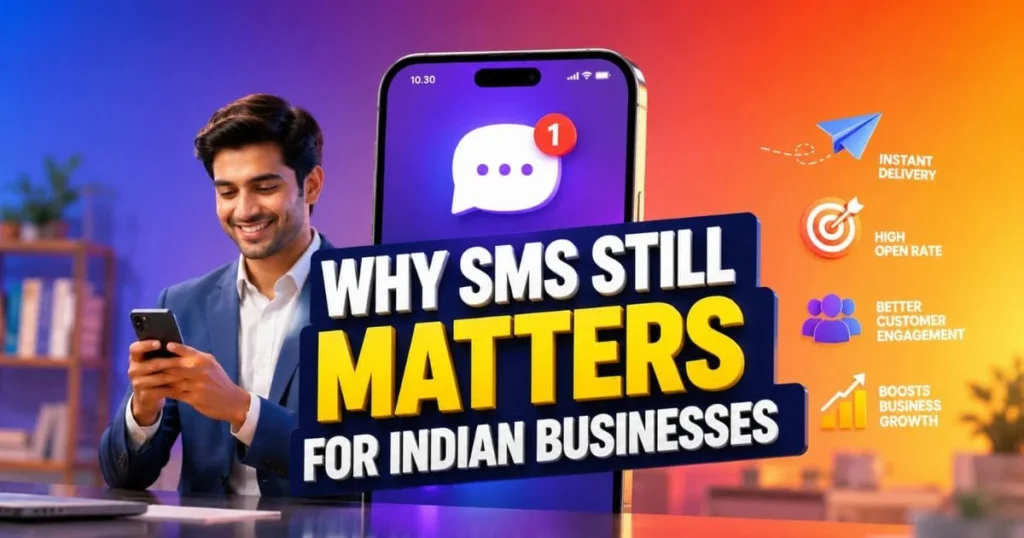
Why SMS Still Matters for Indian Businesses
Many customers may miss emails, ignore ads, or skip app notifications. SMS can still get attention because it appears directly in the phone’s message inbox. For time-sensitive communication, this direct reach is valuable.
SMS also works well for local businesses. A clinic can send a reminder. A store can share a sale update. A restaurant can confirm a booking. A coaching centre can send a class update. These small messages can reduce confusion and improve customer experience.
Benefits of SMS for Business Communication
SMS can support:
- Quick customer updates
- Better appointment management
- Follow-up communication
- Local offer sharing
- Payment reminders
- Order tracking
- Feedback collection
- Lead nurturing
When used correctly, customer engagement through SMS becomes easier because the message reaches the customer at the right moment.
Types of SMS Used by Indian Businesses
Before starting a campaign, a business should understand the main types of SMS. Each type has a different purpose and may require different handling.
Promotional SMS in India
Promotional SMS in India is commonly used for offers, discounts, new product updates, festive sales, event announcements, and lead generation campaigns. A retail store may send a weekend sale message. A real estate consultant may send a property update. A coaching centre may promote a new batch.
Promotional messages should be relevant and permission-based. If they are sent too often or to the wrong people, customers may ignore them or opt out.
Transactional SMS in India
Transactional SMS in India is used for important customer actions and account-related information. These messages are usually connected with a transaction, request, booking, payment, or service process.
Examples include OTP, order updates, booking confirmations, payment alerts, and service updates. These messages are not mainly for selling. Their purpose is to inform or confirm.
Service SMS Alerts
Service SMS alerts are useful when a business needs to update customers about something connected with their service. This may include appointment timing, technician visit status, report availability, delivery status, or account-related information.
OTP and Confirmation Messages
An OTP SMS service is common for login, payment, account verification, and transaction safety. An order confirmation SMS helps ecommerce brands and retailers confirm that a customer’s order has been received. A customer notification SMS can be used for delivery, booking, service, or account updates.
Types of SMS and Their Use Cases
| SMS Type | Common Use | Best For |
|---|---|---|
| Promotional SMS | Offers, sales, product updates | Retail, ecommerce, real estate, restaurants |
| Transactional SMS | OTP, order status, payment status | Ecommerce, banking, apps, service platforms |
| Service SMS | Appointment, booking, visit, report updates | Clinics, salons, repair services, consultants |
| Reminder SMS | Payment, event, appointment follow-up | Education, healthcare, local service providers |
| Feedback SMS | Review request, rating link, survey | Service businesses and local brands |
SMS Marketing Compliance India
Any serious SMS marketing compliance India section must discuss TRAI and DLT. In India, businesses sending commercial communication need to follow rules connected with sender identity, templates, customer consent, approved messaging structures, and consent based marketing.
Compliance is not only a legal point. It also protects customer trust and improves message delivery. If a business ignores rules, messages may get blocked, rejected, or reported.
DLT Registration for SMS
DLT registration for SMS is part of the process that identifies who is sending commercial messages. DLT helps telecom systems verify the sender, header, and template before the message is sent.
For Indian businesses, this process is important because it creates accountability. It helps reduce unwanted messages and protects users from misleading communication.
TRAI SMS Rules
TRAI SMS rules guide how commercial communication should be sent in India. Businesses should understand the basic requirements before sending SMS campaigns. These rules are connected with customer consent, sender registration, content templates, and communication categories.
TRAI Bulk SMS Guidelines
TRAI bulk SMS guidelines are important for businesses that send messages at scale. A company sending campaign messages to hundreds or thousands of customers should not treat SMS as a casual activity. It should have a proper list, approved template, clear sender identity, and message purpose.
SMS Sender ID Registration
SMS sender ID registration helps customers identify who has sent the message. A clear sender ID improves trust because the receiver can connect the SMS with the business.
A registered sender for SMS also supports compliance because the telecom system can verify the sender before allowing commercial communication.
SMS Template Approval
SMS template approval is needed so the message format is checked before use. A template may include fixed content and variable fields such as name, date, amount, link, or reference number.
Approved templates help prevent misuse. They also make campaign execution smoother because the business does not need to create a new structure every time.
Consent-Based Communication
Consent-based SMS marketing means sending messages to people who have agreed to receive them. This is important for trust, response quality, and compliance.
A business should avoid buying random contact lists or sending unrelated messages to people who never showed interest. Relevant messaging works better than mass messaging without permission.
Promotional and Transactional Compliance
Promotional SMS compliance matters when a business sends offers, discounts, or advertising messages. The message should match the approved purpose and should not mislead users.
Transactional SMS compliance matters when a business sends OTPs, order details, booking confirmations, or payment-related information. These messages should be accurate, timely, and connected with a valid customer action.
Commercial Communication Rules
Commercial communication rules India are designed to reduce unwanted communication and make business messaging more transparent. For a company, following these rules helps maintain customer trust and improves long-term campaign quality.
How to Start SMS Marketing in India
Many businesses want to know how to start SMS marketing in India without making mistakes. The first step is not sending messages. The first step is planning with clean and reliable first-party customer data.
Step 1: Define the Campaign Goal
A clear goal helps the business decide what type of SMS to send. The goal may be lead generation, repeat purchase, booking confirmation, payment collection, event reminder, or customer feedback.
Step 2: Build a Permission-Based Contact List
Your list should include people who have shown interest or have a real customer connection with your business. Avoid using unknown databases because they can reduce trust and response quality.
Step 3: Segment Your Audience
Segmentation means dividing your contacts into smaller groups. A new lead should not receive the same message as a loyal customer. A customer who purchased last week may need a different message from someone who has been inactive for six months.
Step 4: Prepare the Message
The message should be short, clear, and useful. Avoid unnecessary words. SMS is not the place for long explanations.
Step 5: Choose Timing Carefully
Timing affects response. A payment reminder may work well before the due date. A restaurant offer may work better before lunch or dinner hours. A class reminder should be sent before the session, not after it starts.
SMS Campaign Strategy for Better Results
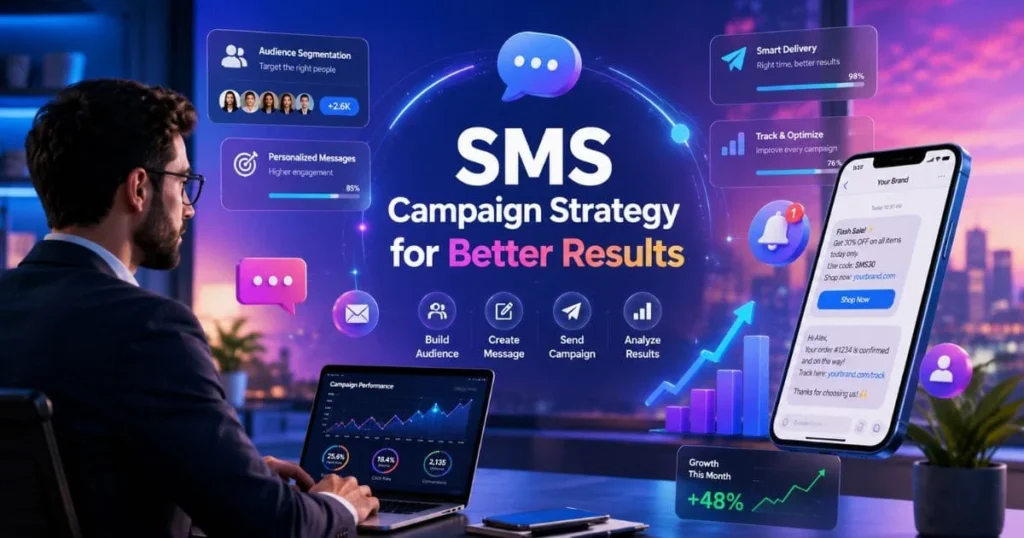
A strong SMS campaign strategy connects the right message with the right audience at the right time and can also help reduce lead leakage CRM gaps through timely follow-ups. Sending one message to everyone may look easy, but it usually gives weaker results.
H4: What a Good Strategy Includes
A good strategy includes:
- Campaign goal
- Audience segment
- Message type
- Approved template
- Clear CTA
- Sending schedule
- Tracking method
- Follow-up plan
SMS Promotion for Business
SMS promotion for business works when the offer is clear and relevant. For example, a retail store can send a festive discount to previous buyers. A salon can send a booking reminder to regular customers. A coaching centre can inform interested students about a new batch.
SMS Advertising India
SMS advertising India should be used carefully. Customers respond better when the message is useful and specific. A vague message like “Best offer available now” is weaker than a clear message that tells users what the offer is, when it ends, and how to take action.
Bulk SMS Marketing India
Bulk SMS marketing India is useful when businesses need to send messages to a large audience. It is commonly used for campaign announcements, alerts, reminders, and updates.
However, bulk SMS does not mean sending the same text to everyone without planning. The campaign should be segmented, approved, compliant, and measurable.
How to Create a Successful Bulk SMS Campaign
To understand how to create a successful bulk SMS campaign, focus on message relevance. A good bulk campaign uses a clean list, a clear message, a strong CTA, proper timing, and tracking.
A campaign should answer these questions:
- Who is receiving the message?
- Why are they receiving it?
- What action should they take?
- How will success be measured?
Bulk SMS for Startups
Bulk SMS for startups can be useful for user onboarding, app verification, event reminders, early offers, and customer updates. Startups should keep communication simple and avoid over-messaging early users.
SMS Campaign Planning Checklist
| Campaign Element | What to Check | Why It Matters |
|---|---|---|
| Goal | Sale, lead, reminder, update, feedback | Gives direction to the campaign |
| Audience | Consent-based and segmented | Improves relevance |
| Message Type | Promotional, transactional, or service | Keeps the message purpose clear |
| Sender ID | Registered and recognisable | Builds trust |
| Template | Approved and accurate | Reduces rejection risk |
| CTA | One simple action | Improves response |
| Timing | Suitable for the audience | Reduces irritation |
| Tracking | Click, reply, call, conversion | Helps measure results |
| Frequency | Not too frequent | Reduces opt-outs |
| Follow-up | Planned after the first message | Improves campaign value |
How to Write Effective SMS Marketing Messages
Many businesses ask how to write effective SMS marketing messages that people will actually read. The answer is simple: write like a human, keep it useful, and make the next step clear.
Keep It Short
A good SMS should be direct. Avoid long sentences and unnecessary adjectives. Customers should understand the message in a few seconds.
Use a Clear CTA
Tell the customer what to do next. Use phrases like call now, confirm booking, visit store, pay now, reply YES, or check details.
Avoid Misleading Urgency
Do not create fake pressure. If an offer ends today, say it clearly. If there are conditions, mention them in a simple way.
Example Format
Brand or context + customer need + benefit or update + CTA
Example:
“Your appointment is booked for 4 PM today. Please arrive 10 minutes early. Reply YES to confirm.”
SMS Marketing Best Practices
Following SMS marketing best practices can help businesses improve trust, delivery, and response.
Practical Best Practices
- Use permission-based lists
- Keep the message short
- Segment the audience
- Add one clear CTA
- Send at the right time
- Avoid over-messaging
- Track every campaign
- Review opt-outs and complaints
- Keep templates updated
- Match the SMS with the customer’s need
These practices are simple, but many campaigns fail because businesses ignore them.
SMS Marketing Use Cases by Industry
Different industries can use SMS in different ways. The message should match the customer journey.
SMS Marketing for Small Businesses
SMS marketing for small businesses can support offers, local reminders, booking updates, and customer follow-ups. Small businesses should focus on helpful communication instead of sending too many sales messages.
SMS Marketing for Ecommerce Businesses
SMS marketing for ecommerce businesses works well for cart reminders, delivery updates, payment status, return updates, product offers, and ecommerce campaigns. A short update can reduce customer support queries.
SMS Marketing for Real Estate Businesses
SMS marketing for real estate businesses can be used for site visit reminders, property updates, document reminders, and lead follow-ups. The message should be specific and location-based.
SMS Marketing for Healthcare Clinics
SMS marketing for healthcare clinics is useful for appointment reminders, report collection notices, follow-up reminders, and health camp updates. The tone should be clear and respectful.
SMS Marketing for Educational Institutes
SMS marketing for educational institutes can support admission reminders, fee updates, class notices, exam schedules, and event updates. Parents and students often prefer short, timely messages.
SMS Marketing for Restaurants
SMS marketing for restaurants can be used for booking confirmations, table availability, festive offers, loyalty updates, and feedback requests.
SMS Marketing for Retail Stores
SMS marketing for retail stores works for sale alerts, new stock updates, festival offers, loyalty points, and store visit reminders.
SMS Marketing for Local Businesses
SMS marketing for local businesses is helpful because customers usually act faster when the message is connected with a nearby store, service, event, booking, or local business leads campaign.
SMS Marketing for Service Businesses
SMS marketing for service businesses can support appointment scheduling, technician visit updates, payment reminders, feedback requests, and service area SEO for local business leads by improving follow-up communication with nearby customers.
Transactional and Reminder SMS Examples
Some SMS types are more about service than promotion. These messages improve communication and reduce missed actions.
A payment reminder SMS can help businesses collect dues on time. An appointment reminder SMS can reduce no-shows. An offer SMS campaign can bring customers back during a sale period. Festival SMS marketing can help businesses connect with seasonal demand during Diwali, Durga Puja, Christmas, Eid, New Year, or regional festivals.
Case Study
Background
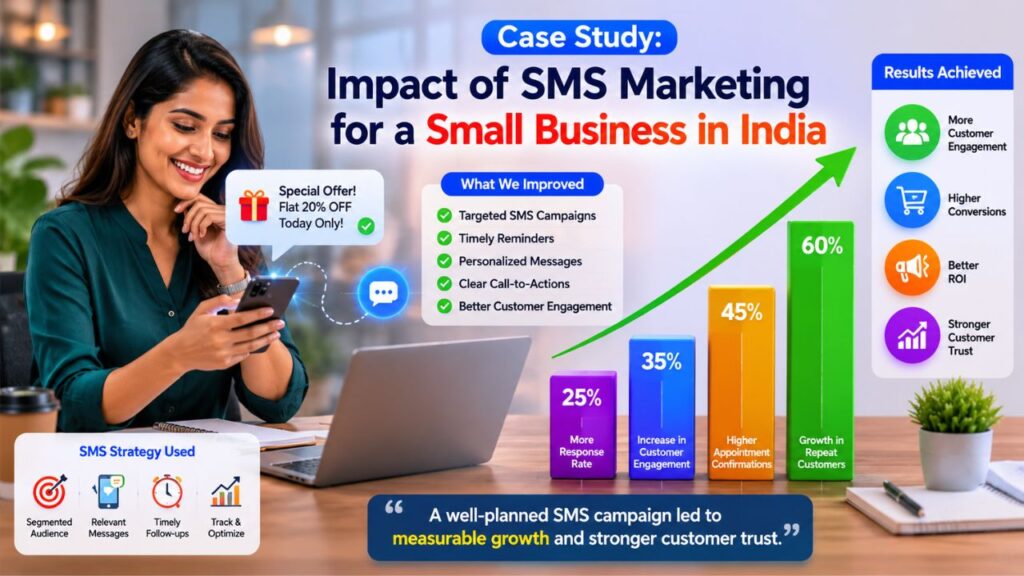
A local service-based business was getting leads through calls, referrals, and online forms. The team contacted leads manually, but many customers missed calls or forgot scheduled appointments.
Problem
The business had no structured SMS process. The same message was sent to all customers. Some leads received offer messages, some received appointment details late, and some did not receive reminders at all.
Action Taken
The business created a simple SMS workflow:
- New leads received a short confirmation message
- Booked customers received appointment details
- A reminder was sent before the scheduled visit
- Payment follow-ups were sent after service completion
- Feedback messages were sent to completed customers
- Campaign results were tracked weekly
Result
The business saw better appointment confirmation, fewer missed visits, and improved customer response. The team also spent less time making repeated follow-up calls.
Key Learning
SMS works best when it is timely, relevant, and easy to act on. A short message sent at the right moment can improve customer communication more than a long message sent without planning.
How to Improve SMS Campaign Response Rate
Businesses often want to know how to improve SMS campaign response rate. The answer depends on relevance, timing, clarity, trust, and automated follow up messages that keep customers informed without making the communication feel repetitive.
Use these steps:
- Send messages to the right audience
- Use simple language
- Personalise when possible
- Add one CTA
- Avoid sending too often
- Track replies, clicks, and conversions
- Remove inactive or uninterested contacts
- Test different message timings
Small changes in wording and timing can improve response over time.
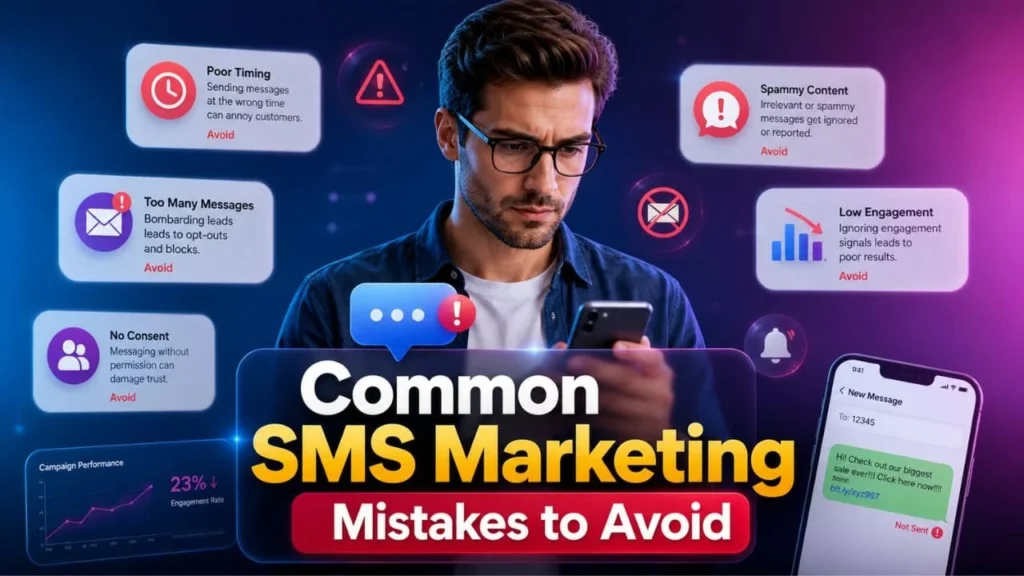
Common SMS Marketing Mistakes to Avoid
Many SMS campaigns fail because of avoidable mistakes.
Sending Without Consent
Sending messages to people who never agreed to receive them can damage trust and create complaints.
Using Unclear Messages
If the customer cannot understand the offer or action, the message will not work.
Overusing Discounts
Not every message should be a discount message. Businesses can also send reminders, helpful updates, and service information.
Ignoring Tracking
Without tracking, it is difficult to know which message worked and which one failed.
Poor Timing
A message sent at the wrong time can feel irritating, even if the offer is useful.
SMS Marketing Tips for Local Businesses in India
SMS marketing tips for local businesses in India should focus on timing, local relevance, and clear action. A local store, clinic, salon, restaurant, or service provider should not send generic messages. The SMS should feel connected with the customer’s real need.
Good local SMS ideas include:
- “Your appointment is confirmed”
- “Your order is ready for pickup”
- “Your service visit is scheduled”
- “Your payment is due tomorrow”
- “New stock is available this weekend”
- “Reply YES to confirm your booking”
Difference Between Promotional and Transactional SMS
The difference between promotional and transactional SMS is based on purpose. Promotional SMS is mainly used to promote offers, deals, sales, or campaigns. Transactional SMS is connected with an action or service, such as OTP, order status, booking confirmation, or payment update.
A business should not mix both casually. Using the right category helps the message stay relevant and compliant.
Best SMS Marketing Strategy for Indian Businesses
The best SMS marketing strategy for Indian businesses is not about sending more messages. It is about sending better messages. A campaign should be permission-based, segmented, compliant, clear, and measurable.
Businesses should focus on the customer’s stage. A new lead may need information. An existing customer may need a reminder. An inactive customer may need a re-engagement message. A loyal customer may respond better to early access or a useful update.
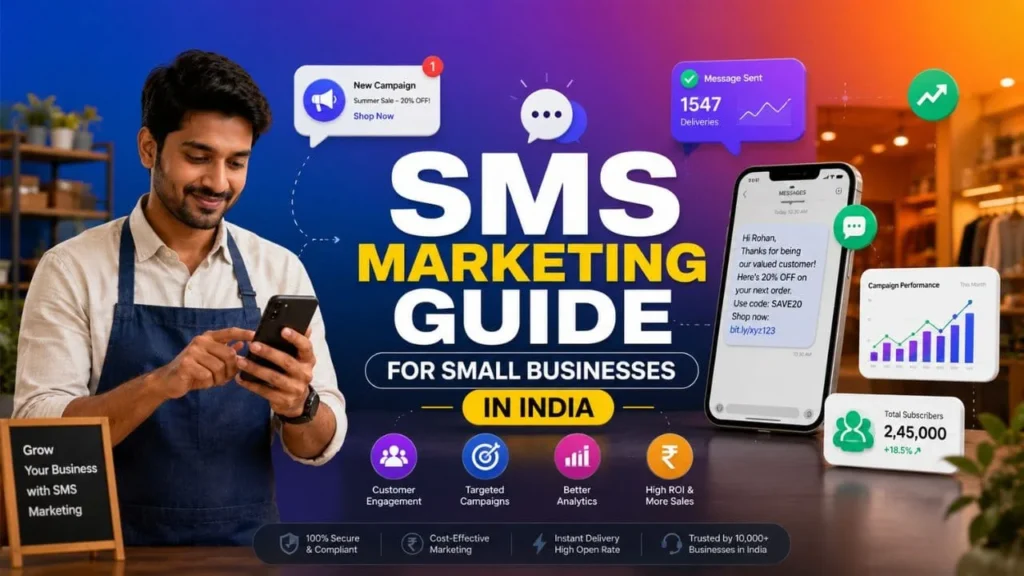
SMS Marketing Guide for Small Businesses in India
This SMS marketing guide for small businesses in India can be followed with a simple plan. Start with a clean contact list, define one campaign goal, prepare approved messages, send at the right time, and measure results.
Small businesses do not need complicated systems in the beginning. They need discipline, clarity, and respect for customer preferences.
How Indian Businesses Can Use SMS Marketing
How Indian businesses can use SMS marketing depends on the business type. A retail shop can send sale alerts. A clinic can send appointment reminders. An education centre can send class updates. An ecommerce seller can send delivery notifications. A service provider can send visit updates.
The best use of SMS is not only selling. It is communication that makes the customer journey easier.
SMS Marketing Rules Every Indian Business Should Know
SMS marketing rules every Indian business should know include sender registration, template approval, consent management, message purpose, and responsible communication.
A business should keep its SMS records organised. This includes approved templates, sender IDs, campaign lists, consent records, and performance reports.
FAQs
Q: What is an SMS marketing guide?
An SMS marketing guide explains how businesses can use text messages for customer communication, offers, reminders, alerts, and updates. It also covers compliance, campaign planning, message writing, and performance tracking.
Q: Is SMS marketing useful for Indian businesses?
Yes, SMS is useful for Indian businesses because it helps send quick updates, reminders, confirmations, and offers directly to customers’ phones. It is especially helpful for local businesses, service providers, ecommerce brands, clinics, and education institutes.
Q: What is DLT in SMS marketing?
DLT is a system used to verify commercial message senders, sender IDs, templates, and consent-related details. It helps reduce unwanted communication and supports responsible business messaging.
Q: What is the difference between promotional and transactional SMS?
Promotional SMS is used for offers, discounts, and marketing campaigns. Transactional SMS is used for important customer actions such as OTP, order confirmation, payment update, booking details, or account-related information.
Q: How often should businesses send SMS campaigns?
There is no one fixed rule for every business. The right frequency depends on customer interest, message purpose, and business type. A business should avoid sending too many messages and should track opt-outs or complaints.
Q: What makes an SMS campaign successful?
A successful campaign has a clear goal, permission-based audience, approved template, short message, strong CTA, right timing, and proper tracking.
Conclusion
SMS remains a practical communication channel for Indian businesses when used with care. It can support offers, reminders, alerts, updates, confirmations, and follow-ups. However, the success of SMS depends on relevance, timing, compliance, and message quality.
A strong SMS marketing guide should not only explain how to send messages but also how to respect customer trust. Businesses should use clean contact lists, approved templates, clear CTAs, and regular performance tracking.
In the end, SMS marketing for Indian businesses works best when it is helpful, timely, permission-based, and easy for the customer to understand.